The document released by the U.S. Congressional‑Executive Commission on China (quoting several “Bitter Winter” articles) insists on religious persecution.
by Massimo Introvigne
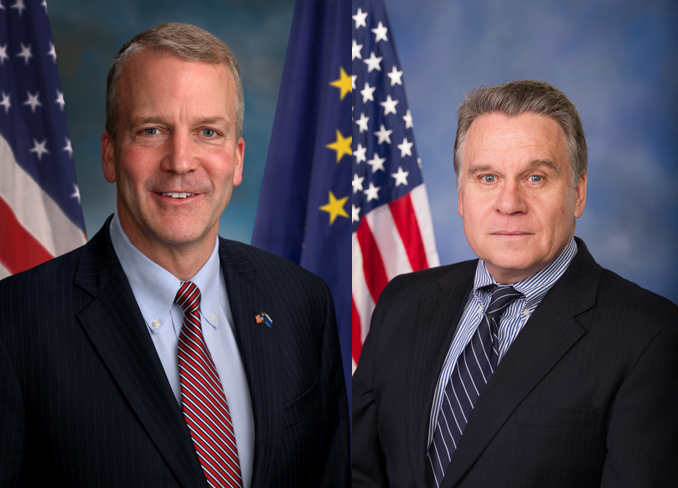
The U.S. Congressional‑Executive Commission on China (CECC) has released its 2025 Annual Report, a document that confirms the breadth and severity of human rights violations and religious repression in the People’s Republic of China. As in previous years. “Bitter Winter” is cited throughout the report as a trusted source, not only for our coverage of religious persecution but increasingly for our reporting on broader social issues, including the long-term demographic consequences of the one-child policy. We welcome this recognition. While the report spans many areas of human rights and governance, this review focuses on the sections concerning freedom of religion, where the Commission’s findings are extensive and detailed.
The CECC concludes that the Chinese Communist Party and government continued to restrict the ability of individuals and groups to form and practice their religious beliefs freely, instead structuring religious life around loyalty to the Party and state. The report describes a coordinated national campaign, led by the United Front Work Department, to train clergy in what is termed the “strict governance of religion,” a concept rooted in Xi Jinping’s 2015 call for the “Sinicization” of religion. The Commission notes that theological education across all officially recognized religions is being reshaped to ensure the political reliability of future religious leaders. New regulations issued in April 2025 further tightened control over foreigners’ religious activities in China, limiting where they may worship, who may preside over their ceremonies, and how they may interact with Chinese believers. Clergy interviewed by international Catholic media described these rules as creating a dangerous environment for non-state-controlled communities and effectively severing ties between Chinese believers and the outside world.
The report documents continued efforts to co-opt Buddhism, Taoism, and folk religion through patriotic education tours, political study sessions, and cultural events designed to merge religious identity with Party ideology. At the same time, the authorities intensified repression of Muslim communities, including Hui Muslims in Yunnan, where mosque “rectifications,” the closure of Quranic classes, and the detention of popular imam Ma Yuwei were reported. The Islamic Association of China removed Islamic symbols from its logo, part of a broader campaign to erase visible markers of Islamic identity.
In the Catholic context, the CECC notes that the Party continued to assert ultimate authority over the Chinese Catholic Church despite the renewal of the Sino-Vatican Agreement. During the interregnum following the death of Pope Francis, local authorities organized the “election” of two bishops at a time when papal approval was impossible. The report also documents ongoing pressure on underground clergy, including Bishop Peter Shao Zhumin of Wenzhou, who was detained in March 2025 after celebrating a Jubilee Mass deemed illegal. Authorities had previously fined him and ordered the demolition of his building; when he refused to pay, he was taken into custody. Even clergy belonging to the state-sanctioned Chinese Catholic Patriotic Association were not spared interference, as seen in the raid that prevented Father Jin Mengxiu from celebrating Mass in Wenzhou. In Fujian, Bishop Guo Xijin remained confined to his residence, with his chapel sealed.

Protestant communities faced a similarly wide range of coercive measures. The CECC describes repeated raids on Beijing Zion Church throughout 2024 and 2025, during which nearly thirty pastors and co-workers, including Pastor Jin Mingri, Preacher Zhou Sirui, Elders Cai Jing and Wu Qiong, and Elder Qin Guoliang, were detained. Early Rain Covenant Church in Chengdu saw the detention of several elders and preachers for “illegally carrying out activities in the name of an association.” In Anhui, a pastor and three members of the Xinyi Village Church—despite being registered—were criminally detained after refusing to comply with local directives.
Courts continued to use charges of “fraud” and “illegal business operations” to criminalize ordinary religious activities, including the operation of church-affiliated schools and the collection of donations. In Wuhu, three Christians from Mount Carmel Church were sentenced to prison for running an affiliated school, while in Linfen, ten lay members of Golden Lampstand Church received sentences of up to nine years and two months. Pastors Li Jie and Han Xiaodong of Linfen Covenant Church were sentenced to three years and eight months. The Commission also notes the use of exit bans to harass pastors. Online censorship intensified as well, with the detention of Christian app developers, the forced deletion of hymn videos, and the issuance of reward notices encouraging citizens to report online religious activity.
The CECC devotes substantial attention to the persecution of Falun Gong, noting that the Party continues to direct considerable resources toward suppressing the movement. The report cites deaths in custody, including that of Zuo Hongtao in Hebei, and long prison sentences, such as the seven-year term imposed on food inspector Gao Xiaoying for online activity. The case of Zhao Ying, a woman in her eighties sentenced to three and a half years despite severe health conditions, is highlighted as an example of the severity of the crackdown.
The report includes a detailed discussion of groups labeled as “xie jiao,” a term often translated as “cult” but in fact meaning “group spreading heterodox teachings.” The CECC notes that the Party has designated twenty-two religious groups as “xie jiao” and continues to subject them to persecution. Among these, The Church of Almighty God (CAG) remains a primary target. The report describes a protracted and nationwide crackdown, including the launch of a three-year “Tough Battle” campaign in 2024, following an earlier “General Battle.” Arrests increased by more than fifty percent in the first year of the new campaign. The CECC’s findings confirm that the repression of CAG is centrally coordinated, sustained, and escalating.

The Commission also documents cases involving foreign nationals. In Guangdong, police raided a Yiguandao gathering and detained several participants, including three Taiwanese citizens. In Xiamen, authorities detained Unification Church members Lu Chia‑Chen and her husband Chang Pi‑Shian while they were holding a worship service at home. Both were criminally detained on suspicion of “organizing and using a xie jiao to undermine implementation of the law” and held at the Xiamen Public Security Bureau Detention Center. Chang was released on bail in February 2025; Lu remained in custody. The cases illustrate the cross-border implications of China’s anti-xie-jiao policy and the risks it poses to foreign believers.
The CECC’s section on Xinjiang concludes that all policies constituting genocide and crimes against humanity remain in place. The report cites research showing that more than half a million Turkic Muslims are still likely detained, either formally or extrajudicially, and that boarding schools continue to expand with the explicit aim of breaking cultural transmission. Forced sterilization and coercive population‑control measures persist, though official data have become increasingly opaque. Forced labor programs expanded through 2024 and 2025, accompanied by coerced land transfers. The Commission documents restrictions on Ramadan, including forced labor during fasting hours and requirements that residents film themselves eating to prove they were not fasting. Independent Hajj pilgrimages remain prohibited. The report includes numerous cases of long prison sentences, such as the life sentence imposed on historian Tursunjan Hezim and the eighteen-year sentence given to entrepreneur Elijan Ismail. It also describes ongoing transnational repression, including the forced return of Abdureqip Rahman from Cambodia and the sentencing of relatives of overseas activists.
In Tibet, the CECC reports no progress toward negotiations with the Dalai Lama and continued state control over reincarnation processes. The National Religious Affairs Administration issued revised measures increasing political requirements for monasteries. Mass expulsions continued at Larung Gar, where around one thousand monks and nuns were forced to leave in late 2024. Tibetans were detained for possessing or sharing teachings of the Dalai Lama, including the case of monk Jampa Choephel, sentenced to one year and six months for sharing a speech by His Holiness on WeChat. The suspicious disappearance and death of Hungkar Dorje Rinpoche in Vietnam is noted, along with subsequent restrictions on public discussion of the case.

Tibetan‑language education faced severe setbacks, with hundreds of novice monks removed from monastery schools and placed in state boarding schools, and the closure of the Ragya Gangjong Sherig Norbuling school in Qinghai after three decades of operation. The report documents cases of Tibetans detained for sharing information about school closures, for livestreaming Tibetan‑language content, and for participating in language‑rights associations, including the death of Gonpo Namgyal, likely due to torture. Access to Tibet remained heavily restricted, with U.S. officials denied entry to the TAR and foreign visitors subjected to surveillance in Tibetan areas outside the region. After the January 2025 Dingri earthquake, authorities restricted travel, confiscated relief supplies, and punished individuals for sharing information about casualties. The imprisonment and sentencing of environmental whistleblower Tsongon Tsering for exposing damage caused by sand mining is also detailed.
The CECC’s 2025 Annual Report is one of the most comprehensive public records of human rights abuse and religious persecution in China to date. “Bitter Winter” encourages readers to consult the full report, which contains extensive documentation across all sectors of Chinese society. The sections on religious freedom confirm that repression remains systematic, nationwide, and intensifying, with groups such as The Church of Almighty God, Falun Gong, house church Protestants, underground Catholics, Muslim minorities, and Tibetan Buddhists facing sustained and often severe violations of their fundamental rights.
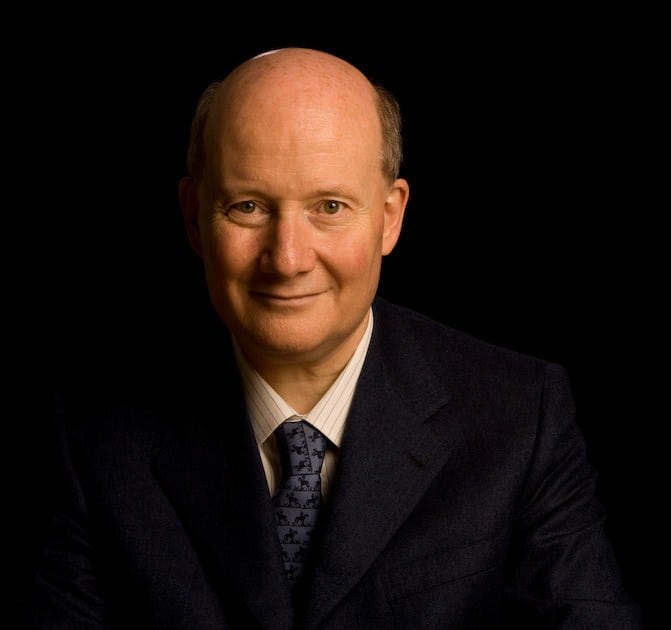
Massimo Introvigne (born June 14, 1955 in Rome) is an Italian sociologist of religions. He is the founder and managing director of the Center for Studies on New Religions (CESNUR), an international network of scholars who study new religious movements. Introvigne is the author of some 70 books and more than 100 articles in the field of sociology of religion. He was the main author of the Enciclopedia delle religioni in Italia (Encyclopedia of Religions in Italy). He is a member of the editorial board for the Interdisciplinary Journal of Research on Religion and of the executive board of University of California Press’ Nova Religio. From January 5 to December 31, 2011, he has served as the “Representative on combating racism, xenophobia and discrimination, with a special focus on discrimination against Christians and members of other religions” of the Organization for Security and Co-operation in Europe (OSCE). From 2012 to 2015 he served as chairperson of the Observatory of Religious Liberty, instituted by the Italian Ministry of Foreign Affairs in order to monitor problems of religious liberty on a worldwide scale.