Three self-reinforcing mechanisms explain why tax authorities still defy a 2007 Supreme Court acquittal, and four reforms could finally break the deadlock after thirty years.
by Cheng-An Tsai*
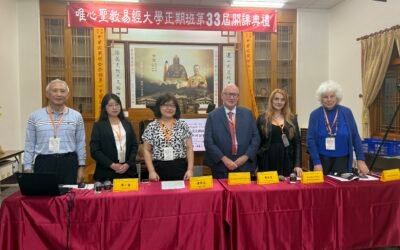
*A paper presented at the session “New Perspectives on the Tai Ji Men Case” of the CESNUR 2026 conference, Taichung, Taiwan, October 12, 2026.

Over the past four decades, Taiwan has undergone one of the most admired democratic transformations in modern political history, evolving from a one-party martial-law regime into a constitutional democracy. Later milestones, including guarantees of press freedom, constitutional judicial review, the incorporation into domestic law of the International Covenant on Civil and Political Rights (ICCPR) and the International Covenant on Economic, Social and Cultural Rights, marriage equality, and frameworks for the protection of victims, have consolidated Taiwan’s standing as a regional leader in human rights and the rule of law.
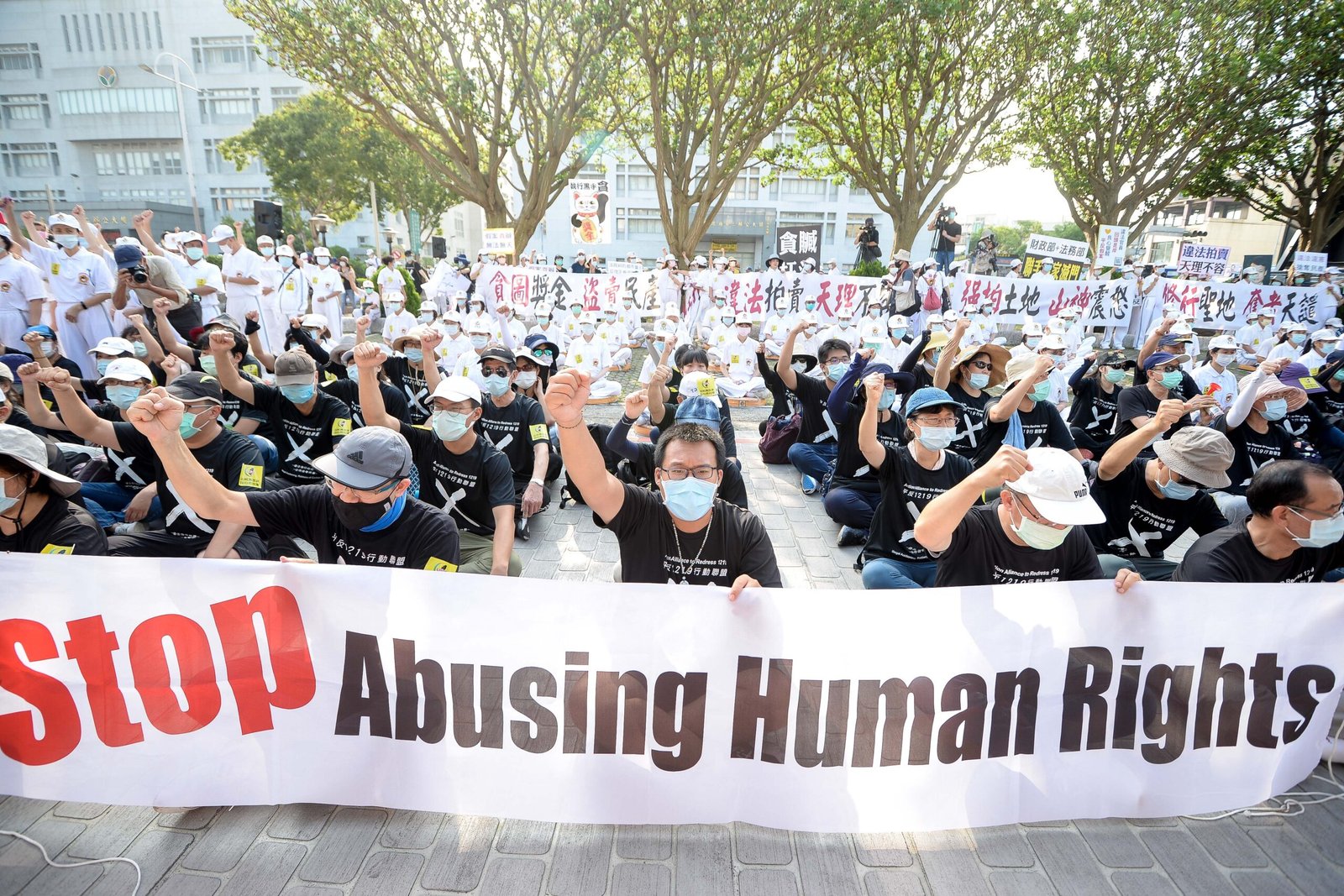
Against this background of democratic maturity stands a persistent legal paradox. Why has the Tai Ji Men case, which began in 1996, attracted international attention, and led Taiwan’s Ombudsman agency, the Control Yuan, to censure the authorities involved, remained unresolved for thirty years? In July 2007, after more than a decade of litigation, Taiwan’s Supreme Court issued a final judgment acquitting all defendants of all criminal charges. It found that there had been neither tax evasion nor fraud, and that the red envelopes given by disciples to their master were gifts, exempt from taxation under Article 4 of the Income Tax Act.
Other authoritative findings pointed the same way. The Control Yuan censured serious illegalities in the prosecution and in the tax audits in 2002 and 2009. In 1997, 1999, and 2000, the Ministry of Education stated that Tai Ji Men is an academy of martial arts and not a cram school. In 2011, an inter-ministerial survey collected 7,401 declarations, all of which confirmed that the payments made by disciples were gifts. The tax authorities nonetheless refused to revoke their tax dispositions. In 2019, the National Taxation Bureau corrected to zero its assessments for five of the six disputed years (1991 and 1993–1996), yet it maintained the 1992 assessment on the basis of a technical administrative court ruling of 2006. This led, in August 2020, to the auction and confiscation of land that Tai Ji Men regards as sacred.
This persistent divergence between judicial exoneration and administrative obstinacy raises the main question of my study: how can a constitutional democracy sustain an administrative human rights violation that openly defies the acquittal pronounced by its highest court? To answer it, I apply the theoretical framework of Institutional Fabrication of Justice (IFJ), combined with System Dynamics modeling.
Socio-legal scholarship on legal failures has traditionally worked within the paradigm of “miscarriages of justice” or wrongful convictions. In this error-based model, judicial and administrative mistakes are understood as unintended, episodic failures occurring within an otherwise functional legal system. Error-centric models fail, however, in situations where state agencies actively construct false factual claims, transmit them from one institution to another, give them procedural form, and defend them indefinitely because of bureaucratic incentives.
To capture this qualitative difference, recent critical scholarship has proposed a paradigm centered on the abuse of power, which Massimo Introvigne and I have analyzed as Institutional Fabrication of Justice. IFJ is a systemic process in which state agencies, driven by post-authoritarian legacies, financial performance bonuses, and bureaucratic self-protection, manufacture false legal allegations and enforce the resulting outcomes in spite of authoritative counter-evidence.
Legal philosophy offers solid foundations for this distinction. In “The Morality of Law,” Lon Fuller argued that a legal system loses its internal morality once official action ceases to match declared rules. Ronald Dworkin emphasized the connection between procedural rights and human dignity, and Robert Cover reminded legal scholars that law always operates in the shadow of violence, which procedure without integrity unleashes. Gustav Radbruch wrote that positive law conflicting with justice to an intolerable degree becomes “statutory lawlessness.” Jeremy Waldron and John Rawls both regarded procedure as an essential component of the rule of law. Procedural justice theory, developed by Tom Tyler, has shown that the legitimacy of institutions depends on how fair their procedures are perceived to be. Fabricated procedures turn legal authority into mere administrative coercion.

The two models can be compared across six dimensions. The error-based model assumes a functional legal system with a normative commitment to truth-seeking, in which failures are accidental and episodic. IFJ assumes instead an operation of structural power, in which the state apparatus manufactures false claims, formalizes them through procedure, and defends them. In the first model, the drivers of injustice are individual cognitive bias, tunnel vision, mistaken eyewitness identification, and technical flaws. In the second, they are post-authoritarian legacies, organizational path dependence, financial bonuses, and bureaucratic self-protection.
The handling of evidence also differs. Miscarriages of justice derive from negligent or mistaken evaluation of evidence and from investigative blunders nobody examined. Institutional fabrication involves coerced perjury, selective suppression of evidence, uncritical adoption of narratives from other agencies, and the reversal of the burden of proof. Between agencies, the error-based model sees independent bodies that fail to detect earlier mistakes because of information asymmetries, whereas IFJ sees an “epistemic coupling” in which the receiving agencies adopt the prosecutors’ narrative without any independent audit.
The two models diverge most sharply in their response to counter-evidence and in their outcomes. In the error-based model, the discovery of proof triggers reinvestigation, reversal on appeal, or a pardon, and the injustice is corrected once the factual error is officially acknowledged. Under IFJ, counter-evidence triggers bureaucratic resistance, recursive legalization, procedural fragmentation, and lock-in. The result is durable administrative repression, in which the state invests institutional resources to protect the fabricated narrative and the production of injustice is distributed among several agencies.
Process-tracing of the thirty-year record shows that the Tai Ji Men case went through four successive stages, each reinforcing the others, through which procedural safeguards were bypassed and an administrative lock-in was created.
The first stage was the construction of a predetermined narrative. It took place in the political climate following Taiwan’s March 1996 presidential election, during which the government launched a crackdown on several spiritual groups. On 19 December 1996, Prosecutor Hou Kuan-jen led raids on Tai Ji Men academies based on anonymous reports. Although no illegal activity was found, Hou drafted an indictment containing a logically impossible double allegation, describing the disciples’ gifts at the same time as “cram school tuition” on which taxes had been evaded and as proceeds of fraud.
In the second stage, the unverified criminal allegations were transmitted to the tax authorities, who adopted them uncritically. Former Control Yuan member Prof. Chi-Mei Chang has identified three structural defects of administrative law in this stage. The first is a violation of statutory competence: under the Tax Collection Act, assessing tax liability belongs exclusively to the tax administration, and the prosecutor’s assertion was therefore an ultra vires act. The second is the abandonment of investigation ex officio: Articles 9 and 36 of the Administrative Procedure Act impose on tax authorities a strict duty to investigate the facts independently, yet the National Taxation Bureau simply copied the prosecutor’s figures. The third is the reversal of the burden of proof: instead of proving tax liability through evidence of actual financial flows, the Bureau required the taxpayers to disprove a fabricated figure. Prof. Chang and certified public accountant Kuang-Hsuan Lin have shown that these defects make the resulting tax dispositions void ab initio under Article 111 of the Administrative Procedure Act.
In the third stage, administrative procedures gave the fabricated narrative an appearance of legal validity. Administrative courts largely deferred to the tax agency’s assertions and did not conduct independent fact-finding. Scholar T.-L. Chen links this persistence to financial incentives: Taiwan’s system of tax enforcement bonuses gives auditors and enforcement officers a direct financial interest in the outcome, generating a strong organizational commitment to defend earlier dispositions, however illegal.
The fourth stage began when the state was confronted with authoritative counter-evidence. Over three decades, Tai Ji Men accumulated overwhelming exculpatory proof: the 2007 Supreme Court acquittal, the Ministry of Education’s declarations, the Control Yuan’s censures of 2002 and 2009, and the 2011 survey with its 7,401 declarations. In 2019, the National Taxation Bureau reduced to zero five of the six disputed assessments. The tax authorities nonetheless isolated the 1992 assessment, kept it alive on the strength of the 2006 procedural ruling, and enforced it through the auction and confiscation of the land in 2020.
The Tai Ji Men case shows how useful System Dynamics, a method developed by scholars such as Donella Meadows and John Sterman, can be for socio-legal analysis. The persistence of this injustice is driven by three interconnected reinforcing feedback loops. In the first, which I call the Narrative Reinforcement Loop (R1), political framing and bureaucratic incentives produce an initial narrative of guilt and embed it in the official memory of the administration. In the second, the Recursive Legitimacy Loop (R2), formal administrative dispositions, appeals, and judicial deference create an appearance of legal validity. Over time, earlier official decisions are used to justify later enforcement, and procedural form takes the place of substantive truth. In the third, the Self-Preservation and Incentive Loop (R3), financial performance bonuses combine with the reputational and legal costs of admitting error to generate strong institutional resistance to correction and an escalating commitment to defend past decisions.

According to standard legal theory, correction mechanisms such as Supreme Court acquittals, Control Yuan censures, and inter-ministerial surveys should form a balancing loop (B1) capable of correcting administrative errors. In the Tai Ji Men case, this Error Correction Loop was blocked and neutralized by procedural fragmentation, which kept the criminal and administrative domains separate, and by the deference of the administrative courts.
The case also reveals a form of administrative path dependence in post-authoritarian Taiwan. Electoral democratization was rapid, yet the bureaucracy retained authoritarian habits, while “negotiated” transitional justice statutes artificially restricted historical review to the period 1945–1992. This cutoff created a legislative blind spot that shields post-1992 administrative purges from transitional justice scrutiny and allows low-visibility administrative repression to survive within a democratic order.
The thirty-year controversy violates core international human rights norms that Taiwan has incorporated into its domestic law. Taxing the disciples’ gifts infringes freedom of religion or belief, protected by Article 18 of the ICCPR and of the Universal Declaration of Human Rights. Judicial deference to tax agency reports violates the rights to a fair trial and to an effective remedy, under Articles 14 and 2(3) of the ICCPR. The arbitrary isolation of the 1992 assessment breaches the principle of equality in Article 26 of the ICCPR, and the confiscation of the land violates the right to property recognized by Article 17 of the Universal Declaration.
Four concrete measures would resolve the case and uphold Taiwan’s constitutional democracy. First, under Article 117 of the Administrative Procedure Act, the Executive Yuan and the Ministry of Finance have full legal authority to revoke ex officio dispositions that are void ab initio because of grave defects under Article 111, and they should exercise it. Second, the Legislative Yuan should abolish tax enforcement bonuses, eliminating a structural conflict of interest. Third, it should amend the transitional justice statutes to cover administrative abuses committed after 1992, allowing truth-seeking and the return of confiscated property. Fourth, the judiciary should apply the effective remedy standard of Article 2(3) of the ICCPR, requiring administrative courts to conduct their own fact-finding instead of deferring to tax agency reports.
The Tai Ji Men case is a valuable diagnostic study for contemporary legal and political scholarship. It shows that democratic elections and formal judicial reforms are insufficient to guarantee human rights as long as post-authoritarian administrative bureaucracies remain locked in self-reinforcing loops of power-driven fabrication. Once state apparatuses engage in Institutional Fabrication of Justice, legal procedures stop working as safeguards and degenerate into instruments of administrative coercion. If Taiwan wants to keep its well-deserved international reputation as a regional leader in human rights, its leaders should exercise political conscience and legal authority to revoke the void 1992 tax disposition, return the confiscated land, and restore full justice and dignity to Tai Ji Men.

Tsai Cheng-An received his Ph.D. in Technology Management from National Chengchi University and his MS in Industrial Engineering from National Tsinghua University in Taiwan. He teaches innovation management, business model analysis, and new business development strategies at Shih Chien University, Taipei, Taiwan. Prior to his academic career, he had 18 years of practical experience in the industry, and his research interests are in decision making, business model innovation, and corporate entrepreneurship, as well as in the area of transitional justice and freedom of religion or belief. He has published in the International Journal of Entrepreneurial Behaviors & Research (SSCI), Technology Analysis and Strategic Management (SSCI), Logistics (SCIE), Management Review (TSSCI), Journal of Management (TSSCI), Sun Yat-sen Management Review (TSSCI), Journal of Science and Technology Management (TSSCI) and Forum for Industry and Management (TSSCI).