A Chinese Christian explains that obtaining a Bible legally is difficult—and getting one illegally will land you in jail.
by Vivian Ren
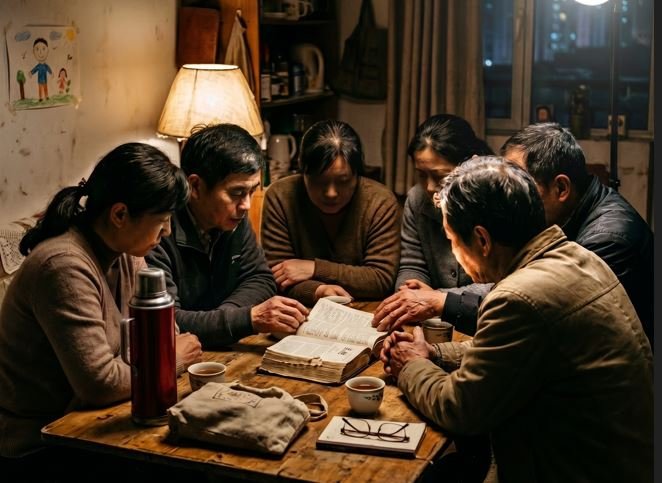
In China, the versions of the Bible used by house church Christians for daily reading and fellowship are strictly controlled under current religiouspolicy regulations. This has become a practical challenge for many ordinary believers. The authorities authorize only the Amity Printing Company in Nanjing to print Bibles, with an annual domestic quota of about two million copies, and all distribution must occur through the ThreeSelf Patriotic Movement system. Any nonofficial edition, or any Bible printed or distributed privately, is treated as a violation of the Criminal Law—either “illegal business operations” under Article 225 or “using a xie jiao organization to undermine law enforcement” under Article 300.
In 2025, ten believers in Inner Mongolia, including Wang Honglan, were charged with “illegal business operations” simply for subsidizing the sale of official Bibles. Several were sentenced to three to five years in prison and fined heavily. Because unregistered house church Christians do not belong to the ThreeSelf system, they often cannot obtain enough Bibles. They must rely on older Union Version copies circulated within small circles, or cautiously bring limited materials from relatives overseas.
One house church member described her experience: “We only hope to read the Bible quietly at home or in small gatherings and share. But whenever a meeting is raided, the Bible is usually the first item confiscated. When children see their parents hiding the Bible, they ask, ‘Why do we have to hide it? Wouldn’t it be easier to keep it on the shelf?’ The parents can only explain helplessly that this is how things are now.” Similar situations exist across the country. In recent years, some believers have been interrogated or sentenced simply for possessing or sharing nonofficial Bible materials.
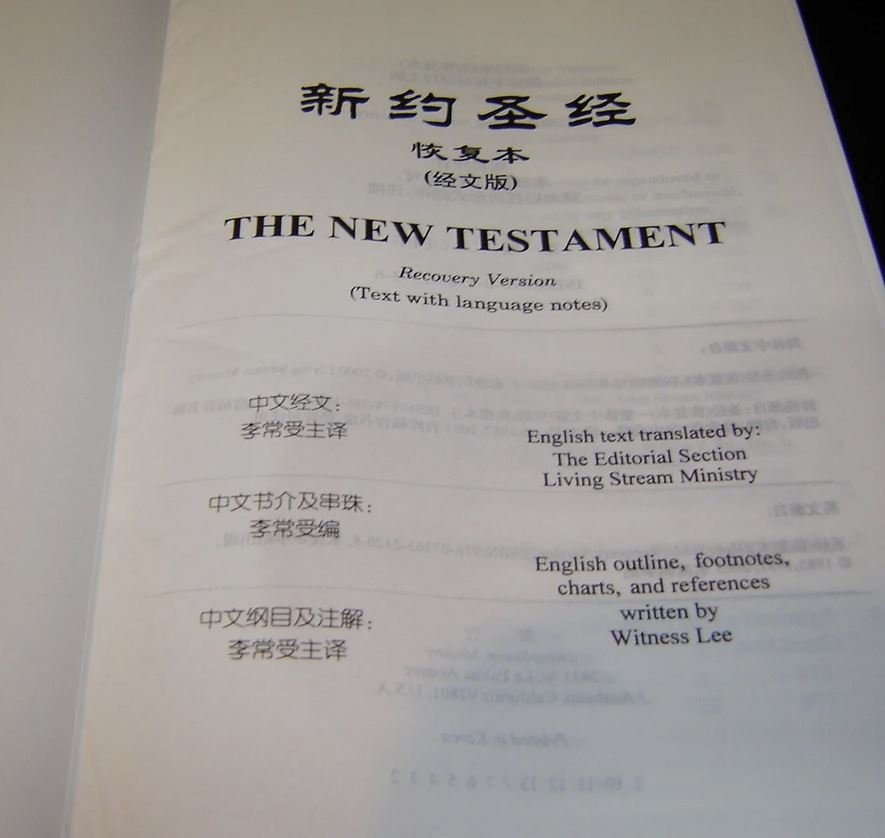
The “Recovery Version” of the Bible, in particular, is widely used among Local Church believers because of its emphasis on orthodox biblical teaching and the traditions of the Local Churches. But after a 1995 administrative document associated this version with a specific group, both the “Recovery Version” and its companion materials have been tightly restricted in practice. In 2021, Nanchang Local Church elder Pan Zizheng and believer Huang Hua were sentenced to three years and six months, and three years and three months, respectively, because their meeting materials included the “Recovery Version” and related publications—204 items in total. Cases like this show the risks that may arise from using certain Bible editions.
Since 2025, policies related to the “Sinicization of religion” have continued to advance, and regulations on online religious information have been further clarified. Bible apps and online study resources now face increased restrictions. House church believers generally feel the dual pressure of an insufficient supply of Bibles and the risk of possessing sensitive materials. Even so, they continue to follow the biblical teaching not to “give up meeting together,” gathering in small and discreet ways to maintain their spiritual life.
Most believers are lawabiding citizens, yet because they choose to read and use Bible versions outside the official system, they are labeled “illegal.” Documenting these policies and cases helps the international community better understand the real conditions under which ordinary Christians in China practice their faith. It is hoped that through continued dialogue and attention, more house church believers will one day be able to use the Bible and live out their faith securely within a legal framework—without the added burden of fear and risk.

Uses a pseudonym for security reasons.