Miranda Fricker’s categories help explain who was believed, who was silenced, and who was entitled to define the meaning of red envelopes in a three-decade Taiwanese controversy.
by Karolina Maria Kotkowska*
*A paper presented at the session “New Perspectives on the Tai Ji Men Case” of the CESNUR 2026 conference, Taichung, Taiwan, October 12, 2026.

Taiwan is the home of Tai Ji Men, or perhaps I should say its first home, since, as we all know, Tai Ji Men now has academies in many places around the world. I would like to offer a fresh perspective on the Tai Ji Men case from a theoretical point of view. I am a philosopher who initially specialized in ontology, ethics, and philosophical anthropology, and only later began conducting research in cultural anthropology and the study of religion. I have always looked for categories of description and interpretation that may open interesting theoretical perspectives at the intersection of different fields of research. Although all these fields belong to the humanities and social sciences, they very often remain, in a sense, separated from one another.
While reading about issues of social injustice, I came across a category known as epistemic injustice. Epistemic injustice is, of course, a category from the field of epistemology. However, I am a scholar of religion working primarily on esotericism and new religious movements (NRMs). When I first encountered the term, one of my first associations was with NRMs, spirituality, and the various problems experienced by their members, including the accusation of “brainwashing.” I therefore decided to examine two things: to what extent this concept corresponded to some of my own intuitions, and to what extent scholars working with the category of epistemic injustice actually take religion, and particularly new religious movements, into account.
Let me spare you the suspense. The concept initially focused mainly on race and gender. Religion did appear as a category in analytical discussions, including later in the handbook published ten years after the concept was systematically formulated. However, it appeared primarily in relation to monotheistic religions, and only as a possible category of analysis rather than through concrete examples. Bringing epistemic injustice into dialogue with the study of new religious movements therefore seems to require a separate and more in-depth study. I will not go into this in much detail today, but I would like to use this category as an analytical perspective that, I hope, will also shed new light on the Tai Ji Men case.
The term epistemic injustice emerged in Miranda Fricker’s earlier work on the relationship between rational authority and social power and on the role of virtue in the politics of knowing. She then developed the concept systematically in her book “Epistemic Injustice: Power and the Ethics of Knowing,” published by Oxford University Press in 2007.
Of course, neither the concept nor this research emerged in an ideological vacuum. They developed from discourses elaborated within feminist epistemology, standpoint theory, the epistemology of testimony, and virtue epistemology. They also drew on various analyses of power relations, mechanisms of marginalization, and the social construction of knowledge (the sociology of knowledge).
Fricker begins by distinguishing epistemic injustice from other forms of injustice involving epistemic goods, such as information or education. Her concern is specifically with “two forms of epistemic injustice that are distinctively epistemic in kind.” She defines epistemic injustice, most fundamentally, as “a wrong done to someone specifically in their capacity as a knower.” She emphasizes that social position can shape a person’s epistemic situation and, under certain conditions, place them at an unfair epistemic disadvantage: “social disadvantage can produce unjust epistemic disadvantage.” The aim of the book is to bring to light the “first-order ethics of epistemic practice,” that is, the ethics of our everyday epistemic practices.
Fricker distinguishes two forms of epistemic injustice. Testimonial injustice occurs when prejudice causes a hearer to give a speaker less credibility than they deserve. Hermeneutical injustice occurs when a gap in collective interpretive resources puts someone at an unfair disadvantage in making sense of their social experiences.
Religion appears here as one of the possible dimensions through which prejudice may operate. Fricker distinguishes between “incidental” and “systematic” testimonial injustice. The latter occurs when prejudice operates beyond a single situation and “tracks” a person across different areas of social life: “Systematic testimonial injustices, then, are produced not by prejudice simpliciter, but specifically by those prejudices that ‘track’ the subject through different dimensions of social activity—economic, educational, professional, sexual, legal, political, religious, and so on.”
She emphasizes that being subject to such a “tracker prejudice” makes a person vulnerable to other forms of injustice as well. Testimonial injustice thus becomes systematically connected with other actual or potential injustices.
Fricker uses the term “identity prejudice” for the main kind of prejudice that tracks people in this way: “The main type (the only type?) of prejudice that tracks people in this way is prejudice relating to social identity. Let us call this sort of prejudice identity prejudice.” She further stresses that “The influence of identity prejudice in a hearer’s credibility judgement is an operation of identity power.” As we can see, Fricker explicitly identifies religion as one of the dimensions through which such prejudice may operate and be analyzed. However, she does not develop this dimension further in the book.
One of the most interesting concepts here is pre-emptive testimonial injustice, described in Chapter Six, “Original Significances: The Wrong Revisited.” It allows us to analyze situations in which a group is regarded as so lacking in credibility that its members are not even admitted as potential sources of knowledge. Fricker points out that exclusion need not consist in someone being heard but not believed, because prejudice may operate earlier: “those social groups who are subject to identity prejudice and are thereby susceptible to unjust credibility deficit will, by the same token, also tend simply not to be asked to share their thoughts, their judgements, their opinions.”
She then defines this form of injustice: “This kind of testimonial injustice takes place in silence. It occurs when hearer prejudice does its work in advance of a potential informational exchange: it pre-empts any such exchange. Let us call it pre-emptive testimonial injustice. The credibility of such a person on a given subject matter is already sufficiently in prejudicial deficit that their potential testimony is never solicited; so the speaker is silenced by the identity prejudice that undermines her credibility in advance.”
Fricker immediately adds that this is a structural operation of identity power: “Thus purely structural operations of identity power can control whose would-be contributions become public, and whose do not.”
The category of pre-emptive testimonial injustice can be combined with Fricker’s explicit mention of religion as a dimension of systematic testimonial injustice. I believe this combination allows me, quite legitimately, to apply the framework to religious groups, and particularly to new religious movements.
In “The Routledge Handbook of Epistemic Injustice,” published ten years later, in 2017, religion appears as a distinct area of application of the concept. In his chapter “Epistemic Injustice and Religion,” Ian James Kidd examines various ways in which religious persons and groups can be both perpetrators and victims of epistemic injustice. He also notes that Fricker mentions religion as one of the dimensions of social activity through which prejudice can “track” a person, but does not develop this aspect further.

Kidd emphasizes that the literature on epistemic injustice and religion remains relatively modest. His own analysis focuses primarily on the major monotheistic religions that are culturally dominant in the modern West. At the same time, he points to the possibility of epistemic injustice affecting certain religious groups. Some may be negatively stereotyped and consequently suffer a prejudicial deflation of their credibility. Others may have their practices and experiences rendered hermeneutically opaque in a society lacking adequate resources for understanding religion.
This is important for my argument because it shows that religion has already been explicitly incorporated into the discussion of epistemic injustice, while new religious movements have not yet been addressed as a distinct object of analysis.
Readers are familiar with the events involving Dr. Hong Tao-Tze, the Shifu (Grand Master) of Tai Ji Men, and his dizi (disciples) over the past three decades. I will therefore omit the history of the case and move directly to examining it through the lens of epistemic injustice. It should be emphasized, however, that harm inflicted intentionally does not fall under this category. I therefore treat intentional harm, including political or institutional decisions, as a separate matter. The epistemic injustice perspective can nonetheless help us analyze other aspects of the case, particularly the social perception of Tai Ji Men, the representation of the group in the media, and the possible influence of these representations on the credibility attributed to its members.
The media campaign at the beginning of the case reached enormous proportions. As Massimo Introvigne has summarized, in 1996–1997 more than 400 newspaper articles and more than 70 television programs repeated the portrayal of Tai Ji Men disseminated by Prosecutor Hou Kuan-Jen. Among the claims circulated was the absurd accusation of “raising goblins.” It was one of many factors that contributed to the sensationalism surrounding the case and to a false image of the group. Referring to these hundreds of newspaper articles and dozens of television programs, Willy Fautré noted that they presented Tai Ji Men as a “dangerous cult.” He also pointed to their use of terms such as “cult,” “religious fraud,” and “brainwashing.”
From the perspective of epistemic injustice, the important question is how such messages affected the credibility economy. Members of the group may be presented primarily as belonging to a “cult,” as involved in “religious fraud,” or as part of a group that uses “brainwashing.” In that case, their statements may be received through the prism of prejudice against the group itself. In other words, the question is not only whether members of the group are telling the truth, but also whether their affiliation with Tai Ji Men affects the credibility attributed to their words.
Here we can see the connection with what Fricker calls identity prejudice and identity power.
Systematic testimonial injustice arises when prejudice “tracks” a person through different areas of social life, and religion is one of the dimensions Fricker explicitly mentions. In the case of Tai Ji Men, we can therefore hypothesize that the negative social construction of the group’s identity affected the epistemic status of its members as well as its general image. The case is particularly unusual in that it has continued for decades, so the passage of time becomes an additional factor in this epistemic burden.
Another interesting example, described among others by Alessandro Amicarelli, concerns the so-called “victims’ association.” Amicarelli reported that Prosecutor Hou was suspected of encouraging the establishment of an organization of people claiming to have been harmed by Tai Ji Men, and of subsequently using this organization to support the case. Later proceedings revealed that its lists contained three kinds of names: those of deceased persons, those of people who had not agreed to have their names used, and those of individuals who later admitted that their claims were false. Amicarelli also emphasized that the media tend to accept claims made by “victims” of new religious movements more readily than positive testimonies from members of the groups themselves. The example of the “victims’ association” is not in itself an instance of epistemic injustice, because it involved deliberate manipulation of data. What it reveals, however, is directly relevant: an asymmetry in the social distribution of credibility, in which some testimonies are readily accepted while others are immediately called into question.
The second category of epistemic injustice identified by Fricker is hermeneutical injustice. In the case of Tai Ji Men, I think we can examine from this angle the issue of the red envelopes, the traditional gifts that became central to the tax case. Tiffany Fang, a Tai Ji Men dizi presenting an emic perspective, described the envelopes as a “gift of respect” given by dizi to the Shifu upon joining Tai Ji Men. She explained that this gift belongs to a master–disciple relationship which, within Tai Ji Men, takes the form of a long-term personal bond. In the tax dispute, however, the National Taxation Bureau treated the same money as taxable tuition fees paid to an alleged cram school. The central conflict in the case therefore concerned the meaning of this money, regarded by one side as gifts and by the other as tuition fees.
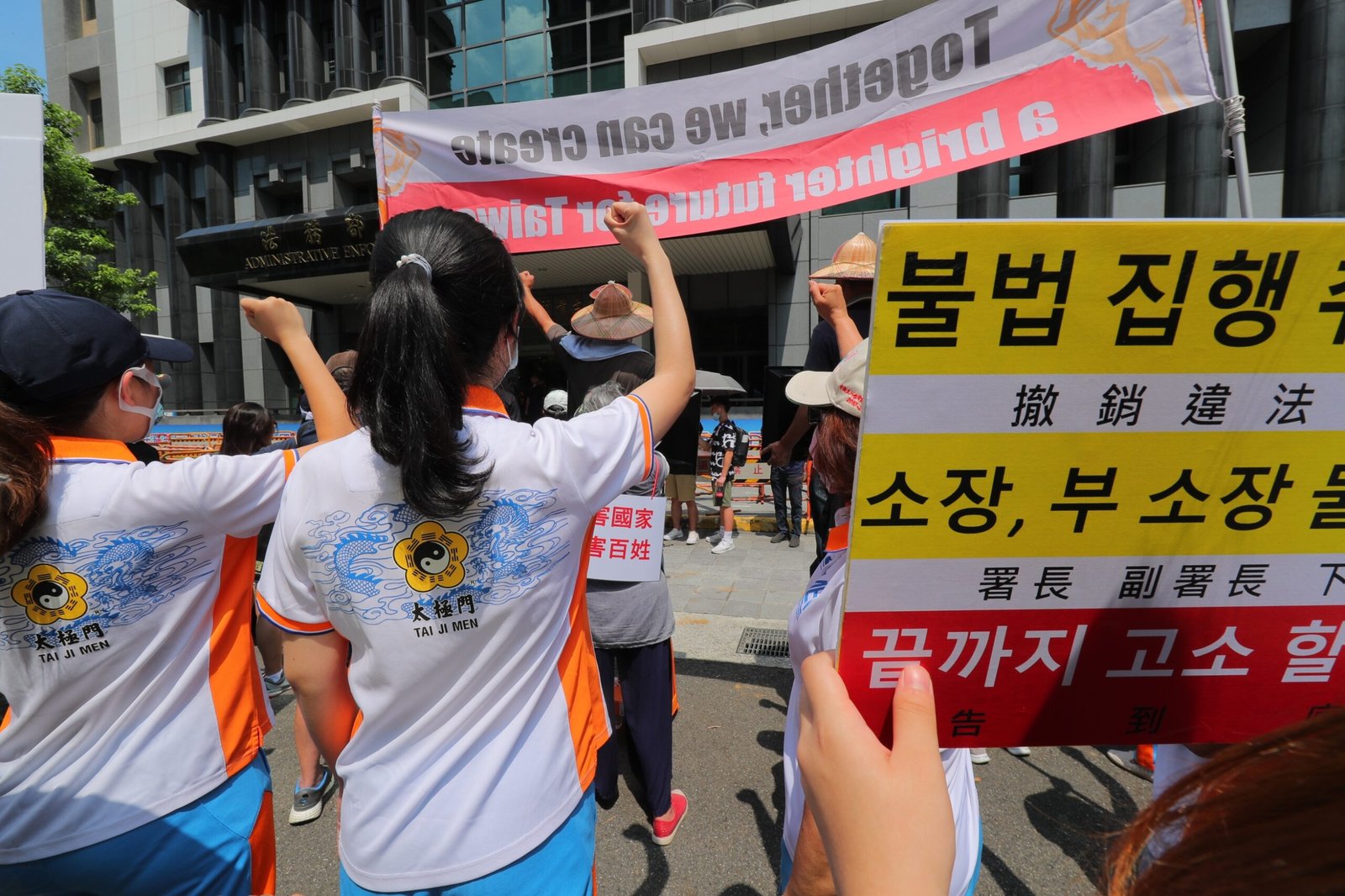
María Vardé has analyzed the same problem. Her argument is particularly useful here because it shows that the change in meaning was not limited to the envelopes. She underlines that Tai Ji Men is a menpai (similar to a school) combining a master–disciple relationship, bodily and spiritual practices, and a community. The state apparatus nonetheless translated it into the category of a “cram school,” to which it cannot be reduced. As a result, the complex dizi–Shifu relationship was transformed into a teacher–student one. In her view, this transformation, like the treatment of the red envelopes as tuition payments or taxable income, was a “categorical misfit.”
This approach allows us to formulate a problem that can be analyzed in terms of hermeneutical injustice: what happens when the experiences and practices of a group cannot be adequately interpreted within the categories employed by dominant institutions? In the case of Tai Ji Men, the difference in meaning (gift of respect versus tuition, for example) is highly significant. The problem is that one interpretation becomes institutionally effective, while the other is pushed to the margins. The two meanings are not treated as epistemically equivalent.
A similar problem can be observed with “raising goblins,” the sensational accusation directed against Tai Ji Men in 1996 mentioned above. Here, an external interpretation was imposed on the group’s practices, although it had nothing to do with them. Other terms used to describe the group included “black magic” and “cult.” This presumably also influenced the credibility attributed to the group. An interesting question arises here, and it will also concern many cases involving NRMs. What interpretive resources enabled audiences then, and enable them today in the age of new media, to understand the practices of Tai Ji Men and other groups beyond the imposed categories? In other words, the question concerns the epistemic gaps within the audience.
Fricker links this category to a gap in collective interpretive resources that places particular people at an epistemic disadvantage. I would hypothesize that a lack of knowledge about religions, in the plural, is to a large extent responsible for hermeneutical injustice toward new religious movements. The wider public lacks the tools for the comparative study of religions and, because of this epistemic gap, can very easily turn a random element into a sensation.
The use of epistemic injustice is not the first attempt to identify the epistemic dimension of the case. One analysis of some of its aspects is Massimo Introvigne’s “What Is Truth? An Eternal Question and the Tai Ji Men Case,” which connects the problem of truth with religious freedom. The category of epistemic injustice, however, plays a somewhat different role. It allows us to identify two mechanisms that deserve attention in questions of religion and spirituality. The first concerns how religious identity influences the credibility attributed to a group’s members (who is believed?). The second concerns whether the practices of a given group can be adequately understood within the interpretive categories available to a wider audience (who gets to define what the experience means?). It also asks whether, in the absence of such categories, those practices are recategorized and thereby deprived of their original meaning.

Karolina Maria Kotkowska is an Assistant Professor in the Centre for Comparative Studies of Civilizations, Jagiellonian University, Kraków, Poland. She holds PhD in Philosophy and works on her PhD in Sociology. She specializes in New Religious Movements and Western Esotericism in Central and Eastern Europe.