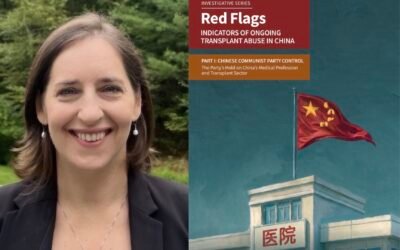
The second report by Sarah Cook revisits a 2022 peer-reviewed paper documenting how doctors exploit political prisoners while advancing their careers amid a genocide.
by Marco Respinti
One would reasonably expect a study published in a prestigious specialist journal to be taken seriously; its deeply troubling findings for morality and professional ethics to cause an outcry; and its international denunciations to elicit responses and official positions worldwide. Above all, one would expect serious consequences to follow from evidence that a country is at the center of the human-harvesting scandal—a country with which the rest of the world maintains substantial trade and business relations, despite a few token expressions of disapproval. But no. Silence reigns.
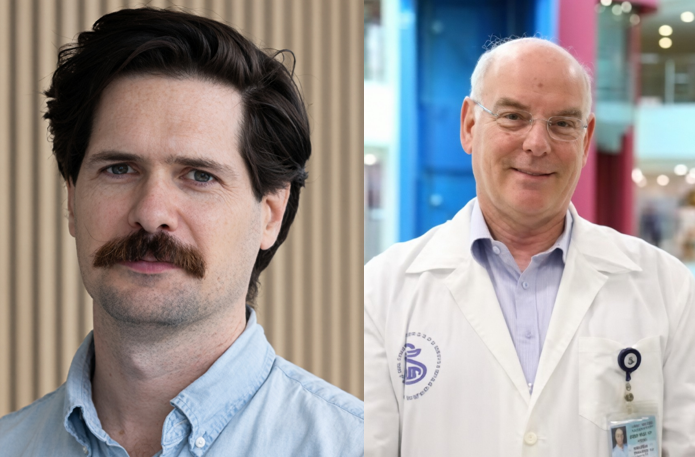
This moral hypocrisy is what one can infer from the fate of an important study that went unnoticed. In the July 2022 issue of the “American Journal of Transplantation,” Matthew P. Robertson and Jacob Lavee published a peer-reviewed study entitled “Execution by Organ Procurement: Breaching the Dead Donor Rule in China.” Robertson was then a Ph.D. student in political science at the Australian National University in Canberra and a China Studies Research Fellow with the Washington-based Victims of Communism Memorial Foundation; Lavee, a cardiac transplant surgeon, is the founder of the Heart Transplantation Unit at the Sheba Medical Center in Ramat Gan, Israel, a hospital affiliated with the Faculty of Medical and Health Sciences at Tel Aviv University.
Horrors and crimes
Their “[…] study used computational text analysis to systematically examine 2,838 Chinese-language medical papers on heart and lung transplantation drawn from a dataset of over 124,000 publications.” What they discovered and denounced is devastating. It concerns the horrors and crimes committed in the People’s Republic of China (PRC) through organ harvesting. “Yet in the more than three years since publication, almost no consequences have followed.” In fact, “[n]o Chinese medical authority, hospital or professional body has announced an investigation into the institutions or individuals named. No surgeon identified in the study’s appendix has faced disciplinary proceedings, licence review or any other form of professional sanction. No statement has been issued by China’s National Health Commission acknowledging the findings or launching an inquiry. There has also been no direct public response or rebuttal to the paper from Chinese officials or medical associations.”
The only reaction to Robertson and Lavee is a 2026 paper by two leading Chinese transplant officials and a foreign co-author, which cites the Robertson and Lavee study in a footnote “[…] with language in the main text that dismisses its findings as an example of ‘misunderstandings, criticism, and misinterpretations’ of China’s transplant system. Whether every author was physically present at every procedure, the association with a paper describing problematic brain death declarations is itself a serious breach of professional ethics. Moreover, the timing of the procedures means they almost certainly also entailed physician participation in the execution of prisoners.” Outside the PRC, the institutional response has also been limited.
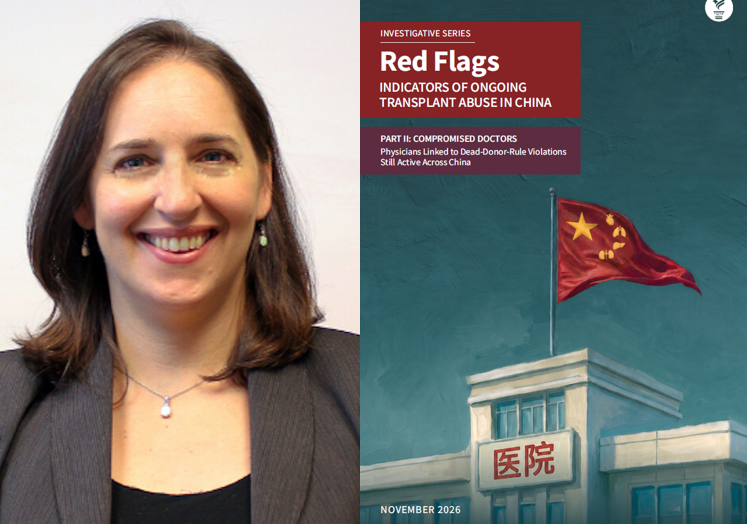
Quite aptly, the Robertson–Lavee study has now been brought back to public attention by PRC-studies expert Sarah Cook in her new investigative report (which is the source of all the direct quotations used so far), the second in the recently launched series, “Red Flags: Indicators of Ongoing Transplant Abuse in China,” published by the Australian NGO “International Coalition to End Transplant Abuse in China” (ETAC). The first of Cook’s reports came out in mid-October 2026 under the title “Part 1: Chinese Communist Party Control. The Party’s Hold on China’s Medical Profession and Transplant Sector” and showed that the PRC’s claim to have carried out reforms in the field so substantial as to completely eliminate the problem is simply false. The second, entitled “Part 2: Compromised Doctors. Physicians Linked to Dead-Donor-Rule Violations Still Active Across China,” was published this November and elaborates further on the main topic, adding details on the medical personnel who, as members of the Chinese Communist Party, officially admitted serious violations in human organ transplant procedures that resulted in crimes, and who received substantial career rewards from the regime for it.
Donor’s death caused by the organ retrieval
The first and indispensable principle of transplant medicine is what is known as the “dead donor rule.” Following Robertson and Lavee, Cook’s new report begins with this principle and formulates it in plain and unequivocal terms: “organ procurement must not commence until the donor has been declared dead, and the act of organ retrieval itself must not be the cause of death.” Any departure from this fundamental golden rule constitutes a crime. “Yet in China,” Cook writes, “available evidence indicates that transplant surgeons have violated both prohibitions.”
Robertson and Lavee identify “[…] 71 papers published between 1980 and 2015 containing descriptions of problematic brain death declarations. These papers came from 56 hospitals (including 12 military hospitals) in 33 cities across 15 provinces, spanning the length of the country […]. A total of 348 medical workers, including surgeons, anaesthesiologists and nurses, were listed as authors on these publications.”
The research shows that several papers describe “[…] unusual features of the procurement sequence in detail.” Some of the examples collected suggest that procurement was performed “[…] in conditions far removed from a standard hospital setting.” And “[m]any of the papers reference multiple donors or the young age of those donors.” In “[…] these and the other 69 cases, the surgical sequence described precludes a legitimate prior determination of brain death.” In all cases, “[…] the procedures surrounding heart or lung procurement indicated that a proper brain death determination had not occurred, meaning that the donor’s death had been caused by the organ retrieval.”
Findings almost certainly represent an undercount
Three further considerations suggest that the cases examined, far from being isolated incidents, are evidence of an established, extensive, and pervasive practice.
First, “[t]he geographic spread of the implicated institutions is striking. The 56 hospitals identified by Robertson and Lavee span 15 provinces from Heilongjiang in the northeast to Guangdong in the south, encompassing both elite academic medical centres and provincial civilian and military hospitals. That distribution points to a nationwide practice, rather than a problem confined to a few institutions.”
Second, “[t]he timing of most of the papers’ publication is also significant. While the dataset spans 1980 to 2015, three-quarters of the problematic papers were published after 1999, the year that the CCP banned Falun Gong, a Buddhist qigong and spiritual practice. A large subset of those papers was published in the period from approximately 2002 to 2010 […]. This timing coincides with what independent researchers, the China Tribunal and a substantial body of investigative evidence identify as a period of intensive forced organ harvesting in China, during which Falun Gong practitioners are believed to have been a primary and, at times, the predominant source of organs for transplantation. It is highly likely then that the dead-donor-rule violations documented in these papers victimized not only convicted death row criminals but also prisoners of conscience.”
Third, Robertson and Lavee “[…] explicitly state that their findings almost certainly represent an undercount, given the narrow specificity of the clinical language they extracted. Many papers that described similar surgical sequences but used slightly different terminology were excluded.”
No accountability, and career rewards
The names of the same authors recur on two or more of the problematic papers under review, and this is serious. In fact, “[a] single paper with a problematic brain death declaration might, in principle, reflect limited involvement in a specific procedure, although it still implies awareness of the practice by co-authors. Appearing on multiple such papers, sometimes spanning several years, suggests repeated participation in or condoning of procurement practices that violated the dead donor rule.” This points to a system, premeditation, and routine practice: “[…] a systemic rather than a marginal problem in China’s medical profession and transplant sector,” Cook writes.
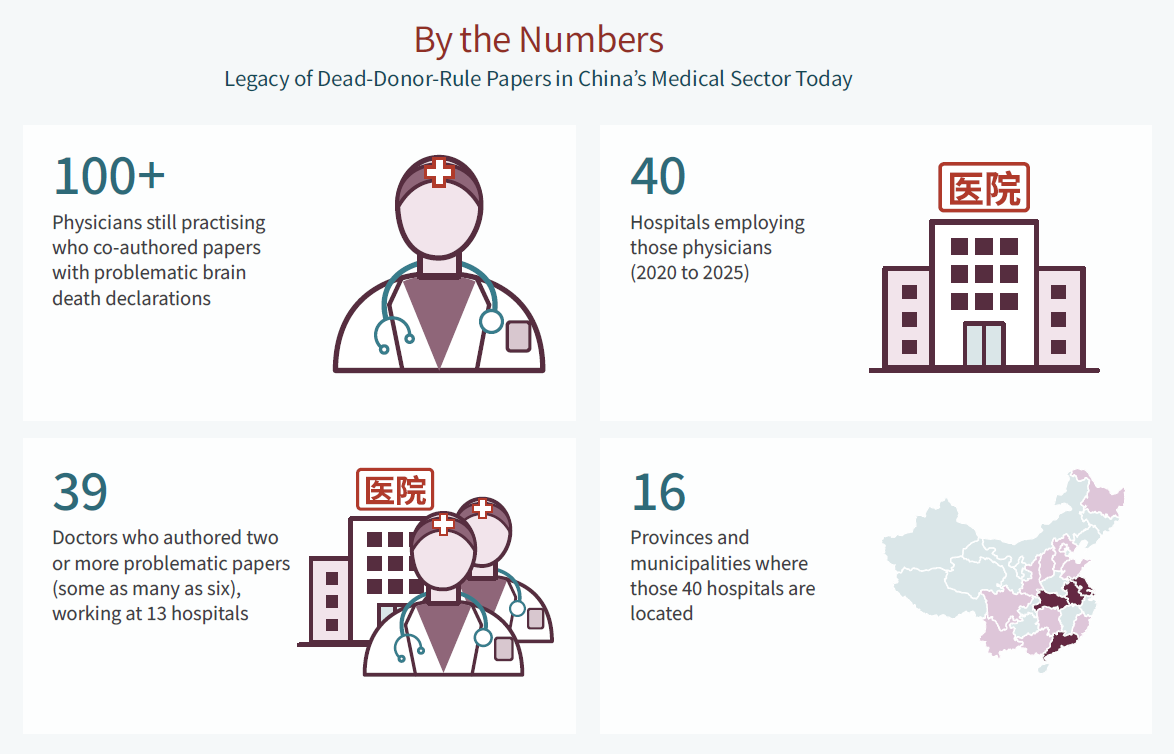
The 2022 Robertson–Lavee study names no fewer than 348 doctors and other medical staff as authors of papers presenting problematic (to say the least) brain death declarations. And these people have received career rewards. Of the identified “[…] 348 surgeons, nurses, anaesthesiologists, other medical staff and researchers as authors of the 71 problematic papers” studied by Robertson and Lavee, at least 100 of those authors, from across 16 provinces, “have been found to be professionally active at Chinese hospitals and medical institutions within the past six years.” “At a minimum,” Cook observes, “named authors were aware of and publicly associated themselves with the procurement practices described.” Also, “[o]f the 53 recurring authors, the majority (74%, 39 individuals) have confirmed current institutional affiliations.” Four case studies—in Beijing, Wuhan, Guangzhou, and Jiangsu—scrupulously analyzed in Cook’s report, show that “[d]espite this diversity, there exists a common thread: the absence of any documented accountability process and the uninterrupted professional advancement of the named authors.”
The word that no one dares to say
One further element is crucial in this scenario. Cook writes that the period under examination, 1980–2015, was one “[…] during which, by the Chinese Government’s own admission, voluntary organ donors constituted a negligible fraction of total transplant volume and effectively all organ donors were prisoners.” For this reason, Robertson and Lavee conclude, and Cook reiterates, “[…] that the donors in these cases were almost certainly prisoners. It follows, they argue, that in each of these 71 cases, assuming the authors’ depiction of the surgery in the papers is accurate, then the ‘heart and lung procurement by the surgeon was the proximate cause of the prisoner’s death, thus directly implicating the surgeon in the execution’.”
This confirms a tragedy within a tragedy: the victims of organ harvesting in the PRC are selected by the regime from among those labeled “prisoners of conscience,” “political prisoners,” or similar designations. They are, in fact, people who are persecuted for a variety of reasons, chief among them their membership in a non-Han ethnic group or their religious affiliation. They thus constitute a group of human beings (prisoners) made up of several other groups (ethnic and religious). The ideological arbitrariness of creating such a group of groups and targeting it casts new light on an issue that urgently needs to be properly addressed but has so far received insufficient attention. The entire machinery of organ harvesting amounts to the word that no one dares to say: genocide—the deliberate and systematic extermination of a group of human beings first constructed and then perceived as distinct from the rest of humanity.
The current definition of genocide under the Convention on the Prevention and Punishment of the Crime of Genocide (CPPCG) excludes culture as a criterion for establishing the genocidal intent of perpetrators against a particular human group. It also excludes any other criterion beyond those listed in the text adopted by the United Nations General Assembly on December 9, 1948: “In the present Convention,” Article II states, “genocide means any of the following acts committed with intent to destroy, in whole or in part, a national, ethnical, racial or religious group.” Thus, the organized, systematic, and intentional extermination of a targeted human group identified by its perpetrators on the basis of other criteria is not recognized as genocide. Attempts to wipe out entire peoples identified by their culture or language, as well as attempts to exterminate human groups identified by their killers on political or economic grounds, do not fall within the Convention’s definition of genocide.
Yet in the PRC, the designations “prisoners of conscience,” “political prisoners,” or similar terms identify a specific category of human beings that the regime itself constructs according to its own criteria—a category comprising people who may otherwise differ in ethnicity, religion, language, and culture—and then butchers for organ harvesting. The intention to use this specific, albeit fictitious, category of people—“political prisoners” and equivalent designations—as a depot of spare human parts is therefore evidently genocidal, even if it has not (yet) been formally identified as such.

Marco Respinti is an Italian professional journalist, member of the International Federation of Journalists (IFJ), author, translator, and lecturer. He has contributed and contributes to several journals and magazines both in print and online, both in Italy and abroad. Author of books and chapter in books, he has translated and/or edited works by, among others, Edmund Burke, Charles Dickens, T.S. Eliot, Russell Kirk, J.R.R. Tolkien, Régine Pernoud and Gustave Thibon. A Senior fellow at the Russell Kirk Center for Cultural Renewal (a non-partisan, non-profit U.S. educational organization based in Mecosta, Michigan), he is also a founding member as well as a member of the Advisory Council of the Center for European Renewal (a non-profit, non-partisan pan-European educational organization based in The Hague, The Netherlands). A member of the Advisory Council of the European Federation for Freedom of Belief, in December 2022, the Universal Peace Federation bestowed on him, among others, the title of Ambassador of Peace. From February 2018 to December 2022, he has been the Editor-in-Chief of International Family News. He serves as Director-in-Charge of the academic publication The Journal of CESNUR and Bitter Winter: A Magazine on Religious Liberty and Human Rights.