A webinar held on the eve of September 21 brought together scholars and dizi to discuss peace, justice, and Taiwan’s long-running Tai Ji Men controversy.
by Daniela Bovolenta
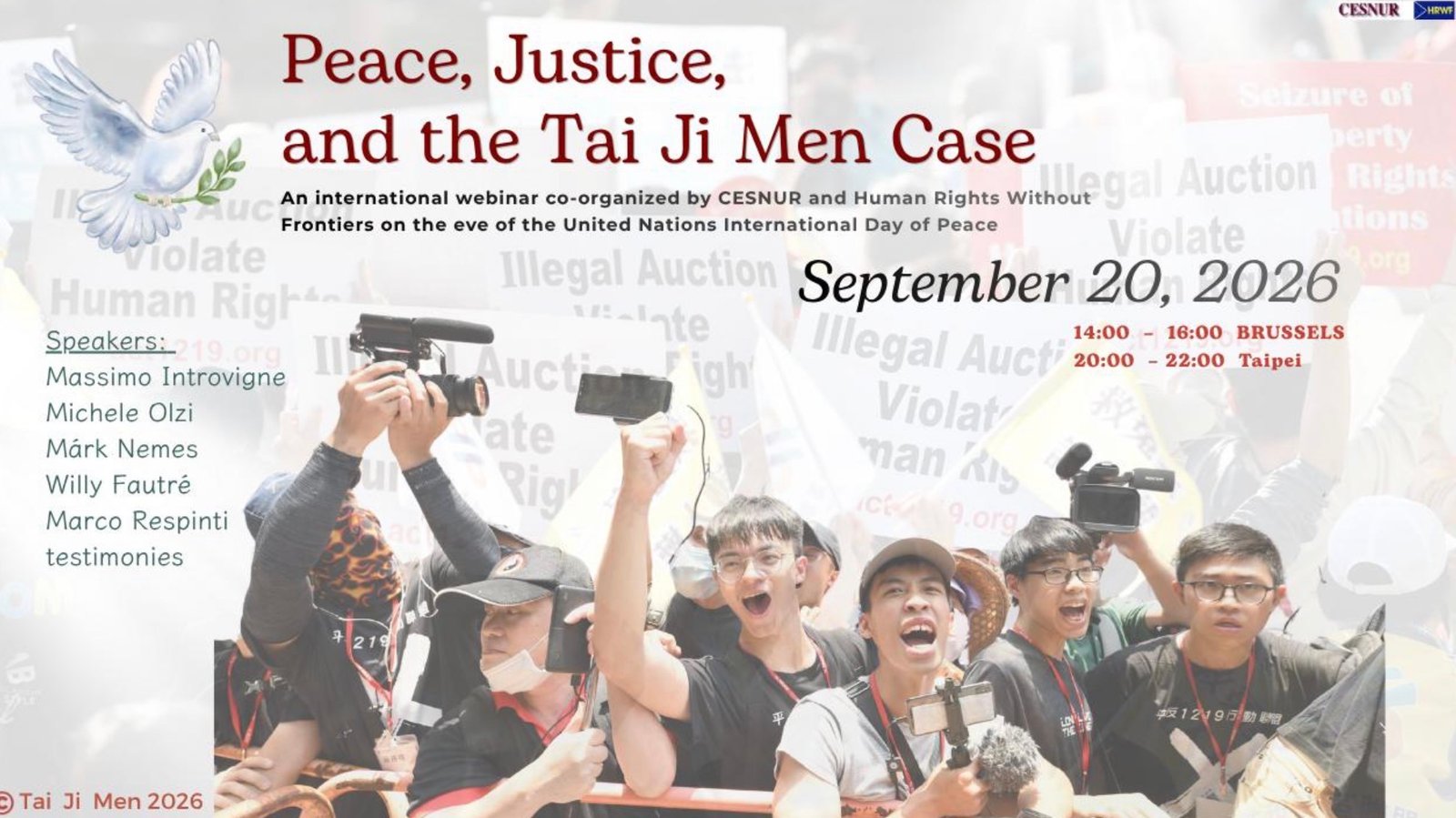
On September 20, 2026, on the eve of the United Nations International Day of Peace, CESNUR and Human Rights Without Frontiers organized one of their regular webinars on the Tai Ji Men case, this time on the theme “Peace, Justice, and the Tai Ji Men Case.”
Massimo Introvigne, Italian sociologist and managing director of “Bitter Winter,” introduced the webinar. He recalled the sudden rise, in the summer of 1399, of the Bianchi (“Whites”), a spontaneous Italian movement born amid war, factional violence, and heavy taxation. Dressed in white robes marked with a red cross, thousands of men, women, and children walked from town to town praying, reconciling with old enemies, and asking rulers to reduce taxes and release prisoners. Their persistence eventually brought them to Rome, where they presented their requests to the Pope, and for a brief period Italy saw reduced hostilities and moderated taxes.
Introvigne drew a parallel with the peaceful movement in Taiwan that has, for more than twenty years, asked for tax and legal reform and a just solution to the Tai Ji Men case, insisting that tax justice is part of social harmony and that spirituality can inspire civic responsibility. He concluded that the Bianchi showed how peaceful protest can open paths to reform, a lesson he regarded as relevant to Taiwan today.

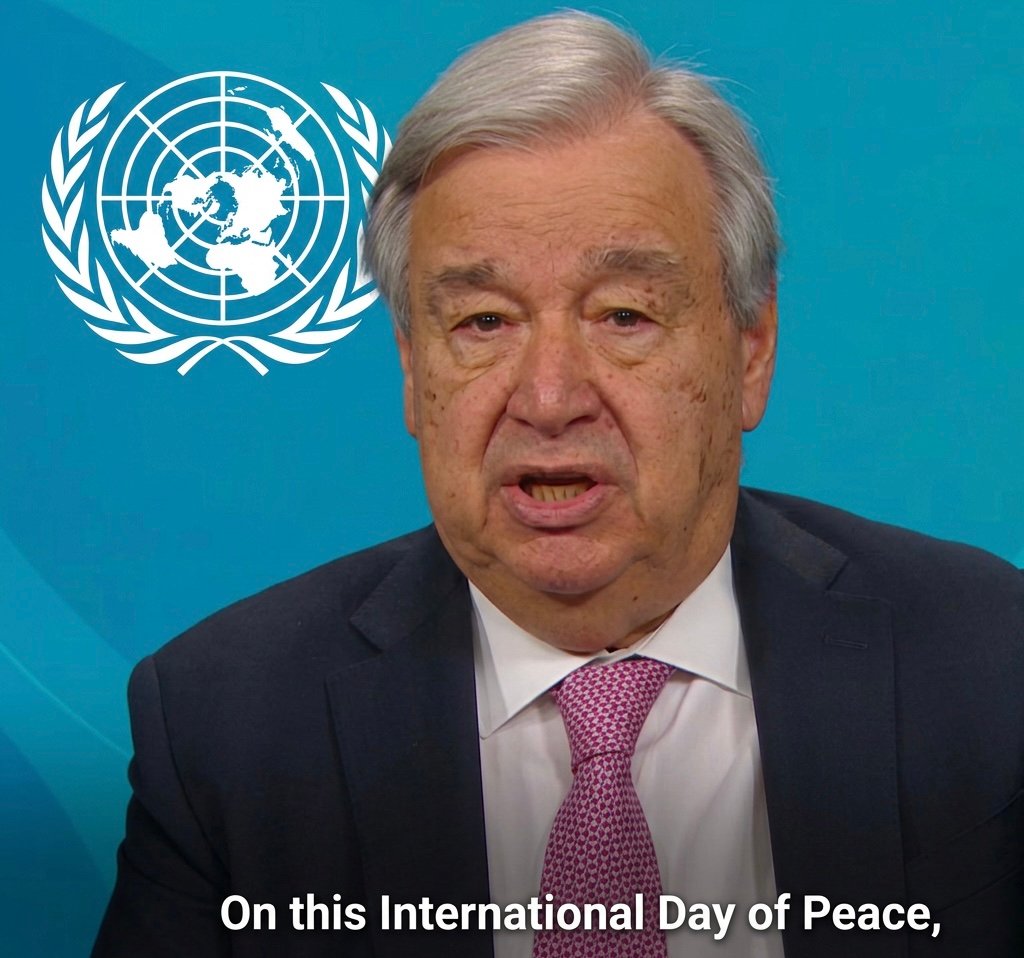
Introvigne then introduced a video message for the International Day of Peace by UN Secretary-General António Guterres. Guterres acknowledged that peace is “in dangerously short supply” in a world shaken by violence and division, where conflicts spill across borders and dialogue is faltering. He nonetheless pointed to volunteers, advocates, civil-society leaders, and peacemakers who are building peace “from the ground up,” and linked this year’s theme, “Investing in Peace: For Everyone, Everywhere, Every Day,” to the idea that peace is an active and deliberate choice. Achieving it, he said, requires building inclusive communities, investing in health, education, and social protection, ensuring every voice is heard, safeguarding human rights and dignity, and strengthening diplomacy, dialogue, negotiation, and peacekeeping. He closed by calling on world leaders to invest in a peaceful future for all.
Introvigne introduced the first two speakers, Márk Nemes, researcher at the Hungarian Academy of Arts and deputy director of CESNUR, and Michele Olzi, teaching assistant at the University of Insubria in Italy.
Nemes discussed the Japanese Peace Bell, inaugurated in the 1950s in New York by Japanese Representative to the United Nations Chiyoji Nakagawa, who spoke of peace, shared values, and mutual respect at a time marked by the wars in the Middle East and Vietnam and by tension between the Eastern and Western blocs. The Bell carries the inscription “Long live absolute world peace” and is housed in a floral sanctum in New York, where it is rung on the vernal equinox, on the opening day of the UN General Assembly, and on the International Day of Peace.
Nemes compared it to Tai Ji Men’s Bell of World Peace and Love, more than twice its weight, and argued that the significance of such bells lies less in their physical mass than in the “resonant” effect they produce. He recalled attending Tai Ji Men’s 60th anniversary celebration in Taipei earlier this year and hearing the Bell of World Peace and Love in person, an experience he described as more compelling than reading about the group’s peace activities or watching recordings of its performances. He recalled Secretary-General Boutros Boutros-Ghali’s 1994 remark that “peace requires work—long, hard, difficult work,” and said the two bells share a common vision. Recalling past peace initiatives and strengthening new ones matters as wars and conflicts continue to tear at the world, and that Tai Ji Men’s message of good conscience and inner reflection is one every society can learn from.

Olzi turned to the French political scientist Raymond Aron and his book “Peace and War: A Theory of International Relations.” Aron argued that peace cannot be defined simply as the absence of war, distinguishing among several forms of peace, including peace through law, equilibrium, consent, and fear. He noted that the absence of war may result from fear rather than shared will, leaving a “conflictual peace” in which conflict persists even without open hostilities. Olzi presented Aron’s distinction among three forms of political morality: the morality of struggle, the morality of law, and the morality of prudence, the last of which weighs concrete circumstances and power relations in search of the most acceptable compromise.
He then applied this framework to the Tai Ji Men case, tracing the criminal and tax proceedings that began in 1996 against the movement and its Shifu (Grand Master), Dr. Hong Tao-Tze, the 2007 Supreme Court acquittal, and the 2018 ruling by the Supreme Administrative Court rejecting the classification of Tai Ji Men as a cram school. He described the 2020 nationalization of land in Miaoli that the movement regards as sacred, and noted that while the National Taxation Bureau reduced the tax assessments for 1991 and 1993 through 1996 to zero in 2019, it maintained the assessment for 1992 on the basis of an earlier administrative decision. For Olzi, this outcome illustrates Aron’s point that a legal peace worthy of the name must rebuild a shared order rather than merely suspend conflict, and he argued that the absence of prudence, recognition, and a correct application of the law in the Tai Ji Men case left both peace and justice unresolved, turning Aron’s insight into a call for the restoration of justice in Taiwan.
Willy Fautré, co-founder and director of Human Rights Without Frontiers, chaired the second session and presented a video on the events marking the 60th anniversary of the Tai Ji Men Qigong Academy, in which Nemes and Introvigne had also participated.
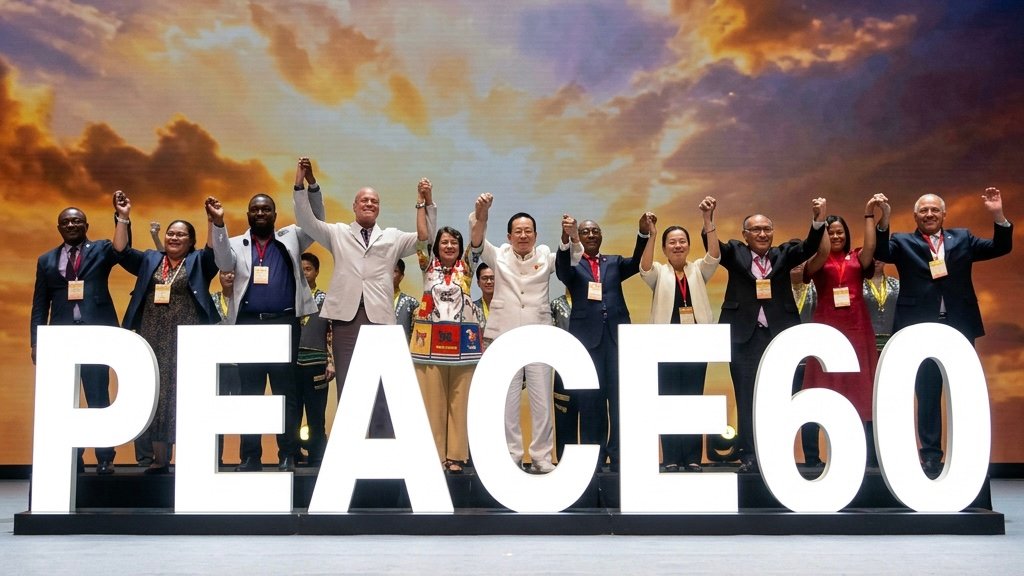
In his introduction to the session, Fautré argued that justice and social peace are closely connected in any democratic society. He said justice is not only about prosecuting those who break the law but also about ensuring individuals and civil society institutions are treated fairly and that the law is applied equally, a standard Tai Ji Men has not experienced, hit by what he called an endemic denial of justice by the tax administration over several decades. Fautré argued that social peace depends on citizens trusting legitimate institutions to resolve disagreements, and that this trust matters particularly for Taiwan, since democracy rests on equality, the rule of law, and public confidence as well as on elections. He added that Taiwan’s geopolitical position gives it added reason to serve as a model of genuine democracy and warned that unaddressed injustice erodes the legitimacy of judicial and political institutions. He concluded that protecting equality, due process, accountability, and human rights in the Tai Ji Men case is a matter of individual justice as well as a foundation of the social trust and institutional legitimacy on which Taiwan’s democracy depends.
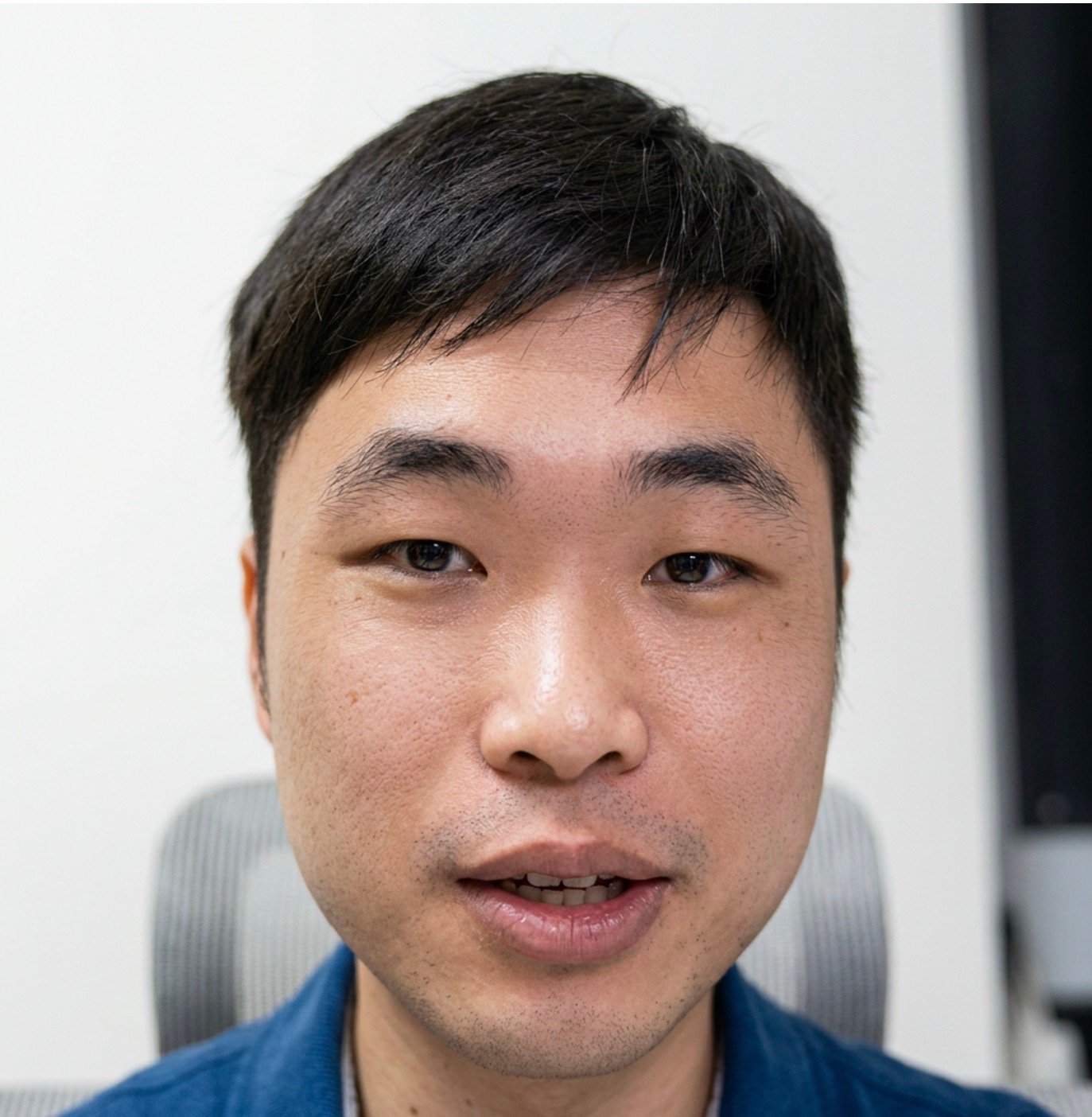
Willy Fautré then introduced the testimonies of five Tai Ji Men dizi (disciples). Andy Lu, a pathology resident, said his medical training has taught him to read the difference between harmony and invasion in living tissue, and that this same distinction applies to peace within oneself. He explained that Qigong practice learned from his Shifu since childhood helps him stay calm during demanding hospital shifts and difficult encounters with patients’ families. He recounted the origins of the Tai Ji Men case in 1996, the false media reports that preceded any trial, and the Supreme Court’s 2007 acquittal, followed by the 2020 nationalization of land intended for the group’s self-cultivation center. He closed by asking the government to revoke the tax bills and return the land.
Karen Huang, an account manager in the electronics industry, reflected on the risks of technology developed without conscience, arguing that innovation requires moral grounding to serve society rather than deepen inequality. She traced her family’s history within Tai Ji Men and described the December 1996 raid ordered by prosecutor Hou Kuan-jen, the detention of Shimu, Shifu’s wife, shortly after surgery, and the freezing of the family’s assets. She recalled that the couple’s children, then studying abroad, were left without support and had to borrow money from friends. She concluded that conscience, not computing power, will determine humanity’s future.

Renée Liu, a university student, described growing up attending tax-reform demonstrations on Ketagalan Boulevard without fully understanding their purpose, and gradually coming to see her family’s persistence as an exercise in civic responsibility. She recounted the 1996 investigation, the 2007 Supreme Court acquittal recognizing the disputed payments to Tai Ji Men’s Shifu as gifts rather than tuition, and the unresolved dispute over the 1992 tax year that led to the Miaoli land’s confiscation. She said her Shifu responded to the loss without bitterness, and offered the belief that peace begins with conscience, and conscience begins with the will to stop wrongdoing.

Monica Li, an educator, argued that peace requires more than calm on the surface, resting instead on the rule of law, justice, and conscience. She said the greatest danger to a society lies less in individual wrongdoing than in institutional arrogance and the neglect of public accountability. Citing the Supreme Court’s definitive 2007 acquittal and the subsequent nationalization of Tai Ji Men’s land in 2020, she asked how teachers can instill faith in justice in their students when officials avoid responsibility for their own errors. She described the case as a test of national conscience rather than a simple tax dispute, and recalled her Shifu’s teaching that Tai Ji Men will pay every tax rightfully owed and none that is not.

Russell Chiu, who works in international logistics, opened with reflections on how this year’s conflict between the United States and Iran disrupted global shipping routes, arguing that such disruptions show how closely peace is tied to ordinary life. He described Tai Ji Men’s decades of cultural diplomacy across 123 countries and recalled a summit in Türkiye held during the Russia-Ukraine war, where his Shifu’s words, that peace requires love and love requires balance, felt especially relevant. He outlined the Tai Ji Men case’s history, including the Control Yuan’s recognition of it as a major human rights matter and the unresolved seizure of land nineteen years after the Supreme Court’s acquittal, and cited international human rights advocate René Wadlow’s calls on Taiwan to solve the Tai Ji Men case. He closed by inviting participants to the Tai Ji Men Qigong Academy’s 60th-anniversary celebrations in Toronto this October.
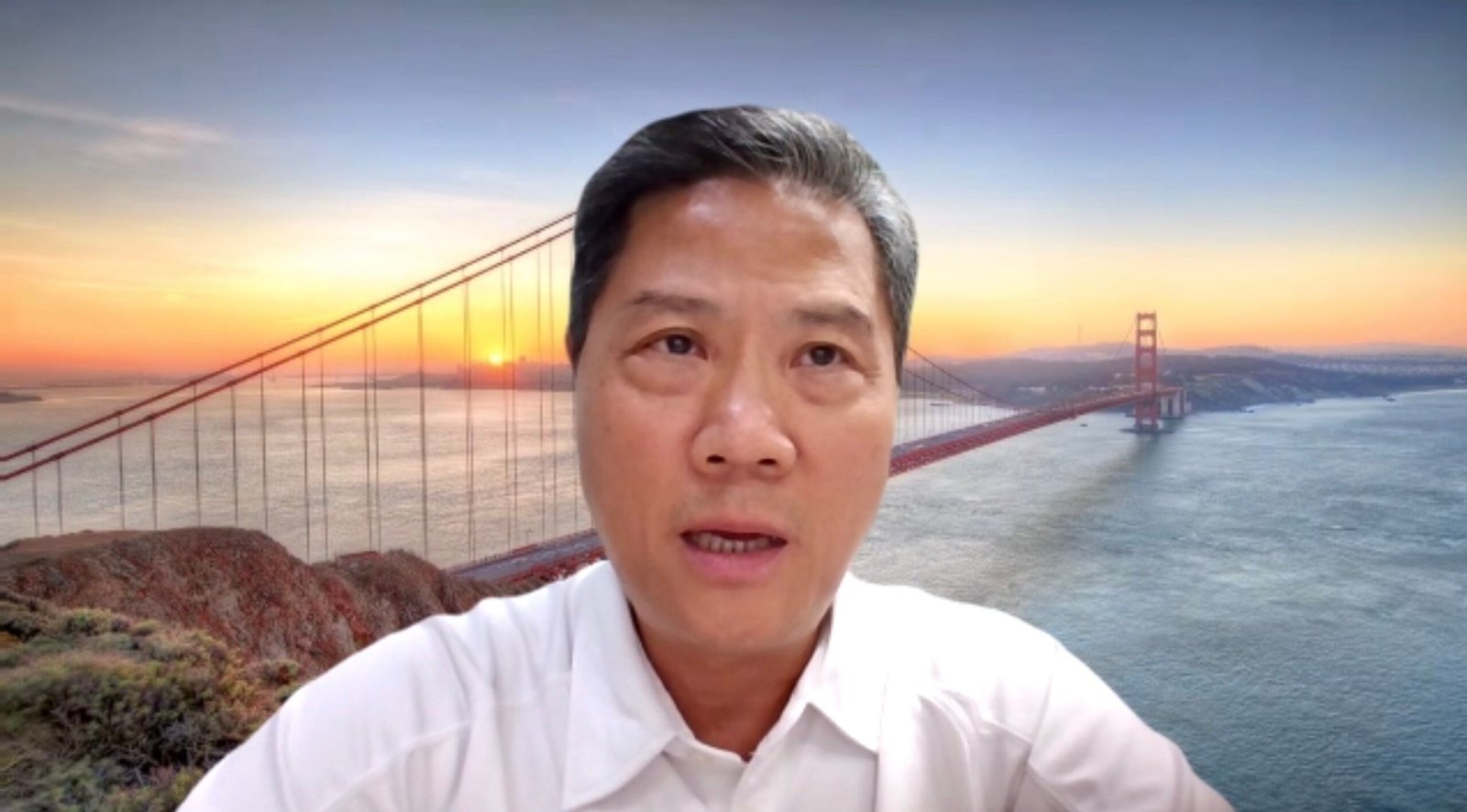
Marco Respinti, Italian scholar and journalist and director-in-charge of “Bitter Winter,” offered the conclusions of the webinar. He noted that the United Nations International Day of Peace, established in 1981 and observed each September 21, came after an older observance, the Catholic Church’s World Day of Peace, established in 1967 and marked every January 1. Respinti recounted how Pope Paul VI, in the homily establishing that day, invoked the “Pax Romana,” the long period of stability that began under Augustus and ended under Marcus Aurelius, and defined it as founded on “the universal extension of equality in the rights of its citizens” and on the wisdom of Roman legal institutions. For Respinti, freedom and just laws form the foundation of peace, a principle he described as belonging to all of human history rather than to any one religious tradition, since societies built on freedom and law have always stood in contrast to those built on coercion and unjust laws.
He described the Tai Ji Men case as a striking illustration of what happens when laws are misapplied or subordinated to power, pointing out that adherents have faced persecution for almost thirty years despite having been found free of wrongdoing by every level of Taiwan’s judiciary, including the Supreme Court. Respinti argued that freedom and justice are ultimately expressions of a single reality, since injustice is itself illiberal, and he rejected the excuse by those who remain silent that the case is someone else’s problem, warning that allowing officials to act unjustly toward one group extends that same power over any group.
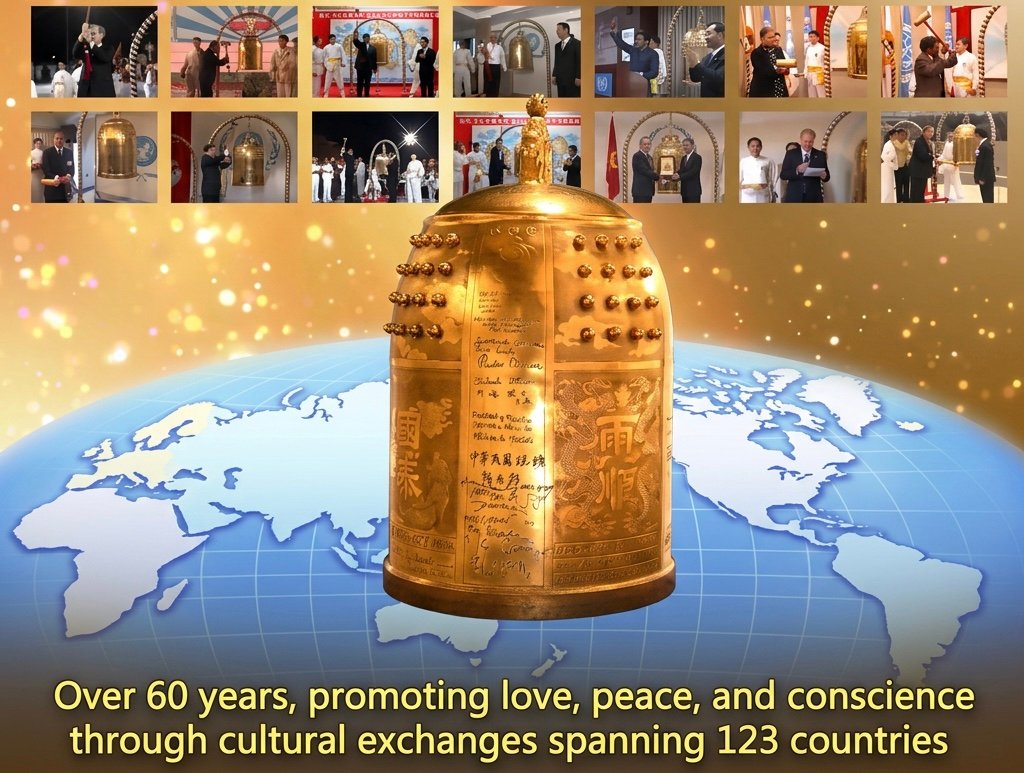
The webinar concluded with a video with a trailer for the celebrations of Tai Ji Men Qigong Academy’s 60th anniversary that, after Taiwan, will continue in October in Toronto, Canada.