Without considering the alliance between anti-cult lawyers and deprogrammers, Japan’s Unification Church case cannot be understood.
a review by Bitter Winter
Article 2 of 5. Read article 1.
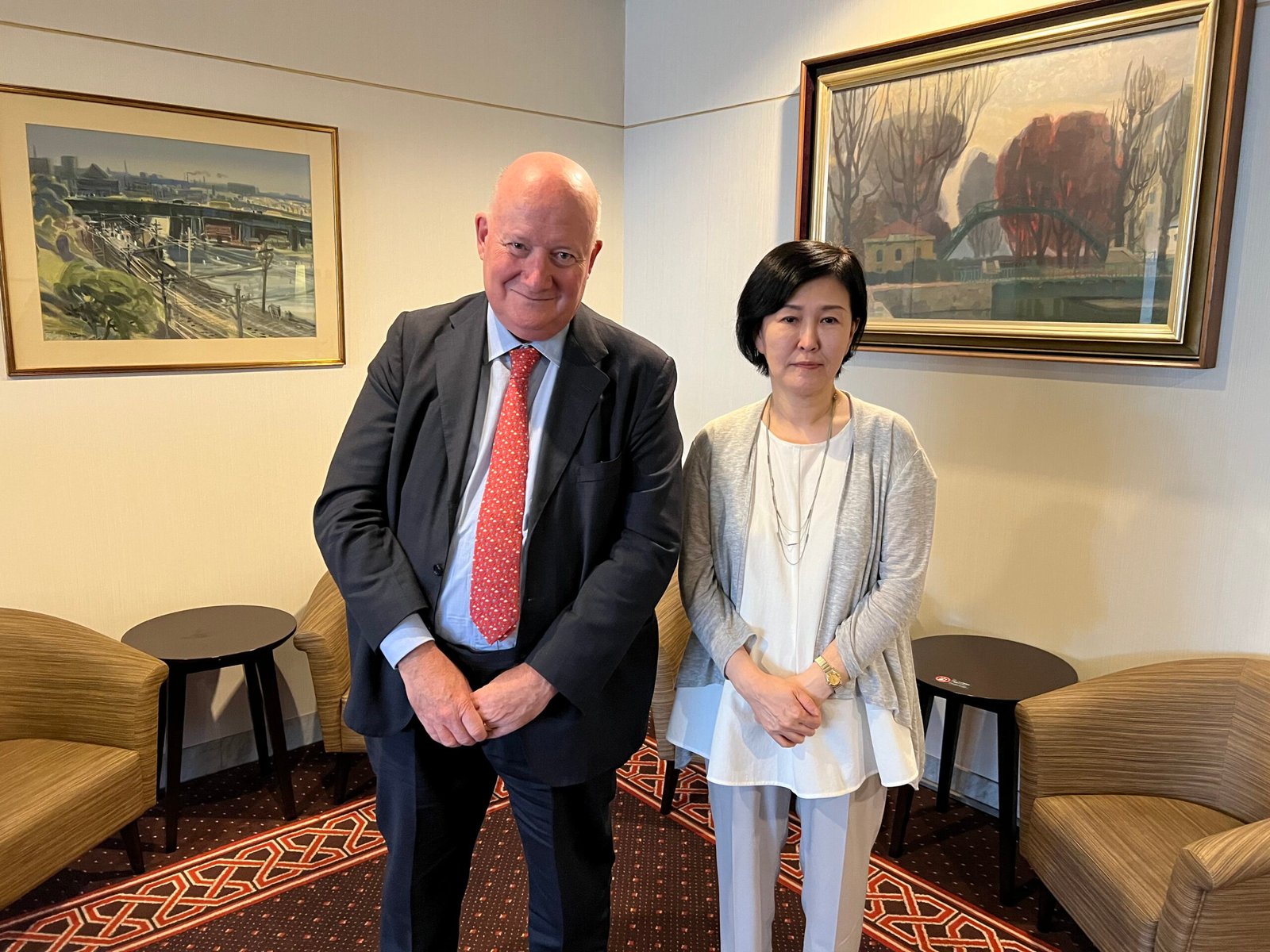
We continue our serialized look at “Sacrifice to the Nation,” the Japanese bestseller by journalist and sociologist Masumi Fukuda. Her book is already changing how Japan views the Yamagami trial and the Family Federation for World Peace and Unification, formerly known as the Unification Church. In this installment, Fukuda focuses on the organization that has shaped the public discussion for decades: the National Network of Lawyers Against Spiritual Sales.
In Chapter 2, Fukuda questions what the Lawyers’ Network actually is and what it has been doing for 35 years. The chapter begins with a straightforward question: Is the National Network of Lawyers Against Spiritual Sales really a consumer protection group? The organization claims to protect vulnerable people and serves as a legal defense for those allegedly harmed by the former Unification Church. However, Fukuda meticulously begins to reveal the truth.
She observes that by 2009, the Unification Church had already stopped the fundraising practices once called “spiritual sales,” i.e., the sale of artifacts with an alleged spiritual meaning at prices exceeding their material value.
One might think the Lawyers’ Network would celebrate the drop in suspected victims, but Fukuda writes that the group reacted with something more like bureaucratic panic. With fewer cases to justify its existence, the Network began to inflate statistics, redefining any significant donation as “victimization.” The reasoning was simple: if the number of victims was decreasing, then the definition of “victim” needed to expand.

Fukuda points out an even more disturbing trend. Many of the “ex-believers” presented in the media as victims of spiritual sales were not ordinary former members; they were individuals who had been abducted and forced to renounce their beliefs. Their leaving was not a matter of free will, but of coercion.
And who provided these “victims” to the media? According to Fukuda, it was Takashi Miyamura, the deprogrammer at the heart of Japan’s history of forced de-conversion. Whenever magazines or television producers sought a “cult victim,” Miyamura supplied one.
After the assassination of former Prime Minister Abe, the media’s demand for such stories soared. Almost all the voices highlighted during that time, Fukuda notes, came from those who had been kidnapped, confined, and pressured into abandoning their faith.
Fukuda argues that, from an outside observer’s perspective, the Lawyers’ Network was not primarily focused on consumer protection. Its fundamental mission was rooted in political and ideological conflict. To understand this, Fukuda goes back in time. The Unification Church entered Japan in 1959 and quickly established the International Federation for Victory Over Communism, a key anti-communist force in the late 1960s. In contrast, the Lawyers’ Network is deeply entrenched in a left-wing ideological background that has long opposed anti-communist movements and resisted efforts to pass an Anti-Espionage Act.
Seen in this light, the Network’s actions take on a different meaning. Shortly after the Unification Church registered as a religious organization, leftist activists were already calling for its license to be revoked. Fukuda suggests that while denouncing the church for allegedly hiding its identity, the Lawyers’ Network may have concealed its own political motives for over three decades. In other words, an organization accusing others of deceit may have been practicing it quietly all along.
If Chapter 2 uncovers the ideological framework, Chapter 3 introduces the driving force behind Japan’s forced de-conversion system, the man behind the scenes: deprogrammer Takashi Miyamura. Fukuda provides a chilling picture of Miyamura, who appears repeatedly in testimonies related to abduction and confinement.

Despite his key role in orchestrating kidnappings, Miyamura has never faced criminal charges. His strategy has been to place all the blame on the parents. However, Fukuda shows how Miyamura created the entire system—advising families on how to abduct their adult children, overseeing the confinement, and finally pressuring the victims to file civil lawsuits as proof of their “liberation.”
Fukuda describes Miyamura as the creator of an “infinite loop”: abduction, confinement, forced renunciation, lawsuit, media testimony, and further justification for more abductions—a self-perpetuating cycle.
Through victim testimonies, Fukuda explores Miyamura’s mindset. Raised in a troubled family, he may have projected his own emotional wounds onto the followers he targeted. He reportedly viewed their belief in “parental love” as false, and breaking their faith became a way for him to deal with his own issues.
His long-term goal, she argues, was to financially exhaust and ultimately dissolve the Unification Church. This was not an unintended consequence; it was his plan.
But Miyamura’s actions did not happen in a vacuum. Fukuda examines the institutions that allowed him to operate. She argues that the media shares significant responsibility. By practicing what she calls the “freedom not to report,” journalists gave social legitimacy to deprogramming. The harsh reality of abduction and confinement remained largely absent from media coverage, allowing the practice to continue without challenge for decades.
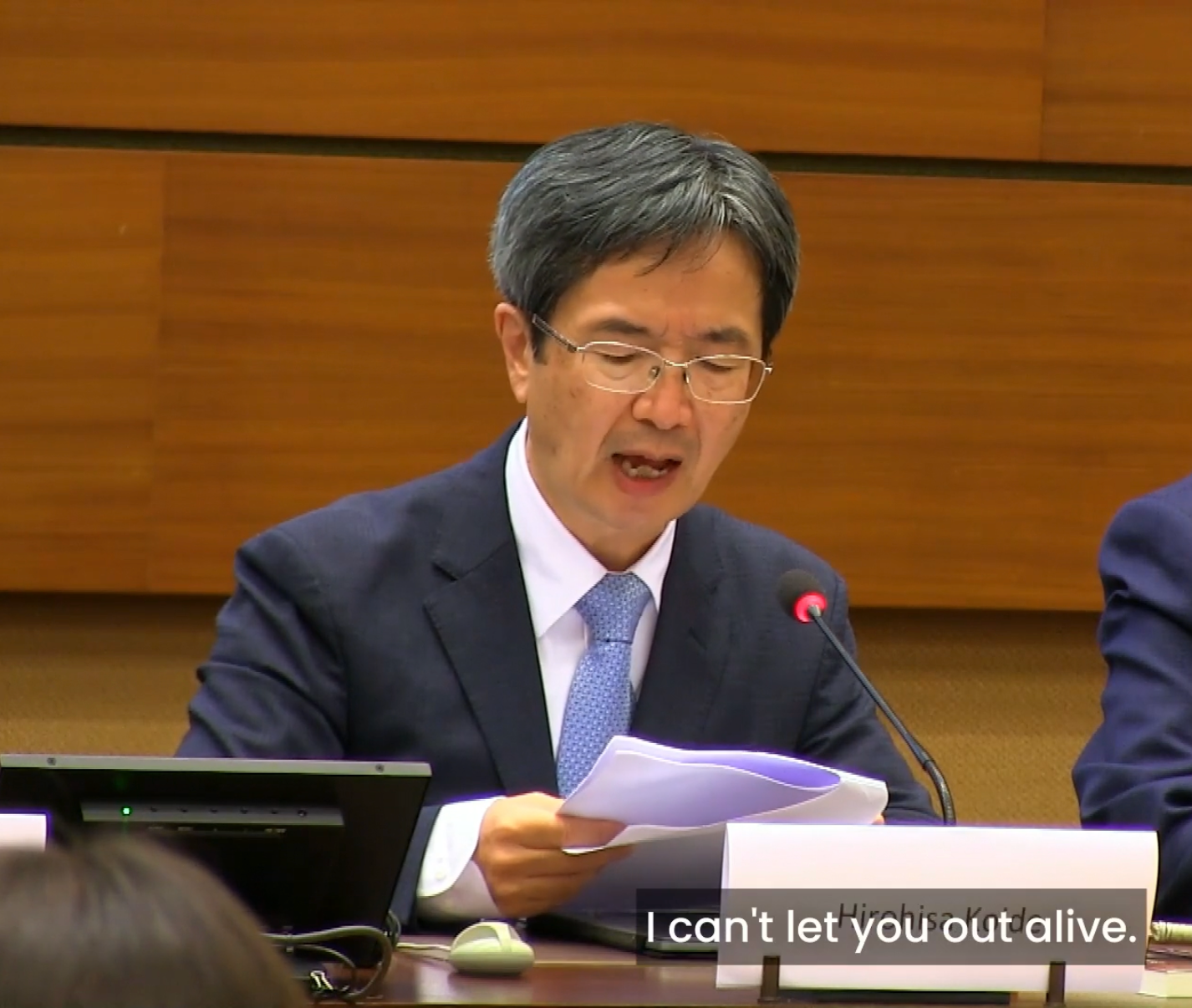
The outcome was a chilling legal and ethical distortion: members of the Family Federation were left unprotected under Japanese law and international human rights standards.
The police also contributed, treating these situations as “family matters” and refusing to intervene. This denied believers equal protection under the law.
Fukuda’s conclusion is disturbing: a system that should have safeguarded citizens instead abandoned them, leaving thousands exposed to crimes committed in the name of “saving” them.