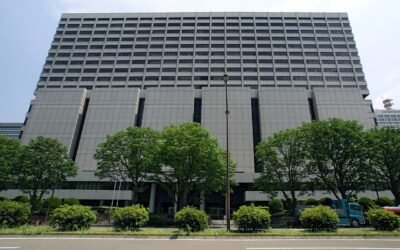
While some had claimed the dissolution would only strip the church of its tax-exempt status, liquidators have already closed down 260 places of worship.
by Patricia Duval
![Representatives of the “Second Generation Association for Protecting the Human Rights of Believers [of the Unification Church]” speak following the Tokyo High Court’s decision. Credits.](https://bitterwinter.org/wp-content/uploads/2026/03/Liquidation-1.webp)
The Tokyo High Court’s decision to dissolve the Family Federation (formerly called the Unification Church) was announced at 11 a.m. on Wednesday, March 4. Immediately afterward, liquidator Hisashi Ito called lawyer Fukumoto, the Church’s lead attorney, and told him, “The liquidators will visit all the churches across the country today. I will go to the headquarters church to explain the liquidation procedures.” About an hour later, five to ten lawyers, accompanied by police officers, showed up at churches across the country to explain the liquidation procedures, seize all assets, and confiscate the keys to the places of worship. This happened in the majority of the 260 Unification Church churches nationwide.
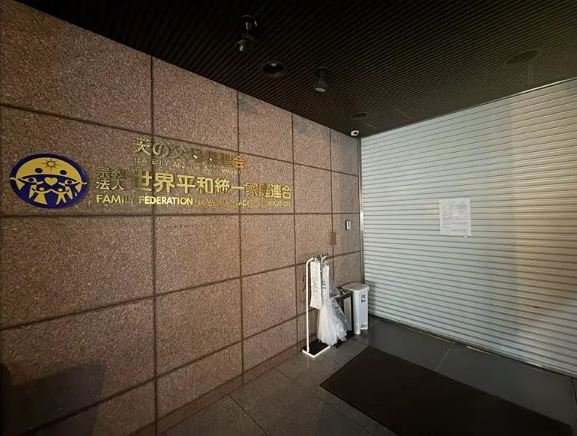
Twenty liquidators arrived at the church headquarters in Shibuya, Tokyo, and closed it down. Employees were no longer allowed to enter the church and were ordered to stay at home.
Information about the liquidation website was published immediately after the High Court’s decision. The domain had already been acquired on February 13, three weeks before the High Court’s decision, and six PDF documents had already been published. Everything had been meticulously prepared.
A member of the Church reports: “Even before the High Court’s decision was made public, approximately 1,000 lawyers and police officers appeared to have collaborated to ensure that the liquidation process went smoothly. Despite assurances from the government and the courts that religious freedom would be protected even after the corporation’s dissolution, we quickly found ourselves unable to practice our religion. The simultaneous dispatch of liquidators to churches across the country resembled a massive investigation into a criminal organization. Churches across the country were closed during the dissolution, leaving believers without a place of worship.”
All this happened after the decision to uphold the District Court’s dissolution order, issued on the sole basis of decades-old civil cases brought by deprogrammed members seeking damages, in which the civil courts had concluded that the Church had violated “social norms” and “social appropriateness.”
Four United Nations Special Rapporteurs issued a public statement on October 1, in which they expressed concern that a decision to dissolve the organization based on alleged harm to the vague and overly broad concept of “public welfare” was not in accordance with international human rights law, in particular Article 18.3 of the International Covenant on Civil and Political Rights, which lists very restrictive grounds for limiting the right to practice one’s religion.
The High Court, in its hundreds of pages-long decision, answered their concerns in merely two pages, in the following way:
– A dissolution order merely has the effect of depriving a religious corporation of its juridical personality. It does not entail any legal effect whatsoever that prohibits or restricts the religious activities of its adherents. This proves to be factually and utterly untrue.
– And, a conduct that constitutes a tort under the Japanese Civil Code and is clearly recognized as significantly harming the public welfare may be regarded as conduct infringing “public safety, order, health or morals, or the fundamental rights and freedoms of others,” as referred to in Article 18(3) of the Covenant.
In other words, the Court used tautological and highly fallacious reasoning: dissolution based on public welfare is legitimate, therefore it is legitimate under international human rights law.
This decision clearly violates international law and demonstrates contempt for international institutions and the human rights commitments that Japan claimed to uphold after World War II.

Patricia Duval is an attorney and a member of the Paris Bar. She has a Master in Public Law from La Sorbonne University, and specializes in international human rights law. She has defended the rights of minorities of religion or belief in domestic and international fora, and before international institutions such as the European Court of Human Rights, the Council of Europe, the Organization for Security and Co-operation in Europe, the European Union, and the United Nations. She has also published numerous scholarly articles on freedom of religion or belief.