Soyonbo Borjgin’s PropagandaScope provides an effective new lens on the CCP’s machinery of erasure.
by Massimo Introvigne

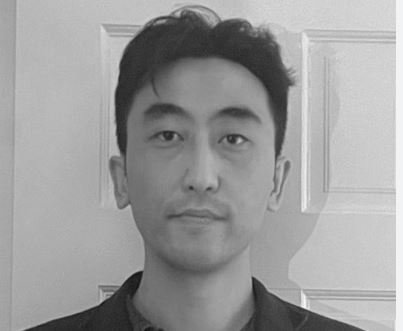
Every so often, a project emerges that shifts our understanding of the Chinese Communist Party’s propaganda system. PropagandaScope, created by Soyonbo Borjgin—a journalist from Southern Mongolia (which China calls Inner Mongolia) now living in New York City whose story “Bitter Winter” covered last year—stands out as a unique tool. “Bitter Winter” is pleased to welcome it as a valuable partner in the global effort to document, expose, and study the CCP’s ideological operations.
PropagandaScope is simple in concept but effective in execution. It contains a database of over 400,000 articles from twenty provincial Party newspapers, updated daily, searchable by keyword, and capable of tracking how political terms spread from Beijing to the provinces. It acts like a microscope for propaganda, revealing patterns that were previously visible only in fragments. On a deeper level, it serves as a record of what the CCP chooses to name and what it chooses to erase.
Borjgin’s introduction to the project is based on personal experience. In 2020, he was forced into a political re-education class where he was told that Mongolian was a “backward” language, unfit for science or modern life. He understood that Mongolian identity was not just discouraged but delegitimized. Five years later, PropagandaScope has given him the ability to quantify what he once could only sense. When he searched the database for “Mongolians,” he found only one mention in more than 400,000 articles—and that was in the title of a conference. The term had been systematically removed.
What replaced it was a sanitized geographic label: “Northern Frontier Culture.” In the CCP’s language, Mongolians are no longer a people but a location.
PropagandaScope also shows how the Party’s ideological campaigns seep into minority regions long before they become national policy. The phrase “forging a strong sense of community for the Chinese nation,” now a cornerstone of China’s ethnic policy, appeared in Xinjiang’s official newspaper at seventeen times the rate of “People’s Daily.” Tibet and Ningxia followed closely. By the time the National People’s Congress formally adopted the phrase into law, the propaganda groundwork had already been laid. The law did not start a campaign; it confirmed one.
The project’s technical development tells its own story. When Borjgin used boundary data from Alibaba Cloud to create a map of China, the map would not render unless it showed the nine-dash line and Taiwan as a province. In the data source’s logic, a China without these claims did not exist. Even a tool designed to analyze propaganda was, by default, built on propaganda. Only by replacing the dataset with a neutral, public-domain source could the map be drawn accurately. This small detail highlights the depth of the CCP’s informational structure: the Party’s worldview is not just asserted—it is embedded.
PropagandaScope is now live, and its potential is vast. Researchers can track the spread of political slogans, monitor changes in ideological focus, and document the disappearance of entire categories of identity. Activists can use it to reveal the mechanics of cultural erasure. Journalists can look at it to verify patterns that would otherwise go unnoticed. And ordinary readers can see firsthand how the CCP manufactures consensus.
The project serves as a reminder that the struggle for truth in China increasingly relies on data as well as testimony, on code as well as courage. It also stands as a testament to the resilience of those who have lived through repression and choose to respond not with silence but with documentation.

Massimo Introvigne (born June 14, 1955 in Rome) is an Italian sociologist of religions. He is the founder and managing director of the Center for Studies on New Religions (CESNUR), an international network of scholars who study new religious movements. Introvigne is the author of some 70 books and more than 100 articles in the field of sociology of religion. He was the main author of the Enciclopedia delle religioni in Italia (Encyclopedia of Religions in Italy). He is a member of the editorial board for the Interdisciplinary Journal of Research on Religion and of the executive board of University of California Press’ Nova Religio. From January 5 to December 31, 2011, he has served as the “Representative on combating racism, xenophobia and discrimination, with a special focus on discrimination against Christians and members of other religions” of the Organization for Security and Co-operation in Europe (OSCE). From 2012 to 2015 he served as chairperson of the Observatory of Religious Liberty, instituted by the Italian Ministry of Foreign Affairs in order to monitor problems of religious liberty on a worldwide scale.