A new Tibet Watch report shows how Beijing turned a deadly October tremor in Nagchu into an occasion for censorship, resettlement, and Sinicization.
by Lopsang Gurung
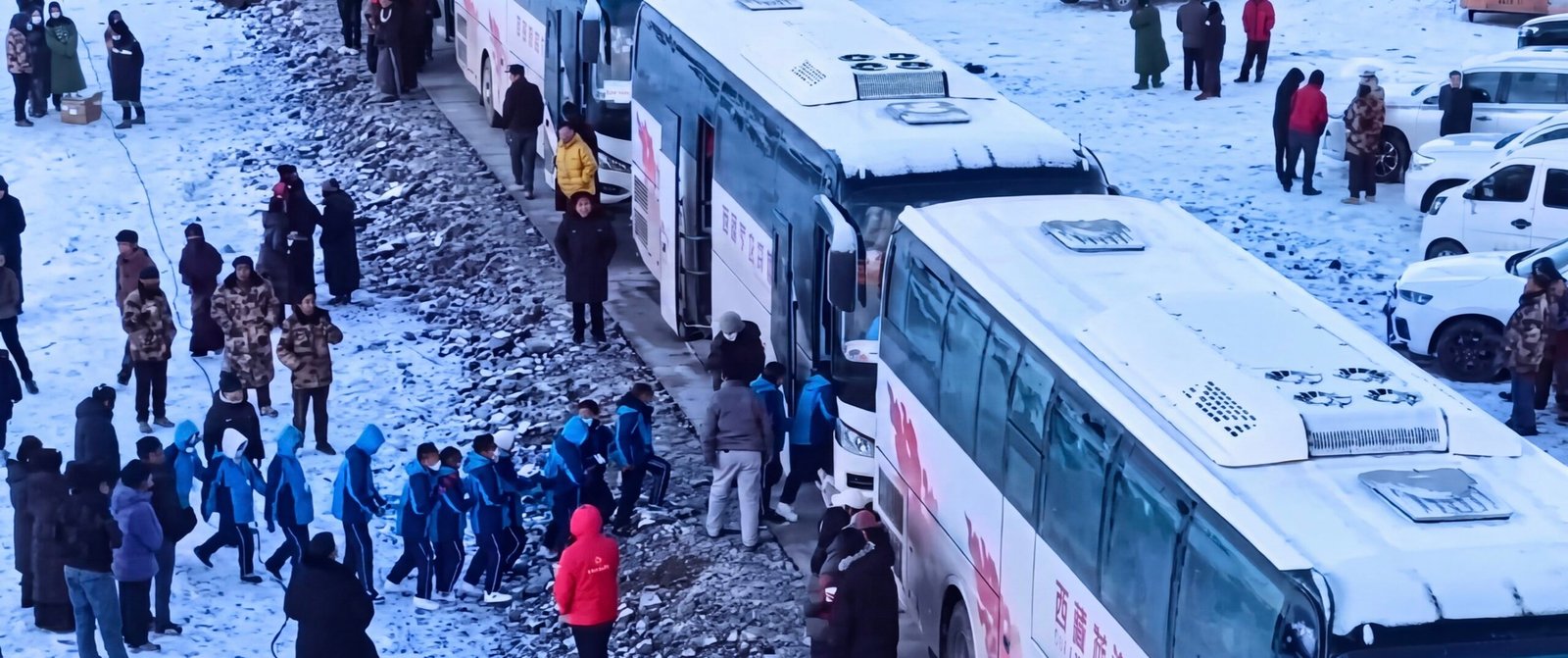
A Tibetan mother told a Chinese state television crew that she was “heartbroken to see her daughter leave home.” The girl was among 1,495 pupils, some of them only in first or second grade, who were taken from the grasslands of Drachen County to a boarding school in Lhasa, hundreds of kilometers away. Nobody has told the families whether the children will come back, or when.
The episode is one of several reconstructed in “Forced Confessions, Displaced Herders and Children Removed to Lhasa,” published on November 13 by Tibet Watch, the London-based charity that monitors human rights on the plateau. The text is short, some 20 endnotes long, and it does what Chinese censors hoped nobody would do. It assembles the scattered pieces of the weeks following the earthquake of October 22, 2026, and reads them as a single story.
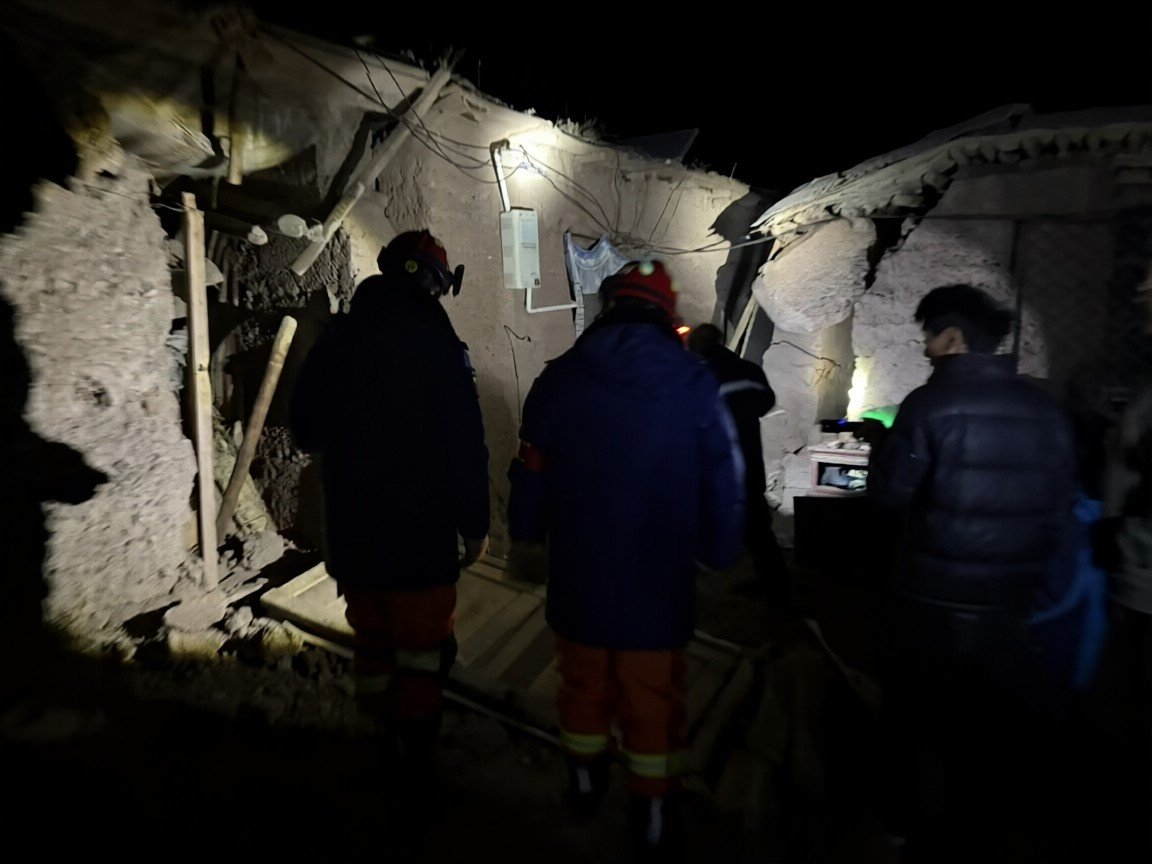
The facts of the disaster are not in dispute. A magnitude 7.0 tremor hit Drachen (Baqen in Chinese) County, in Nagchu, Tibet Autonomous Region, at 10:33 at night. The epicenter was in Maru Township, about 400 kilometers northeast of Lhasa. More than 2,000 aftershocks followed, including one of magnitude 5.7. Official media counted over 330 houses damaged or destroyed, 12,964 people moved out of their homes, and 2,505 prefabricated units sent to shelter them.
The number of victims is another matter. Xinhua announced 16 dead on the morning after, and the figure has never changed, although the tally of the injured climbed in stages from 32 to 76. Tibetans tell a different story. One source spoke to Tibet Watch of more than 20 deaths, 13 of them women. Another, quoted by the Tibetan Centre for Human Rights and Democracy, counted around 50 among relatives and acquaintances alone. Foreign journalists were kept out. Tibetan volunteers who tried to bring help were turned back in some cases, and in others had to sign a pledge to obey government directives. The monks of Lungkar Monastery, close to the epicenter, could only send a letter of condolences explaining that they were unable to come and were praying for the dead. Some laypeople did manage to deliver tents, blankets, and food.
Anyone who doubted the official count learned quickly what doubting costs. Within a day of the earthquake, the Nagchu cyber police instructed the public to trust official sources only. A Tibetan man who had warned a WeChat group that a dam where the Sog and Leychu rivers meet might crack, and had urged those living downstream to climb to higher ground, was detained and filmed while confessing that he had spread falsehoods endangering national security. Two netizens identified only as Bai, from Chamdo, and Luo, who lives in faraway Shenzhen, were detained for sharing casualty numbers the authorities did not like. Others were punished in Lhasa and Nagchu. In Lhorong, a young woman who had written online that more than 100 people had died was made to apologize on camera for circulating rumors. Further detentions were reported from Sog and from Chentsa, in Qinghai.
Tibet Watch observes that the script had been rehearsed two months earlier, after the flood of August 26 in Kyirong, where a netizen was penalized for mentioning a number of missing persons higher than the official one. The report also makes a point that deserves to be remembered. Administrative detention, which the police can inflict without charge or trial, lasts up to 15 days for each offense. The “confession” videos have no expiry date. They stay online, a permanent pillory for those who appear in them and a warning for everybody else.
The most original pages concern a danger few outside Tibet would think of. The displaced herders of Drachen are spending the winter in temporary shelters at some 4,800 meters, in bear country. In April, according to a video by Beijing News, three bears broke into a village office in the same county. The report does not claim that anybody has been mauled since the earthquake. It explains why residents are asking for sturdier shelters, and why they are afraid. Since the 1980s, state policies have settled nomads in fixed houses, where stored food attracts hungry animals. A survey of 300 households on the Changtang plateau found that nearly half had suffered from bears between 1990 and 2006, and that conflicts multiplied more than four times after wildlife protection rules were introduced in 1993. Bears are a protected species, killing one may mean up to 10 years in jail, and the herders’ guns were confiscated long ago. Here, too, talking is risky. In May, officials in a county of Chamdo denied that bears had killed anyone and warned against “rumors.”
Then there are the children. Chinese sources themselves, as Tibet Watch notes, report that 168 schools with more than 59,000 students reopened locally, and 31 moved their classes online. Only two schools, serving the hardest-hit townships of Maru and Gangchen, were transferred to the capital, to the Lhasa Nagchu Complete Middle School. Officials describe the move as temporary. CCTV showed the first day in the new premises: the flag, the anthem, and lessons on gratitude to the Party. Readers of “Bitter Winter” know that boarding schools are a main instrument of Sinicization in Tibet, and that United Nations experts have expressed alarm about the roughly one million Tibetan children separated through them from their families, language, and culture. An earthquake has now supplied a humanitarian reason for adding some 1,500 more, including six- and seven-year-olds.
The last part of the report asks what will be rebuilt, and where. Nagchu is the northern door of Tibet, with a large logistics hub on the Qinghai-Tibet Railway and an expressway to Lhasa opened in 2021. Since 2017, a program of “ecological resettlement” has been moving pastoralists from very high altitudes to lower land, and a 2023 academic study found that officials obtained the herders’ “consent” through mounting pressure. Tibet Watch lists the precedents: Kyegudo (Yushu) after the 2010 earthquake, the border town of Dram emptied in 2015, and Dingri in 2025, where villages were rebuilt somewhere else. Drachen has an additional reason to worry. During the 2013 crackdown in neighboring Driru, it was among the counties whose residents the police marked with code letters to track them.
The report has limits, and its authors are honest about them. They signal that one of the studies they cite on bears has been withdrawn and that a link no longer works. Most of what they offer on the reconstruction is a forecast based on earlier cases, and time will tell whether it is accurate. Yet a large part of the evidence comes from Xinhua, CCTV, and police notices, which makes it hard to dismiss, and the impossibility of checking the rest on the ground is precisely what the report denounces. Its closing argument is that the silence imposed in the first 24 hours belongs to the reconstruction itself. A state that decides how many died will also decide where the survivors live, and where their children go to school.

Uses a pseudonym for security reasons.