Daughters of Amdo nomads learned their language, Buddhism, and modern subjects there for twenty-one years. Today the institution bears a different name and is under government control.
by Lopsang Gurung
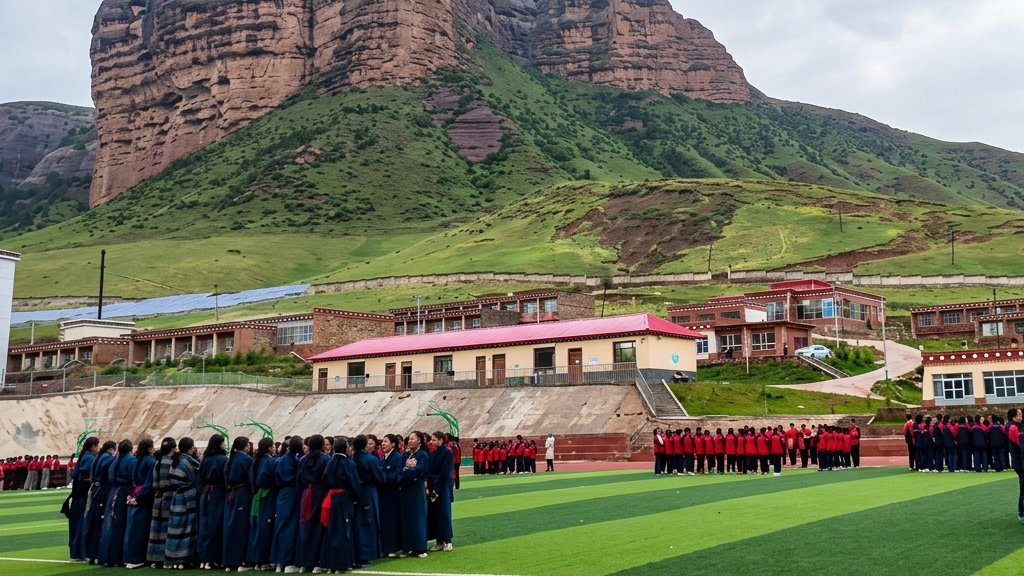
For twenty-one years, girls from herding families in Golog, in the traditional Tibetan region of Amdo, had a place where they could learn to read and write in their own language, study Buddhist philosophy and Tibetan medicine, paint thangkas, and sit in front of computers. That place no longer exists in the form its founder imagined. The Prairie Talent Girls’ School, also known as the Grassland Girls’ School or the Snowland Grassland Girls’ School, closed its doors for good on August 27, 2026. The news was spread through a post on X by Lhasa Spring, a platform promoting dialogue between Chinese and Tibetans, and was reported by Tibetan exile media in Dharamsala on October 17.
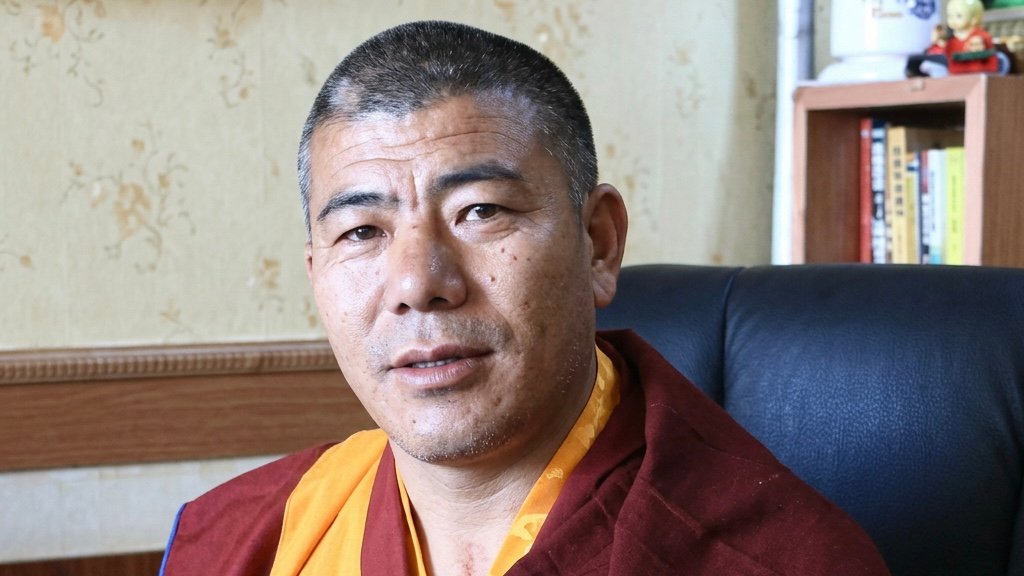
The school stood near Ragya Mountain, a sacred peak in Golog Tibetan Autonomous Prefecture, which Chinese administrative maps place in Qinghai Province. Its founder, the monk and educator Ragya Jigme Gyaltsen, is respected among Tibetans for his lifelong commitment to education. In 1994 he had already created the Jigme Gyaltsen Nationalities Vocational School. In 2005 he turned his attention to a group often left behind: the daughters of nomads, who in pastoral households typically spend their days on domestic chores and tending the herds.
The Trace Foundation, which supported his projects, lists the girls’ school as one of the two institutions he established. It also preserves the founder’s reasoning. In his view, educating a girl meant educating a future mother, and therefore laying a foundation for humanity itself.
The beginnings were modest, with forty girls admitted each year from different parts of Tibet. Six years later, enrollment reportedly reached 240. The first class graduated in 2010, and its members ranked at the top in the primary school examinations held across Golog, an achievement that gave the institution a reputation for academic excellence.
Students came from U-Tsang, Kham, and Amdo, the three traditional regions of Tibet. Their curriculum combined Tibetan language, Buddhism, Tibetan medicine, thangka painting, and other traditional arts and crafts with science and computer studies. For many families, the school offered a rare chance for their daughters to receive a modern education without losing touch with their heritage.
According to Lhasa Spring, after the closure the authorities took over the premises and renamed the institution Ragya Town Girls’ Middle School. It now operates under an arrangement described as “privately run, publicly funded,” which leaves little room for the independence its founder had built over two decades.
Videos circulating online show students hiding their faces and weeping, with books and teaching materials left scattered across the floor. October 15 should have been a day of celebration, the twenty-first anniversary of the school’s founding. Former students used it instead to mourn on social media, posting photographs and memories of their years there and of their affectionate relationship with the principal. Many wrote that the school had shaped both their education and the persons they became.
The story has a precedent. On July 12, 2024, the authorities closed the Jigme Gyaltsen Nationalities Vocational School after almost thirty years of activity. That award-winning institution had trained young Tibetans in their language and culture as well as in computer science, engineering, and medicine. Reports at the time described its final assembly, with students in tears as they said goodbye to their teachers.
Both closures are part of a wider campaign against private Tibetan schools, which in recent years have been shut down or absorbed into the state system one after another. Beijing’s education policy in Tibet increasingly favors Mandarin as the language of instruction, and UN experts have estimated that around one million Tibetan children live in state-run boarding schools, far from their families and their native tongue. Private institutions founded by monks and lay educators were among the last places where Tibetan could remain the language of learning.
Jigme Gyaltsen believed that by educating girls he was preparing the mothers who would pass on Tibetan language and culture to the next generation. This conviction is probably what made his schools intolerable to a regime that wants the next generation of Tibetans to think, speak, and dream in Chinese.

Uses a pseudonym for security reasons.