Rural communities increasingly refuse unilateral decisions about religious structures.
by Zeng Liqin
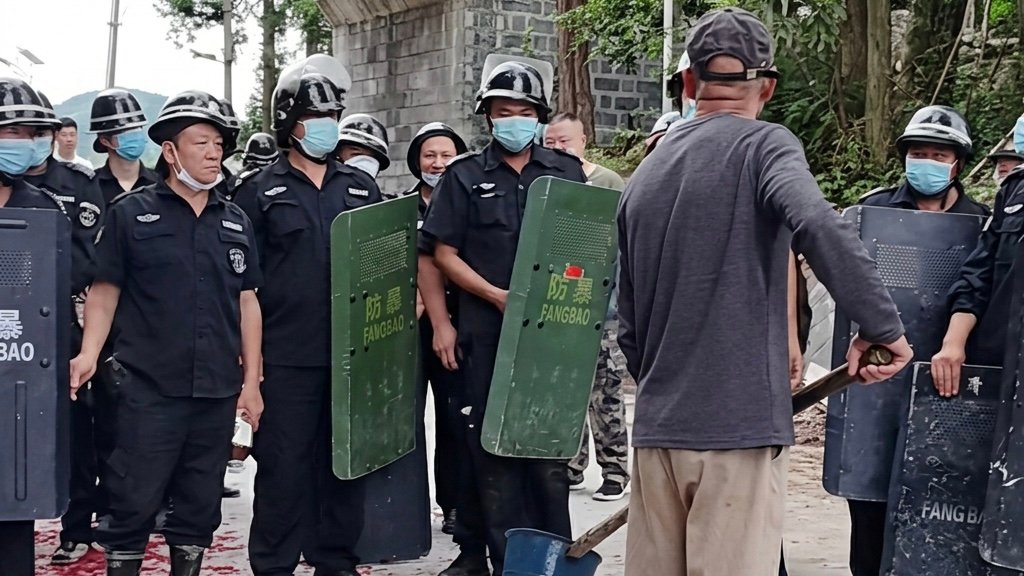
A confrontation in Houyang Village, Hetang Township, Gutian County, Ningde, unfolded on September 4 and revealed a growing determination in rural areas facing campaigns against religious symbols.
Officials arrived with a demolition team to remove a Guanyin statue that villagers regard as part of their communal identity. The operation quickly met organized resistance, and the situation escalated into a prolonged standoff. A female villager was injured during the clash and taken to hospital, adding urgency to an already volatile scene.
Videos circulating on social media show groups of villagers surrounding the demolition personnel and shouting for the operation to stop. At one point, several individuals threw liquid manure toward the team as a gesture of defiance. The act was meant to convey the depth of their frustration, and it created conditions the officials on site could not manage. The demolition team withdrew, and the authorities suspended the operation (at least temporarily).
Houyang is not an isolated case. Reports from multiple provinces indicate that villagers increasingly reject decisions that remove statues, small temples, or other religious markers without consultation. These communities regard such structures as part of their history, and they mobilize quickly when they believe that outside forces are acting without regard for local sentiment.
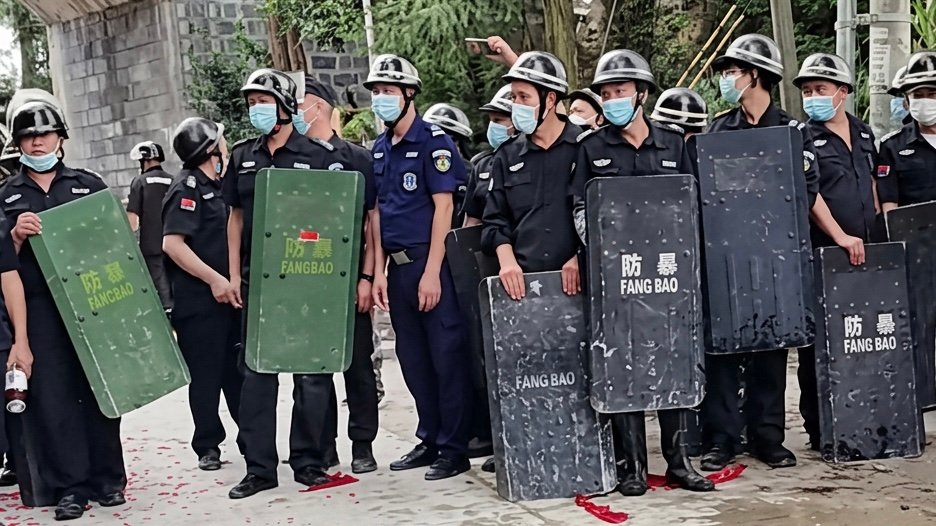
The outcome of the Houyang incident remains uncertain, yet the resistance shown on September 4 suggests rural residents are willing to confront demolition teams directly and endure the consequences.
The authorities have not issued detailed statements about the next steps, and villagers remain alert to the possibility of a renewed attempt. The injured woman’s condition has drawn sympathy within the community, and her presence in the hospital has become a reminder of the risks involved in opposing government operations.

The suspension of the demolition has given the village a reprieve, and residents continue to discuss how to respond if officials return.
The future of the Guanyin statue remains unknown, and the situation may evolve in unpredictable ways. Yet, the resistance displayed on September 4 has already shaped the village’s atmosphere and influenced discussions in nearby communities.

Uses a pseudonym for security reasons.