Freemasonry and the anti-Catholic rhetoric of the “Third Rome” were important for the friends Balla met when he moved from Turin to Rome. Theosophy was not far away.
by Massimo Introvigne
Article 3 of 5. Read article 1 and article 2.

Balla was born in Turin on July 18, 1871. Although his family later claimed his father was a chemist and photographer, he was a waiter at the time of Giacomo’s birth and later worked “for” a photographer. His mother, a seamstress, helped Giacomo enroll to study art at the Accademia Albertina in Turin when he was 15. Giacomo supported himself through work with a lithographer and then a photographer. He completed three years in the first cycle at the Albertina and two years in the second, but had to halt his studies due to financial issues. His five years at the Albertina provided him with a solid academic foundation. In 1895, when his mother decided to move to Rome with him, Giacomo quickly gained recognition from critics, patrons, and fellow artists.
Gino Severini (1883–1966), a student and friend of Balla, recalled that Rome was aware its painters were conventional and imitative, falling behind Milan and Turin in the arts. Northern painters with academic training aimed for success there, and officials increased awards and stipends to attract talented artists and writers, including Balla’s fellow Turin natives like painter Felice Carena (1879–1966) and poet Giovanni Cena (1870–1917).
Most of these newcomers showed anticlerical tendencies and favored socialism. Among these intellectuals, the “Third Rome” myth grew popular, representing hopes that Italy’s capital would become a model of progress and social justice. Catholicism was seen as corrupt and decadent, inspiring that the third Rome should mirror the first (of the Roman Emperors), not the second (of the Popes). This new Rome sought to foster a new spirituality, with some even suggesting the creation of a new religion, though its exact nature remained unclear. Freemasonry provided a secular spiritual framework, while socialism was embraced with intense religious-like fervor. Supporters of Giuseppe Garibaldi (1807–1882) and Giuseppe Mazzini (1805–1872) cultivated a quasi-religious civil spirituality centered on them, and Leo Tolstoy’s (1828–1910) gentle religiosity also gained influence. When Theosophy arose, it integrated smoothly into this landscape of progressive spiritual options beyond Catholicism.
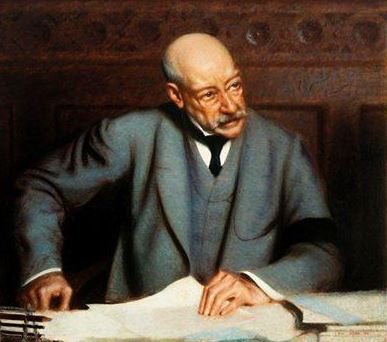
When Ernesto Nathan (1845–1921), a London-born Jew and enthusiastic admirer of Mazzini who served as Grand Master of Italian Freemasonry from 1896 to 1903, was elected Mayor of Rome in 1907, the city’s anti-clerical cultural movement gained political dominance. Nathan’s agenda heavily drew from the myth of the Third Rome, emphasizing the celebration of the First Rome by supporting archaeologists such as Giacomo Boni (1859–1925), who regarded the ancient Roman spirituality as superior to Catholicism. Through innovative art, Nathan helped artists and architects establish the Third Rome as a prominent symbol. The existing Società Amatori e Cultori (Society of Amateurs and Scholars of the Arts) expanded with Nathan’s support and became a key platform for his artistic and political initiatives.
Balla included Duilio Cambellotti (1876–1960) and Alessandro Marcucci (1876–1968), who were involved in Masonic circles, among his earliest friends in Rome. In 1904, he married Marcucci’s sister, Elisa (1878–1947), with Cambellotti and Marcucci serving as his best men. Later, Laura, Marcucci’s daughter, married Cambellotti’s son. Cambellotti was a versatile artist mainly known as a ceramist, while Marcucci was an officer at the Ministry of Instruction. Their circle also featured Cena and Giovanni Prini (1877–1958), a sculptor with an influential salon, as well as Giuseppe Pellizza da Volpedo (1868–1907), a Turin painter famous for creating the Socialist icon painting “Il quarto stato” (The Fourth State, 1901). Family tradition claims that the figure in the painting’s center was Cambellotti.
Cambellotti and Marcucci often collaborated with the Rome-based journal “La casa,” which aimed to bring the ideas of William Morris’ (1834–1896) Arts & Crafts to Italy. These principles combined Socialism, Pre-Raphaelite aesthetics, Art Nouveau, and the belief that decorative arts should foster cultural and social renewal. Italians first encountered these concepts when the Episcopalian Church opened St. Paul’s Within the Walls in 1880. The mosaics were created by pre-Raphaelite painter Sir Edward Burne-Jones (1833–1898), and although William Morris was consulted about the tiles, they were ultimately made by his contemporary Frederick Garrard (1837–1893).
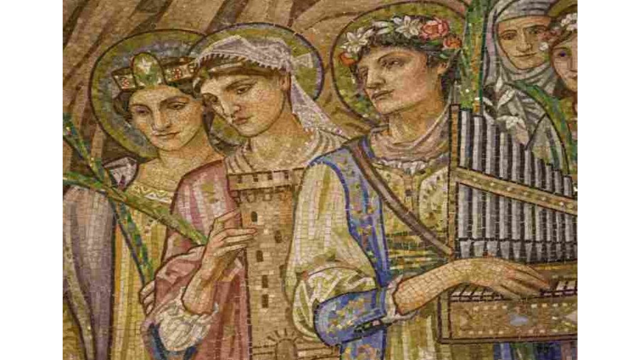
While these ideas originated in a different context, Arts & Crafts principles later influenced Balla, who, along with fellow Futurist Fortunato Depero (1892–1960), authored the manifesto “Ricostruzione futurista dell’universo” (Futurist Refashioning of the Universe). Balla also started making furniture, clothing, ties, wooden flowers, and other artifacts as part of a Futurist vision to revolutionize all arts.
Balla was among the first to exhibit at the Società Amatori e Cultori in 1899. After briefly staying in Paris from 1900 to 1901, he gained recognition in Rome and began teaching younger artists, including Severini and Boccioni. Severini recalled that they interpreted Marxism through Tolstoy’s religious lens. Balla’s friends, Cambellotti and Marcucci, introduced him to more esoteric aspects of the Roman Masonic community. His daughter Elica (1914–1993) told Italian art critic Maurizio Fagiolo dell’Arco that Balla never officially joined Freemasonry but was close to the lodges.
Many Roman artists and Freemasons prioritized educating poor children in the Roman countryside (Agro Romano), where most were illiterate and suffered from malaria. Among the so–called “XXV [artists] of the Agro Romano” was Vittorio Grassi (1878–1958), a Freemason and Italian disciple of William Morris. In 1911, he created a Masonic stamp celebrating Italy’s 50th anniversary, showing a Freemason sculpting a serpent eating its tail, with the motto DEA ROMA (Goddess Rome). Although Balla was not part of the XXV, he donated works, including a portrait of Leo Tolstoy, to support their charitable activities.
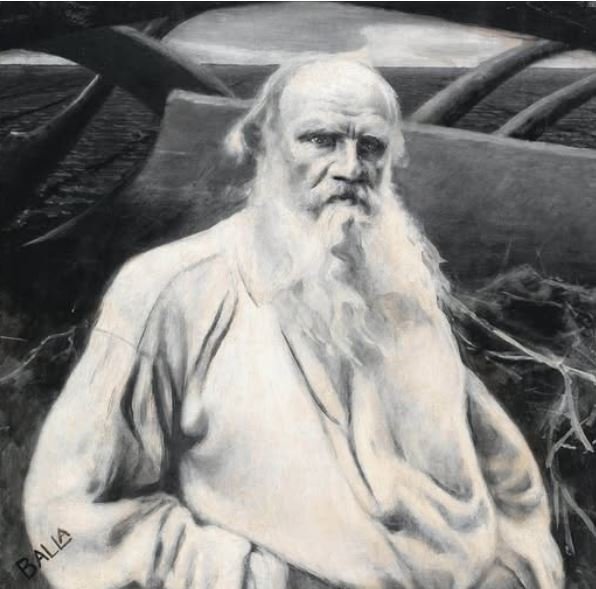
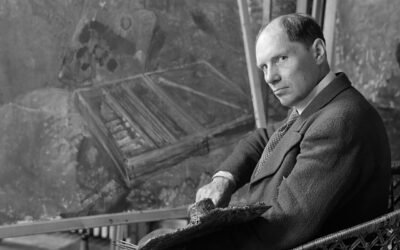
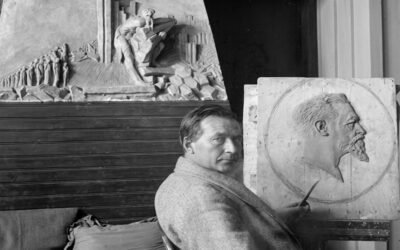
These efforts secretly conveyed meaningful messages. Several XXV members, such as Cambellotti and sculptor Ettore Ferrari (1845–1929), who became Grand Master of Italian Freemasonry in 1904, believed that peasants in the Roman countryside preserved, in their appearance and folklore—less influenced by Catholicism—authentic remnants of the old Roman Empire. Cambellotti observed, “These men still displayed signs of ancient nobility, beneath the damage caused by malaria, fatigue, and servitude. We saw the physical traits and posture of Roman legionaries, consuls, tribunes, and captains in them.”
A close friend of archaeologist Boni and of Cambellotti, involved in both the Agro Romano project and Balla’s early circle in Rome, was Cesarina Ribulsi (1892–1963). She was an archaeologist and served as secretary for Camilla Mongenet de Renancour Calzone (1861–1944). Mongenet was a notable member of the Theosophical Society and, along with Boni and Ribulsi, played a significant role in Rome’s circle that sought to revive the ancient Roman religion and act as priests during Neopagan ceremonies.
A savvy politician, Nathan was naturally skeptical about reestablishing Rome’s Pagan religion. Nonetheless, he supported Boni and the Agro Romano campaign, involving his daughter Annie (1878–1946). Annie Nathan was among a group of female artists studying under Balla. She later married Emilio Engel (1878–1944), a Scottish Rite Freemason and son of Senator Adolfo Engel (1851–1913), Grand Master of the Masonic Italian Symbolic Rite.
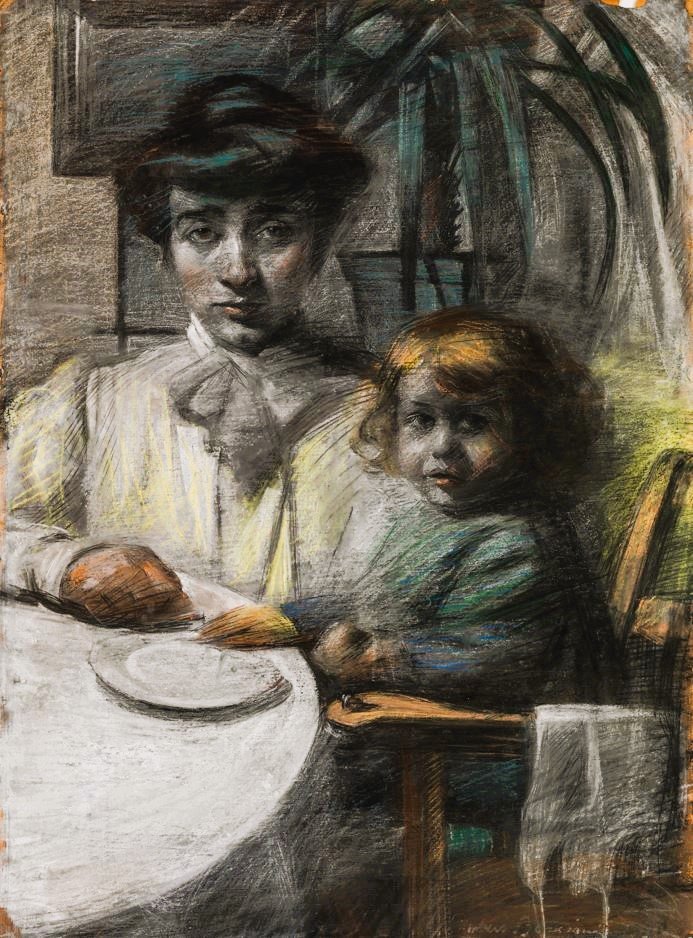
Their group also included Yris Randone (1888–1958), the daughter of the distinctive artist Francesco Randone (1864–1935), known as the Maestro delle Mura (Master of the Walls). He lived in a tower along the Aurelian Walls and established a free art school there in 1890. A close friend and collaborator of the Masonic artist and Grand Master Ettore Ferrari, Randone had been a Freemason since 1905. He was particularly fascinated by the religion and art of the Etruscans, a civilization that flourished in Central Italy from 800 to 500 BC. For Randone, firing ceramics in pits or kilns was considered an “Etruscan” ritual.
The exclusive guests invited to these ceremonies, including Balla, received invitations shaped like a “host of goodness.” These resembled the Eucharistic wafers of the Catholic Church but were decorated with pagan, socialist, and Masonic symbols. One of these hosts depicted the “tria fata,” symbolizing the three Sibyls or Roman fortune-tellers. They were Randone’s daughters—Yris, Honoris (1892–1968), and Horitia (1894–1984)—dressed in outfits reminiscent of Etruscan priestesses or the ceremonial robes used by Tolstoyan communities. They also participated in the ceramic firing ritual, where Balla was often a guest.
Randone saw Cambellotti more as a rival than a friend and rarely worked together. Their only connection was Balla, a mutual friend. Cambellotti’s experiences and the Master of the Walls’ unique activities reflect Nathan’s Rome’s vibrant artistic and cultural scene, where exploring spiritual forms that could challenge Catholic dominance was a central theme. It’s possible that Randone, influenced by his friend and teacher Maria Montessori—who was already involved in the movement—may have also become a member of the Theosophical Society, as Italian art historian Giovanna Caterina de Feo suggests.
While de Feo’s research on Randone frequently references the Theosophical Society, the addresses of the meetings he attended indicate his central involvement was with the Independent Theosophical League. This may clarify why Randone is not listed in the registers of either the Italian Theosophical Society or the international Society in Adyar. In 1920, Randone later showed visitors “the Golden Chain sent to us by the President of the Theosophical Society.” However, it remains uncertain who this President was or what the Golden Chain specifically symbolized.
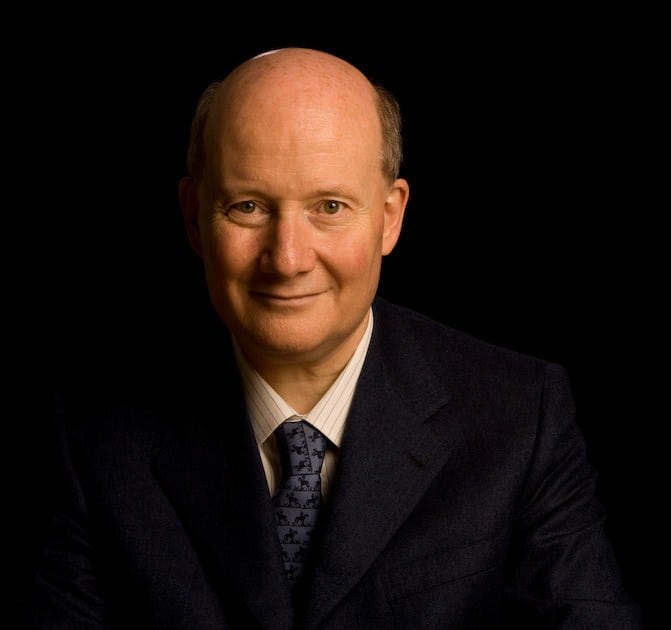
Massimo Introvigne (born June 14, 1955 in Rome) is an Italian sociologist of religions. He is the founder and managing director of the Center for Studies on New Religions (CESNUR), an international network of scholars who study new religious movements. Introvigne is the author of some 70 books and more than 100 articles in the field of sociology of religion. He was the main author of the Enciclopedia delle religioni in Italia (Encyclopedia of Religions in Italy). He is a member of the editorial board for the Interdisciplinary Journal of Research on Religion and of the executive board of University of Pennsylvania Press’ Nova Religio. From January 5 to December 31, 2011, he has served as the “Representative on combating racism, xenophobia and discrimination, with a special focus on discrimination against Christians and members of other religions” of the Organization for Security and Co-operation in Europe (OSCE). From 2012 to 2015 he served as chairperson of the Observatory of Religious Liberty, instituted by the Italian Ministry of Foreign Affairs in order to monitor problems of religious liberty on a worldwide scale.