One of the tenets of democracy is respect for religious liberty, which is the most important political and human right. Where does the UK stand in this regard?
by Marco Respinti
Article 2 of 2. Read article 1.
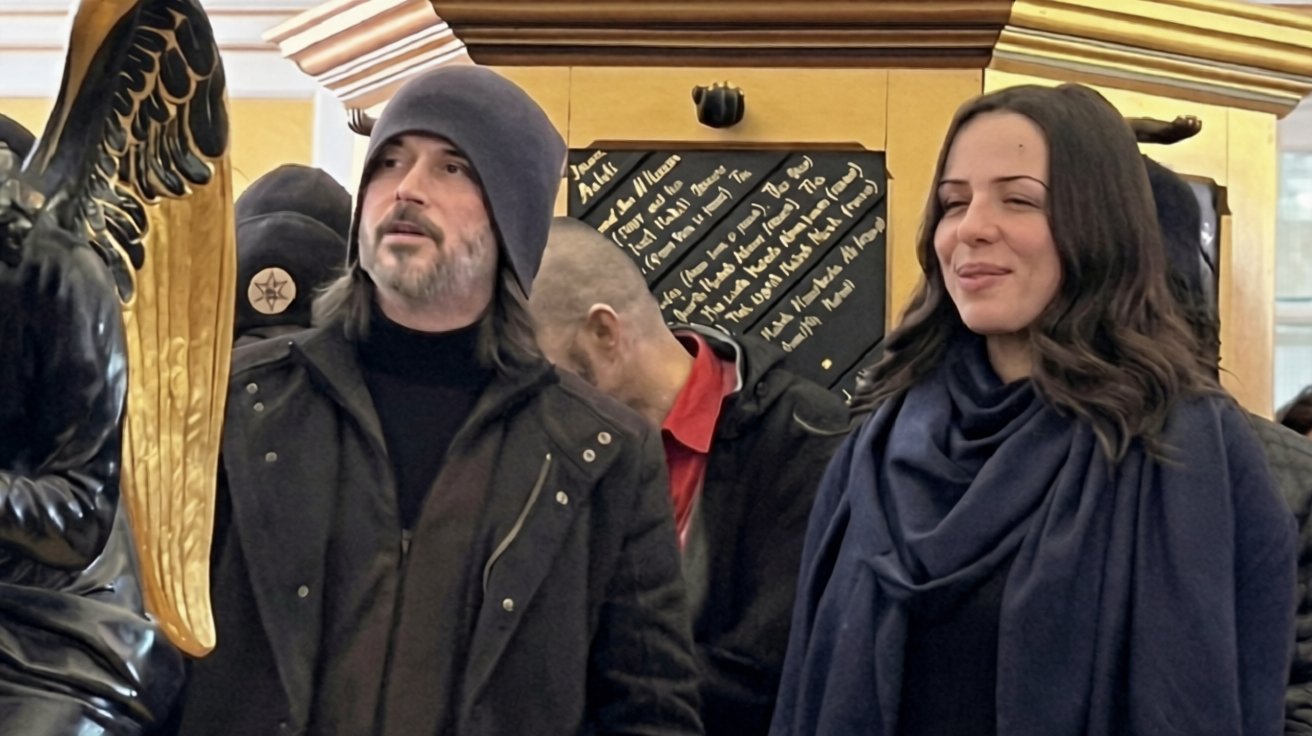
I love England. Its literature is fascinating, its language intriguing, and English and English-speaking authors have strongly marked my personal story and career. I even love English food and weather.
England’s history is rich and powerful. The idealization of its Saxon past in Gilbert K. Chesterton’s (1874–1936) 1911 poem “The Ballad of the White Horse” is as inspiring as the modern epic force of the 1798 poem “The Rime of the Ancient Mariner” by Samuel Taylor Coleridge (1772–1834), which carries the power of a quasi-religious parable.
Less than an hour into my visit to the home and headquarters of the Ahmadi Religion of Peace and Light (AROPL) in Crewe, Cheshire, England (see Article 1 in this series), I discovered that Brother James is a fellow admirer of William Blake’s (1757–1827) mystical verses and paintings, culminating in his 1804 hymn “Jerusalem.” Sitting in the car James was driving, “on England’s pleasant pastures” (Blake), I recalled once having been ridiculously accused of crypto-Satanism for writing that Iron Maiden, one of the historic and leading groups in heavy metal music, now more than 50 years into its career, set Coleridge to hard rock music, and that its lead singer (and pilot), Bruce Dickinson, loves and quotes Chesterton and later also recorded a masterful version of Blake’s “Jerusalem.”
England’s rich history has also produced one of the most influential early examples of representative institutions and the rule of law in medieval history: the 1215 “Magna Charta Libertatum,” which remains a strong bastion against absolutism, statism, and tyranny to this day. England is also proud of the so-called Glorious Revolution of 1688. It was called “glorious” because it was largely bloodless in England, and it was not really a revolution but a dynastic transition that, as the Irish-born philosopher and statesman Edmund Burke (1729–1797) explained, prevented a revolution rather than producing one. In fact, it restored the law rather than breaking it, and it was called a “revolution” because, at the time, the word had not yet acquired the subversive meaning it would later assume with the French Revolution. It was still used metaphorically in its Ancient Greek and medieval astronomical sense: the complete turning of a celestial body around a central mass—a movement that restores rather than destroys.
Where has England gone?
The idea of English, and later British, law as grounded in precedent and norms rather than in human whims and arbitrary rules is rooted in this historical tradition, which has granted chartered rights and concrete liberties. How, then, could the authorities order an unprecedented raid on private property without respecting the very law they exist to defend, using unnecessary and, in any case, excessive force, and beating, injuring, and forcibly removing innocent people, when 500 police officers stormed the home and headquarters of AROPL at the end of April this year?
How is it that the British police, who exist to serve and protect, instead harassed and assaulted?
How is it that the police of a country that laid the foundations of representative government and democracy could, on a cold morning, detain women still in their pajamas, half-naked children, and barefoot men, herding them like cattle into a stadium, where they were held in segregation for hours on end and interrogated? This recalls the worst periods of human history and the most brutal regimes that still dehumanize their people.
How is it that the golden principle of “innocent until proven guilty” has been reversed in such a dangerous way? Should decent people still count the UK among the defenders of truth and justice?
In short, where has my England gone?
Death of the West
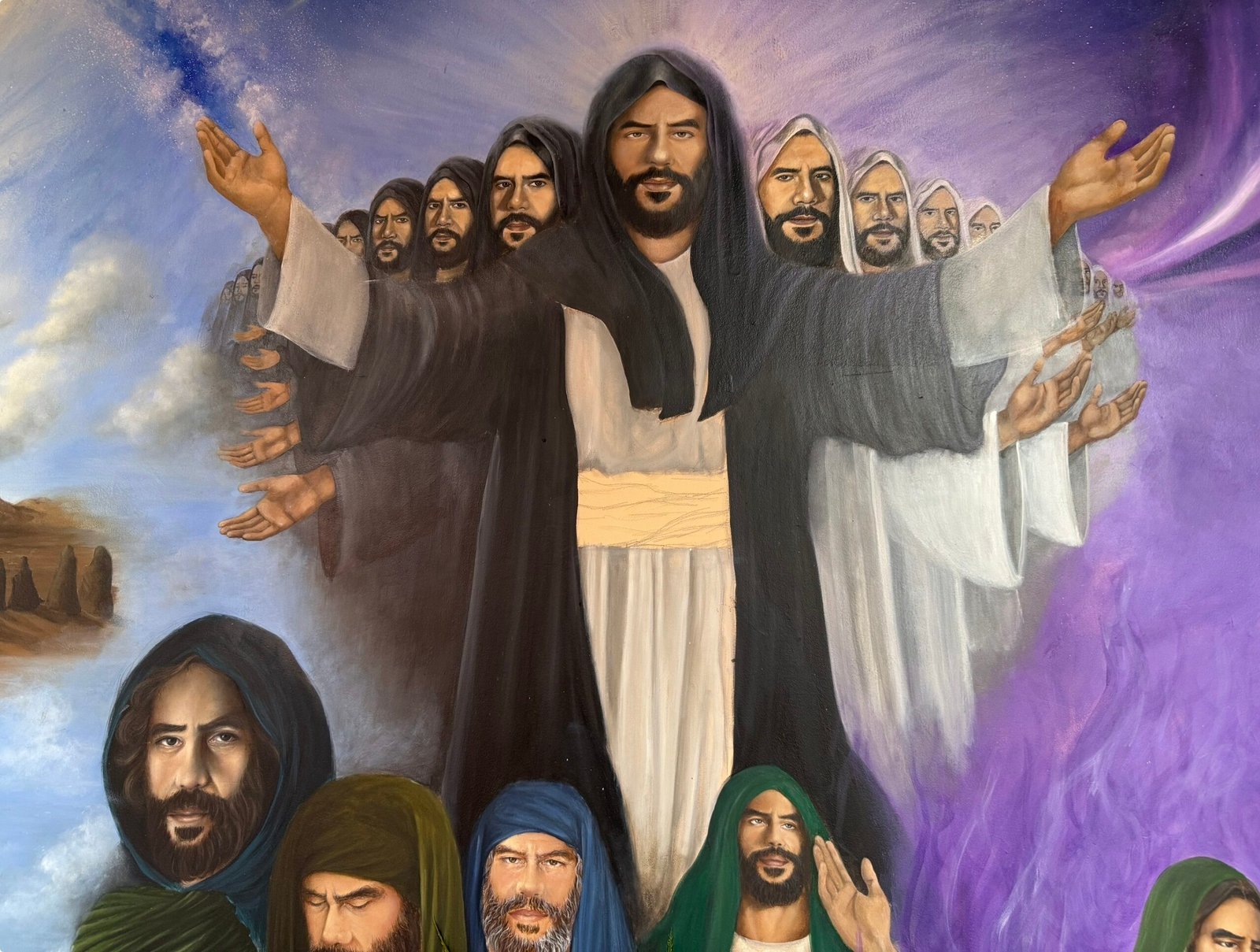
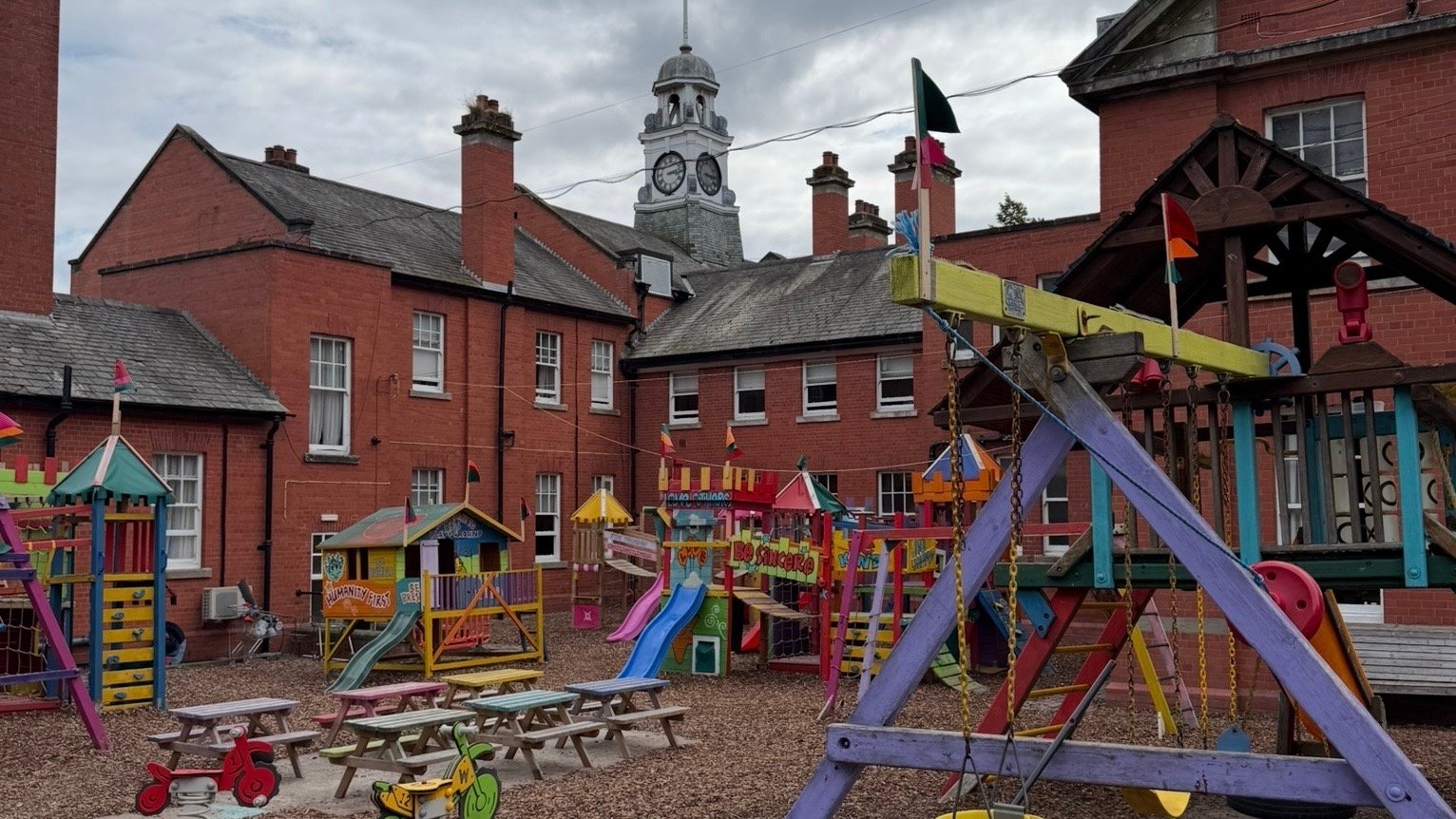
I visit the facilities that make up the Webb House complex. I enter the basilica, entirely frescoed with bust-length portraits of those whom AROPL considers to have been prophets of the past, and of their present-day reincarnations. I spend time in the “Hall of Mysteries” and have pleasant chats in the refectory over lunch. Outside, the carefully maintained park offers some relief from the heat. Nearby, I notice the children’s playgrounds—slides, swings, and the like—but everything is unnaturally silent. There are no little voices, no shouting, no crying. Free people cannot live freely on their own property. Why? No one knows. This is not England.
We all expect, and see, this kind of behavior from authoritarian and totalitarian regimes that hold human dignity in contempt. We all know these are the methods of tyrants and evil rulers, based entirely on arbitrariness, hubris, and despotism. We all know this is not the tradition of England and the UK. This is not the tradition of the “Magna Charta” and the Glorious Revolution. Has the UK decided to change its nature? Has the UK turned into something else?
If the UK follows this path, it will be finished. It will become yet another mockery of democracy and human rights, based on ruthless power and no liberties. If the UK decides to go that way, the “Magna Charta” is dead, and the 1688 Glorious Revolution is reduced to dust. And if the UK becomes unrecognizable, given its historical role in establishing the rule of law and defining substantial aspects of Western civilization, both the rule of law and Western civilization are in grave danger. Does the UK want to be remembered as the killer of the rule of law and Western democracy?
AROPL is attacked, assaulted, and discriminated against in several countries whose values are the opposite of those of the UK. AROPL believers have been killed in countries where the rule of law is generally or substantially absent. Where does the UK stand in this scenario? Where does it want to stand in the world?
Violence, harassment, and brutality are always unbearable. But they are outrageous in a democratic country, and utterly inconceivable when they come from the authorities and law enforcement agencies of one of the pivotal nations that helped set the very standards of democracy. One of the tenets of democracy is respect for religious liberty, which is the most important political and human right. Does the UK want to join the war against this fundamental pillar of human nature, like so many of the despotic regimes of the earth?
The UK is not alone. Several democratic states are showing worrying signs of intolerance toward religious liberty. It seems as if it is becoming fashionable to describe democracy as intolerance toward religion. Does the UK want to continue raising the banner of decency, freedom, and human rights, protecting children, women, and those in need, as it always has, or not.
In Crewe, there is a small garden at the junction of two streets, just beyond the pedestrianized, flower-filled Market Square. It is Memorial Square, with a monument to the fallen. Words are inscribed on the four sides of the base of the statue of Britannia, the female personification of the country, who holds the palm of the martyrs in one hand. They read: “When you go home, tell them of us and say: ‘We gave our today for your tomorrow.’” It is the “Kohima Epitaph,” written by the English classicist and poet John Maxwell Edmonds (1875–1958), and used to honor the fallen buried in the war cemetery at Kohima, India, after the battle of April 1944. Are there still such women and men in England today?
London still has time to reverse the course of events, to give AROPL its due, and to give everyone what is theirs. But time is running out, and women and children are the first to suffer.

Marco Respinti is an Italian professional journalist, member of the International Federation of Journalists (IFJ), author, translator, and lecturer. He has contributed and contributes to several journals and magazines both in print and online, both in Italy and abroad. Author of books and chapter in books, he has translated and/or edited works by, among others, Edmund Burke, Charles Dickens, T.S. Eliot, Russell Kirk, J.R.R. Tolkien, Régine Pernoud and Gustave Thibon. A Senior fellow at the Russell Kirk Center for Cultural Renewal (a non-partisan, non-profit U.S. educational organization based in Mecosta, Michigan), he is also a founding member as well as a member of the Advisory Council of the Center for European Renewal (a non-profit, non-partisan pan-European educational organization based in The Hague, The Netherlands). A member of the Advisory Council of the European Federation for Freedom of Belief, in December 2022, the Universal Peace Federation bestowed on him, among others, the title of Ambassador of Peace. From February 2018 to December 2022, he has been the Editor-in-Chief of International Family News. He serves as Director-in-Charge of the academic publication The Journal of CESNUR and Bitter Winter: A Magazine on Religious Liberty and Human Rights.