A major new book by the leading scholar of esotericism shows how “rejected knowledge” was expelled from European culture, and how the same operation was later exported to the colonized world.
by Massimo Introvigne
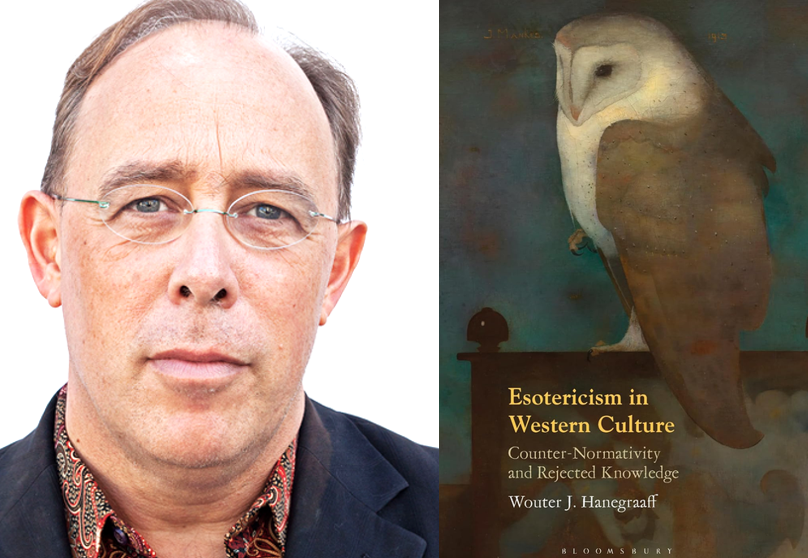
Some books summarize a field. A few redefine it. Wouter J. Hanegraaff’s “Esotericism in Western Culture: Counter-Normativity and Rejected Knowledge” (London: Bloomsbury Academic, 2025) does both.
Hanegraaff, of the University of Amsterdam, has shaped the academic study of esotericism for more than thirty years. The new volume grew out of a short textbook he published in 2013, “Western Esotericism: A Guide for the Perplexed.” He now writes that he “hereby declare[s]” it “obsolete.” The 2025 book is entirely rewritten and much longer, and the change of title, from “Western Esotericism” to “Esotericism in Western Culture,” announces a change in perspective that I will discuss below.
The book is organized in three triads of chapters. In the first, introductory triad, Chapter One asks what we mean by esotericism, refusing the question “what is esotericism?” as crypto-essentialist. Hanegraaff distinguishes two scholarly uses of the word. “Esotericism1” is a collection of historical traditions, ideas, and practices grouped together because they are considered to have certain things in common. “Esotericism2” refers to the dialectics of secrecy, the social regulation of access to specific forms of knowledge, which can be found in almost any social setting. The book is about the first meaning. Esotericism, in his working definition, has two characteristics: it has been set apart as the negative “other” against which dominant religious and intellectual elites defined their identity, and it emphasizes worldviews and epistemologies at odds with normative post-Enlightenment culture. In a memorable phrase, Hanegraaff calls it “the academy’s dustbin of rejected knowledge.”
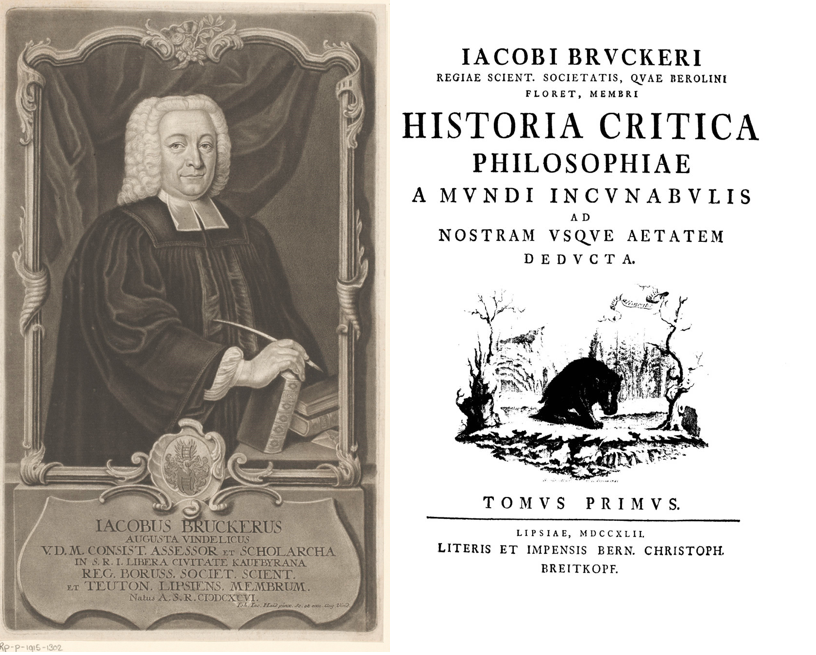
Chapter Two offers a historical map, from the Platonic Orientalism of late antiquity, Hermetism, and Gnosticism to the Renaissance, Rosicrucianism, Christian Theosophy, Freemasonry, Mesmerism, Spiritualism, occultism, the Theosophical Society, Traditionalism, and the New Age. New and substantial sections deal with Jewish and Islamic esotericism, including the Brethren of Purity and the “science of letters” known as lettrism. Chapter Three, now titled “Internal Eurocentrism,” moves from history to “mnemohistory,” the history of how the past is remembered. Here Hanegraaff condenses the argument of his classic 2012 book “Esotericism and the Academy.” Early Christians rejected pagan cults as worship of demons. Protestant polemicists later accused Catholicism of having been contaminated by “pagan” philosophy. Enlightenment thinkers took over the Protestant arguments and turned them into a wholesale rejection of “superstition.” The German historian of philosophy Christoph August Heumann proposed in 1715 that the “superstitious idiocies” of ancient wisdom be thrown into “the sea of oblivion,” and after Johann Jacob Brucker’s monumental “Historia critica philosophiae” the field became “academically homeless.”
The second triad describes the contents of the field. Chapter Four classifies esoteric worldviews into patterns of “metaphysical radicalism,” either monistic or dualistic, and “metaphysical mediation,” in Platonic and alchemical forms. Chapter Five proposes a fourfold typology of knowledge (reason, faith, experience, and gnosis, distinguished by whether they are communicable and verifiable). Chapter Six turns to practice, warning against a “(crypto)Protestant bias” that privileged belief over ritual in the study of religion.
The third triad opens with a chapter on modernization, examining causality and disenchantment, globalization, evolutionism, psychology, and the “religious supermarket.” Chapter Eight follows esotericism across philosophy, science, the arts, social life, and politics. The final chapter, “The Importance of Esotericism,” introduces the concepts of “counter-normativity” and “counter-normality.” The former is the critical project of showing that what we experience as normal reflects hidden normative choices. The latter covers the experiences that do not fit those norms, from the paranormal events studied by Jeffrey Kripal to visions, voices, and synchronicities. Against a dogmatic “Enlightenment2,” defined by the rejection of rejected knowledge, he sides with an open “Enlightenment1” committed to free inquiry wherever it leads. The book ends with three lines that summarize its program: “It could all be different / It already is different / Just look at what’s there.”
Readers of “Bitter Winter” may want to know that Chapter Eight discusses esoteric new religious movements and the controversies about “cults.” Hanegraaff writes that the distinction between “true” religions and pseudo-religious “cults” is “entirely arbitrary,” that there is “no scientific basis” for the notion of cultic brainwashing, and that members of minority religions should not be harassed by media or police because their beliefs look weird to others. He is generous enough to mention my own work and that of the CESNUR network of scholars in this context, and to quote elsewhere my studies of Satanism, Rosicrucianism, and the Order of the Solar Temple. I mention this only for the sake of disclosure.
My comments focus on two larger themes. The first is the extension of the argument of “Esotericism and the Academy.” In 2012, Hanegraaff described a sequence in which Protestant anti-paganism, Enlightenment rationalism, and later Marxist and positivist critiques progressively expelled esotericism from respectable culture. In the new book, he shows that the operation had a wider target. The campaign against “magic” and “superstition” eventually became a campaign against the supernatural and the miraculous as such, and finally against religion. Hanegraaff observes that early modern scientists such as Robert Boyle and Henry More defended the reality of demons because they feared that, once malevolent spirits disappeared from the world, angels and God himself would follow them. “They were correct,” he writes, “for that is precisely what happened.”

Esotericism, in other words, was the first casualty of a much larger war. One book Hanegraaff does not quote, perhaps because it appeared too late for him to use it, is Peter Harrison’s “Some New World: Myths of Supernatural Belief in a Secular Age” (Cambridge University Press), which I reviewed in “Bitter Winter” last year. Harrison argues that the very distinction between “natural” and “supernatural,” and the idea that the supernatural is by definition irrational, are modern constructions, and that “belief” as assent to propositions is itself largely a modern invention. I suspect that Hanegraaff, whose final chapter includes a sharp critique of neoliberalism, may not share the conservative political sensitivities of the Australian scholar. Yet the two books supplement each other nicely. Harrison deconstructs the category of the supernatural from the side of the history of ideas and theology, Hanegraaff from the side of the history of rejected knowledge, and both show that what modernity presents as the natural outcome of progress is the result of historically contingent polemical choices.
The second theme concerns the notion of the West, where the book departs most from its 2013 predecessor. Hanegraaff proposes to speak of a “Greater West,” defined as the dialectic between Hellenistic “paganism” and the three exclusive monotheisms of Judaism, Christianity, and Islam. Geographically, before 1492, it covered the whole Mediterranean area, including North Africa and the Middle East. Islam thus becomes an integral part of Western culture, and Hanegraaff reminds us that, in the early modern period, the Islamic part of the Greater West included about one third of the world’s population.
Hanegraaff also introduces the category of “internal Eurocentrism,” the sanitization of Western culture by removing its esoteric elements, and later its supernatural and religious ones. In the final chapter, he shows that internal Eurocentrism was the template for “external Eurocentrism,” the colonial disparagement of non-Western cultures as magical, superstitious, and inferior. The same categories of “idolatry” and “demon worship” used against European witches and heretics were exported to Asia, Africa, and the Americas, with consequences that included extermination. The pages quoting Herbert Spencer and Eduard von Hartmann on the desirable disappearance of “inferior races” are among the most disturbing in the book. “Rejecting knowledge,” Hanegraaff writes, “means rejecting people to whom such knowledge is important in their lives.” He also argues, provocatively, that many decolonial critics accept the narrow Eurocentric caricature of the West as accurate, while they should deconstruct it.
I would suggest that continuing this conversation requires a third category, which I propose to call “decolonial Eurocentrism.” The expression is mine, and I hope to develop it in a future study. Some decolonial authors, both Western and non-Western, affirm the value and even the superiority of non-Western cultures. They often do so, sometimes unconsciously and while denying that they are doing it, by sanitizing and Westernizing these cultures. Their supernatural, miraculous, and magical elements are dismissed as later superstitions, while the cultures in their “pristine” forms are presented as inherently monotheistic, reasonable, and rationalist.
Examples abound. The Hindu reformers of the 19th century, from Rammohun Roy to Dayananda Saraswati, created a mythical “original” Hinduism purged of image worship, references to sexuality, and siddhis (supernormal powers), a Hinduism that looked suspiciously like Unitarian Protestantism and was in some respects downright puritanical. Several theorists of African “traditional religion” reconstructed it as a form of monotheism, regarding entheogens, “superstitious” rituals, healing practices, and “magic” (admittedly a contested category) as encrustations to be removed. The Ugandan scholar Okot p’Bitek protested as early as 1970 that his colleagues were dressing African deities in Hellenic robes. Some Chinese authors reconstruct ancient Chinese religion as a monotheism. Xi Jinping praises the superiority of the “excellent traditional Chinese culture” while claiming that it was not religious. He argues from the fact that Chinese had no word for “religion” before the encounter with Western missionaries and scholars, which is true, to the conclusion that China had no religion, which is false.
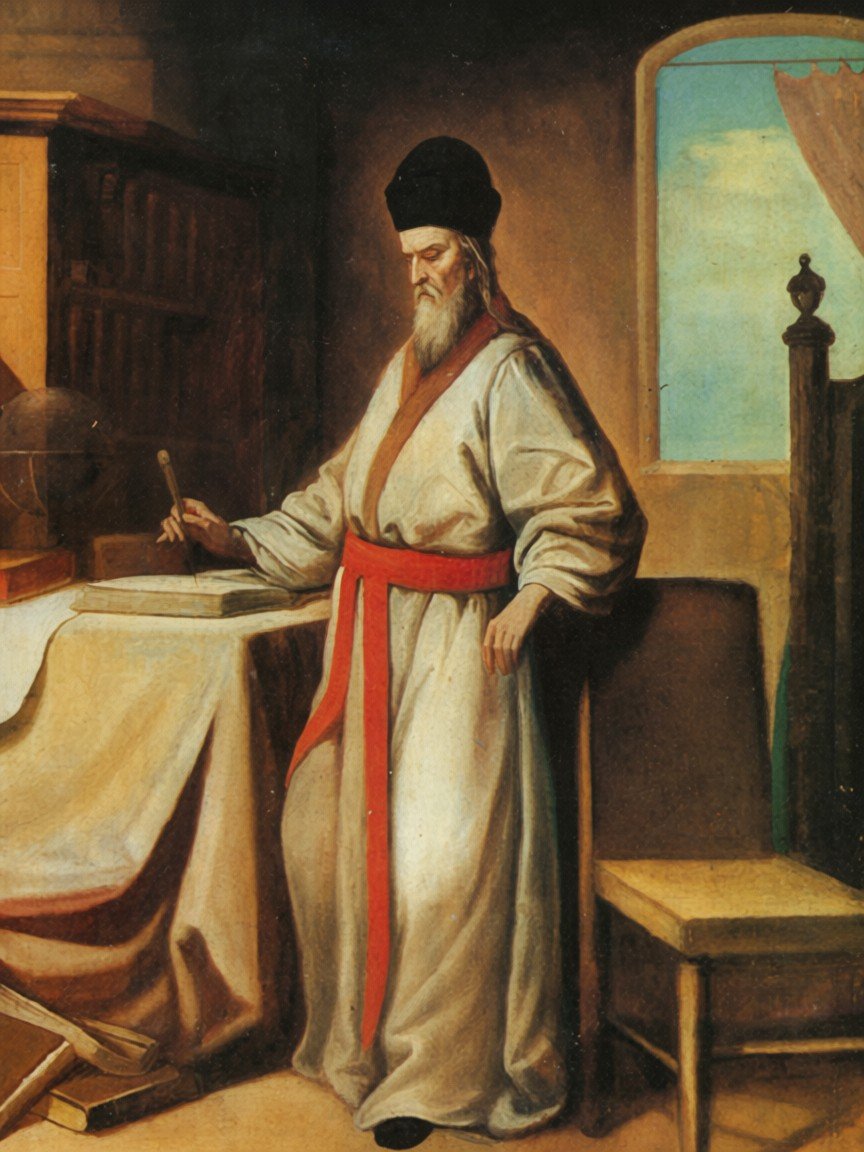
Hanegraaff’s own material offers a genealogy of this attitude. He shows how Jesuit missionaries in China, including Matteo Ricci, distinguished a “secret” pure monotheism of the elites, which could be recovered and harmonized with Christianity, from the idolatrous superstitions of the masses, which should be suppressed. The missionaries who regarded African and Asian religions as demonic were later replaced by those who followed the celebrated 1965 book by the Belgian theologian Dominique Nothomb, “Un humanisme africain: valeurs et pierres d’attente.” For Nothomb, African indigenous spirituality came from God, who had scattered in it “pierres d’attente,” toothing stones that the missionaries would one day be able to use, rather than from Satan. This was an advance in respect and sympathy. It was also decolonial Eurocentrism, because it came at the price of eliminating from African spirituality the elements we may call “esoteric,” which lie at its core. There is much to praise in the decolonial reappraisal of African and other indigenous spiritualities. At the end of the day, however, external Eurocentrism and decolonial Eurocentrism risk being two faces of the same coin.
A final remark concerns the chapter on modernization. Hanegraaff notes, correctly, that historians rather than natural scientists have posed the most serious threats to esoteric and religious convictions. “There is no greater threat to religious or esoteric conviction,” he writes, “than the practice of historiography.” His example is the Corpus Hermeticum, which Renaissance readers regarded as the most ancient repository of Egyptian wisdom, until Isaac Casaubon demonstrated in 1614 that it had been written in the first centuries of the Christian era. Undoubtedly, this contributed to the decline of Hermeticism. On the same page, however, Hanegraaff adds that textual and linguistic criticism since the early modern period “basically destroyed the possibility of seeing the Bible as the Word of God.” Here, I believe, “destroyed the possibility” should be qualified by adding “for academic scholars.” Unlike Hermeticism, Christianity is a mass movement of more than two billion people, many of whom do not care for academic studies or do not even know they exist. Millions happily continue to regard the Bible as the Word of God, impervious to the conclusions of biblical criticism. This is, admittedly, the typical comment of a sociologist on a book by a historian.
The book is a work of history, and an exceptionally good synthesis, invaluable to historians and sociologists alike, and even to practitioners of esotericism, who will find in it a respectful and learned account of their own traditions. Hanegraaff did not need this volume to establish his reputation, yet it confirms once again that he is the most knowledgeable living scholar of esotericism.

Massimo Introvigne (born June 14, 1955 in Rome) is an Italian sociologist of religions. He is the founder and managing director of the Center for Studies on New Religions (CESNUR), an international network of scholars who study new religious movements. Introvigne is the author of some 70 books and more than 100 articles in the field of sociology of religion. He was the main author of the Enciclopedia delle religioni in Italia (Encyclopedia of Religions in Italy). He is a member of the editorial board for the Interdisciplinary Journal of Research on Religion and of the executive board of University of Pennsylvania Press’ Nova Religio. From January 5 to December 31, 2011, he has served as the “Representative on combating racism, xenophobia and discrimination, with a special focus on discrimination against Christians and members of other religions” of the Organization for Security and Co-operation in Europe (OSCE). From 2012 to 2015 he served as chairperson of the Observatory of Religious Liberty, instituted by the Italian Ministry of Foreign Affairs in order to monitor problems of religious liberty on a worldwide scale.