A new volume catalogs the plates the Italian painter drew for the Parisian magazine “Je sais tout,” amid Spiritualist séances, pacts with the devil, and ectoplasms.
by Massimo Introvigne
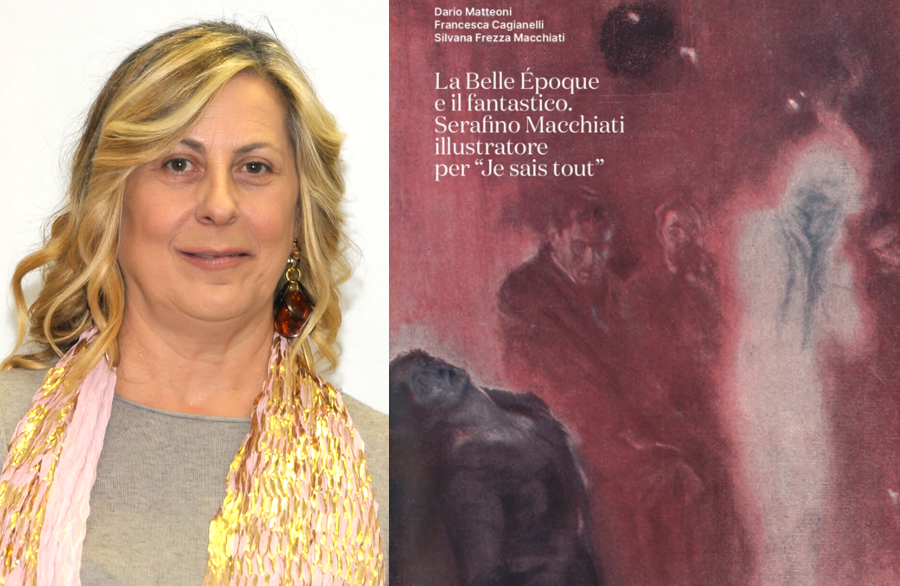
In December 2023, I reviewed in “Bitter Winter” the exhibition that the Pinacoteca Comunale Carlo Servolini in Collesalvetti, Tuscany, devoted to Serafino Macchiati (1861–1916), the painter born in Camerino who died in Paris. After painting Impressionist and Divisionist landscapes under the guidance of Vittore Grubicy de Dragon (1851–1920), he turned to nightmares, literary Satanism, and Spiritualist séances. That show, curated by Francesca Cagianelli and Silvana Frezza Macchiati, left one area of research open: the plates published between 1905 and 1917 in the Parisian monthly “Je sais tout” (I Know Everything). The gap is now filled by “La Belle Époque e il fantastico. Serafino Macchiati illustratore per ‘Je sais tout’” (The Belle Époque and the Fantastic: Serafino Macchiati as an Illustrator for “Je sais tout,” Silvana Editoriale, 2026), by Dario Matteoni, Cagianelli, and Frezza Macchiati.
The volume includes three essays, a complete index of the texts the artist illustrated for the magazine, and about eighty pages of plates, many in color. For readers of “Bitter Winter,” who follow the history of alternative spiritualities, its interest lies in the material that can finally be seen together: a decade of images in which a talented Italian painter gives visible form to what early-twentieth-century Paris thought, feared, and hoped about the afterlife.
Matteoni starts with the magazine. “Je sais tout” was founded in February 1905 by the publisher Pierre Lafitte, the same man who would launch Arsène Lupin, and in 1906 it printed two hundred thousand copies. Its editor-in-chief until 1912 was Henri Barbusse (1873–1935), the future author of “Le Feu” (Under Fire) and a close friend of Macchiati. The monthly promised bourgeois families the whole of human knowledge for one franc, and published aeronauts, financiers, and scientists. Its very first issue, however, carried an article on the end of the world by the astronomer Camille Flammarion (1842–1925), a member of the Theosophical Society, who in those years was also one of the best-known French students of mediumistic phenomena.
Matteoni observes that, for the general public of the time, medical knowledge and beliefs in the occult remained intermingled, and that the magazine combined its trust in science with a constant unease about the mysteries of the psyche. As a sociologist, I would add that the picture matches what scholars of esotericism have documented: Belle Époque Spiritualism presented itself as an experimental science, and taking an interest in it was a way of being modern.
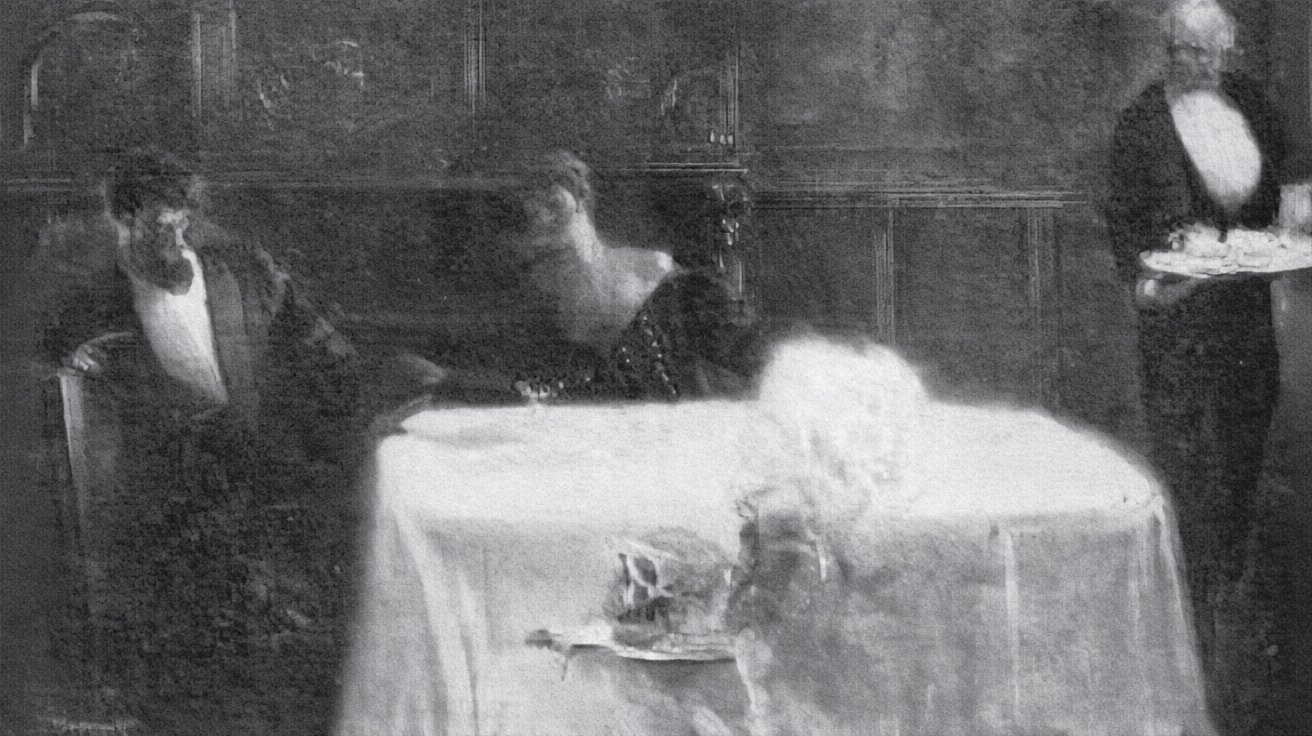
The testing ground was “Moi et l’Autre” (Me and the Other), the novel by Jules Claretie (1840–1913) that came out in seven issues between February and August 1905 with twenty-six plates by Macchiati. Its protagonist, the painter André Fortis, suffers from a split personality, and during his crises he paints pictures he does not recognize as his own. One of them, discovered by his wife Cécile in the studio, depicts a goat-man surrounded by worshippers, which is to say a Sabbath. In the end, one of the doctors consulted pronounces: “man is double.” Matteoni recalls that Claretie had in mind the cases of dual personality studied by French psychiatry, and he puts forward an intriguing thesis. Macchiati would have read his own autobiography in the story: the Other would be his stand-in, the artist of visions pressing beneath the painter of light trained by Grubicy. The letters to the latter, preserved at the MART museum in Rovereto, would confirm this. On December 31, 1904, Macchiati reported that the drawings preceded the writing of the novel and steered its plot, so that the work amplified “the mission of the draftsman, who thus becomes a true collaborator.” Elsewhere he described this kind of subject as “something half pathological and half fantastic.”
Cagianelli follows the collaboration year by year, and her essay is the most useful for those looking for esoteric themes. In 1905, Macchiati illustrated the French version of “The Monkey’s Paw,” the tale by W.W. Jacobs (1863–1943) about the Indian talisman that grants wishes at a heavy price, and “L’Homme rouge” (The Red Man) by Marie-Anne de Bovet (1855–1943), a writer who—the author recalls—would later draw close to occultism and to the Martinism of Gérard Encausse, “Papus” (1865–1916). In 1906 and 1911 came the turn of Arthur Conan Doyle (1859–1930), with a castle full of portraits that seem to step out of their frames and an African island haunted by the demons of local superstition. Readers will remember that, a few years later, the creator of Sherlock Holmes would become the world’s best-known propagandist of Spiritualism.
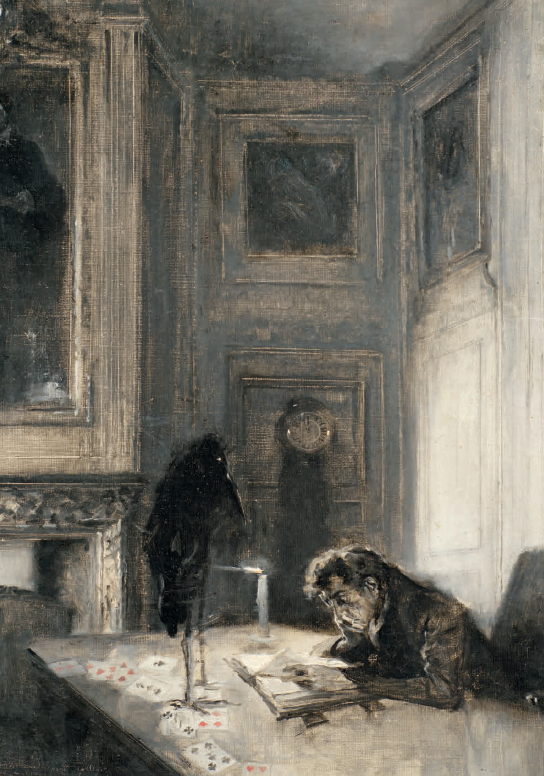
The peak, according to Cagianelli, came in March 1908 with the six plates for “L’Homme qui a vu le Diable” (The Man Who Saw the Devil) by Gaston Leroux (1868–1927). A gentleman ruined by gambling finds in a book of witchcraft the simplest formula of evocation: “Anyone who seriously wants to see the devil has only to call him with all his heart: he comes!” Macchiati portrays him bent over the volume with a raven looming in the foreground, and Matteoni recognizes in it the bird of Edgar Allan Poe (1809–1849). In the last plate, the mirror gives back to the protagonist a face that is not his own. All around, objects move by themselves: playing cards, a wardrobe that Leroux describes as drunk, and elsewhere the crockery spilling out of the cupboard in a study intended for a monograph on fear. It was mentioned in 1912 by Carlo Gaspare Sarti (1870–1935), the Paris correspondent of “La Tribuna” and “Il Caffaro,” for whom Macchiati was by then “the conqueror of Paris.” Of that very year Cagianelli writes: “In 1912, Macchiati’s inclination toward the sphere of the paranormal takes off.”
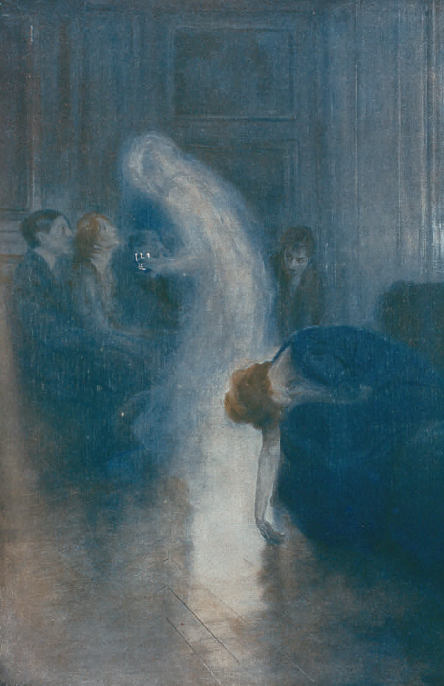
In November 1912, in fact, “Je sais tout” published “Notre Enquête sur l’Au-delà” (Our Inquiry into the Beyond) by the journalist André Arnyvelde (1881–1942), and entrusted Macchiati with four large color plates, which the volume reproduces full-page. They are, in my opinion, the most remarkable images in the book. In “An Occultism Séance,” the participants emerge from a blue half-light dotted with small lights. In “An Entity from the Astral World?,” a veiled figure, white and transparent, crosses the circle of sitters while a red-haired figure bends down to the floor. “A Hallucinatory Apparition,” chosen for the cover, is steeped in a dark red where a luminous form takes shape next to a slumped figure. A hooded silhouette, “A Dantesque Vision,” closes the series. Matteoni notes that the technique is close to photographic superimposition, and Frezza Macchiati that in these inquiries “the illusion of reality is amplified by the combination of drawing and photography.” The remark deserves to be developed. Spirit photography was then the most debated proof of survival after death. By imitating its look, the painter lent his ghosts the authority of a document.
The last work was again for Leroux. “Le Monsieur qui revient de loin” (The Man Who Came Back from Afar) was serialized from June 1916, and its epilogue appeared in January 1917, a month after the artist’s death on December 11. The novel features a Dr. Moutier, the theorist of an “astral medicine” that claims to unite the magnetism studied by Jean-Martin Charcot (1825–1893) with the Spiritualist experiments of William Crookes (1832–1919). Macchiati draws the séance with three figures whose hooked hands surface from the dark, and then takes the ghost outdoors, among the poplars of the French countryside, where the heroine feels her wrist being seized: “I felt a hand of marble settling on my wrist!” Cagianelli points out that here the paranormal meets the open-air painting of the artist’s beginnings. The day after his friend’s death, Barbusse remembered in “L’Œuvre” both his luminous landscapes and “the sensational intensity of his dramatic compositions.”
The third essay, by Frezza Macchiati, examines the plates devoted to current affairs: Leo Tolstoy (1828–1910) among the peasants, the Russian Revolution of 1905, an anarchist torn apart by his own bomb, stock-market speculators besieged by specters and skeletons. It serves to recall that Macchiati’s fantastic vein also invaded the news, and that the artist sympathized with the humble as much as he distrusted the powerful.
The cataloging is precious, the plates are carefully reproduced, and the thesis of the autobiographical “double” is convincing. Those who study esotericism are left with some questions. Did Macchiati personally attend séances? Did he believe in the phenomena he painted, or did he regard them merely as a repertoire of images? Who were the mediums and scholars Arnyvelde interviewed, and what did his readers see in the plates? The authors, prudently, do not take a position. The Collesalvetti exhibition had recalled the artist’s relations with Gaetano Previati (1852–1920) and Giacomo Balla (1871–1958), both attentive to alternative spiritualities, and research can continue on this ground. Matteoni, after all, closes his essay by writing that into the figures of the fantastic Macchiati pours “all his knowledge, graphic and intellectual, difficult, closed, esoteric.” The last adjective is an invitation to keep digging, and this volume supplies the tools to do so.
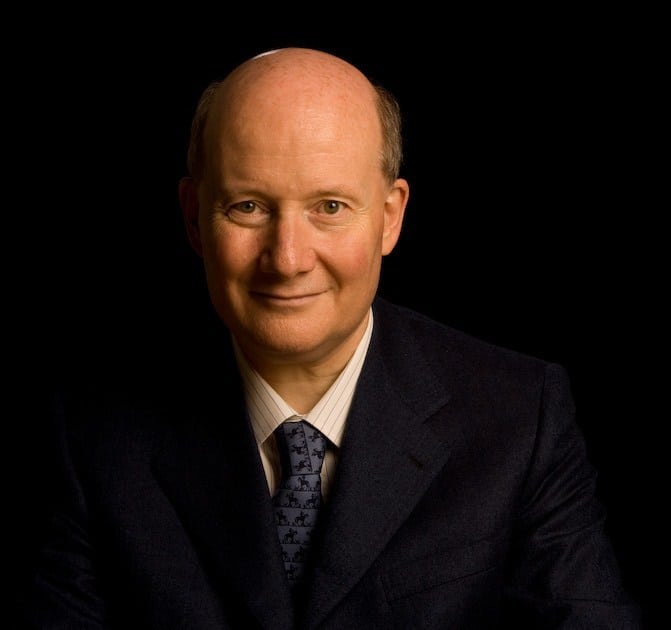
Massimo Introvigne (born June 14, 1955 in Rome) is an Italian sociologist of religions. He is the founder and managing director of the Center for Studies on New Religions (CESNUR), an international network of scholars who study new religious movements. Introvigne is the author of some 70 books and more than 100 articles in the field of sociology of religion. He was the main author of the Enciclopedia delle religioni in Italia (Encyclopedia of Religions in Italy). He is a member of the editorial board for the Interdisciplinary Journal of Research on Religion and of the executive board of University of Pennsylvania Press’ Nova Religio. From January 5 to December 31, 2011, he has served as the “Representative on combating racism, xenophobia and discrimination, with a special focus on discrimination against Christians and members of other religions” of the Organization for Security and Co-operation in Europe (OSCE). From 2012 to 2015 he served as chairperson of the Observatory of Religious Liberty, instituted by the Italian Ministry of Foreign Affairs in order to monitor problems of religious liberty on a worldwide scale.