A murder in Mozambique raised embarrassing questions for the government and for the Catholic Church itself
by Massimo Introvigne
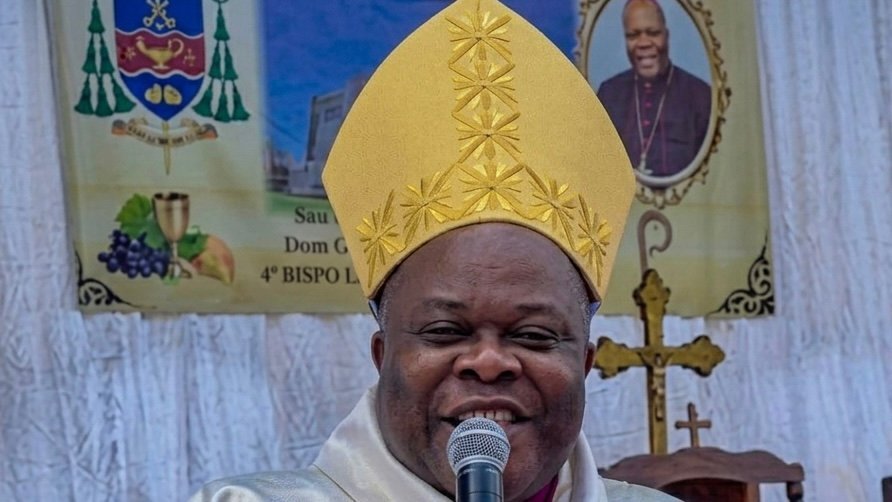
Four months after the assassination of Bishop Osório Citora Afonso, the Catholic Church in Mozambique continues to wait for answers, and the silence of the authorities has become part of the story itself. The bishops’ concern grows as the investigation stalls, and the hypotheses circulating among Catholics point to a crime that may have originated in more than one sphere of influence.
The murder took place on June 6 inside the bishop’s residence in Quelimane. The weapon was a large‑caliber firearm normally associated with military operations. The bishops of Mozambique themselves stated on September 4 that the bishop died in “strange circumstances that have yet to be clarified.”
Monsignor Osório was killed not with a standard handgun, but with a large-caliber weapon of war. The attackers bypassed security systems and executed the killing with precision. Two clerics have been arrested: the chancellor of the diocese, Father Adelino Novais Amado, whom Osório had decided to dismiss, and another cleric, Father Celso. Authorities have seized their phones, along with those of the bishop and the current apostolic administrator, Monsignor Estevão Ângelo Fernando. Yet no official explanation has been offered regarding the motive, the perpetrators, or the chain of command behind the operation.
The bishops’ conference has repeatedly expressed its dismay. They remember that Mozambique has a long history of investigations that never reach full conclusions, especially in cases involving political figures, journalists, and public officials. They fear that the same pattern may repeat itself unless the authorities provide a transparent and persuasive account of what happened. The lack of formal updates from SERNIC, the agency leading the investigation, compounds their frustration.
Two hypotheses dominate public discussion. The first is widely shared among Catholics who admired Bishop Osório’s outspoken stance against corruption. He denounced abuses of power, economic interests that damage the common good, and the situation in Cabo Delgado, where violence, political interests, and opaque networks intersect. Sister María Gómez‑Lechón, who worked in Mozambique for decades, described him as “an uncomfortable figure for numerous sectors of power due to his denunciations of corruption, social injustices, and certain entrenched structures both in society and within the Church itself.” Those who support this hypothesis believe the killing was planned by actors with significant resources, which would be consistent with the weapon used and the professional manner in which the attack was carried out.
The second hypothesis arises from the arrests of the two priests. Some investigators, also based on local media’s investigations, have suggested that the bishop may have been targeted because he was confronting internal irregularities within the Church. The bishops have acknowledged the need for a serious internal examination of conscience, citing undue financial influence and inconsistencies in some clergy’s lives. Yet they also insist that the evidence against the arrested priest is thin and that premature conclusions risk obscuring the broader context. The hypothesis of a rogue priest acting alone is unconvincing, given the operation’s logistical complexity.
These two hypotheses are often presented as alternatives, although the available facts do not require such a separation. Corruption in Mozambique is widespread and can intersect with ecclesial structures. A bishop who challenged political interests and confronted internal irregularities may have found himself at the crossroads of multiple networks capable of violence. The possibility that the crime stemmed from overlapping motives cannot be ruled out.
The bishops have asked for a rapid and persuasive investigation. They insist that identifying those who commissioned the killing is essential for reconciliation and for the credibility of institutions. They also warn that rumors, especially those involving other bishops, are damaging the search for truth.
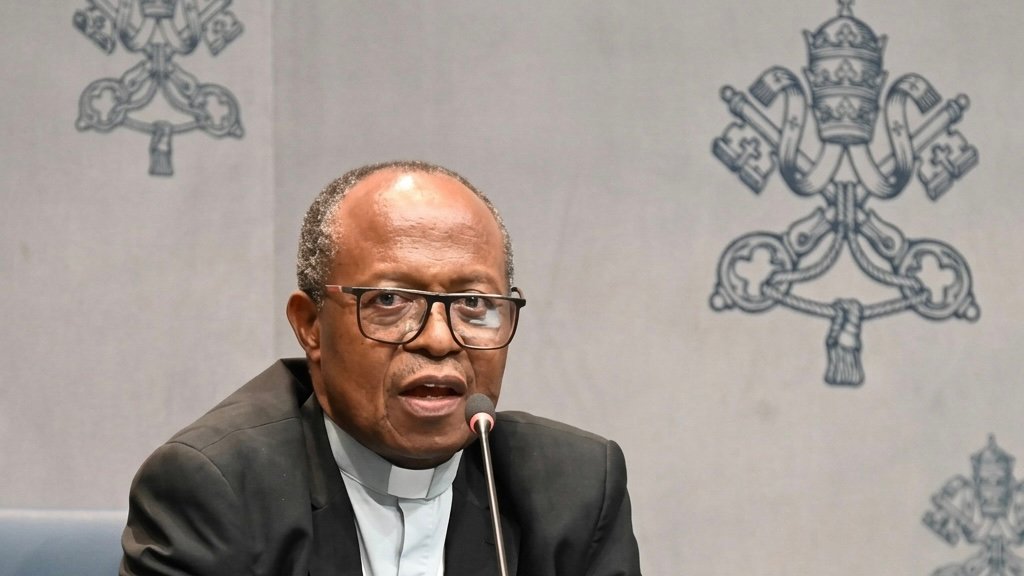
In July, Pope Leo XIV received the president and vice president of the Episcopal Conference of Mozambique, Archbishops Inácio Saure and João Carlos Hatoa Nunes, as well as the archbishop emeritus of Beira, Claudio Dalla Zuanna. The Pope expressed his solidarity and urged the Mozambican Church to transform this tragedy into a path of renewal. The bishops returned from Rome strengthened by this support, yet their grief remains. They continue to ask the questions that the entire country is asking: who killed Bishop Osório, who ordered the crime, and what motive guided the operation.
The investigation must advance with determination. A bishop who dedicated his life to justice and pastoral service deserves a full accounting of the forces that ended his mission. The Church in Mozambique waits for answers, and the country waits with it.
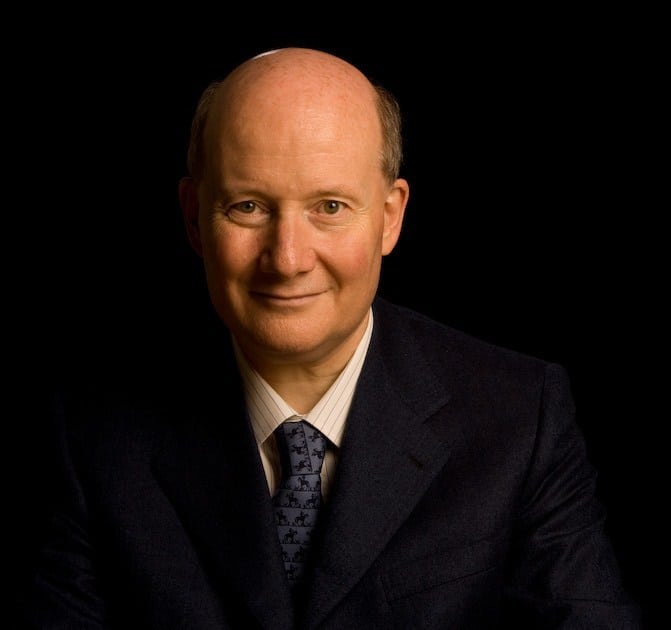
Massimo Introvigne (born June 14, 1955 in Rome) is an Italian sociologist of religions. He is the founder and managing director of the Center for Studies on New Religions (CESNUR), an international network of scholars who study new religious movements. Introvigne is the author of some 70 books and more than 100 articles in the field of sociology of religion. He was the main author of the Enciclopedia delle religioni in Italia (Encyclopedia of Religions in Italy). He is a member of the editorial board for the Interdisciplinary Journal of Research on Religion and of the executive board of University of Pennsylvania Press’ Nova Religio. From January 5 to December 31, 2011, he has served as the “Representative on combating racism, xenophobia and discrimination, with a special focus on discrimination against Christians and members of other religions” of the Organization for Security and Co-operation in Europe (OSCE). From 2012 to 2015 he served as chairperson of the Observatory of Religious Liberty, instituted by the Italian Ministry of Foreign Affairs in order to monitor problems of religious liberty on a worldwide scale.