A FOIA complaint against USCIS shows secularist activists eager to recast foreign priests, nuns, and temple volunteers as potential slaves—OneTaste style.
by Massimo Introvigne

In June, “Bitter Winter” published a call to action, endorsed by an international group of scholars and human rights activists, warning that the old “brainwashing” theories, thrown out of American courtrooms decades ago, are climbing back in through the window of human trafficking laws. Some readers asked the obvious follow-up question. Who is holding the ladder? More than one pair of hands is on it. Anti-cult activists such as Steven Hassan supply the theory, ambitious prosecutors look for novel precedents, and journalists and documentary makers are happy to provide the narratives. A complaint filed on October 20, 2026, in the U.S. District Court for the District of New Jersey now reveals that the list includes another name, and it belongs to an organization that has never claimed to be neutral about religion.
The plaintiff is American Atheists, a New Jersey nonprofit that promotes atheism and polices the separation of church and state with an ideologically motivated zeal. The defendant is U.S. Citizenship and Immigration Services (USCIS). On paper, the case is a modest Freedom of Information Act (FOIA) lawsuit. In December 2022, American Atheists asked USCIS for all records of inspections, verifications, and compliance reviews concerning employers of R-1 visa holders between January 1, 2018, and January 1, 2020. R-1 visas are the temporary visas through which American churches, temples, mosques, and synagogues bring in foreign religious workers—the African or Indian priest who keeps a rural Catholic parish alive, the Korean pastor of an immigrant congregation, the cook or artisan of a Hindu temple.
USCIS ignored the request for three years, then produced a single spreadsheet covering some 6,000 R-1 workers and their employers, with many cells and columns redacted. The atheists filed an administrative appeal in July 2026, received no answer, and went to court.
Bureaucratic sloth in answering FOIA requests is a real problem, and on this narrow point even “Bitter Winter” may sympathize with the plaintiff. Three years of silence is long by any standard, including Washington’s. Readers who stop at the four procedural counts, however, would miss the real business of the complaint, announced in its very first paragraph. There, American Atheists informs the court that the lax oversight of USCIS has allowed religious bodies to engage in “nothing short of human trafficking and forced labor.” The subject of the sentence is “religious entities,” in the plural, with no qualifiers. The records requested concern every religious employer of R-1 workers over a two-year period, as if each sacristy concealed a sweatshop and each temple kitchen a slave galley.
The evidence offered for this sweeping generalization is thin. The complaint builds on two cases. The first concerns BAPS (Bochasanwasi Shri Akshar Purushottam Swaminarayan Sanstha), one of the largest Hindu organizations in the world, which the complaint insists on calling a “sect”—a word American Atheists would probably hesitate to use for the Episcopal Church, although with American Atheists one never knows. In 2021, Indian workers who had been employed at a BAPS temple in New Jersey filed a civil suit alleging fraud, forced labor, and wages of about $1.20 per hour. The FBI opened an investigation the same day. The complaint concedes that the federal investigation closed in September 2025, yet it frames the closure as something the “Trump administration abandoned,” hinting at political motives without offering a shred of evidence. The civil case is still pending, and its claims remain allegations.

The second case is the Church of Scientology, and here the evidence is an article published in “New York Magazine” in 2022. A magazine exposé, however well or badly written, remains a magazine exposé. “Bitter Winter” readers are familiar with media campaigns against Scientology built on the accounts of hostile ex-members and their professional promoters. An organization that asks a federal judge to compel government action and accuses a church of “forced labor over a period of at least three decades” on the strength of a magazine piece tells us something about its standards of proof.
The complaint also cites three federal reports from 1999, 2006, and 2009 that found the religious worker visa program susceptible to “fraud and abuse.” Readers unfamiliar with immigration jargon may imagine chained laborers. The fraud these reports investigated was mostly of a different kind: congregations existing only on paper, workers who never performed religious duties, applicants using a church address to obtain a visa. In such schemes, the foreign worker is usually a willing accomplice, far from a trafficking victim. The spreadsheet the atheists obtained confirms the point. According to the complaint, its unredacted columns classify problematic cases under labels such as “material misrepresentation,” “not started working,” “wages,” and “no physical location.” A worker who has “not started working” is hard to picture as a slave, and a congregation with “no physical location” would struggle to run a sweatshop.
The complaint also laments that until March 2023 the USCIS Policy Manual required pre-approval compliance reviews of all petitioners for religious workers, which could include on-site inspections of places of worship and interviews with religious officials, and that a Policy Alert of March 2, 2023, removed the mandatory language. Here is a curious spectacle. An organization that presents itself as the guardian of the wall between church and state asks the state to send more inspectors into churches, temples, and mosques, and to hand over what they wrote. Thomas Jefferson’s wall, it seems, is meant to have a gate that opens in one direction only.
What would American Atheists do with thousands of compliance files on religious employers? The complaint is silent on this point. A guess is easy enough. Files labeling a church as deficient on “wages,” or reporting an unsuccessful site visit, are perfect raw material for the new trafficking narratives. The template already exists, and its name is OneTaste.
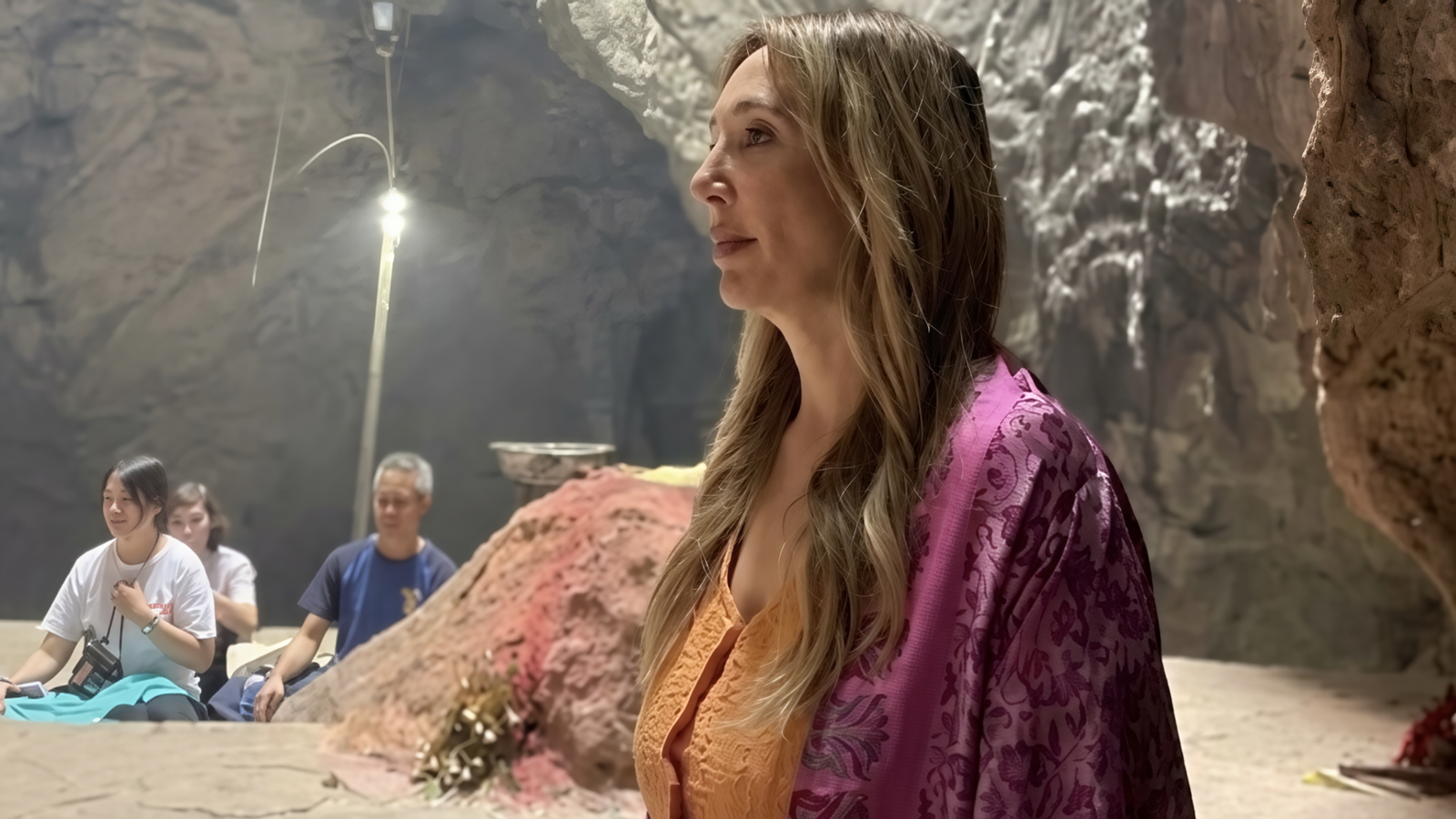
Founded in San Francisco in 2004 by Nicole Daedone, OneTaste taught a practice called “orgasmic meditation” and offered courses on women’s sexual awareness that some found exciting and others found offensive. Federal investigators spent years looking for sexual crimes and were unable to sustain the charges. In June 2025, a Brooklyn jury convicted Daedone and former head of sales Rachel Cherwitz of conspiracy to commit forced labor, and in March 2026 they were sentenced to nine and six and a half years in prison, respectively. According to the evidence and testimony at trial, the two women did not physically threaten anyone into staying at OneTaste. Prosecutors described the coercion as psychological, emotional, and financial. At sentencing, the court rejected the government’s renewed attempt to bring in sexual misconduct, citing insufficient evidence. The result was the first federal forced labor conviction resting entirely on theories of psychological coercion, with Steven Hassan serving as therapist to key government witnesses and as a ubiquitous presence in the media campaign around the trial. An appeal is underway, supported by Alan Dershowitz and other legal luminaries.
Readers who think orgasmic meditation has nothing to do with Catholic nuns should think again. The OneTaste prosecutors had to persuade a jury that adults who joined freely, worked for little money, lived in communal houses, obeyed their leaders, and found it hard to leave were in fact victims of forced labor. Now look at the typical R-1 worker. He or she often receives a modest stipend, may have taken vows of poverty and obedience, lives in a rectory, convent, or ashram, defers to superiors, and depends on the sponsoring organization for legal status in a foreign country. Under the OneTaste theory, the novice mistress turns into a recruiter, the bishop into a trafficker, and the vow of obedience into a textbook case of what Hassan’s pseudo-scientific BITE model calls “behavior control.” This is not a hypothesis only. The Catholic Maryknoll nuns were sued for trafficking with similar arguments, although the case was then settled.
“Bitter Winter” has already documented how prosecutors in Argentina followed exactly this route, moving from small new religious movements to Opus Dei and large evangelical charities. The U.S. Supreme Court saw the danger coming in 1988, warning in “United States v. Kozminski” that a standard based on psychological coercion alone would criminalize ordinary religious, social, and economic relationships.
The coalition behind the trafficking offensive against religion is thus taking shape, and it is a motley one. Anti-cultists contribute the pseudo-scientific vocabulary of “coercive control.” Ambitious prosecutors want career-making precedents, and sensationalist media are always hungry for stories of sinister gurus. Secularist lobbies such as American Atheists bring to the table a worldview in which intense religious commitment looks suspicious by definition, along with the lawyers needed to pry from the government the data that can turn suspicion into case files. One may doubt that the six thousand workers listed in the USCIS spreadsheet asked American Atheists to come to their rescue. Many of them would probably be surprised to learn that their vocation is being studied as a symptom.
Trafficking exists, and its victims deserve serious prosecutors. The surest way to fail them is to dilute the concept until it covers every nun with a stipend and every temple volunteer with a visa. In the nineteenth century, critics argued that no rational person could become a Mormon without being mesmerized. Today, the argument runs that no rational foreigner would serve a church for a modest stipend unless trafficked. The vocabulary has been updated, from mesmerism to psychological coercion. The accusers, and their fondness for explaining away other people’s faith, have not changed—except that now they file FOIA requests.
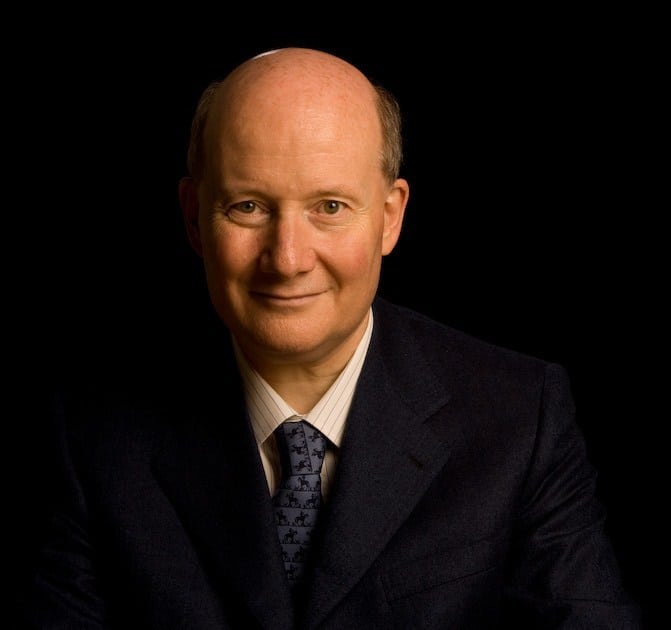
Massimo Introvigne (born June 14, 1955 in Rome) is an Italian sociologist of religions. He is the founder and managing director of the Center for Studies on New Religions (CESNUR), an international network of scholars who study new religious movements. Introvigne is the author of some 70 books and more than 100 articles in the field of sociology of religion. He was the main author of the Enciclopedia delle religioni in Italia (Encyclopedia of Religions in Italy). He is a member of the editorial board for the Interdisciplinary Journal of Research on Religion and of the executive board of University of Pennsylvania Press’ Nova Religio. From January 5 to December 31, 2011, he has served as the “Representative on combating racism, xenophobia and discrimination, with a special focus on discrimination against Christians and members of other religions” of the Organization for Security and Co-operation in Europe (OSCE). From 2012 to 2015 he served as chairperson of the Observatory of Religious Liberty, instituted by the Italian Ministry of Foreign Affairs in order to monitor problems of religious liberty on a worldwide scale.