A rising tally of detentions exposes escalating risks for cross‑strait believers.
by Zhao Zhangyong
The quiet erosion of cross‑strait religious exchanges has now reached a new and troubling threshold. Taiwan’s Mainland Affairs Council (MAC) reports that 458 Taiwanese nationals are currently missing, detained, or otherwise restricted in their freedom of movement in the People’s Republic of China. The figure, updated through October 19, marks yet another incremental rise—small in weekly arithmetic, but significant in political meaning. Among those affected, a growing number belong to I‑Kuan Tao (Yiguandao), one of Taiwan’s most widespread redemptive traditions and a movement Beijing has long viewed with suspicion.
The MAC’s breakdown is impressive. 175 Taiwanese nationals are listed as missing, 41 have been detained for questioning, and 242 remain held by Chinese authorities. These numbers, while not unprecedented, now intersect with a pattern “Bitter Winter” has documented for years: the CCP’s renewed hostility toward redemptive religions, especially those with transnational networks or Taiwanese connections.
The Straits Exchange Foundation’s Secretary‑General Luo Wen‑jia has confirmed four recent cases involving Taiwanese I‑Kuan Tao followers detained between April and July. These individuals were not short‑term visitors, nor participants in cultural exchanges. They were long‑term residents—teachers, businesspeople, retirees—living in Fujian, Guangdong, and Shenzhen. Their common denominator was not political activism, nor involvement in any alleged “illegal organization.” It was simply their religious identity.
Luo warns that circumstances once considered safe have changed. The detentions, he notes, appear to be religion‑driven, a shift from earlier incidents where Taiwanese believers were targeted during brief visits. He has urged I‑Kuan Tao followers to return to Taiwan and called for a “red alert” travel advisory for movement members.
The situation is not hypothetical. Three Taiwanese I‑Kuan Tao adherents were detained in China in October 2024 and prosecuted under Article 300 of the Criminal Law, the CCP’s catch‑all provision for punishing “xie jiao” (movements promoting heterodox teachings). They received prison sentences of two to three years. One remains imprisoned; another has returned to Taiwan; the third has completed the sentence but is still unable to leave China.
These developments echo the broader pattern “Bitter Winter” reported in 2025, when Chinese authorities reignited a campaign against Yiguandao—the name under which I‑Kuan Tao is historically known in mainland China. In Guangdong, police dismantled a kindergarten accused of functioning as a covert center of Yiguandao rituals, complete with ritual prostrations and teachings on the Ancient Mother. In Shandong, more than 600 individuals, including minors, were arrested in a sweeping operation targeting alleged “xie jiao activities.”
The rhetoric deployed by the China Anti‑Xie‑Jiao Association—an organ of the United Front—remains depressingly familiar. Yiguandao is framed as a predatory force, accused of “spiritual control,” “financial exploitation,” and “sexual misconduct.” These tropes, recycled across decades, serve as ideological scaffolding for repression. They are political instruments designed to delegitimize any religious movement outside state control.
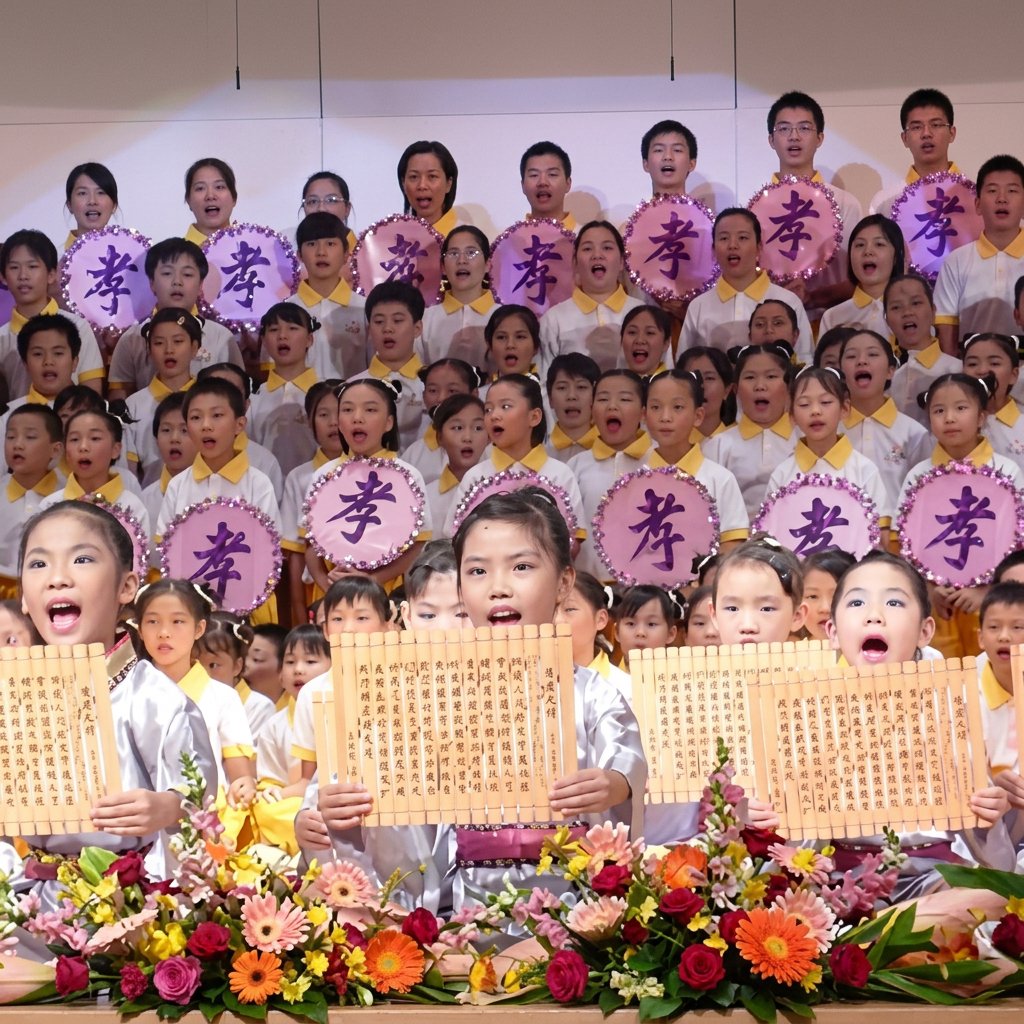
Under Xi Jinping, the CCP’s campaign to Sinicize religion has hardened into a doctrine of total supervision. Movements that once enjoyed cautious tolerance under Hu Jintao are now treated as latent threats. Yiguandao’s Confucian vocabulary, vegetarian ethics, and emphasis on filial piety—once seen as compatible with official narratives—no longer offer protection. The Party’s message is that no autonomous spiritual tradition is safe.
The detentions of Taiwanese nationals thus represent more than isolated incidents. They reveal a cross‑border extension of China’s domestic religious policy. A Taiwanese passport offers no immunity when the CCP decides that a believer’s faith constitutes ideological deviance.
The MAC’s rising numbers, the Straits Exchange Foundation’s warnings, and the prosecutions under Article 300 all point to a tightening environment in which religious identity itself becomes grounds for suspicion. For I‑Kuan Tao followers, the risk is measurable, documented, and ongoing. In Xi’s China, repression travels well.

Uses a pseudonym for security reasons.