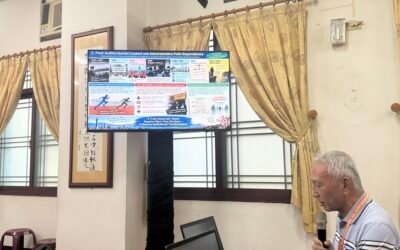
A Taiwanese dizi describes the master–disciple bond that transformed four generations of her family, and the thirty-year struggle of her school for justice.
by Emma Chen*
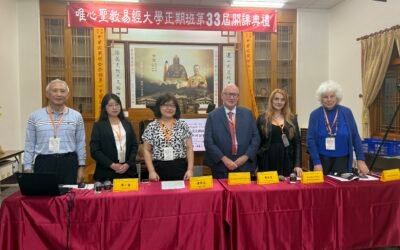
*A paper presented at the session “New Perspectives on the Tai Ji Men Case“ of the CESNUR 2026 conference, Taichung, Taiwan, October 12, 2026.
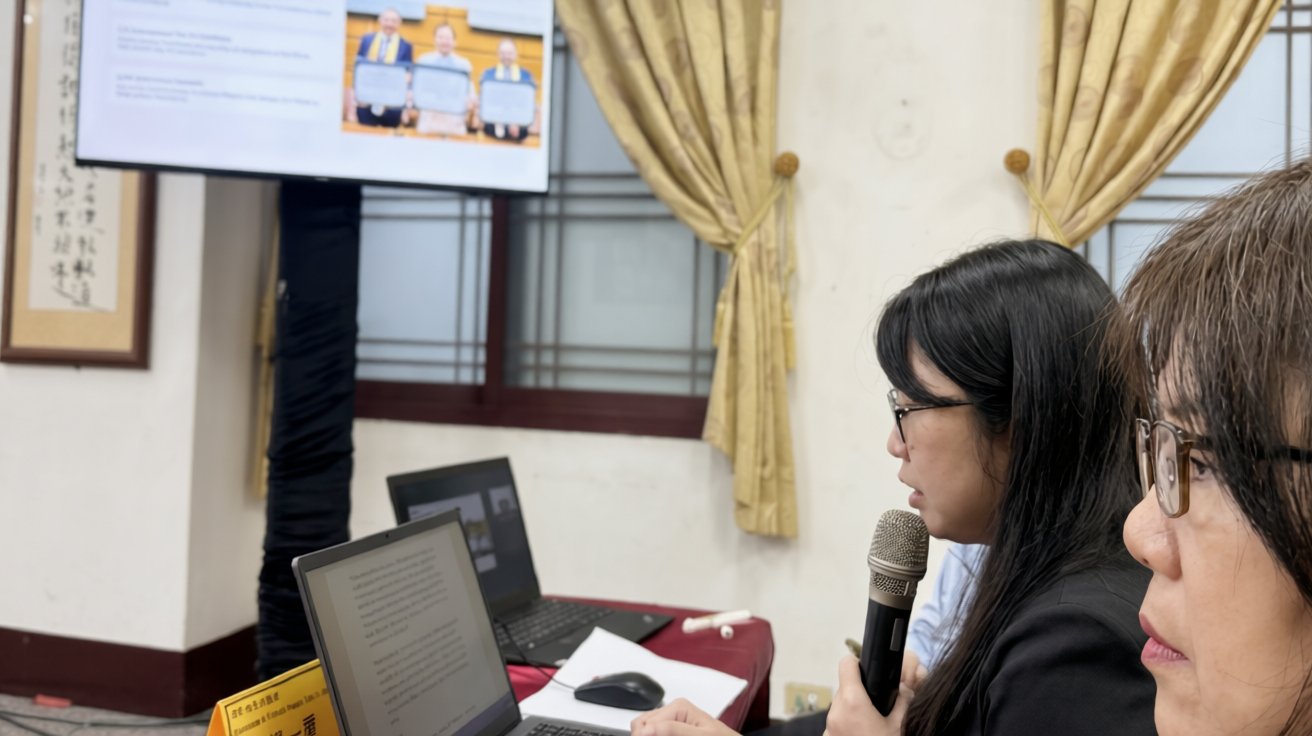
My name is Emma Chen. I am a practicing dentist from Taiwan and a Tai Ji Men dizi (disciple). Today, I would like to share my perspective as a disciple on the master–disciple relationship within this ancient tradition, on its culture of conscience, and on the important role that groups like Tai Ji Men can play in promoting global sustainable development.
Tai Ji Men is an ancient menpai (similar to a school) of qigong, martial arts, and self-cultivation, passed down through generations in the master–disciple tradition. Our disciples range in age from newborns to 103 years old. We come from all walks of life and from different parts of the world, and we represent diverse religious beliefs, nationalities, and languages. Yet we all share the same Master (Shifu) and the memory of his late wife (Shimu), who guide us in cultivating our vital energy (qi) and refining our hearts and minds.
This traditional form of transmission, in which esoteric teachings and practices are passed down from heart to heart, is one of humanity’s oldest and most beautiful cultural traditions and a precious part of our shared heritage. In this sacred bond, Shifu imparts the Way, passes on knowledge and skills, resolves doubts, and guides disciples in understanding the essence of the tradition. Disciples, in turn, sincerely ask to be accepted, seeking to cultivate their bodies and minds, preserve this heritage, and pass down its ancient wisdom and skills to future generations.
The master–disciple relationship encompasses both the bond between mentor and disciple and that between parent and child. It combines the rigorous guidance of a teacher with the loving care of a father and mother. Shifu and Shimu treat every disciple as their own child, forming lifelong bonds through personal example, verbal instruction, and teaching without words.
Following the path of our menpai is a remarkable journey of self-discovery and personal growth. Our menpai is like an extended family. Although we are not related by blood, Tai Ji Men brothers and sisters share close bonds and care for and support one another. Tai Ji Men is my second home. Shifu and Shimu cared for us as loving parents would, teaching us the wisdom of Yin and Yang. Their guidance extends far beyond qigong and martial arts and offers valuable lessons for everyday life. They teach us to remain calm and positive in the face of adversity, to reflect on and improve ourselves, to discover meaning in life, to apply the wisdom of Yin and Yang to our personal and professional growth, and to listen to, understand, and appreciate our families with compassion and gratitude.
Thanks to qigong, my 91-year-old grandfather and 88-year-old grandmother remain in good health. They are independent in their daily lives and regularly visit the Tai Ji Men Qigong Academy to sing and practice sign-language dances with fellow disciples. Since retiring, they have also gone to the academy every week to mop the floors and clean the restrooms, caring for it as if it were their own home.
By practicing qigong and following Shifu’s guidance, my uncle and aunt learned to reflect on themselves and manage their tempers. Their business prospered, their relationship grew stronger, and their home became a more harmonious and loving environment. After undergoing surgery and chemotherapy, my aunt practiced qigong to support her recovery, and she has had no recurrence of cancer for more than 20 years. With Shifu’s care and guidance, she also changed her outlook on life, shifting her focus from personal achievement to helping others, expressing gratitude, and taking an active part in community service.
Seeing these changes in our family’s health and happiness inspired more than 30 members of our extended family, spanning four generations, to join Tai Ji Men and practice qigong under Shifu’s guidance. We are deeply grateful to be part of this wonderful family, and for the loving care Shifu and Shimu generously give to every disciple, treating each of us as their own beloved child.
In ancient Chinese thought, the character wu (武), associated with martial arts, can be understood as combining the ideas of “stopping” and “spear,” and thus symbolizes the cessation of conflict. On a global scale, this means ending war between nations. On a personal level, it means bringing an end to the conflicts within our own hearts.
During our qigong practice, Shifu often shares timely words of wisdom, guiding us to resolve our inner conflicts and live in peace with ourselves and others. Peace begins in everyday life, by speaking kind and encouraging words, keeping a positive outlook when facing difficulties, and learning to encourage ourselves. With a calm mind, we can draw upon our wisdom to find hope and opportunities even in seemingly hopeless situations.
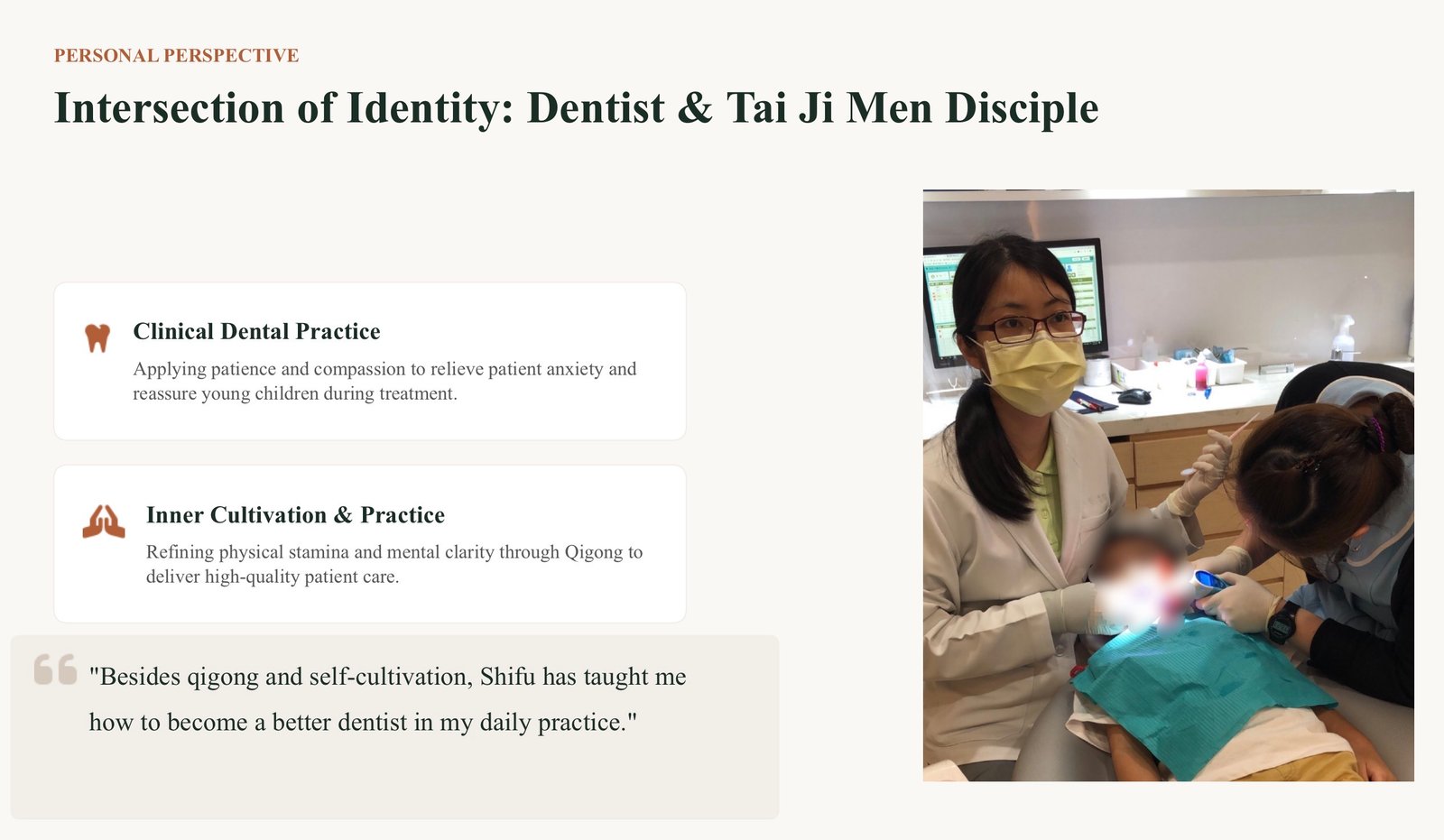
In my work as a dentist, Shifu’s words have taught me to listen more attentively to my patients’ needs and to consider different treatment options carefully. Frightened or distressed children are reassured by a calm and positive attitude, which gives them the courage to receive treatment. Even during long and demanding workdays, a serene mind and good physical stamina help me care for my patients more effectively. Besides qigong, martial arts, and self-cultivation, Shifu has taught me how to become a better dentist.
Through qigong, we cultivate physical well-being and joyful hearts, and Shifu and Shimu have led us into communities around the world. Traveling at their own expense, Shifu and the disciples visit major cities worldwide. Through martial arts, dance, music, international summits, and ceremonies for ringing the Bell of World Peace and Love, we share messages of love and peace, promote conscience education, awaken people’s conscience and innate goodness, and inspire individuals and world leaders to work toward sustainable development and fulfill their commitments to love and peace.
This year is the 60th anniversary of the Tai Ji Men Qigong Academy. We celebrated it in the United States, Canada, and Taiwan, and together with world leaders and distinguished guests we hosted World Summits of Love and Peace to share ideas and practical approaches to global peace and sustainability. My mother, aunt, and sister traveled with Shifu and fellow disciples to North America to support these peace initiatives. In fact, I returned to Taiwan from Los Angeles only this morning, and this conference is my very first stop!
Shifu and Shimu live by the conviction that “A single good thought brings peace to the world; a unified heart brings safety to all.” For 60 years, they have dedicated themselves to global sustainability, conscience education, and holistic well-being, leading disciples to 123 countries on five continents and holding more than 4,000 cultural performances and events, all at their own expense, without accepting outside donations or raising funds.
Through the Bell of World Peace and Love ceremonies, we seek to awaken people’s conscience and bring comfort to troubled hearts. To date, 692 prominent leaders from 159 countries, including 89 heads of state and government and 15 Nobel Peace Prize laureates, have rung the Bell and pledged their commitment to world peace.
In the winter of 1996, an event occurred that forever changed the course of Tai Ji Men’s history. In December of that year, Prosecutor Hou Kuan-jen launched an operation against Tai Ji Men based on fabricated allegations. My Shifu, Shimu, and two fellow disciples were detained, and they were later indicted for fraud and tax evasion. This abuse of power and these unlawful detentions seriously violated our human rights.
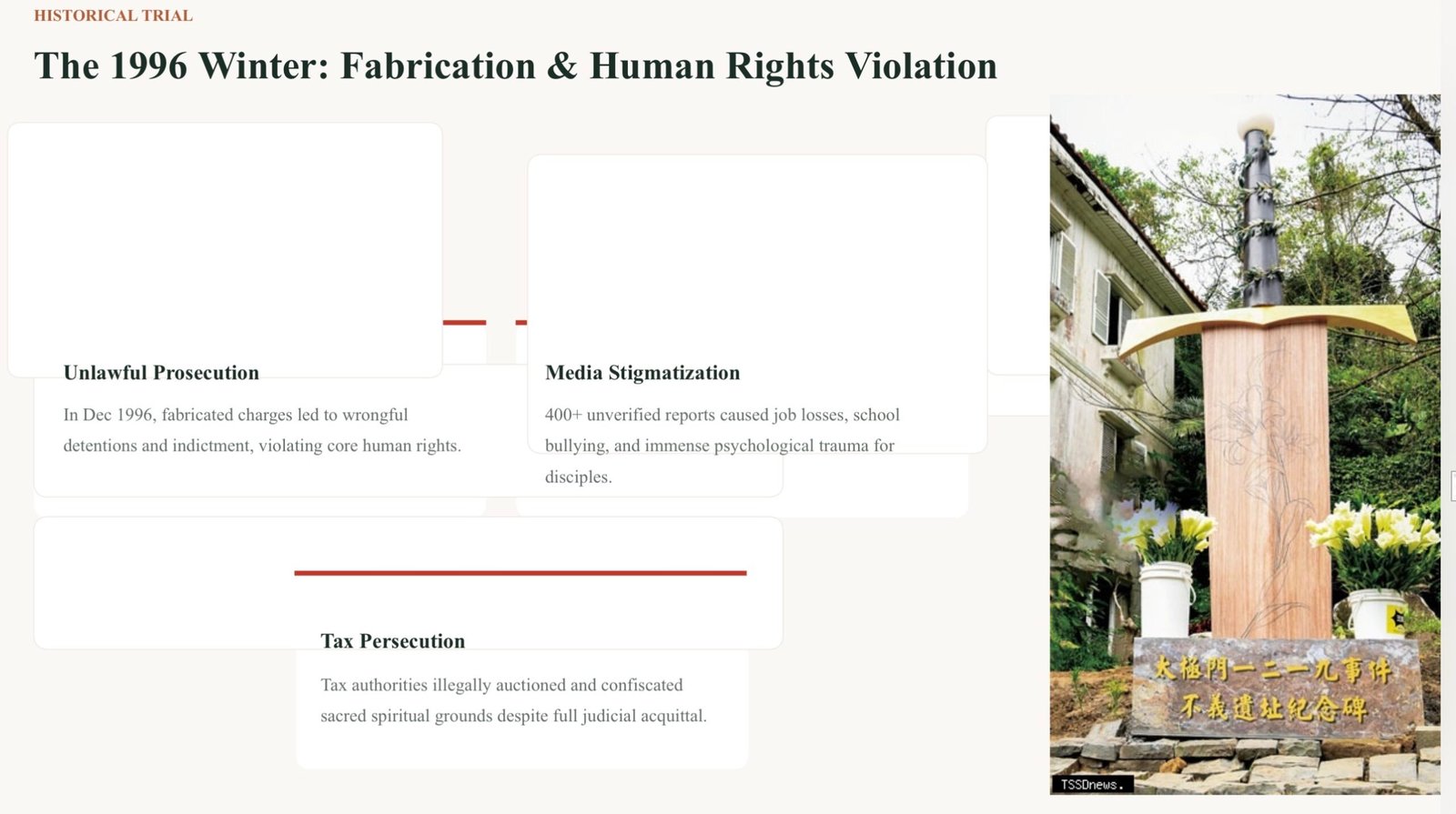
Within a few months, Tai Ji Men became the target of intense media attention in Taiwan. More than 400 sensationalist and unverified news reports spread allegations against us, including the bizarre claim that we were “raising goblins,” along with accusations of fraud and tax evasion. Because of these false reports, many disciples lost their jobs, students were bullied at school, and families moved away to escape the stigma. Many disciples had to choose between their families’ fears and their commitment to Tai Ji Men, a choice that caused deep and lasting pain. Facing widespread public misunderstanding, disciples had little opportunity to defend themselves and suffered in silence. The kind of persecution one reads about in historical novels had unexpectedly become a reality for my Shifu, Shimu, and fellow disciples in modern times.
In 2007, Taiwan’s Supreme Court definitively declared Shifu, Shimu, and the disciples innocent of all charges, including tax evasion. Those who had been wrongfully detained later received compensation from the state, a further confirmation of Tai Ji Men’s innocence.
Yet the National Taxation Bureau continued to pursue taxes based on the same allegations, and in August 2020, land intended for our spiritual practice was put up for auction and then confiscated by the National Taxation Bureau and the Administrative Enforcement Agency. It is a painful irony that the judicial system was unable to protect innocent citizens and to stop administrative agencies from continuing to violate their fundamental human rights.
Taiwan enacted the Act on Promoting Transitional Justice in 2017, but the law only covers human rights violations that occurred before 1992. When we sought legal remedies, administrative courts cited a strict five-year time limit for retrials, which prevented us from obtaining effective relief. Experiences of transitional justice around the world show that the truth about state violence often takes decades to emerge, and rigid legal time limits can close the door to justice before the full truth comes to light.
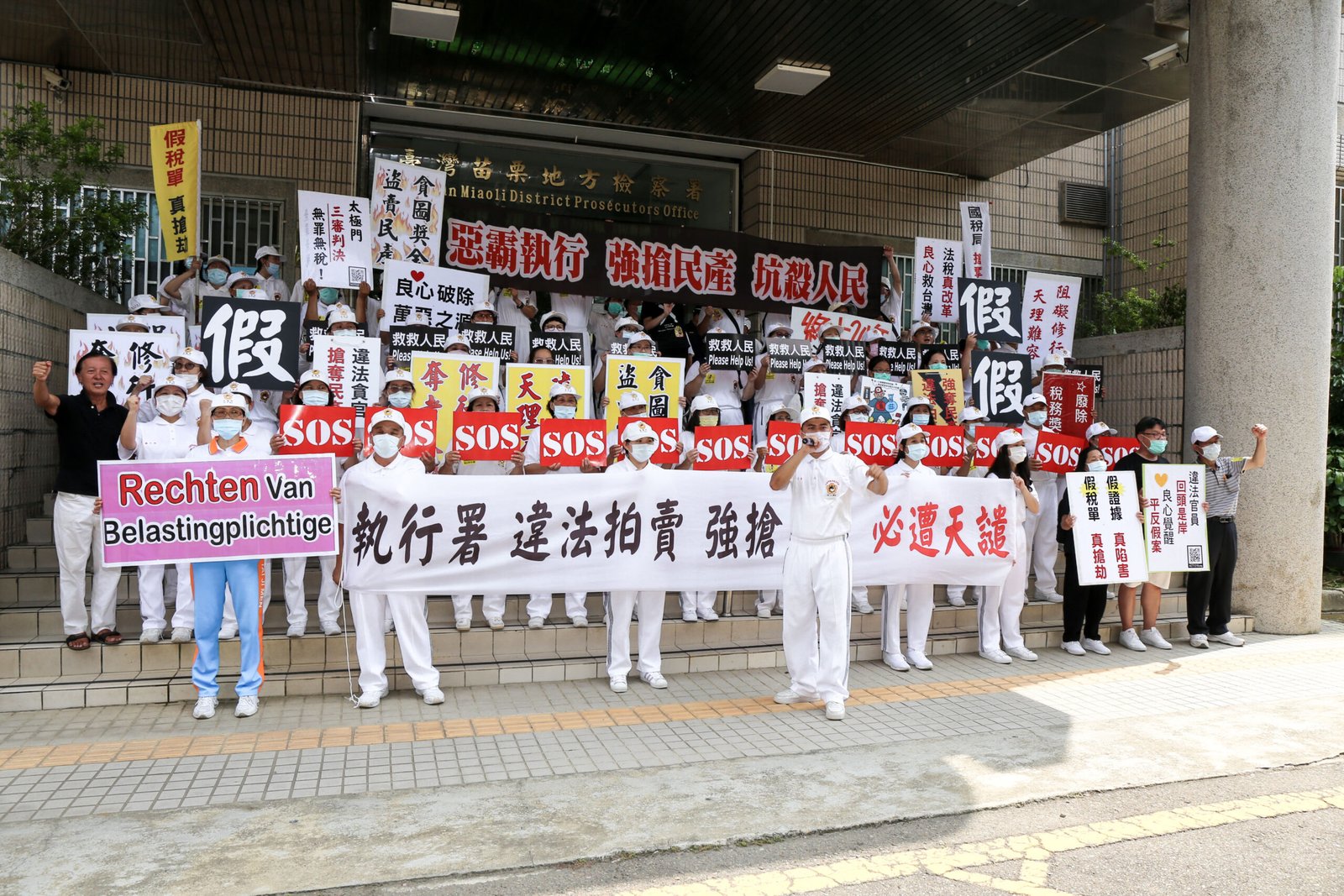
In Germany, administrative acts affected by particularly serious defects, such as violations of fundamental rights, can be considered null and void from the outset, without legal certainty being invoked as a defense. We call upon the Taiwanese government to act with conscience, address the problems caused by these statutory time limits, and achieve true transitional justice by resolving the Tai Ji Men human rights case.
This year is also the 30th anniversary of the Tai Ji Men case, a 30-year winter. Without the strong foundation built over 60 years of practicing qigong, martial arts, self-cultivation, and moral integrity, our menpai would not have endured. We have turned our personal suffering into an opportunity for society to reflect, advocating tirelessly for tax reform and human rights protection so that no other innocent citizens will suffer the same fate. For Tai Ji Men disciples, standing up for justice is an essential part of our spiritual practice—just as sharing this story with you today is part of mine.
Even in the face of injustice, Shifu’s commitment to spreading love and peace has never wavered. In 2014, Tai Ji Men launched the global movement An Era of Conscience, bringing together people across cultures, races, and borders to promote a culture of conscience for world peace. These efforts contributed to the United Nations’ decision to proclaim 5 April as the International Day of Conscience in 2019, and 12 July as the International Day of Hope in 2025.
Over the past 30 years, Tai Ji Men disciples have refused to remain trapped in grief or bitterness. Guided by Shifu’s vision, we have channeled our energy into caring for all living beings and bringing hope to a troubled world.
In closing, I invite each of you to join us in practicing conscience education. Starting with ourselves, let us take 60 seconds each day for silent prayer and reflection, cultivating pure, kind, and compassionate thoughts as we pray for ourselves, our families, and the world. Together, let us create a butterfly effect of goodwill that brings peace and happiness to all.

Emma Chen (Yi-Shuan), born in Taiwan, received her D.D.S. (2016) from Chung Shan Medical University, Taiwan. She currently works as a dentist at Global Digi Dental Clinic in Taiwan. She has been practicing Tai Ji Men Qigong for nearly thirty years, and she participated in the cultural performances at the 2017 Summer Universiade. She is an active member and volunteer for the Association of World Citizens and the Movement of An Era of Conscience.