Four years after leaving the grey list, Islamabad must show that its rules can stop terror money moving through illegal betting apps and digital “hawala.”
by A. Sahara Alexander
The Financial Action Task Force (FATF) is an intergovernmental policy-making body established by the G7 in Paris, France, in 1989 to combat money laundering, terrorist financing, and proliferation financing. As the FATF approaches its October plenary (October 26–30), Pakistan once again faces scrutiny over whether its counter-terrorist financing architecture has moved beyond legal formalities and public-relations signaling. Islamabad may point to legislative amendments, regulatory notifications, asset-freezing announcements, and occasional enforcement actions. Yet the central question for the FATF is whether Pakistan’s system can consistently detect, investigate, prosecute, and disrupt the financing structures that sustain extremist networks.
Pakistan’s exit from the FATF “grey list” in October 2022 was no permanent certificate of financial integrity. It reflected progress against a defined action plan and a set of technical benchmarks. The FATF itself has maintained that jurisdictions must preserve effective safeguards after delisting, especially where structural risks remain substantial, such as informal value-transfer systems, cash-intensive activity, cross-border financial flows, weak beneficial-ownership transparency, and militant financing ecosystems. Pakistan continues to be assessed by the Asia/Pacific Group on Money Laundering (APG), which adopted Pakistan’s third-round mutual evaluation in 2019 and monitors its follow-up progress.
Islamabad’s difficulty lies in the persistent gap between technical compliance and real-world effectiveness. The APG’s 2022 follow-up report rated Pakistan compliant or largely compliant on 38 of the 40 FATF Recommendations, including those on the terrorist-financing offense, targeted financial sanctions, customer due diligence, suspicious transaction reporting, and the regulation of money or value transfer services. The same report, however, retained “partially compliant” ratings on new technologies and on mutual legal assistance for freezing and confiscation. These ratings measure whether laws, regulations, and institutional powers broadly meet FATF standards; by themselves, they do not establish that terrorist money is being reliably intercepted or that networks are being permanently dismantled.
Compliance becomes cosmetic when it is episodic
This is where Pakistan’s recurring pattern of surface-level compliance becomes relevant. The country has repeatedly shown that it can act under external pressure by passing amendments, strengthening penalty provisions, reorganizing oversight bodies, issuing notifications against listed individuals, and visibly targeting selected entities. Such measures are not meaningless. Legal reform matters, and financial regulation needs institutions, procedures, and enforceable rules. However, compliance becomes cosmetic when it is episodic, selectively applied, or concentrated around international review cycles instead of being embedded in normal state practice.
The growth of illegal online gambling and betting offers a sharper test of this credibility. The FATF’s recent work on gaming and gambling identifies the sector as an expanding channel for money laundering, terrorist financing, and, in some cases, proliferation financing. Its concern extends beyond formal casinos. Online platforms, offshore operators, mobile-payment systems, cryptocurrency-linked transactions, proxy accounts, and cross-border intermediaries can allow criminals to obscure the origin, destination, and ownership of funds. The FATF identifies illegal gambling as one of the sector’s most significant risks because it operates outside ordinary licensing, customer-verification, and reporting frameworks.
Pakistan is especially vulnerable because gambling is illegal domestically, which pushes demand into underground and offshore channels without eliminating it. An activity that is prohibited yet remains accessible through apps, websites, agents, and informal payment routes is much harder to police. Users may rely on mule accounts, mobile wallets, informal brokers, virtual private networks, and unregulated foreign platforms. The financial trail is fragmented, identities are obscured, and money can be routed through layers of small deposits and withdrawals.
The “grey zone” where dangers arise
The terrorist-financing danger should be stated precisely. Illegal betting does not mean that every participant or operator is connected to terrorism. Nor should gambling-related transactions be casually treated as proof of extremist financing. The concern is that unregulated platforms can offer methods of concealment that terrorist financiers and organized criminals may exploit. Funds can be placed into betting accounts, moved among multiple accounts, withdrawn through third parties, or converted across payment channels with little apparent commercial rationale. Criminals may also use betting platforms to move money without engaging in any meaningful gambling activity, or split transactions into smaller amounts to evade scrutiny, a practice often called “smurfing.” The FATF has flagged multiple accounts, inconsistent customer and payment information, suspicious identity documents, unusual betting patterns, opaque ownership structures, and links to cyber-enabled fraud or organized crime as relevant warning indicators.
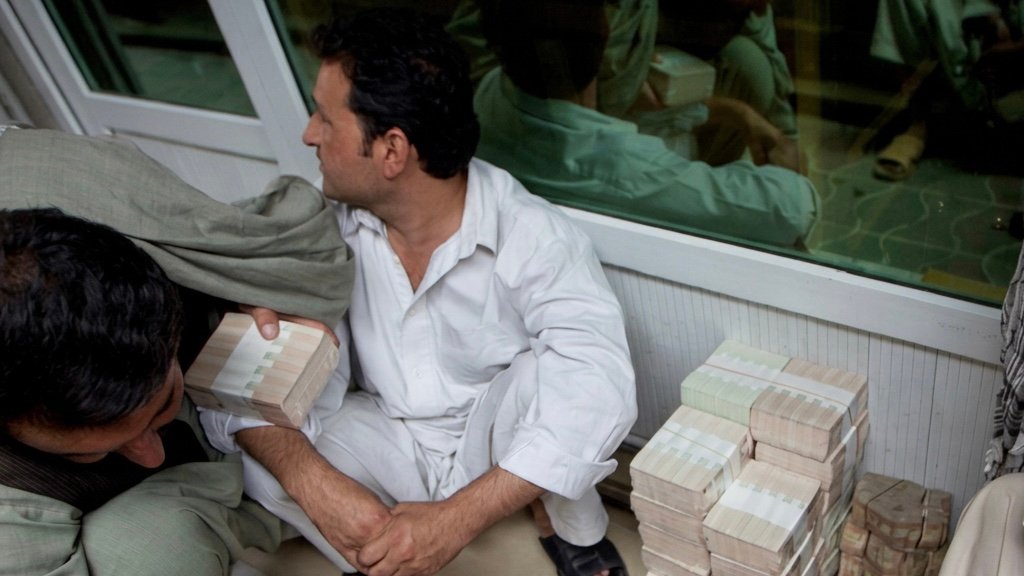
The challenge is compounded by the continuing adaptation of informal transfer systems. The FATF has warned that “hawala” (a widespread informal value-transfer system that relies on trust and on a vast network of money brokers) and other underground value-transfer networks are becoming more sophisticated through the use of financial technology and virtual assets. These networks can conceal the movement of illicit funds linked to a range of offenses, including cybercrime, illegal gaming and gambling, and terrorist financing. In a country where informal remittance channels, cash transactions, and weakly supervised digital activity intersect, legal bans alone cannot neutralize the risk.
A serious response requires sustained inter-agency coordination among financial intelligence authorities, cybercrime investigators, central-bank regulators, provincial police, tax authorities, and counter-terrorism departments. It also requires cooperation with foreign regulators, payment companies, and the jurisdictions hosting offshore platforms. Blanket website bans or highly publicized raids may generate headlines, but they will not dismantle the financial ecosystem if operators simply switch domains, intermediaries, or payment methods. Pakistan’s task is to prove that its rules change behavior, expose financiers, and sever the financial lifelines of violent organizations.
The October plenary should look beyond surface-level compliance. The real measure of progress is whether Pakistan has replaced selective enforcement and temporary, pressure-driven action with an irreversible system capable of confronting terrorist financing in all its traditional and digital forms.

Uses a pseudonym for security reasons.