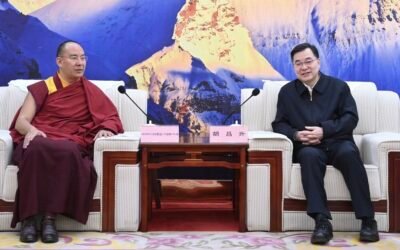
It is October and the “People’s Daily” presents the Party’s renewed promise of total guidance over thought, spirit, and culture.
by Hu Zimo
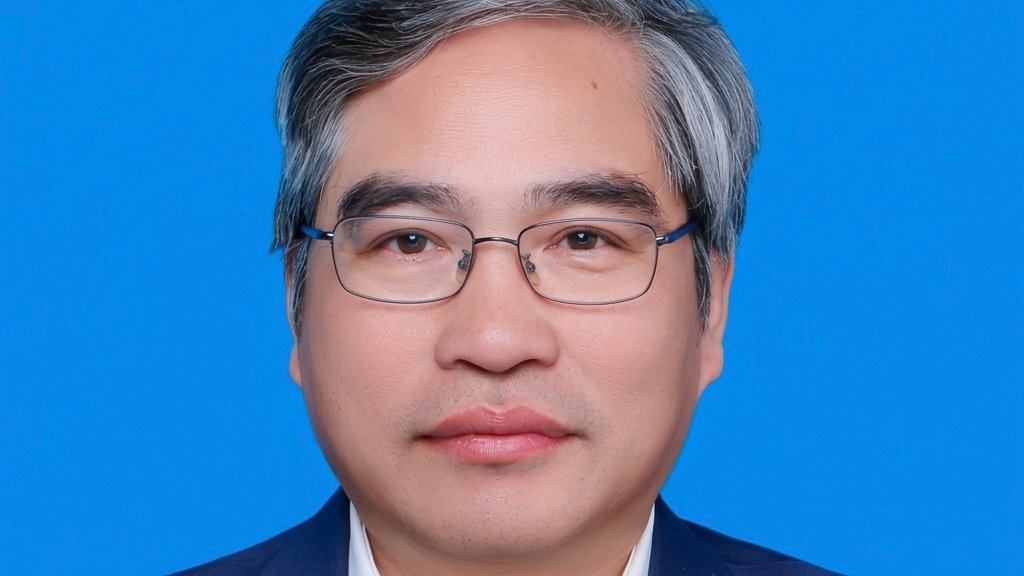
The October air in Beijing carries a faint chill, but the pages of “People’s Daily” remain warm with ideological certainty. On October 12, 2026, the official newspaper published a lengthy doctrinal essay by Sun Laibin, whose title alone announces the familiar theme: strengthening the Party’s leadership over propaganda, ideology, and culture through diligent study of the newly released “Xi Jinping Cultural Anthology, Volumes I and II.” A professor at Peking University’s School of Marxism, Sun Laibin is regarded as the key figure in the CCP’s Central Marxist Theory Research and Construction Project.
The article insists that propaganda and cultural work determine “the Party’s future and destiny,” “the country’s long-term stability,” and “the nation’s cohesion and centripetal force.” It is difficult to imagine a broader mandate.
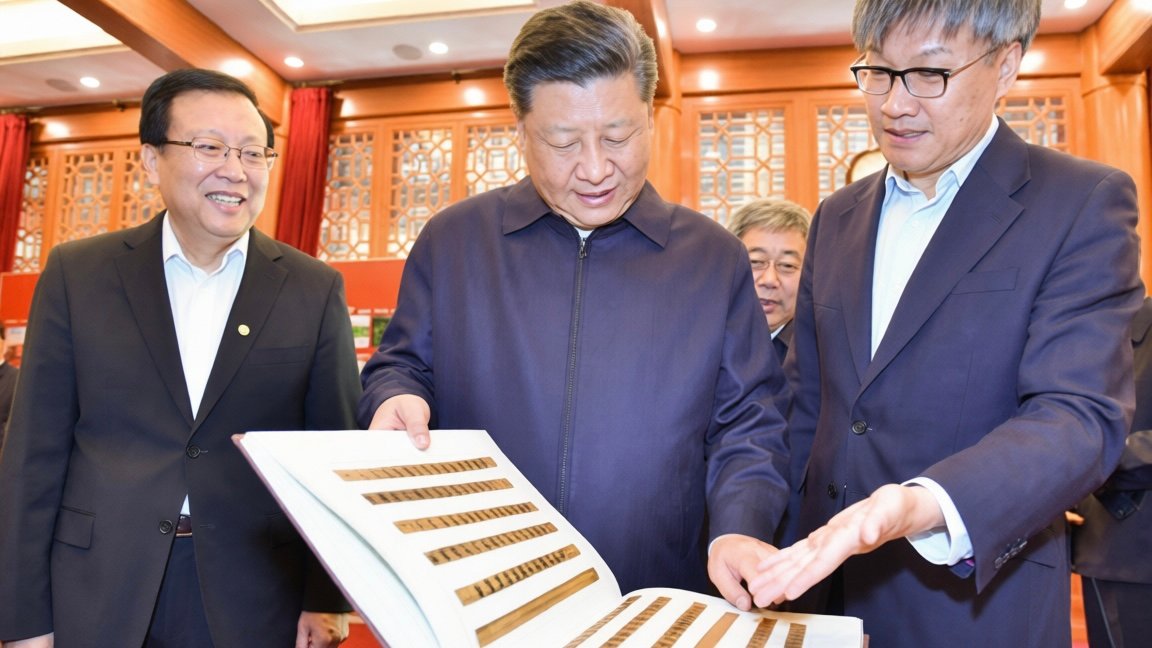
Sun begins by praising the seventy-eight texts collected in the Anthology as proof of the Party’s “high theoretical confidence and cultural confidence,” and as a vivid demonstration of Xi’s leadership over ideological work. The reader is reminded that strengthening this leadership is “the most essential characteristic” of China’s socialist cultural development. Culture, in this telling, is not an organic expression of society but a carefully administered system of guidance.
The author then reconstructs the Party’s century-long tradition of ideological management. Xi Jinping is quoted as saying that the Party’s propaganda experience is “hard-won and extremely precious,” and must be “summarized carefully, adhered to over the long term, and continuously enriched and developed in practice.” The new era, Sun argues, has produced a theoretical “leap,” culminating in the first of the “Seven Priorities”: “strengthening the Party’s leadership over propaganda, ideology, and cultural work.” This is presented as a major theoretical innovation, though readers familiar with the history of Leninist parties may find that the “innovation” is not so new.
The Marxist foundations are laid out with dutiful reverence. Xi Jinping is quoted as saying, “To study Marx, one must study and practice Marxist ideas on cultural development.” The article repeats the classic formula: “The ruling ideas of a society are nothing more than the ideal expression of the dominant material relationships.” If the Party is to remain the dominant material force, it must also remain the dominant ideological force. The “Anthology” is thus elevated to the status of doctrinal scripture, containing “original and distinctive concepts” and demonstrating the Party’s “cultural subjectivity.”
The most revealing passages concern the totalizing nature of ideological leadership. Xi Jinping is quoted repeatedly, always with the same refrain: “The Party’s leadership is the fundamental guarantee for the development of socialist literature and art,” “Ensure the Party’s leadership, management, and authority over the news media,” “Firmly grasp the leadership of ideological work,” “We must uphold the Party’s centralized and unified leadership over religious work.” Sun concludes that Party leadership over culture is “comprehensive and all-encompassing,” extending to “all fields and all links.” Nothing escapes.
The article then attempts to distill the “laws” governing ideological leadership. The first law is direction: “Grasping ideological leadership is the foundation of grasping all leadership.” The second is institutionalization: “Upholding the guiding role of Marxism in the ideological field is a fundamental system.” The third is control of public opinion: “Correct public opinion guidance is a blessing for the Party and the people; incorrect public opinion guidance is a disaster for the Party and the people.” The internet must be “well managed and well used,” and the principles are laid out with admirable clarity: “Positive energy is the general requirement, being able to control is the hard truth, and using it well is real skill.” Spontaneity, it seems, is not part of the plan.
The final section outlines the principles for implementing ideological leadership. The first is the unity of “Party-ness” and “People-ness,” expressed through Xi Jinping’s line: “Party-ness and People-ness have always been consistent and unified.” The second is the unity of preservation and innovation, summarized by the instruction to “uphold what is correct and innovate.” The third is the dialectic of establishment and criticism: “We must uphold and break at the same time, clearly uphold truth, and firmly criticize fallacies.” The Party must raise its flag high, produce more mainstream cultural products, and “dare to unsheathe the sword against various ideological disorders.”
Sun concludes with a call for unity of thought and spirit, urging all citizens to “be tightly united in thought and spirit,” so that the great rejuvenation may proceed without distraction. The “Anthology” is thus presented as not merely a collection of speeches. It is a manual for the future, a guidebook for cultural governance, and a reminder that in the new era, culture is not a conversation but a command.
The “People’s Daily” has once again demonstrated the Party’s unwavering commitment to ensuring that culture remains firmly within the boundaries of what Xi Jinping defines as “the correct political direction.” The “Anthology” is presented as both scripture and shield, a testament to the Party’s belief that ideological unity is the prerequisite for national strength. Whether this unity is achieved through persuasion or through persistent administrative vigilance is left politely unstated, though the text offers more than enough hints.

Uses a pseudonym for security reasons.