Speaking in London, the Uyghur author of a memoir on her years in a Chinese camp described the price of bearing witness and the solidarity among detained women.
by Ruth Ingram
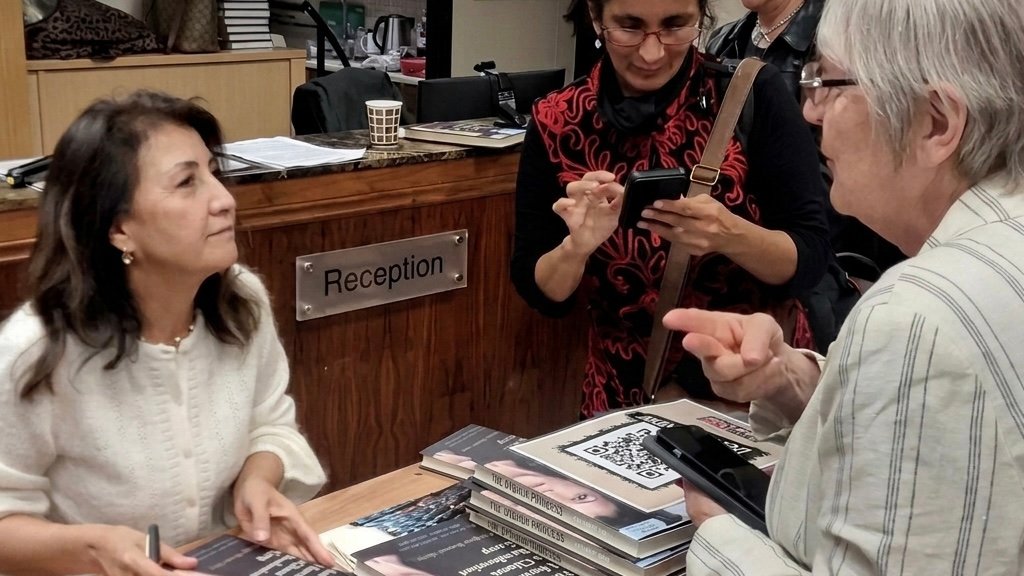
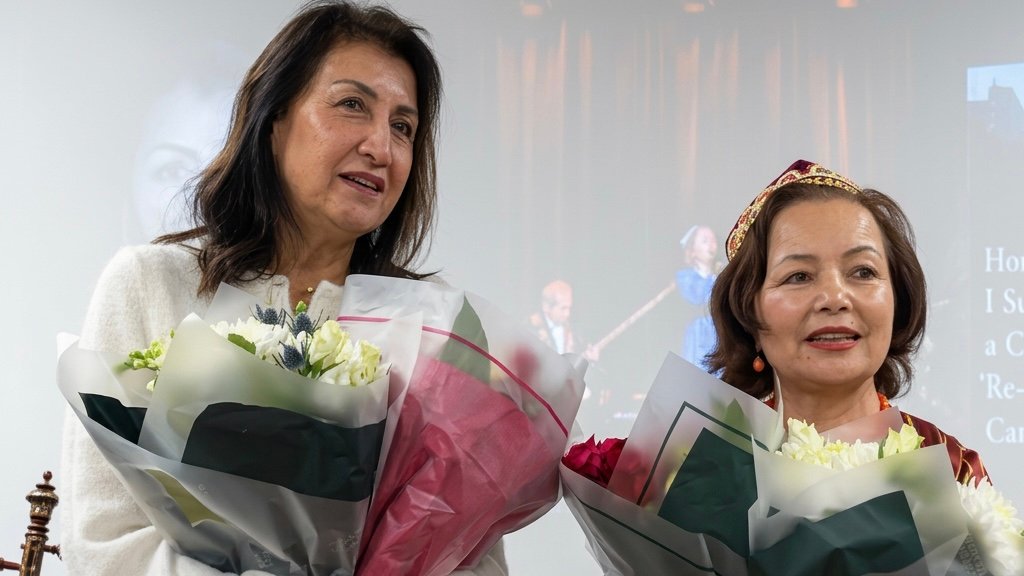
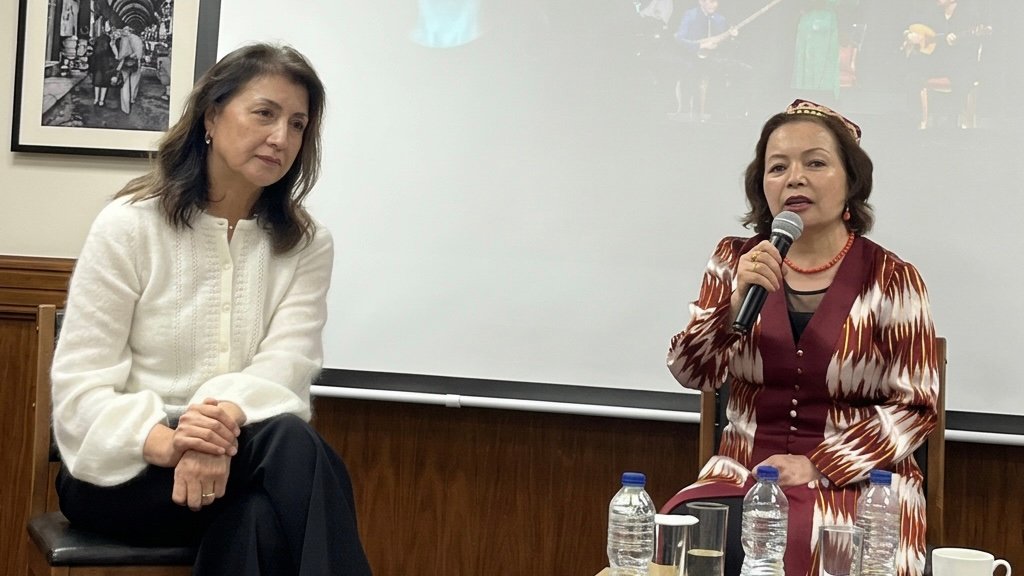
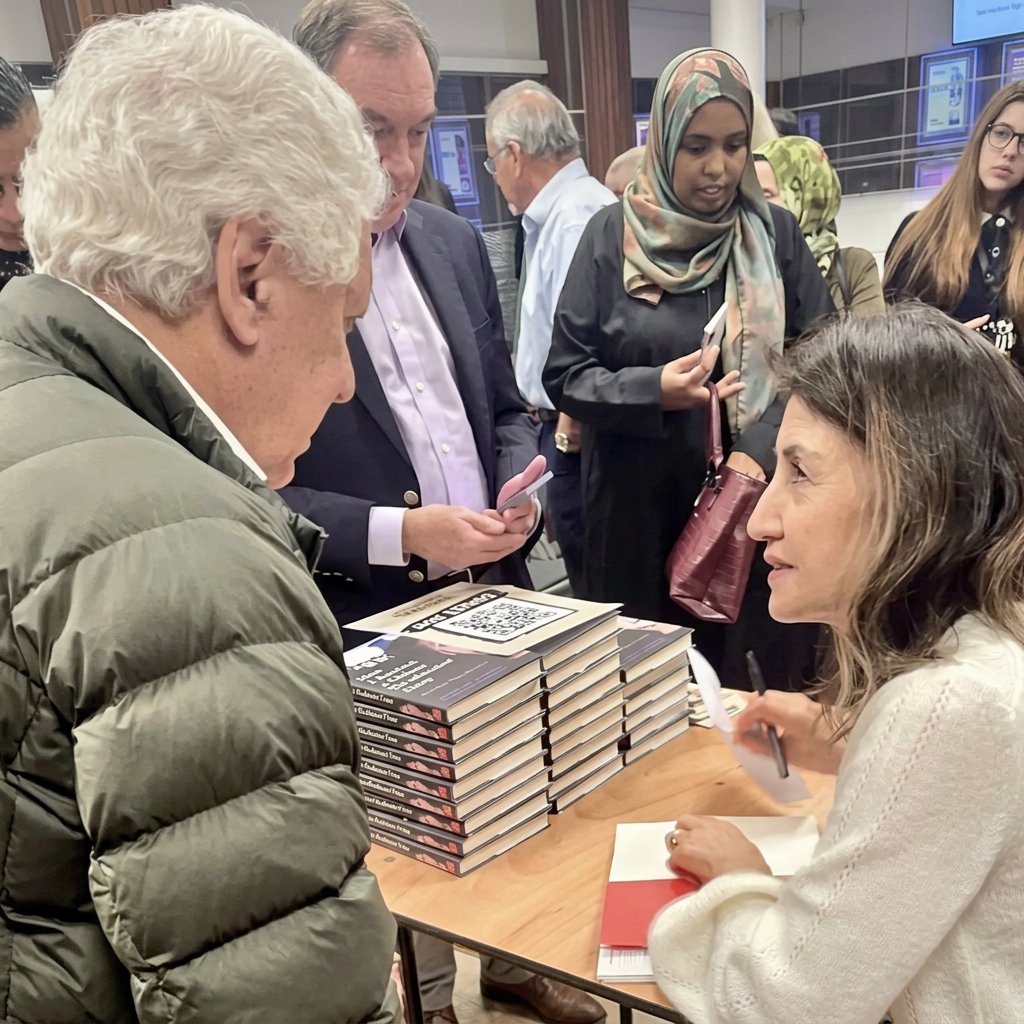
“The Chinese government thought they could manipulate us into abandoning faith, but the more they persecuted us the harder we prayed,” Gulbahar Haitiwaji told an audience at a Stop Uyghur Genocide event at the Yunus Emre Institute in London.
Her measured but harrowing account of her three-year ordeal at the hands of the Chinese state in a camp designed to “crush her spirit and to make her silently disappear” was published in 2021 to exorcise the ghosts of those years, but mainly to tell the world what was happening to the Uyghurs. Her book, “How I Survived a Chinese Re-Education Camp,” has been translated into 14 languages.
“Bitter Winter” had visited the family in early 2019 during the nail-biting silence after her disappearance, amid rumors that she had been sentenced to seven years in prison.
But it was two years after her return to Paris, her home in exile, before she could finally bear to record the horrors. She started tentatively and anonymously. But she realized that if she only tried to protect her own family, she could not help the women she left behind. There was no choice but to go public.
Since then she has not stopped speaking out. Speaking to “Bitter Winter” before the event, she said that every retelling has a cost. Each time, she is catapulted back into her cell, with years of unspeakable cruelties and privation returning in sleeplessness and nightmares.
But each public ordeal also brings the feeling that she is speaking for those muzzled and “disappeared” compatriots with whom she endured months of mindless political indoctrination and gratuitous torture. She gained her freedom. Thousands remain.
The content of her book is shocking. She was interrogated to the point of madness, shackled to metal chairs, barely allowed to see daylight, assuming every summons would be her last. Once she was punished for no reason and chained to her bed for two weeks. They were all sure they were there to die; it was just a matter of when.
They were punished for speaking at meals, for praying, for rejecting food. They were made to stand motionless for long periods by whistle-blowing guards. Those who collapsed disappeared, forever. One elderly woman dared to close her eyes briefly, and blows rained down on her fragile frame.
Nights were spent in terror of sudden visits by guards, and sleep was broken by bright lights and the sounds of women pleading for mercy down the corridor. Long-term memories faded. The faces of her children began to blur. The random cruelties, the prisoners vanishing, the insults and the slaps no longer shocked her.
The constant self-criticism, confessions and repentance emptied her of who she once was. She felt she was becoming an animal.
“We were pitiful heaps of sagging, warped flesh,” she wrote, “our faces greenish and swollen,” with dark shadows lining their eyes and hair hacked shapeless with clippers.
Two years of so-called re-education followed by one year of a seven-year sentence designed to “help her see the error of her ways” rendered Gulbahar Haitiwaji, a 54-year-old mother of two, “dead inside.”
For hours they played with her mind with repetitive questions designed to trip her up and confuse her, until she was tricked into signing away her freedom on imaginary charges of terrorism and plotting against the state.
Seven years after her release, on her first visit to the UK, she spoke to the BBC Uzbek Service”s Ibrat Safo.
At first she tried to ease the memory by immersing herself in her grandchildren. “In the beginning it was so difficult,” she said. As she left China, police had reminded her how much she “loved her family and younger sister, and would hate anything bad to happen to them.”
“I knew from that they would not hesitate to harm them in some way if I spoke out,” she said.
But as the book took shape, she had no doubt that the story should be told. On publication, the Chinese government wasted no time in denouncing her as a terrorist and a “loose woman” and blocked all contact with relatives at home. A week later, she was heartbroken to hear through a friend in Canada that her mother had died without her by her side.
She understood why other survivors don’t dare testify. “The Chinese really do investigate everything that is going on outside China against their government,” she told Ibrat. “They can be brave for themselves but not for their families.”
Ibrat asked: had China achieved its objective? She had been kept out in the snow, bound in shackles, chained to her bed for two weeks and fed meager rations. China had assumed this would break her, but had it, he asked? “Can you change someone’s mind through torture?”
“China’s purpose is to wash our brains and destroy our culture and language,” Gulbahar said. “But I think it’s not that easy to destroy who we are. I think Beijing miscalculated.”
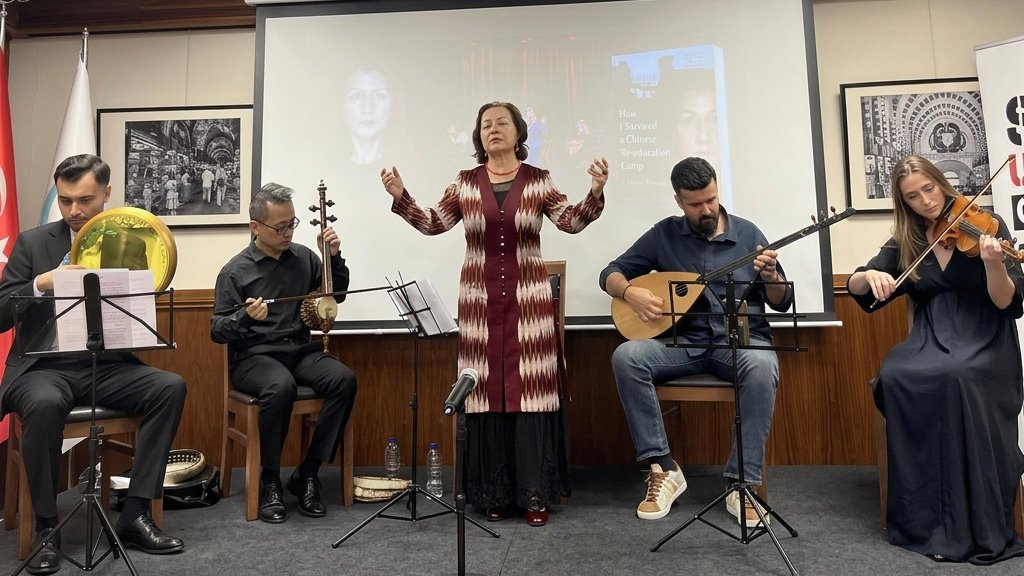
“They don’t want Uyghurs any more, but we are the natives of the land,” she said. “They will never destroy us.”
But the campaign of sterilization has had unavoidable long-term implications. The Uyghur Tribunal in December 2021 found “beyond reasonable doubt” that China intended to destroy a significant part of the Uyghur population by imposing systematic measures to prevent births, violating Article II(d) of the UN Genocide Convention.
Gulbahar spoke of mystery injections she and her co-prisoners were compelled to endure “voluntarily” twice a year, ostensibly as immunity boosters. Many young girls stopped menstruating and discovered on release that they were sterile. She became a surrogate mother to them, offering hope they might recover. But worse happened to many others, who were rounded up on release and forcibly sterilized.
Ibrat asked about Uyghur collaborators—police, wardens and tutors. While in her own camp she neither heard of nor saw sexual abuse, she knew from other testimony that it was common in Urumqi and Ghulja. But Uyghur staff “were just doing what they had to do.”
“I knew that some were sympathetic but dared not show it or they would also be taken away,” she said, citing police officer “Enver,” who disappeared after criticizing a Chinese guard who had sworn at the women. “He was dragged away and we never saw him again,” she said. “Maybe he was interned. We don’t know.”
“How can we judge them?” she asked, saying there were police who had helped her but whom she dared not name in her book for their safety.
She spoke about the heartbreak among some of the younger women whose children had been taken away. One woman’s mother took her children when she was arrested, but when the grandmother was later taken, the children were put in a children’s camp. Families and marriages were also destroyed by the state campaign to “pair up and become family”—Han Chinese cadres sent to live, eat, cook and sleep with Uyghur families, often billeted with single women whose husbands had vanished in the purges. “There were so many incidents that women had been sexually abused through this campaign,” she said.
Yet there were glimmers of hope. She saw the depths of human depravity but also care. “I saw true love and care among us,” she said, recalling how one candy was divided into 12 so that each woman in the cell could taste something sweet. Another day, 27 sunflower seeds and two peanuts were shared, the extra peanuts given to a 59-year-old woman.
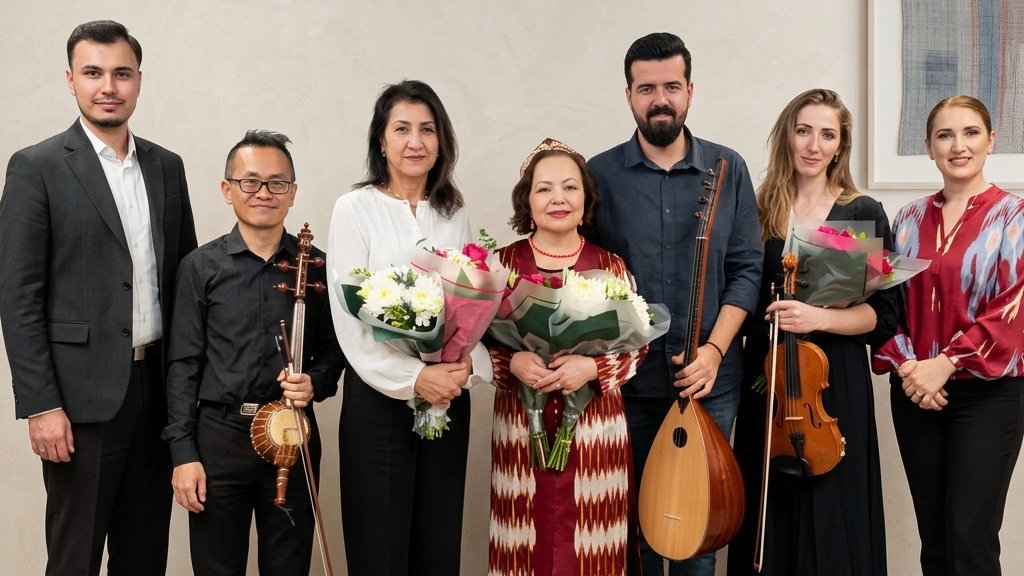
“We are a people with a beautiful and ancient culture that is still alive,” she
Introducing Gulbahar to the audience in London, Rahima Mahmut, CEO of Stop Uyghur Genocide, reminded listeners: “This suffering isn’t history. It continues in forced labor, family separation, fear and silence.” “We must remember those unable to speak for themselves,” she said.. “Gulbahar’s testimony is one of survival…”

Ruth Ingram is a researcher who has written extensively for the Central Asia-Caucasus publication, Institute of War and Peace Reporting, the Guardian Weekly newspaper, The Diplomat, and other publications.