A nationwide system now merges digital extraction, algorithmic profiling, and immersive simulation to push Party ideology into every citizen’s daily life.
by Tan Liwei
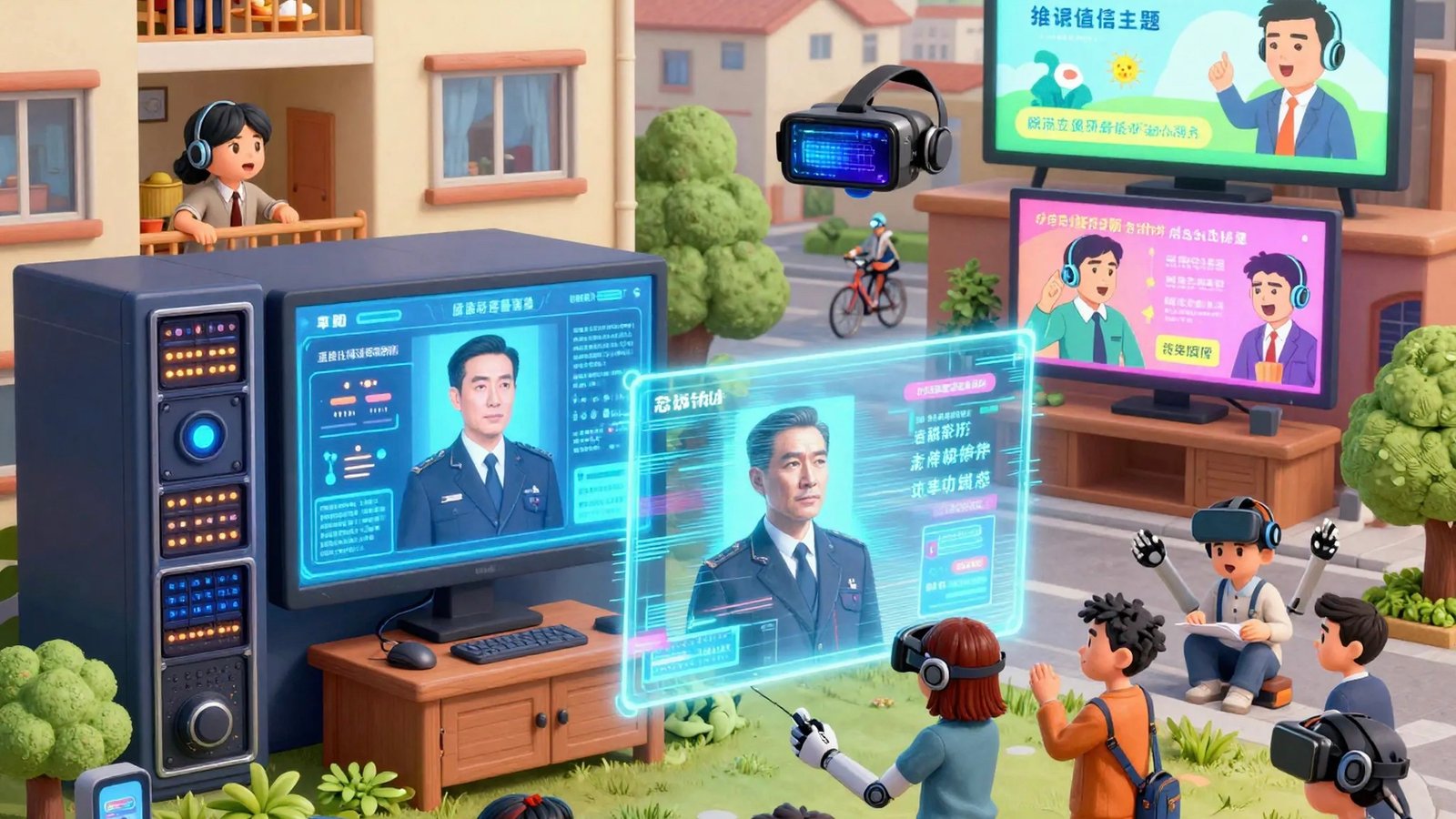
A new phase of ideological engineering is unfolding across China, driven by a fusion of political command and digital instrumentation. The Party’s theorists describe this program as “grassroots theoretical propaganda,” a term that once referred to modest neighborhood lectures but now signals a nationwide effort to inject official doctrine into every home through data extraction, algorithmic profiling, and immersive technologies. An article published on September 21 in the “Study Times,” the official newspaper of the Central Party School of the Chinese Communist Party (CCP), outlines this system and presents it as a bridge meant to carry Party ideology into the lives of ordinary citizens.
The text explains that propaganda workers must “grasp the essence of the theory” and “embrace digital and intelligent technologies” so that Party doctrine can “take root at the grassroots level.” It insists that digital tools should be used to “find out what the masses want to hear.” To achieve this, the article describes a vast apparatus designed to harvest conversations from village lanes, residential chat groups, and household visits, feeding them into centralized databases through mobile reporting tools and automated scraping systems. Citizens are encouraged to submit questions and preferences through online platforms offering “cloud‑based ordering,” where they can select topics and leave comments about their worries and expectations. At the same time, the system collects unsolicited data from casual conversations in fields and alleys, funneling it into back‑end databases through automated group‑monitoring tools. The goal is to merge voluntary disclosure with algorithmic capture.
Once aggregated, these fragments of daily life are sorted to produce what the article calls a “precise portrait” of ideological appetite built from digital traces. The study claims that this process reveals what young people enjoy hearing and what older citizens focus on, allowing propaganda workers to craft topics that answer personal needs with political messaging. The shift from “what I want to say” to “what the masses want to hear” is presented as a gesture of responsiveness. However, the underlying purpose remains consolidating ideological authority. The system converts the public’s “list of problems” into the propagandists’ “list of themes,” ensuring that employment, education, healthcare, and eldercare are framed through Party doctrine.
The “Study Times” article also urges propagandists to strengthen their arguments through “data resources.” It describes data as “the most powerful evidence” and “the most vivid material,” insisting that numbers can make propaganda appear objective. Propaganda workers are told to collect statistics from official agencies and pair them with local figures that seem authentic because they come from familiar environments. They then filter these numbers to match public concerns and interpret them through narratives that claim to reveal trends and gaps. The text encourages dynamic visual charts and cross‑database analysis to turn raw data into persuasive stories. The intention is to make doctrine feel empirical, even though the selection and interpretation of data remain entirely under political control.

The final section of the article reveals the program’s most ambitious part: transforming propaganda into an immersive experience. Propaganda workers are instructed to use virtual reality and holographic projection to create “immersive experience scenes” that make abstract doctrine feel tangible. VR can “restore historical scenes” so that citizens can absorb revolutionary messages inside simulated environments. Holographic projections can “revive historical figures” and place them in “cross‑time dialogue” with contemporary audiences. Micro‑animations and micro‑videos are recommended as tools to make grand ideological messages fit into small screens.
Dissemination is equally elaborate. Offline lectures are streamed online with real‑time comments, live voting, and audio participation, creating a hybrid environment in which participation is monitored and responses are instantly recorded. After each session, digital tools extract short clips for distribution across new media platforms, ensuring that propaganda circulates far beyond the original venue. The system is designed to capture attention, prolong exposure, and generate continuous engagement, extending the reach of official doctrine into every corner of daily life.
The “Study Times’ article presents these developments as innovations that will make ideological communication more accessible and more trustworthy. In reality, they reveal a system designed to ensure Party ideology reaches every household, every screen, and every conversation, turning propaganda into a permanent presence in the lives of millions.

Uses a pseudonym for security reasons.