The story of the most important East African millenarian movement and the spirit that allegedly gave rise to it.
by Massimo Introvigne
Article 1 of 3
In a previous article on indigenous spirituality in Rwanda, I examined the Ryangombe cult (“cult” in African spirituality scholarship has no negative meaning and indicates veneration of a particular spirit). I showed how a form of “guterekera” (communion with the spirits) that emerged at the margins of the main spiritual tradition could, over time, be drawn into the ceremonial and ideological orbit of the royal court. Its integration into kingship, its hierarchical pantheon, and its ritual system demonstrate how a spirituality born outside the central religious framework could become an instrument for expressing and legitimizing political authority. Yet the regional landscape of spirit-mediumship was far more varied, and not all forms followed the same trajectory. Some remained peripheral, others became vehicles of protest, and still others developed in open tension with the monarchy.
To understand this broader constellation, I present in this article the cult of Nyabingi, which represents the opposite pole of the spectrum. It belongs to the same cultural matrix of a shared regional complex of spirits and mediums. The cult of Nyabingi emerged from this matrix, yet it evolved in ways that diverged sharply from the “kubandwa” (spirit evocation) systems centered on the Cwezi and other royal spirits. While the Rwandan court eventually embraced the cult of Ryangombe, it proscribed that of Nyabingi. While the cult of Ryangombe reinforced political authority, that of Nyabingi challenged it. The contrast between the two cults illuminates the range of possibilities within Rwandan indigenous spirituality. As American historian Iris Berger emphasized, the kubandwa could both legitimize authority and subvert it.
As with the cult of Ryangombe, the origins of the Nyabingi cult are uncertain. In Rwanda, an oral tradition traces its origins to Kagarama, near Kabale in present-day Uganda. Some Ugandan sources claim the opposite, asserting that the cult originated in Rwanda and later crossed the border. Kabale remains a living center of Nyabingi practice, and those who wish to learn the tradition from Rwanda still travel there, acknowledging the continuity of a spiritual heritage that has survived despite repression and transformation.
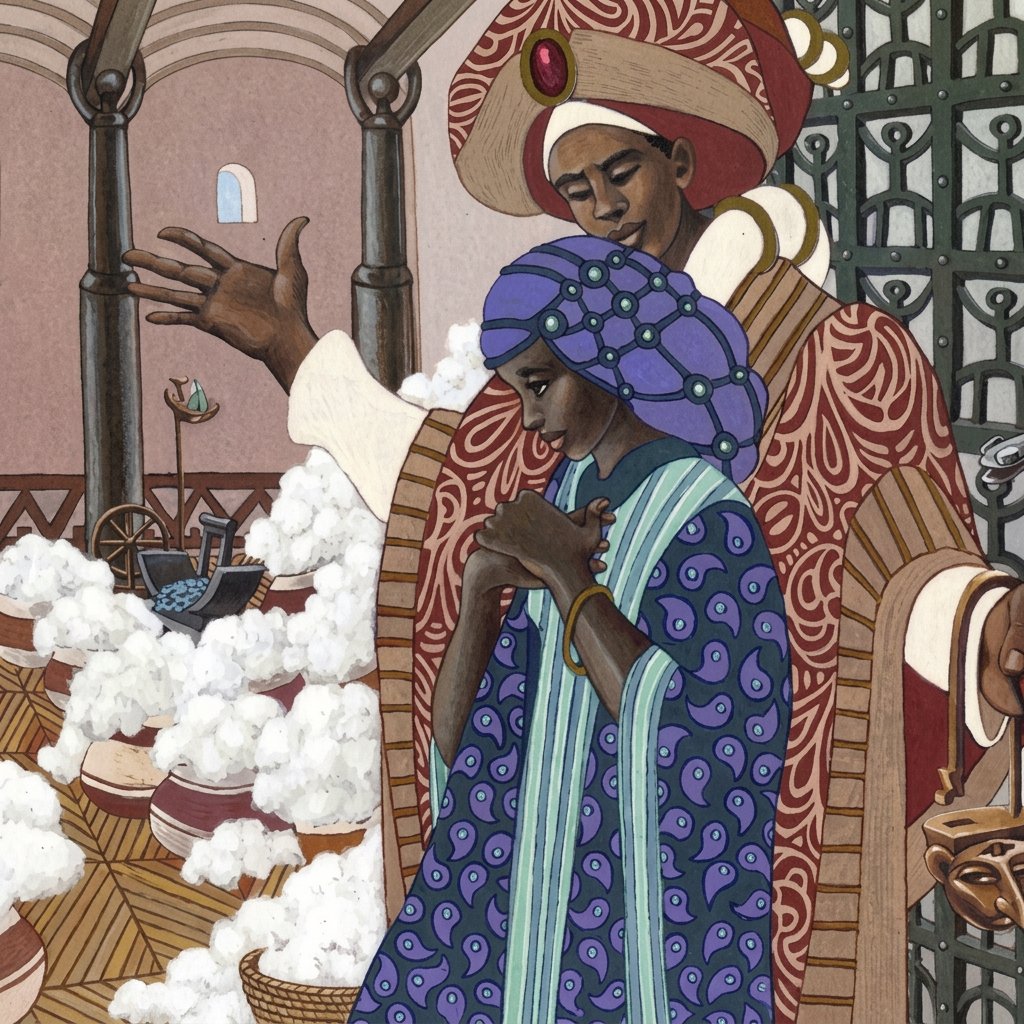
Competing narratives surround Nyabingi. Some describe her as an aristocratic woman who, after her death, became a powerful spirit invoked by her followers. In Northern Uganda, she is said to have been the daughter of the last independent king of Ndorwa or Mpororo before the Rwandan conquest, a woman who became immortal and whose return would restore the lost kingdom. Some believed she was merely a servant, persecuted and perhaps killed because she became a single mother and was a woman with small breasts (impenebere), believed to bring bad luck. Other accounts portray her as a spirit dwelling underground who appears to humans as a destitute woman asking for help, rewarding those who show compassion and punishing those who reject her.
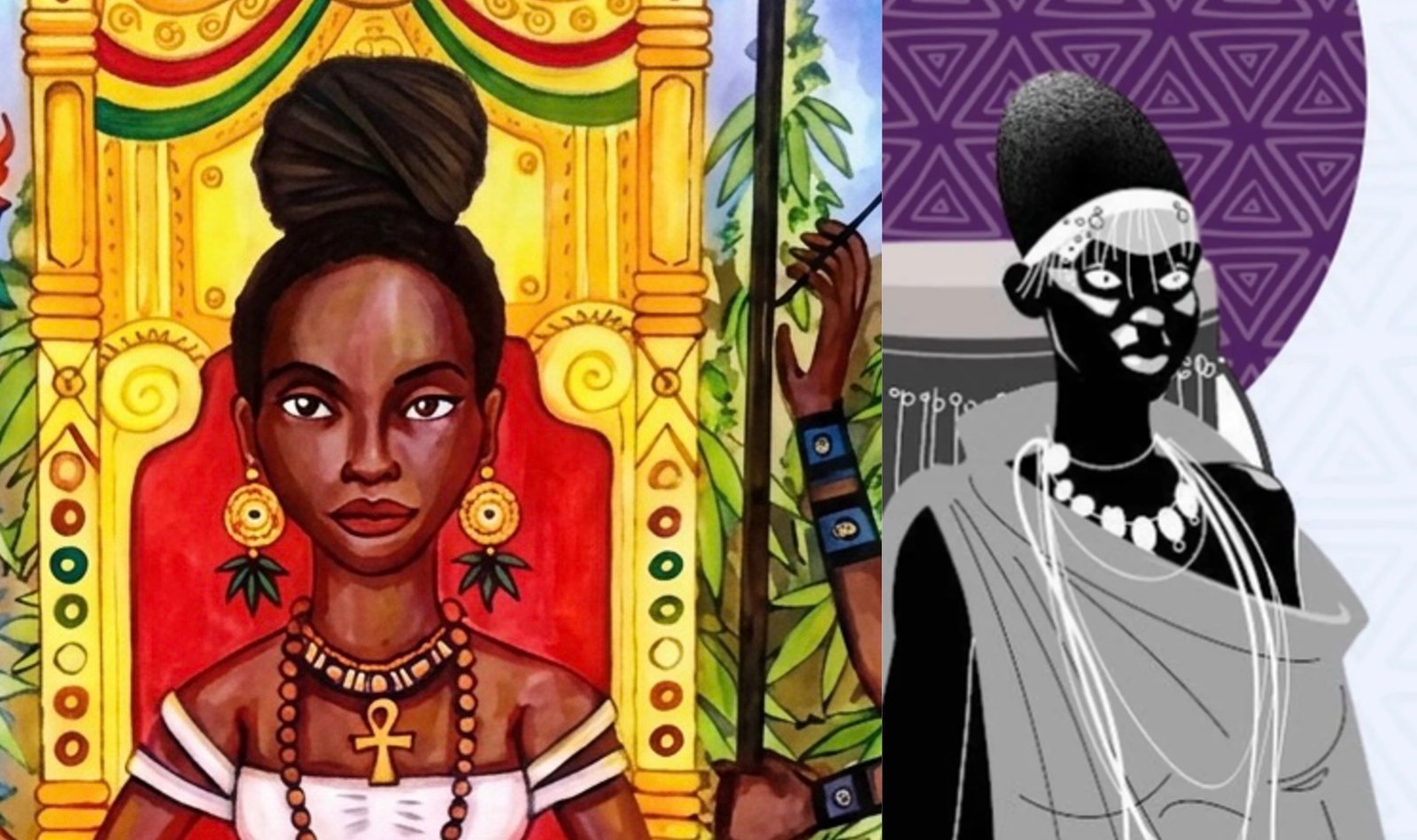
In 1951, Catholic missionary Marcel Pauwels (1901–1978) collected six versions of the Nyabingi story, but more existed. He concluded that a woman named Nyabingi had probably lived in the Ndorwa-Mpororo area at the present-day Rwanda-Uganda border. This would explain why the cult spread slowly into Rwanda and was regarded with suspicion by the court, as imported from an area whose rulers had frequently been at war with them. Other scholars have been more skeptical about Nyabingi’s historical existence, although Canadian anthropologist Jim Freedman later defended the theory. He maintained that, although indirectly and symbolically, the story of Nyabingi referred to real events in the early Ndorwa kingdom: “The events, like the cast of characters, have become expressions frozen within the context of a ritual discourse, and divested of any historical import. In a sense, history has been converted into liturgy, events have become the lexicon of a ritual. In another sense, however, structure has not entirely obscured history.”
In the Rwandan tradition, Nyabingi is regarded as a figure who, during her lifetime, was surrounded by a devoted circle of attendants whose attachment to her endured after her death. When misfortune struck, or danger threatened, these former companions called upon her, convinced that she still responded to those who sought her aid. Over time, this confidence grew into personal devotion expressed through gifts of livestock, beer, and food. The communication of her will was later entrusted to priests or mediums, who created the conditions for her presence to manifest, whether in a dedicated hut or, more recently, in any structure designated as the “ingoro ya Nyabingi,” the palace of Nyabingi, within the medium’s compound.
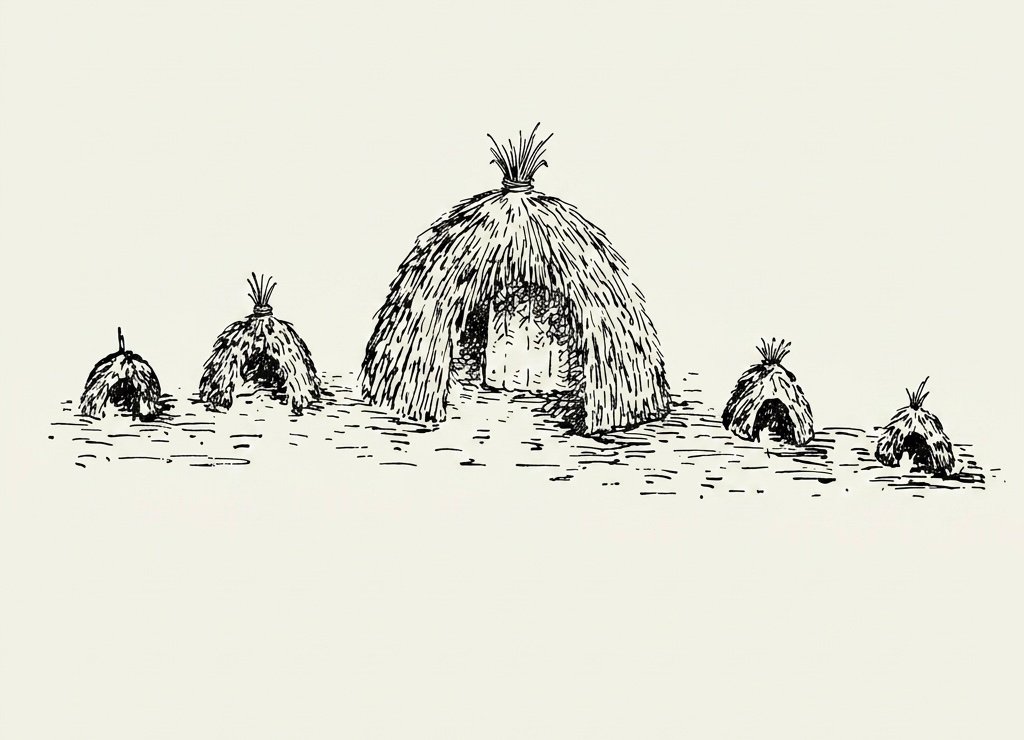
The slight shaking of the building, produced by the medium or an assistant, signals that the spirit has arrived. The medium then translates Nyabingi’s words, spoken in Hororo, into Kinyarwanda. Some claim that the medium can also discern the spirit’s intentions by interpreting the disordered speech of a person seized by possession. During these sessions, the mediums allow Nyabingi to take hold of them, pray, and act as intercessors for the sick, receiving the offerings intended for the spirit. Entering this role requires Nyabingi’s choice and possession, demonstrating her ability to transmit her commands and intervene effectively on behalf of those in distress. Once acknowledged as legitimate, the mediums gather a circle of assistants drawn from those who come seeking help and protection.
Unlike the cult of Ryangombe, the Nyabingi cult lacks initiation rituals or detailed liturgical sessions. Only the medium enters contact with Nyabingi and becomes possessed. For this reason, Freedman believes that the Nyabingi cult is not a form of kubandwa: “The kubandwa is a public ceremony—a ritual in the course of which an individual is initiated into a secret society. It is by virtue of such an initiation that an individual pledges himself to obey and impersonate one of the deities in the imandwa pantheon, and thereby acquires the deity’s assistance in various earthly matters. No initiation, secret society, or formal public ceremony exists for the worship of Nyabingi. Nyabingi is represented on earth by bagirwa, priests with privileged access to her. These representatives can contact Nyabingi on behalf of those who seek Nyabingi’s assistance, or intervention in their affairs. There is, in effect, no formal ritual associated with the worship of Nyabingi. There are, rather, private séances with a representative capable of making one’s appeals known to Nyabingi.”

Massimo Introvigne (born June 14, 1955 in Rome) is an Italian sociologist of religions. He is the founder and managing director of the Center for Studies on New Religions (CESNUR), an international network of scholars who study new religious movements. Introvigne is the author of some 70 books and more than 100 articles in the field of sociology of religion. He was the main author of the Enciclopedia delle religioni in Italia (Encyclopedia of Religions in Italy). He is a member of the editorial board for the Interdisciplinary Journal of Research on Religion and of the executive board of University of Pennsylvania Press’ Nova Religio. From January 5 to December 31, 2011, he has served as the “Representative on combating racism, xenophobia and discrimination, with a special focus on discrimination against Christians and members of other religions” of the Organization for Security and Co-operation in Europe (OSCE). From 2012 to 2015 he served as chairperson of the Observatory of Religious Liberty, instituted by the Italian Ministry of Foreign Affairs in order to monitor problems of religious liberty on a worldwide scale.