Ukrainian Orthodox Church priests face a painful dilemma: cooperate with the Russians, go to jail, or flee.
by Willy Fautré
Article 3 of 3. Read article 1 and article 2.
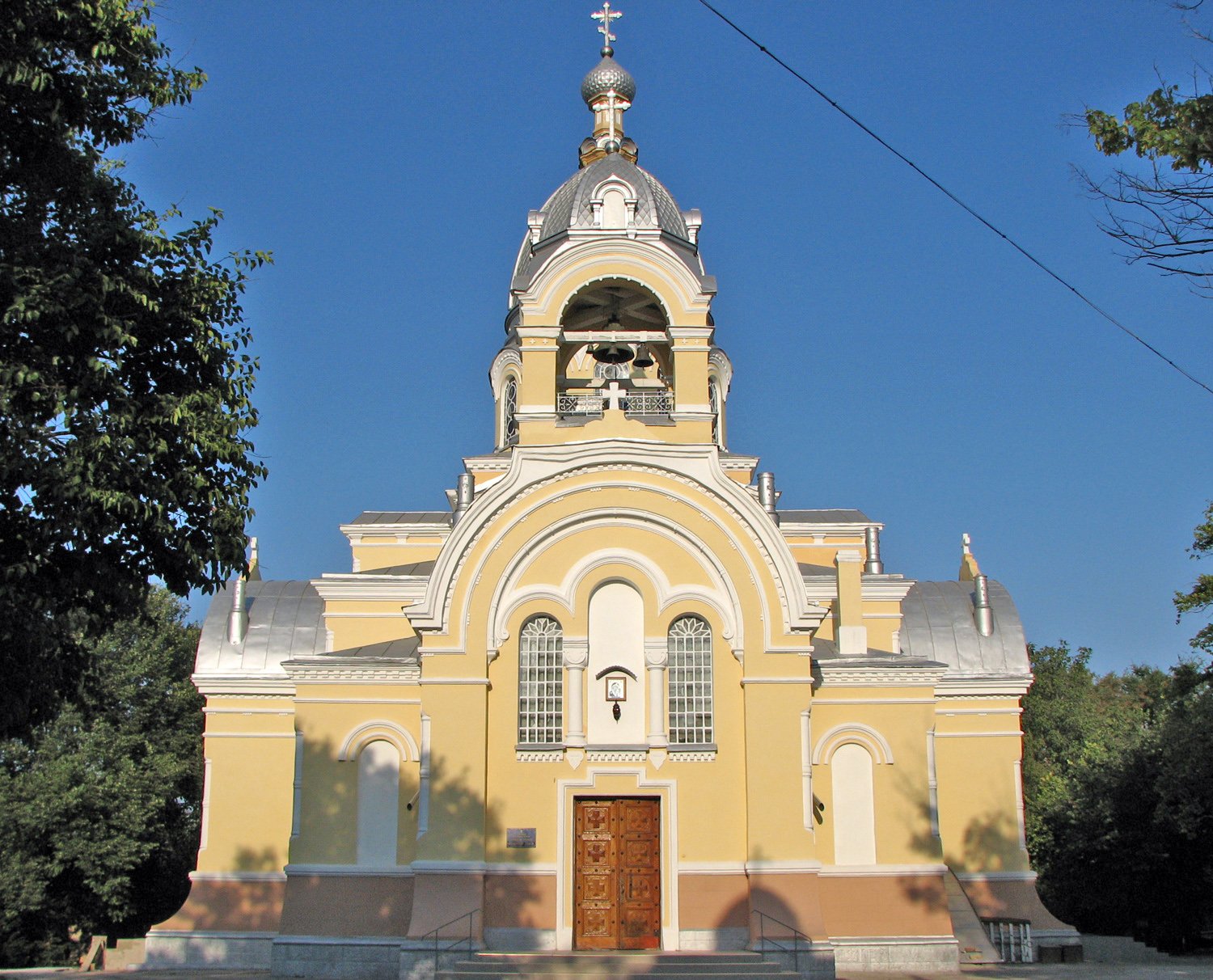
Almost immediately after the start of Russia’s full-scale war on Ukraine in 2022, the Holy Synod of the Russian Orthodox Church (ROC) began to integrate individual Ukrainian Orthodox Church (UOC) dioceses into the direct subordination of the Patriarch of Moscow. How did this take place? Did the priests have a choice?
The annexation strategy
The first three dioceses that joined the ROC were in Crimea: Dzhankoi, Simferopol, and Feodosia. The ROC officially withdrew them from UOC jurisdiction and incorporated them directly into ROC structures.
Later, a similar practice spread to a significant part of the occupied territories: Berdiansk; Rovenky; parts of the Luhansk and Kherson regions; and other territories under stable Russian control.
The process of absorption of UOC parishes by the ROC usually followed this pattern: spiritual subordination to the ROC by commemorating and praying for Patriarch Kirill (a ritual forbidden by the UOC because Patriarch Kirill supported Russia’s war), management of financial and administrative issues through ROC structures, registration of parishes and religious organizations under Russian law.
This was clear interference by the ROC in the internal management of another church structure, the UOC.
By mid2026, the annexation process of most UOC dioceses had been achieved. This process took place in various ways, such as:
- UOC diocesan requests were officially accepted by the Synod of the Russian Orthodox Church and placed into direct subordination to the Patriarch and the Russian Synod.
- The ROC integrated the ruling bishop of the diocese, effectively establishing its authority over it, without formalizing a separate decision on “the diocese’s admission to the ROC.”
- Subordination of the UOC diocese through the transfer of its parishes to neighboring ROC dioceses.
Cooperation or collaboration? Voluntary or forced or unavoidable?
According to the investigation conducted by “Novaya Gazeta Europe” data journalist Maria Erlikh in the Russian-controlled regions of Ukraine, Orthodoxy has been turned into a propaganda tool, and dissenting priests are tortured, killed, or forced to flee. It is becoming increasingly difficult to maintain neutrality: “cooperation” with the occupation authorities is becoming a condition for survival for both Orthodox priests and ministers of other Christian churches.
Many UOC priests did not want to remain in the occupied territories or move to the Russian Orthodox Church. Moreover, they were required not only to submit formally, but also to cooperate with the new government actively.
A concrete example comes from Maria Erlikh, who spoke with Volodymyr Budnik, a priest from the Kherson region. At the start of the full-scale war, he was serving as the rector of the UOC church in the city of Hola Prystan.
According to him, “people in civilian clothes” began to come to his church in April 2022. They wanted him to stop preaching in Ukrainian. He tried to give an evasive answer, saying he did not know Russian very well, but they pressed him more and more, and he did not know how to get away.
At some point, he felt he was about to be arrested. Visits by representatives of the authorities became increasingly frequent. His only solution was to flee, which he did just in time. Indeed, soon after reaching Kyiv, he received an SMS from an unfamiliar number warning that “they” would come for him soon and that he had to go into hiding urgently for his safety.
By that time, his priest friend in Kherson had already spent two weeks in detention. He had been accused of “collaborating with the Kyiv regime” by the occupation authorities.
“A lot of priests have run away from there,” Alexander Sorokin, a UOC priest, told Maria Erlikh.
This shift in the Russian Orthodox Church’s attitude toward UOC dioceses in the occupied territories began in October 2022 in the Rovenky diocese and then spread to other occupied territories.
More investigation in the field is needed to determine to what extent UOC clerics at all levels have collaborated or cooperated with the occupation forces under threat, whether they had a real choice, in which circumstances they acted, and to what extent.
At the time of the Soviet Union, there were Ukrainian and Russian Orthodox priests who were opposed to the Communist regime. Abroad, they were known as “dissidents,” an emblematic term of the time, and the international community supported them. Those who resist now in Ukraine and Russia are not on the radar of international media in democratic countries and lack support from Western states. Their freedom and lives are at risk because they are nonviolent resistance fighters. They are truly alone in their fight. This should change.

Willy Fautré, former chargé de mission at the Cabinet of the Belgian Ministry of Education and at the Belgian Parliament. He is the director of Human Rights Without Frontiers, an NGO based in Brussels that he founded in 1988. His organization defends human rights in general but also the rights of persons belonging to historical religions, non-traditional and new religious movements. It is apolitical and independent from any religion.
He has carried out fact-finding missions on human rights and religious freedom in more than 25 countries He is a lecturer in universities in the field of religious freedom and human rights. He has published many articles in university journals about relations between state and religions. He organizes conferences at the European Parliament, including on freedom of religion or belief in China. For years, he has developed religious freedom advocacy in European institutions, at the OSCE and at the UN.