How anti-cult prejudices led social workers to misinterpret the lives of children in the community.
by Susan J. Palmer
Article 2 of 3. Read article 1.
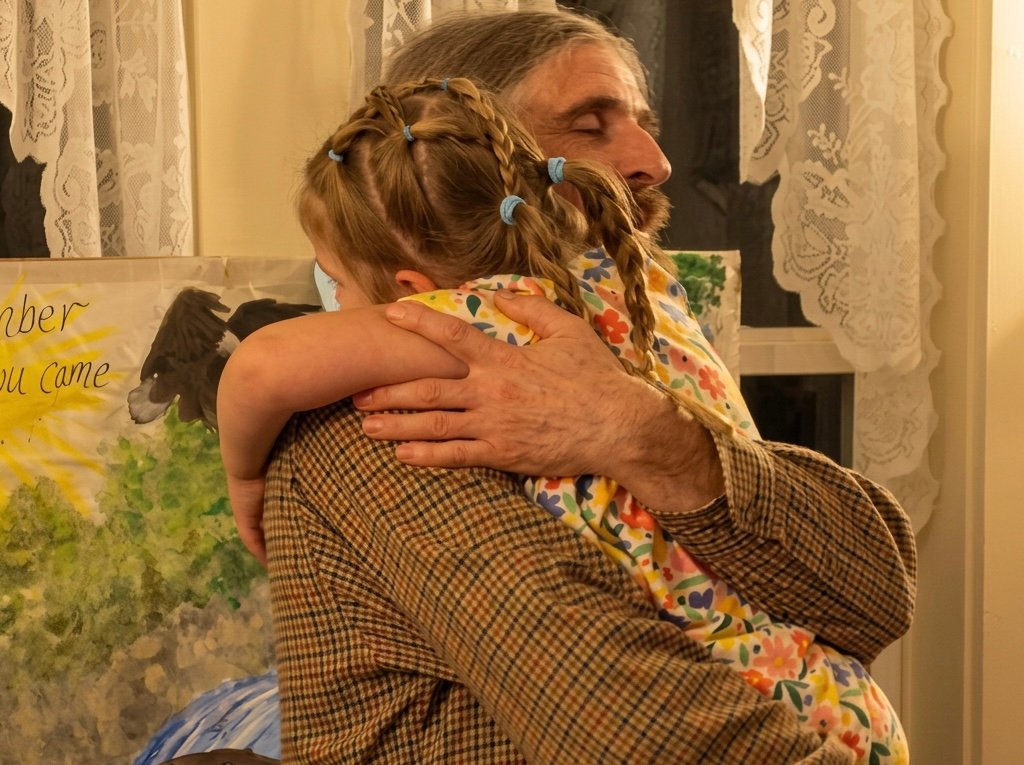
Between July 14 and 16, I interviewed 8 Twelve Tribes parents whose children had been taken. In these interviews, they expressed their mistrust of the CPS caseworkers.
One father described the “forensic interviews” of the children by social workers that had taken place in a “nice big room with toys and snacks.” He said, “All the interviews with children were recorded to make sure the social workers didn’t apply undue pressure on the child to get the results they wanted – but my 3-year-old daughter was in the last interview—the only one that was not recorded. And yet, the caseworker wrote in her report that our daughter said we ‘beat her with a stick’.”
He protested: “Now there is no way that she could come up with that in her little 3-year-old brain. She would never use that language. We always explain to her about ‘discipline’ with a ‘rod.’ She had heard the word ‘beat’ before, as in ‘let’s beat the drum’ or ‘you beat me in a race,’ but never in the context of discipline. Also, she wouldn’t use the word ‘stick’—sticks are for firewood, not like the pathetic little balloon sticks we use for our children.”
One mother complained that the social worker had “whisked her toddler off in her car” and then reported that the child talked about “ouchies” and “booboos” on her arms, inflicted by the parents. “That language is foreign to us,” the mother said. “I have never heard of an ‘ouchie’ before, or a ‘booboo’… My child had no marks on her body and, if she actually said those strange words, she must have been coached by the social worker.”
A social worker misquoted another child as saying, “Mama and Papa hurt me.” The mother protested, “But in our community we use the terms ‘Imma’ and ‘Abba’ for mother and father. Our child wouldn’t even know what a ‘Mama’ or a ‘Papa’ means!”
None of the parents were happy about the care their children were receiving in foster care, particularly the unhealthy diets and ubiquitous television (not available in Twelve Tribes homes).
An important puzzle in the case was how to fit the communal organization of the Twelve Tribes into U.S. law. The fact that members shared all goods (and money) in common, and that parents were raising their children in a communal setting, was viewed as problematic. The judge decided to try all ten parents together, despite the Constitutional requirement of individual treatment under the law. Trying so many parents together continues to cause months of delay because of congested court calendars and the difficulty of assembling so many lawyers at the same time.
Twelve Tribes’ resident lawyer Jean Swantko Wiseman commented: “The judge’s consideration of the charges arising from ‘the same circumstances’ seems to have prevailed over the principle of ‘the child’s best interests’ in receiving a speedy determination.”
Several parents spoke of how the state was challenging their communal ethic. One father explained the situation eloquently: “With all due respect, no one has come and asked us what our religion is about. Well, I’ll tell you now, the Book of Acts is at the core of our religion. But they don’t want to understand what we are doing; it’s not part of their job. They want us to stop doing it. What the Department of Social Services is telling us is, ‘Forsake your God, forsake your religion!’ ’I want to ask them, What’s the matter? Don’t you believe in sharing?’ No, they have their boxes to check. But don’t they realize they are going against the free enterprise system in the United States, where you are free to make money… and you are free to give it away! But they tell us, ‘Show us your pay stubs, show us your rental agreement—or you will never get your children back’.”

In New York state law, a “person legally responsible” (PLR) is broadly defined as “the child’s custodian, guardian, [or] any other person responsible for the child’s care at the relevant time” (Family Ct Act § 1012 [g]). In the Twelve Tribes Hamburg case, a major concern for the social workers was whether only the parents spanked their own children, or whether any adult—as a “PLR”—could spank any child.
I raised this issue with several parents, a shepherd, and lawyer Jean Swantko Wiseman. They explained that only parents had the authority to spank their children, and only they could decide when it was appropriate. But parents could delegate the authority to spank to teachers in their home-schooling program, or to other temporary caretakers of their children.
As one of the fathers summed it up, “Just because we live together, Twelve Tribes parents are not PLR for other parents’ children. The court assumed at our first hearing that we are all one big family, right? But in fact, the nuclear family is our pre-eminent social unit. Each family has their own separate living quarters; each father rules over his own family.”
Jean Swantko Wiseman explained the situation as follows: “At that first hearing, the court-appointed attorneys did not know any better, and the parents were not allowed to speak. Some parents have asked to have each parent tried separately, as is required by law, but the judge wants to try them collectively, as a unit. CPS has offered all ten parents a deal through their lawyers: to plead guilty to the neglect of their children, and then they will get their children back, but with confining CPS conditions. They were told, ‘We want all of you to plead guilty, not just some of you. It’s all or nothing.’ Our response was, ‘But we are not guilty. Our Father does not want us to lie. We have not neglected our children.’”
As one of the fathers objected: “[The CPS] have used the rape to take away our children, but now they realize they have no evidence of neglect. So next they’re going after medical neglect. Their strategy is: ‘get the children first, and then we’ll try to find evidence!’ And now it’s turned into a non-stop fishing expedition. And they’re still charging us with excessive corporal punishment—even of our own babies!”
Jean Swantko Wiseman echoed his point: “It seems that their children are in investigative detention, which is illegal in this country. They are looking for evidence of harm after—rather than before—the removal of the children. Judge Frank Mahady, in his 1984 opinion, denounced this practice as unconstitutional.”
Several parents spoke about their four weekly visits to their children placed in foster homes. A father described his consternation at seeing his 3-year-old daughter bedecked with makeup and false fingernails. One couple was deeply distressed because their daughter would scream, struggling to escape and follow them whenever it was time to leave—and she would often throw up as she watched them waving goodbye. Another couple said they tried not to cry during the visits, although the father admitted to crying five times.
Susan J. Palmer is an Affiliate Professor in the Religions and Cultures Department at Concordia University in Montreal. She has directed the Children on Sectarian Religions and State Control project at McGill University, supported by the Social Sciences and the Humanities Research Council of Canada (SSHRC). She is the author of fourteen books, notably The New Heretics of France (Oxford University Press, 2012).