As part of a broader effort to tighten control over the Special Administrative Region, control over religion is also increasing.
by Yoyo Ng
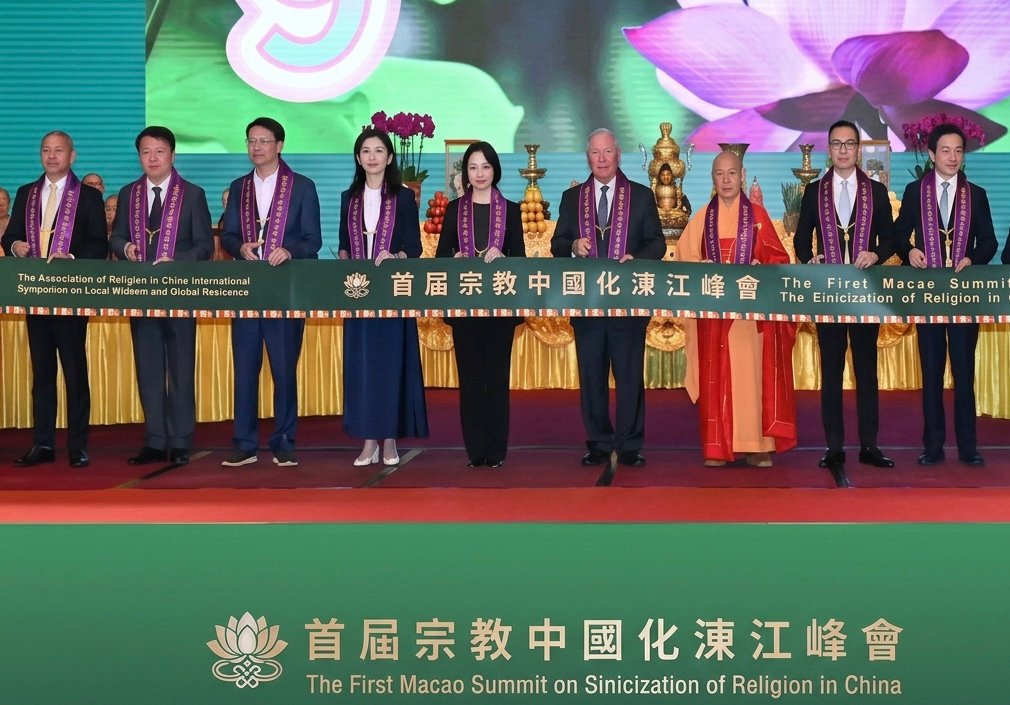
The first Macau Summit on the Sinicization of Religion opened on July 20 at the Fisherman’s Wharf Convention Center. It was presented as an international event on Buddhism and religious dialogue, yet the structure of the gathering reveals its political purpose. Senior representatives of the Chinese People’s Political Consultative Conference attended, together with officials from the Central Government Liaison Office and the United Front, and leaders of the government-controlled Chinese Buddhist Association. Their presence confirms that the summit is part of a national strategy aimed at aligning religious life with the authorities’ priorities.
Chinese Buddhism is quintessentially Chinese, and its “Sinicization” does not mean making it more Chinese, but more aligned with the Chinese Communist Party’s control.
The theme chosen for the summit, described as “local wisdom resonating with the world,” was used to promote the idea that religious traditions should adapt themselves to the cultural and social framework defined by the state. The president of the Chinese Buddhist Association, Venerable Yanjue, delivered a keynote speech insisting on the need for religious teachings to merge with history, social conditions, and Socialist values. This language mirrors the formula used in Mainland documents on Sinicization, where doctrinal reinterpretation, patriotic education, and political reliability are central requirements.
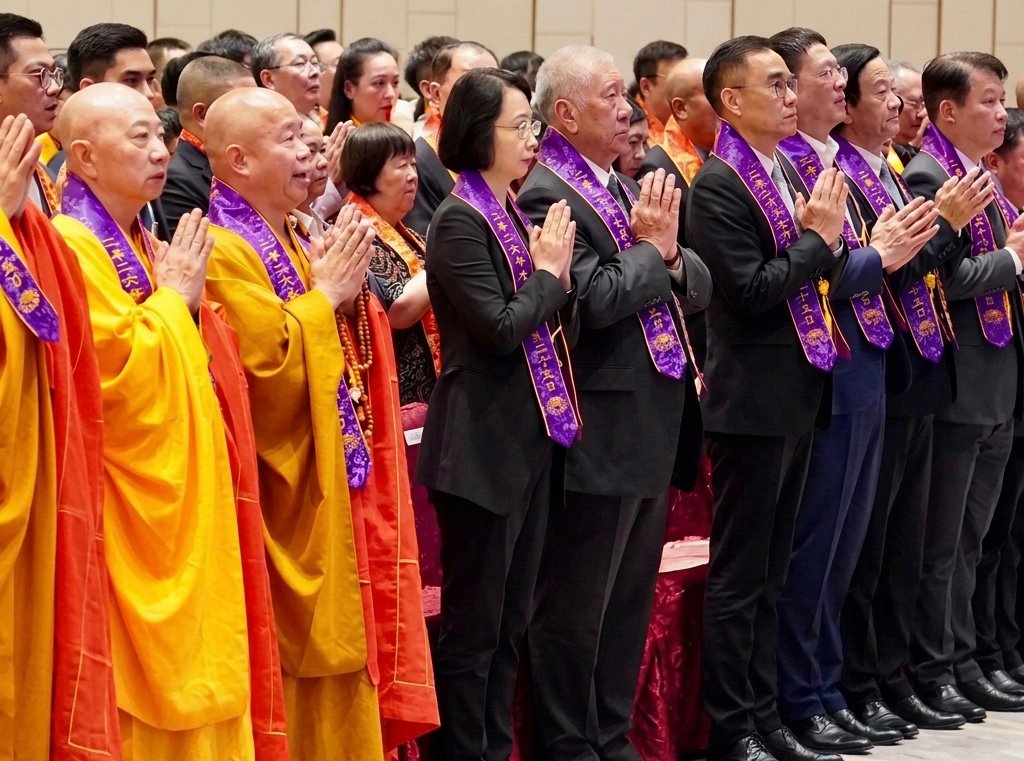
The China Buddhist Association’s own report on the event emphasizes that Macau is presented as a model of One Country Two Systems, a place where cultural coexistence is praised as long as it follows the political principles defined by Beijing. Yanjue reminded the audience that Macau’s Buddhist community has long supported national unity and endorsed the basic policies governing the Special Administrative Region, including the new National Security Law. He praised its role in promoting Macau’s “stability,” which the authorities regard as essential.
China Buddhist Association Vice President Master Minghai explained that Buddhism should continue its academic research, monastic discipline, and international outreach while being guided by Socialist core values. He stated that doctrinal interpretation should follow the requirements of contemporary development, that temple management should be strengthened, and that international exchanges should serve the purpose of presenting China to the world in a favorable light. This is the standard vocabulary of Sinicization, where religious teachings are reinterpreted through political criteria and religious institutions are supervised through administrative mechanisms.
The summit included a prayer ceremony involving the three major Buddhist linguistic traditions, a large offering ritual, and an academic forum on Sinicization. It also featured a cultural exhibition titled “Memory and Harmony” and a series of lectures by well-known Buddhist masters.
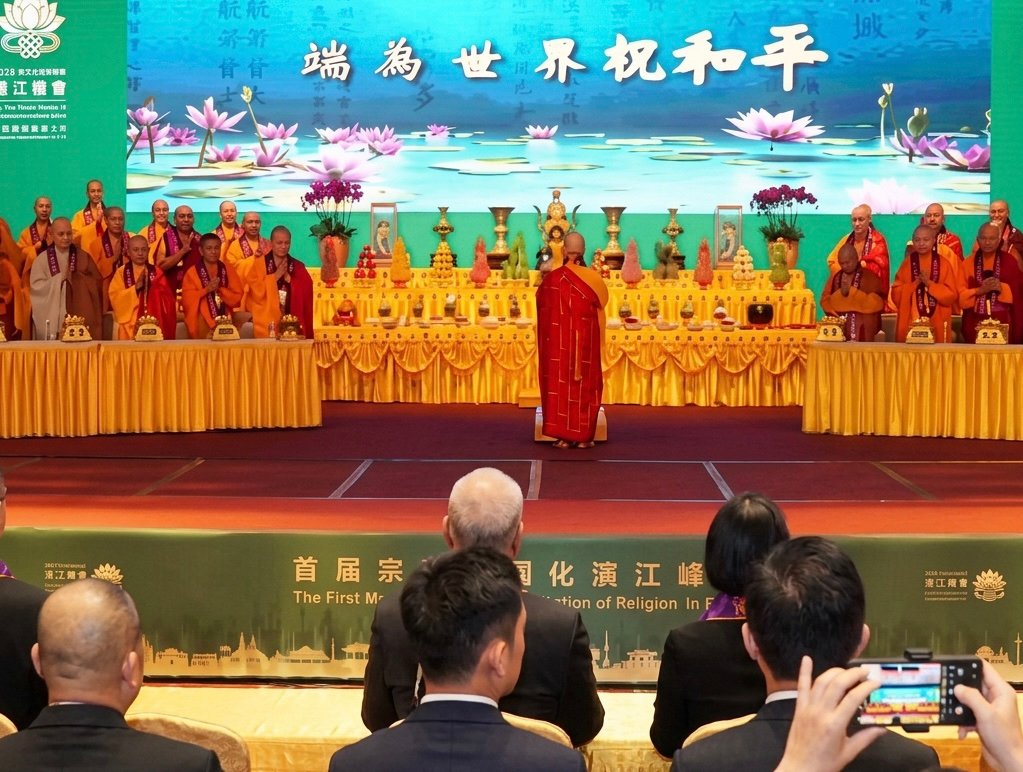
The event was organized by the Macau Buddhist Association, the Hong Kong Buddhist Association, and the Macau Buddhist Youth Association, with guidance from the Central United Front Work Department and the Chinese Buddhist Association. The Macau government and the Liaison Office endorsed the summit, and the Macau Foundation provided financial support. This structure replicates the model used in Mainland China, where Sinicization activities are planned and supervised by Party-controlled bodies.
Macau receives less international attention than Hong Kong, yet its autonomy has been steadily reduced through legal, administrative, and cultural mechanisms. The enforcement of the National Security Law has already shown how political control is exercised. Extending Sinicization of religion, including Buddhism, adds a new dimension to this process, bringing religious life under the same framework that governs Mainland religious policy. The summit demonstrates how the political program of Sinicization is now applied in Macau with growing intensity, reinforcing the gradual erosion of the autonomy promised under One Country Two Systems.

Uses a pseudonym for security reasons.