Captured on CCTV broadcasts despite FIFA’s attempts at censorship, its waving was a significant fact for the Uyghurs—and the Chinese.
by Abdulrehim Gheni Uyghur
In the past, the world was largely unfamiliar with the Uyghurs. Today, however, the world has come to know them. People have learned that their homeland, East Turkestan, was unlawfully occupied and colonized by the Chinese invading regime, renamed under the colonial moniker “Xinjiang.” The flag of this nation—the blue flag adorned with the crescent and star—now waves passionately at protests against the Chinese government, standing before the global public as the undeniable symbol of the Uyghur nation.
The FIFA World Cup, which captured the attention of the entire globe, has come to a close. Nations around the world broadcast these matches live, bestowing moments of hope, confidence, and excitement upon their citizens. Amidst this universal fervor, a new ray of hope illuminated the East Turkestani people, particularly the Uyghurs—a nation long forgotten by the international community, suffering under ongoing genocide by the Chinese occupation regime, and facing systematic erasure of their national identity.
The international sports arena frequently touts the slogan “sports should remain free from politics.” In reality, sports are never truly detached from political realities. On the contrary, for oppressed nations, the football pitch becomes an unarmored battleground. When Maradona scored his triumph against England at the 1986 World Cup, it served as a profound spiritual retribution for the Argentine people following their defeat in the Falklands War.
This time, a similarly symbolic victory has reverberated for the Uyghur people.
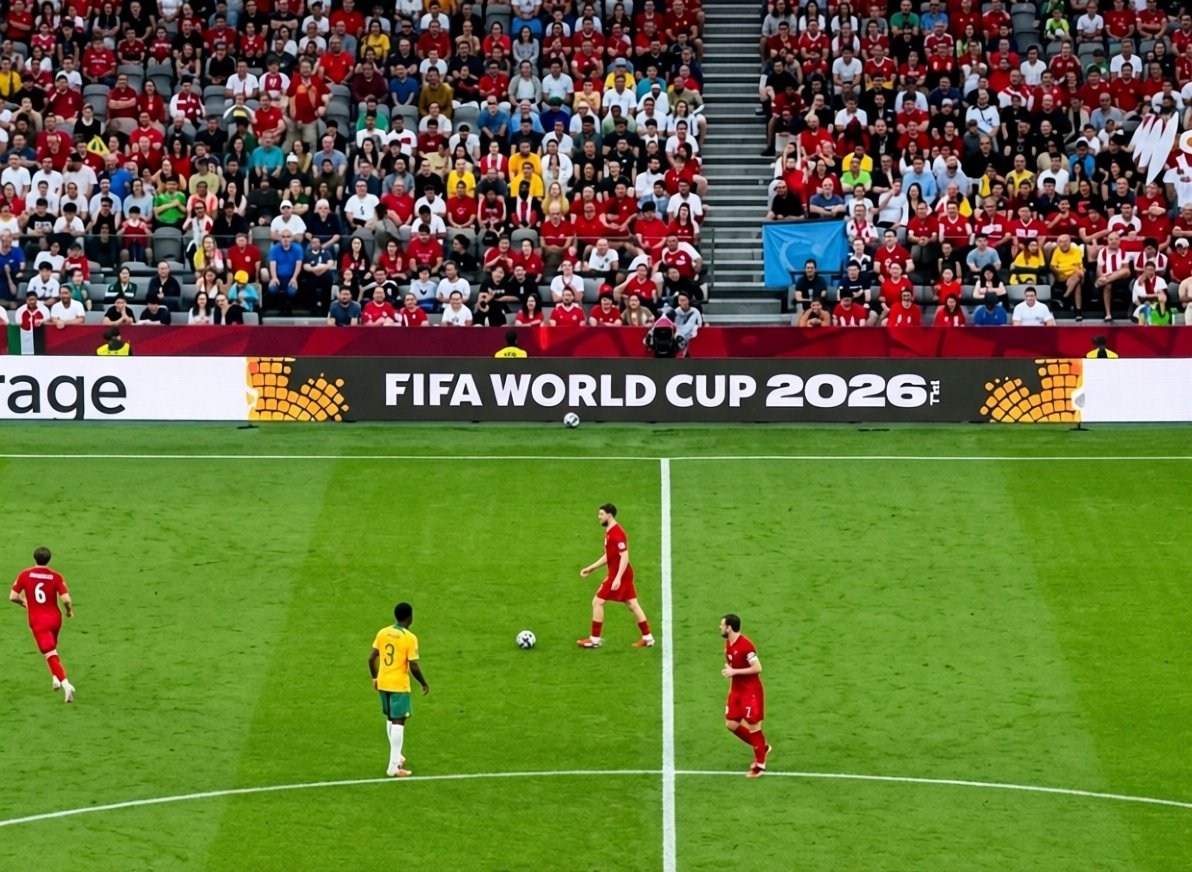
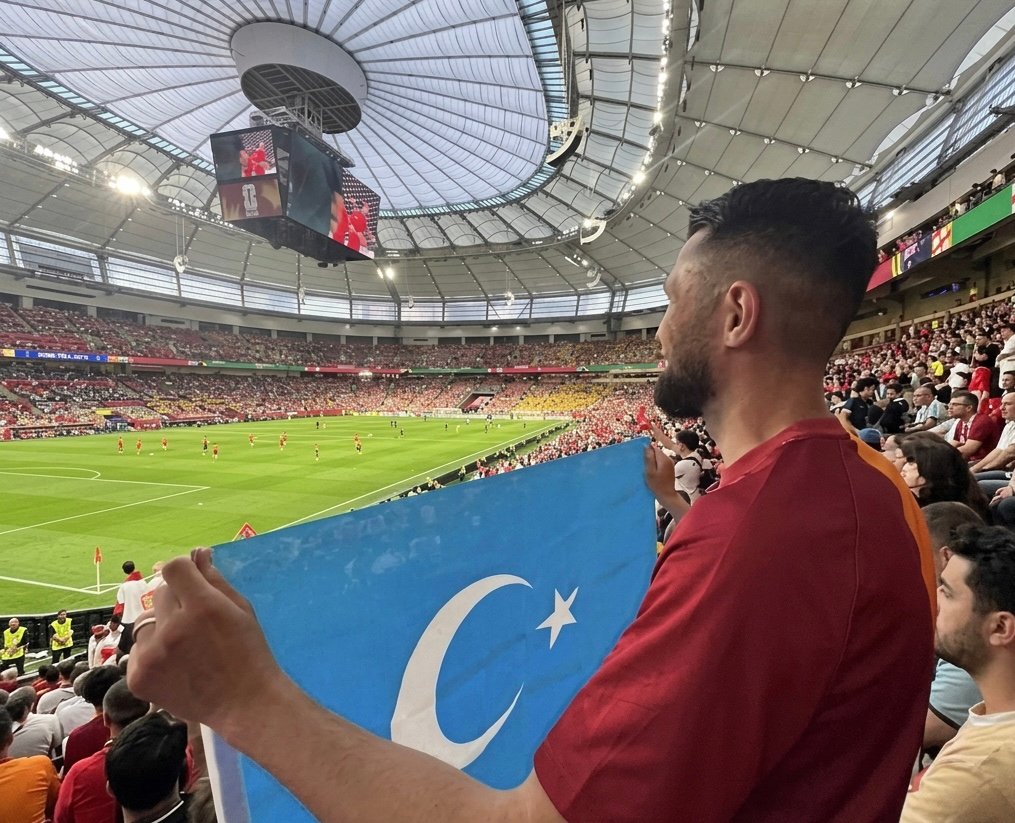
On June 13, 2026, at the BC Place stadium in Vancouver, Canada, during the Group D FIFA World Cup match between Australia and Türkiye, Uyghur spectators hoisted the East Turkestan flag (the Blue Flag). The image of the flag fluttering proudly was broadcast live on stadium displays and even captured directly on China’s state media channel, CCTV-5. This moment was witnessed not only by the Uyghur diaspora, but by millions of viewers worldwide—including Uyghur football enthusiasts residing in their homeland under occupation. This was far more than the simple waving of a banner; it was the re-emergence of Uyghur national pride on the world stage. Deeply moved by this bold reflection of their national spirit, the diaspora community shared the footage tirelessly across social media platforms.
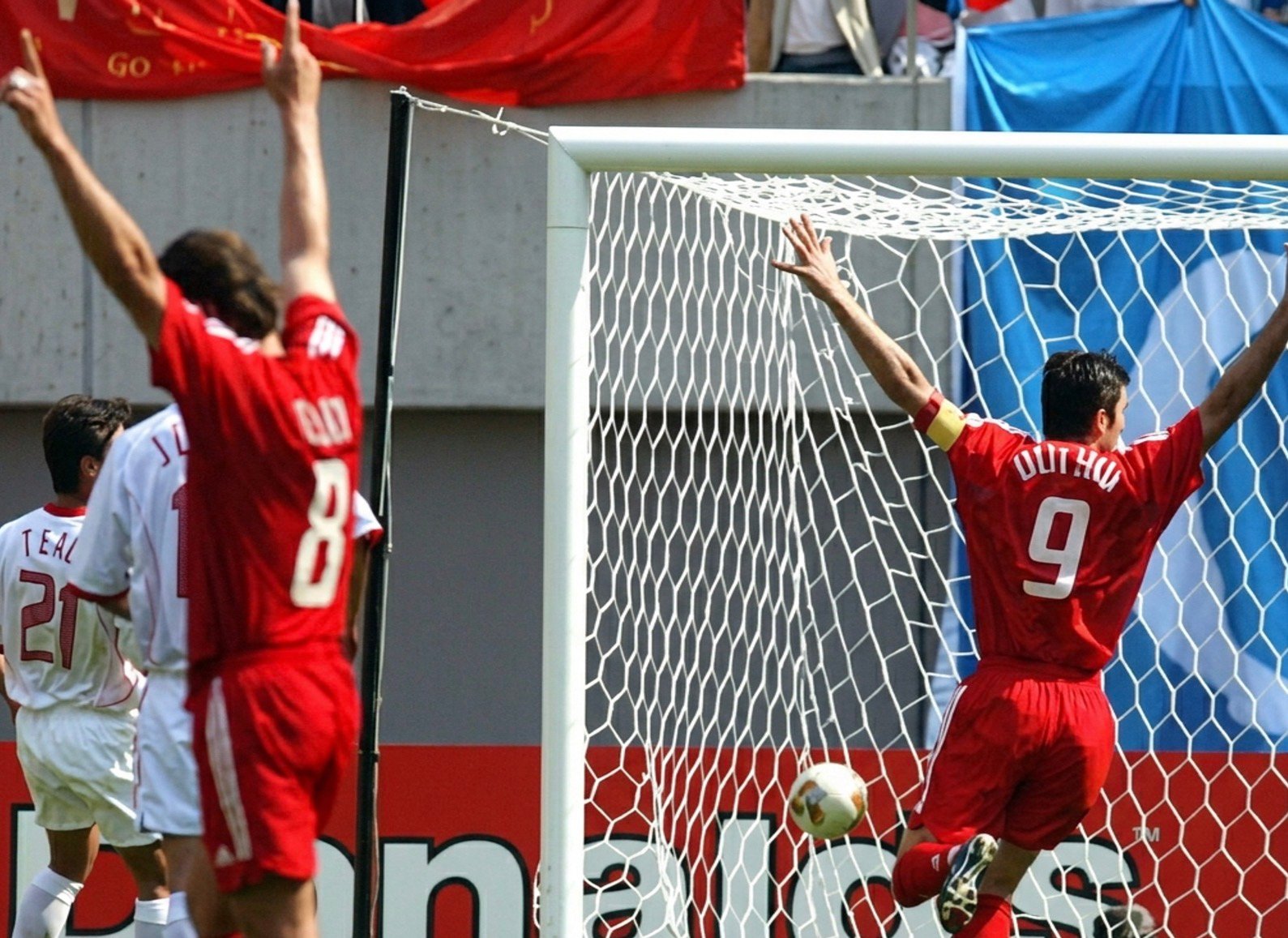
This was not the first time the crescent-and-star blue flag—the crown of Uyghur pride—made an appearance at the World Cup. On June 13, 2002, during the Group C match between China and Türkiye at the Seoul World Cup Stadium in South Korea, UK-based Uyghur human rights activist Enver Tohti and his friends unfurled a three-meter-wide blue flag inside the arena. That historic moment was also briefly broadcast on Chinese state television before being censored and scrubbed three days later.
Since 2014, the Chinese government has constructed concentration camps across occupied East Turkestan, attempting to smother the Uyghur national spirit through genocide. Just as Beijing officially implemented its “Law on Promoting Ethnic Unity” on July 1, 2026, aiming to legally finalize the total erasure of Uyghur identity, the sight of the blue flag waving at a world tournament—and appearing on China’s own state television—pierced through the regime’s psychological fortress once again.
The sight of the blue flag at the World Cup reignited the Uyghur spirit. For those inside the homeland, it transmitted a powerful message: “The world sees us; our cause has become an inseparable part of global politics.” Standing inside their homes under oppressive surveillance, Uyghurs gained immense spiritual strength seeing their national flag on CCTV screens. The stirring hope that “We are not alone; our blue flag with the crescent and star still flies high across the world” filled their hearts.
On June 27, 2026, at the Mercedes-Benz Stadium in Atlanta, USA, during the match between Uzbekistan and Congo, Uyghur activist Tumaris Almas and her family raised the East Turkestan flag once again. For several seconds, the vibrant blue flag illuminated the stadium’s giant screens, radiating like a beacon of light across the arena.
However, the intense diplomatic pressure exerted by the Chinese government on FIFA swiftly manifested. FIFA security personnel acted aggressively to seize the flag, forcibly removing Ms. Tumaris from the venue in front of her traumatized children. During the incident, FIFA staff went so far as to insult the flag, calling it a “symbol of hate” and a “flag of genocide.’ Does this reaction not clearly expose how Beijing pressures FIFA, demanding extreme vigilance and draconian measures to prevent the Uyghur banner from entering stadiums and appearing on camera?
Why does China fear and vilify this blue flag so intensely? Because a single wave of this flag shatters Beijing’s multi-billion-dollar propaganda apparatus, dismantles the illusion of its concentration camps, and tears down walls of fear. Every time that flag is raised, it exposes China’s false narrative of “Xinjiang” and proclaims the true identity of East Turkistan to the world.
A flag is the ultimate embodiment of national pride. No country’s flag inherently carries “hate.’ To label a flag a “symbol of hate” is merely a coercive tactic employed by an invading colonial power like China to vilify the identity and degrade the dignity of the people it oppresses. Such desperate actions only reveal the regime’s own deep-seated terror: that a single piece of blue fabric can dismantle billions of dollars’ worth of state propaganda in a single flutter.
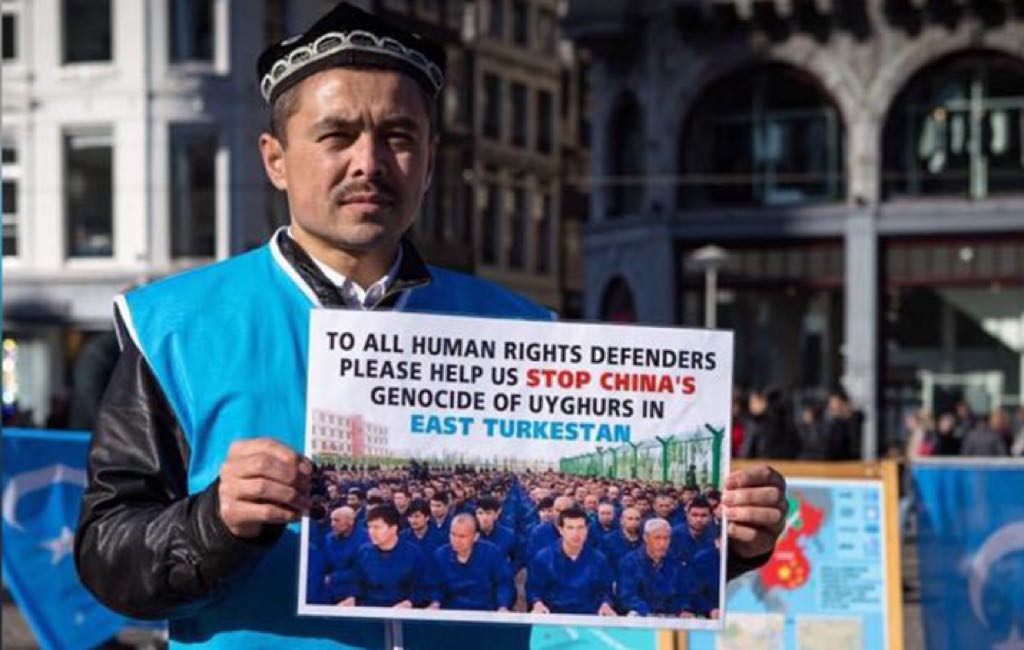
Abdurehim Gheni is a Uyghur activist living in the Netherlands who became famous for his solo protests in Dam Square in Amsterdam. He also educates tourists to the reality of the Uyghur genocide.