A classical story of power and lust, self-sacrifice and repentance, illuminates reality with the immortal power of myth. May Tai Ji Men soon see the day of its fulfillment.
by Marco Respinti*
*Conclusion of the webinar “A Legal Victory, an Administrative Injustice: The 19th Anniversary of Tai Ji Men Supreme Court Acquittal,” coorganized by CESNUR and Human Rights Without Frontiers on July 13, 2026.
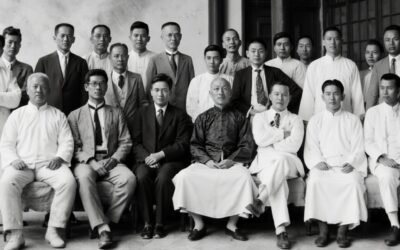
Nineteen years ago, on July 13, 2007, the Supreme Court of the Republic of China (Taiwan) conclusively ruled that Tai Ji Men, which had been accused of wrongdoing since December 1996, was not guilty of fraud, tax evasion, or any violation of the tax laws, contrary to what certain corrupt bureaucrats had falsely maintained for years. Tai Ji Men’s Shifu (Grand Master), his wife, and two dizi (disciples), who had been unlawfully detained, were awarded state compensation for their wrongful imprisonment. It was a historic ruling, the fitting culmination of a judicial process in which court after court had completely exonerated Tai Ji Men. The accusations had been fabricated and were entirely without foundation.
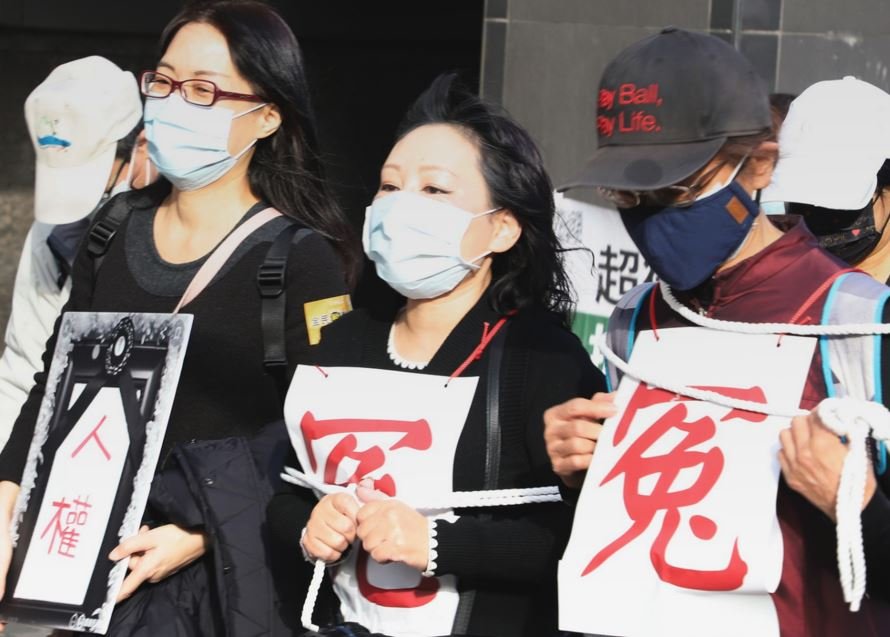
Yet, almost two decades later, the Tai Ji Men case remains unresolved. The National Taxation Bureau continued to issue unjustified tax bills. All of them were eventually corrected to zero, except for the one relating to 1992. Based on the 1992 bill, the movement’s land and other assets were unlawfully seized, put up for auction, and nationalized after the auction failed.
We gather today under the title “A Legal Victory, an Administrative Injustice,” and rightly so. Despite its complete vindication at every level of the Taiwanese judicial system, the Tai Ji Men case remains a paradigmatic example of intolerable administrative abuse directed against innocent citizens, resulting in serious violations of their human rights and religious freedom.
The important series of webinars that CESNUR and HRWF have been organizing for years is a call to awareness and action. Today, I wish to conclude by recounting a famous story of steadfastness and courage in the face of despotism and injustice, one whose enduring beauty can inspire nobility of heart and perseverance in the pursuit of truth. It is the story of a case of fiscal tyranny, making it particularly apt in the context of the Tai Ji Men case.
In the dim and distant England of old, Robin Hood fought against lawless oppressors. His exploits were preserved in the popular ballads, later famously collected by the American folklorist Francis James Child (1825–1896). He was neither a champion of wealth redistribution nor a hero of class warfare. Rather, he stood for a humane society founded on justice, private property, and limited government. He resisted tyranny.
But another legendary figure had fought the same battle before him. She was a noble Saxon lady, married to the powerful Earl Leofric of Mercia. She was probably born around the year 990 and may have died in 1067. Her name was Godgyfu, which in Old English means “Gift of God.” Blue-eyed, dark-haired, voluptuous yet chaste, enchanting and devout, she has come down through the centuries in her Latinized name: Lady Godiva.
Leofric and Godiva were generous rulers, renowned for their benefactions to monasteries and religious houses. Leominster, Chester, Much Wenlock, Worcester, and Evesham all bore the mark of their patronage. Around 1043, they rebuilt the town of Coventry, which Danish incursions had laid waste. There, they also founded a new Benedictine abbey dedicated to Saint Mary. Behind every act of Leofric’s generosity stood Lady Godiva. Behind every great man stands a great woman; behind every great king, a great queen.
Sir Leofric was a good man, yet in the end, the lust for power overcame him. One day, he burdened Coventry with new taxes, heavy and needless. It was a manifest injustice, a reckless act by which the ruler erased years of generosity. The people protested and resisted, yet they could not persuade Leofric to relent.
Then Godiva intervened. She pleaded that the unjust taxes be abolished, for they were unworthy of a just sovereign. Three times she made her request, and three times Leofric did not answer. Three more times she pleaded, and still he remained unmoved. Exasperated, Leofric surrendered completely to greed, for avarice begets only greater avarice. He no longer remembered who he truly was. His heart longed only for power and wealth.

Yet Godiva did not lose heart. She continued to implore him for mercy. At last, Leofric spoke. He declared that he would grant her request only if she humbled herself by riding naked through the streets of Coventry, exposed to the mockery and lust of the people.
Godiva was horrified. She offered God prayer, penance, and fasting. At last, for the sake of justice and the common good, she accepted the challenge laid before her by the evil man her once noblehearted husband had become.
On a night bathed in brilliant moonlight, the gentle mother of her people slowly removed her noble garments with regal dignity, as though performing a nuptial rite or a sacred liturgy. She descended to the royal stables, mounted the finest of steeds, and rode through the streets of Coventry.
The people gathered in morbid curiosity. Yet when Godiva appeared, advancing slowly and majestically in her sorrow, no one saw her nakedness. They beheld only purity, innocence, and radiant whiteness. Tradition tells that one man dared to raise his eyes with lust upon her, and that God struck him blind.
Godiva had nothing to offer but herself, and herself she offered—like a martyr before her persecutors, as Christ Himself had done.
Leofric refused at first to believe the guards who hurried to tell him what was taking place. He had never imagined that the queen would carry out such a deed. Astonished and overcome, he rushed to her. He fell to the ground in defeat. Rising again, he felt only shame for himself. He realized that it was he, not she, who stood naked. In that instant, all his wickedness melted away. He came to his senses. With a broad gesture, he removed his own cloak and wrapped it around his beloved wife. She smiled gently.

Leofric repealed the unjust taxes because of that heroic woman, and Coventry was once again able to flourish in justice.
The graceful English poet Alfred Lord Tennyson (1809–1892) immortalized this motif in his poem entitled simply “Godiva,” written in 1840 and published two years later: “To meet her lord, she took the tax away, / And built herself an everlasting name.”
It is a beautiful myth that, like all great stories, conveys profound truths. Justice is restored through personal sacrifice when men and women offer nothing less than themselves, for in the end, the only thing they truly retain is their very selves.
Tai Ji Men’s Shifu and dizi have sacrificed everything they possess, even enduring imprisonment and deprivation for crimes they never committed. They have become sacrificial lambs upon the altar of arbitrary power. May they, like a new Lady Godiva, soon witness the day when their own Leofric awakens, repents, and restores justice.

Marco Respinti is an Italian professional journalist, member of the International Federation of Journalists (IFJ), author, translator, and lecturer. He has contributed and contributes to several journals and magazines both in print and online, both in Italy and abroad. Author of books and chapter in books, he has translated and/or edited works by, among others, Edmund Burke, Charles Dickens, T.S. Eliot, Russell Kirk, J.R.R. Tolkien, Régine Pernoud and Gustave Thibon. A Senior fellow at the Russell Kirk Center for Cultural Renewal (a non-partisan, non-profit U.S. educational organization based in Mecosta, Michigan), he is also a founding member as well as a member of the Advisory Council of the Center for European Renewal (a non-profit, non-partisan pan-European educational organization based in The Hague, The Netherlands). A member of the Advisory Council of the European Federation for Freedom of Belief, in December 2022, the Universal Peace Federation bestowed on him, among others, the title of Ambassador of Peace. From February 2018 to December 2022, he has been the Editor-in-Chief of International Family News. He serves as Director-in-Charge of the academic publication The Journal of CESNUR and Bitter Winter: A Magazine on Religious Liberty and Human Rights.