Nationalizing Tai Ji Men property based on a fabricated tax bill was much more, and much worse, than a mere administrative act.
by Márk Nemes *
*A paper presented at the European Academy of Religion’s Ninth Annual Conference, LUISS University of Rome, July 2, 2026.
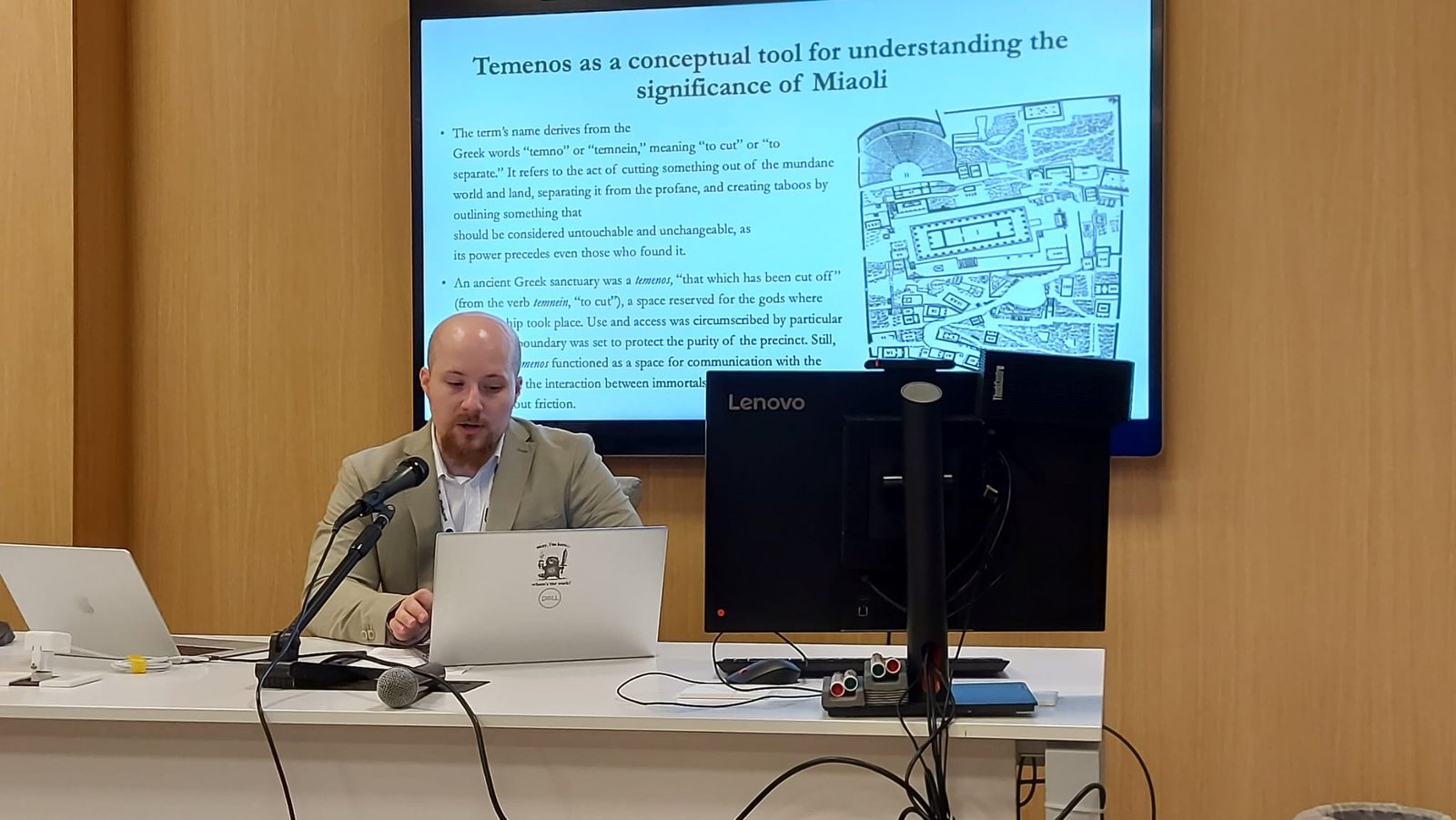
My study highlights an aspect of the Tai Ji Men Case that, so far, has been under-researched and underreported, alongside the elements with which most readers of “Bitter Winter,” “The Journal of CESNUR,” and other outlets dealing with matters of FoRB are already well acquainted. Those who read these sources and reports know a great deal about the Tai Ji Men case. Their story of difficulties originates from the 1996 Taiwanese state crackdown on several spiritual and religious minorities of Taiwan, including the movement in question, which practices a specific form of energy work, or Qigong.
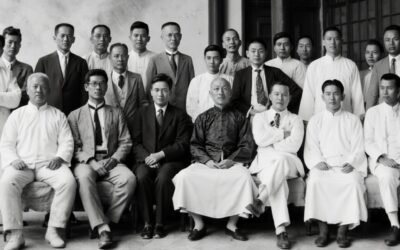
As the scholarship notes, Tai Ji Men is an ancient menpai (or school) for martial arts, Qigong, and self-cultivation. Incorporated by Dr. Hong Tao-Tze as the Tai Ji Men Qigong Academy in Taiwan in 1966, the movement today operates more than 20 centers globally, with the most recent inaugurated in Canada, while the first celebrates its 60th anniversary this July and early August. Since its establishment, Dr. Hong serves as Zhang-men-ren (leader) of Tai JiMen, while those affiliated with him refer to him as Shifu (Grand Master).
Often referred to as “The Energy Family,” Tai Ji Men’s teachings are rooted in Taoist philosophy and connected to “eastern” esotericism, humanist pacifism, and other forms of Chinese spiritual cultivation. The bond between Shifu and the disciples (dizi) is, according to members, akin to that of father and son. Becoming a Tai Ji Men dizi is not just about following rituals and committing to the teachings of the Shifu, but about a deeper connection to a spiritual tradition deeply embedded in 6,000 years of historical and cultural developments.
It is customary for dizi to express their gratitude to their Shifu by presenting “red envelopes” containing a monetary gift. This gift of gratitude, however, must not be interpreted as a form of tuition fee (an argument in those reports that interpret Tai Ji Men as a cram school), nor as an equal-sum service fee or religious tax, akin to Christianity’s tithe. The envelopes are rather symbolic, materialized signs of thankfulness, specifically given to the Shifu. Such a form of gifting is deeply interwoven with a cultural and bodily language that is decoded in specific ways in most East Asian cultures.
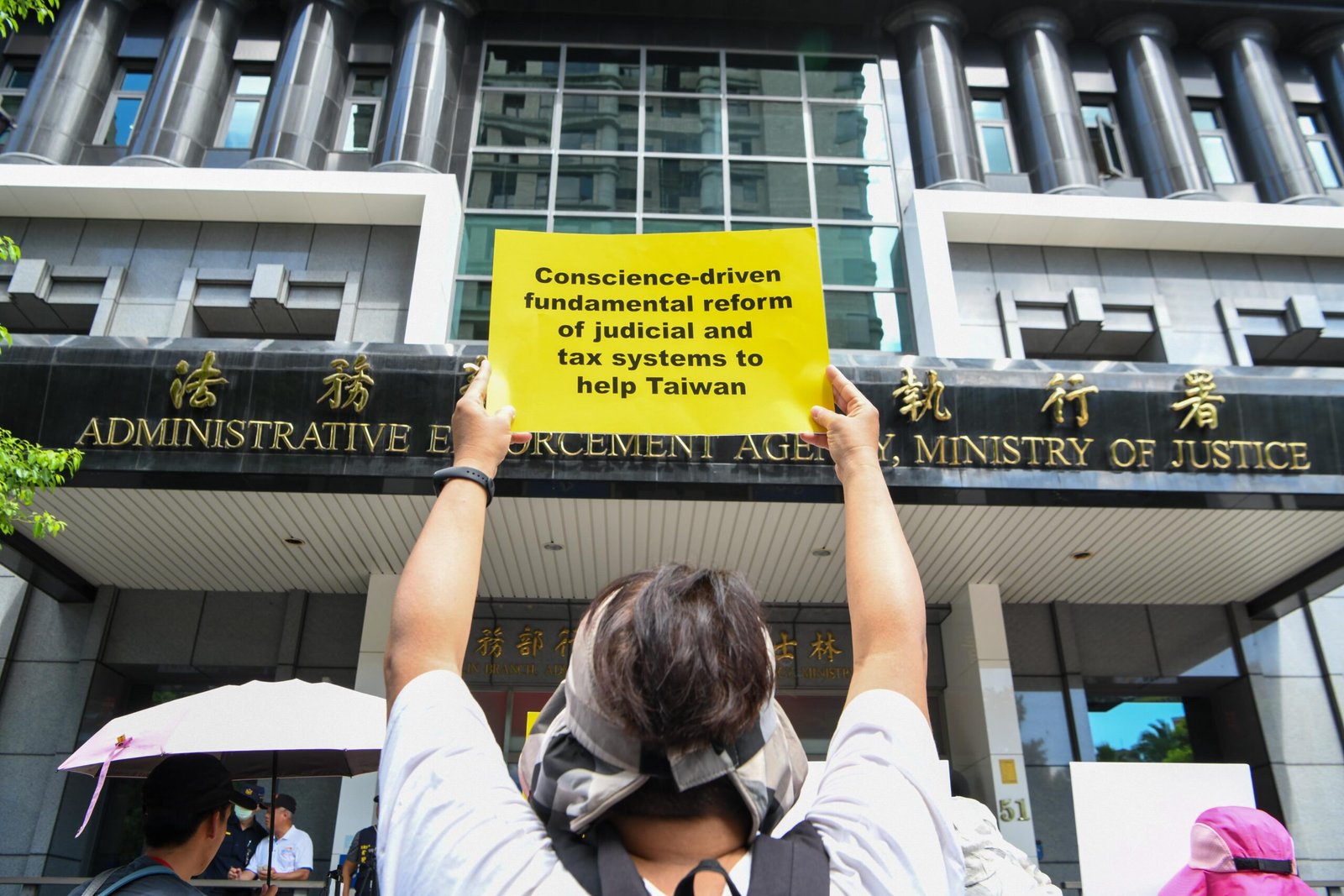
When these acts are misdecoded, the outcome is predictable, as seen in the Tai Ji Men Case. Even though the accused were later exonerated of all charges by the Taiwanese Supreme Court in 2007—explicitly stating that there was no basis for the claims of tax evasion and that the gifting practice known as “red envelopes” should be considered non-taxable gifts—the Taiwanese National Taxation Bureau (which issued tax bills for the years between 1991 and 1996), using a lower Administrative Court’s verdict of 2006, disregarded the Supreme Court’s Criminal Division’s decision and enforced an unjust bill for the year 1992. Based on this procedural technicality (while agreeing to correct the bills to zero for all other contested years), the Taiwanese National Taxation Bureau seized, unsuccessfully auctioned, and then nationalized 67 plots of sacred land and a bamboo forest belonging to Tai Ji Men in 2020. These plots were intended for a self-cultivation and educational facility, of great importance to members.
The significance of this seized land, intended for spiritual purposes and as a safe retreat for those practicing Tai Ji Men’s form of Qigong, is evident. However, for a Westerner to understand these, it is best to draw on cross-cultural perspectives, bringing the observed phenomenon into clearer focus. In my opinion, this is best achieved when interpreting Tai Ji Men’s seized lands in Miaoli as a planned-for but stripped-away “temenos.”
“Temenos” (τέμενος) in Homeric usage signified either a king’s or a god’s own domain, a space marked off and assigned to a particular use (typically for rituals). Its literal name derives from the Greek words “temno” (τάμνω) or “temnein” (τέμνειν), meaning “to cut” or “to separate.” Later, the term was exclusively used to indicate a god’s domain. In the narrower sense, “temenos” meant strictly the sanctuary or precinct, the consecrated and enclosed area surrounding a god’s altar, as a center of worship and the only indispensable cult structure. This may have extended to a temple, whose primary purpose was to house the image and votive offerings. Larger precincts, like Apollo’s at Delphi or the Altis at Olympia, also contained treasuries built to house offerings, as well as supplementary structures associated with the particular god’s worship, such as sacred groves, statues, theaters, gymnasiums, and temples of associated deities.
The rules governing the sanctity of precincts varied; however, a unifying trait was the fact that entrance was forbidden except for certain persons at certain times. In most instances, whoever entered the precinct had to be ritually purified under the oversight of a specialized priesthood. Similarly, the Roman “fanum” or “templum” (in the original sense) corresponds to this narrower meaning, as noted by Margaret M. Miles. In the broader sense, a “temenos” included all lands that belonged to a particular god’s cultus. Some contained large forests, pastures, cultivable lands—even factories and fisheries—all specialized for providing appropriate ritual materials and offerings. Agricultural and industrial work on such lands was conducted by specialized personnel.
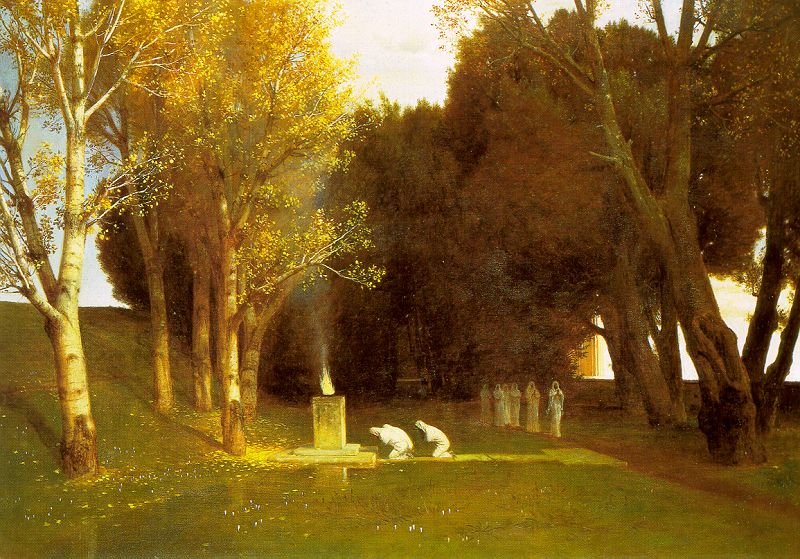
In both senses, classical antiquity’s “temenoi” were sacred groves dedicated to worship, sacrifice, and mystical experiences. These spheres were intended as places for spiritual advancement, communion with transcendent beings, and the achievement of higher consciousness. Their semantics inherently carried the act of cutting something out of the mundane world and land, separating it from the profane, while creating taboos and delineating what should be considered untouchable and unchangeable, as its power even surpasses that of those who encircled it.
“Temenoi” also served the gods associated with premonition, foresight, prophetic visions, and healing, such as Asclepius and Apollo. Such enclaves were populated by satyrs and dryads, embodying something even more ancient than the gods themselves. For this reason, entry and exit from such primal sources of power were strictly regulated and ritualized. The groves were also closed to the public for most of the year and opened their grounds only during specific celebrations and “festums.” These periods served as liminal times, during which the spheres of the sacred and the profane blurred into one another. In regular times, these spheres were also physically separated from the mundane world by sensory markers. Bush hedges, fences, stone columns, and decorated gates with seals, bells, and guardian statues—or even armed guardians—surrounded the perimeters. Besides, most “temenoi” already had a unique spatiality, one that highlighted the place’s significance and invoked a sense of awe in visitors, even before the construction of visible markers. Such groves were hidden in the depths of valleys or were located in difficult-to-reach mountainous areas, or on the perimeters of dense forests, or were caressed by rivers or other bodies of water.
The pristine mountainous area of Miaoli, where the sacred land of the Tai Ji Men is located, with 67 interconnected plots, fits this description in several respects. The environment immediately captures the visitor’s spirit: it is a tropical broadleaf forest with rivers flowing through it, surrounded by even larger bamboo forests, from which the dizi used to gather materials for their famous dragons used in dances.
Before the seizure of the land in 2020, Dr. Hong planned to construct a large assembly hall on this interconnected network of plots, along with supplementary educational and spiritual-cultivational structures. The plans were laid out to manifest something that the land had already been ready for: it was the perfect place to create a “temenos” for the Tai Ji Men. A sacred grove where the dizi may retreat and elevate their consciousness. A place where they could gather, discuss, study, and even retreat and recharge, far from the noise of the outside world. It is also worth noting that, in Tai Ji Men’s view, this land possesses an excellent magnetic field and feng shui, which can support disciples in their spiritual practice and advancement. In conclusion, the land was already prepared to serve as a spiritual home for the dizi.
It is also worth noting that in Taiwan, each religious group typically has sacred spaces that serve as symbols of the organization. These locations showcase spiritual and communal narratives and serve as banners under which followers and practitioners may gather for significant events. They also serve as signaling posts, communicating that the movement that built them is alive and ready to face any power that dares to storm the walls of these spiritual fortresses. Once such a sacred space is built, a prominent and decorated gate is usually erected at the boundary of the land, marking the conclusion of “temnéndus,” the process of ritually cutting out a sacred land from the profane world. The separation of these two spheres at this point is signaled by a physical object, which can be seen by anyone who passes by, not just the followers themselves. In this understanding, the sacred land innately holds spiritual power. The structures built on it only highlight and enhance these traits, and the act of enclosing the land seals the power within, accumulating and directing it for ritual purposes.
At one point, Tai Ji Men had one such land. Tragically, before the act of “temnéndus” could even begin, this land was unjustly nationalized. As such, the construction was halted, and the plans were largely lost in the turmoil of the following decade. Today, these planned buildings are still unbuilt; the sacred space is still “intemnéndus”—non-separated, part of the mundane world.
Still, the mountain calls to the Tai Ji Men. They visit the available plots of land, but coming here invokes a sense of sadness, which, for some dizi, is too much to bear. Being here reminds them of past, undealt-with bitter memories. At the same time, returning to the land of the unbuilt “temenos” gives the dizi a sense of home and belonging. They still gather bamboo from the remaining plots, and they still fulfill their duties to the land that holds a promise: a future central space, a sacred grove, and a spiritual retreat for the Tai Ji Men.
The act of returning here is similar to what Carl Gustav Jung suggests about one’s own internalized “temenos”: here, the dizi may still conduct “work”—engage with the subconscious, achieve higher consciousness, commune with greater truths, and practice self-cultivation. Doing so, they create an inner “temenos,” akin to that which has been stripped from them, and connect them to an envisioned, ideal form of land. In their minds, this “temenos” is already “temnéndus”—enclosed and protected from external powers and awaits those who have already been introduced to the mysteries it contains. Hence, this inner image—or rather, a vision—of Miaoli is an already-outlined sacred grove, ready for those who practice Tai Ji Men’s way of inner cultivation.

Márk Nemes is a historian and a graduate in the academic study of religions. He received his doctorate in philosophy at the University of Szeged’s PhD program in 2025 and works as a researcher at the Hungarian Academy of Arts’ Research Institute of Art Theory and Methodology. As an awardee of the Hungarian National Eötvös Scholarship, he served as a visiting researcher at CESNUR from 2023 to 2024. For the past 10 years, he has focused on researching new, alternative, and emergent forms of religiosity in Hungary, Iceland, the US and most recently, in Italy. Since 2025, he serves as the Deputy Director of CESNUR