Bureaucratic inertia persisted after courts ruled in favor of Tai Ji Men, resulting in administrative persecution.
by Davide S. Amore*
*A paper presented at the European Academy of Religion’s Ninth Annual Conference, LUISS University of Rome, July 2, 2026.

The Tai Ji Men case continues to raise fundamental questions not only for legal scholars and human rights practitioners, but also for all those concerned with the subtle dynamics through which state power interacts with religious and spiritual minorities.
In my contribution today, I would like to focus on a dimension often overlooked in mainstream discussions of religious freedom: the possibility that taxation—typically understood as a neutral, technical, and universally applicable instrument of governance—can, in fact, function as a subtle mechanism of religious discrimination. My argument is not that taxation as such is inherently problematic, but rather that its implementation, interpretation, and enforcement can, under certain conditions, produce discriminatory effects that are difficult to identify precisely because they are embedded within the ordinary functioning of administrative systems.
At first glance, taxation appears to belong to a domain governed by rationality, neutrality, and legal predictability. It is one of the core instruments of the modern state, justified by the principles of equality before the law and collective responsibility. Yet, as legal anthropology and socio-legal studies have repeatedly shown, no administrative system is entirely neutral in its effects. The application of fiscal norms inevitably involves interpretation, classification, and discretionary judgment. It is precisely in these spaces of interpretation that the potential for structural bias or unequal treatment may emerge.
The case of Tai Ji Men provides a particularly illuminating example of how such mechanisms can unfold in practice.
As the next speakers in this session will illustrate in more detail, Tai Ji Men’s non‑commercial master‑disciple gift tradition was reinterpreted by tax authorities as taxable income of a non-existent cram school. This faulty reclassification persisted for decades despite judicial rulings affirming its spiritual nature and caused significant legal, material, and reputational harm.
This raises a crucial analytical question: how is it possible for administrative and judicial interpretations of the same factual reality to diverge so significantly over such an extended period?
To address this question, it is necessary to move beyond a purely doctrinal legal analysis and consider the broader institutional dynamics at play. One useful conceptual framework is that of what may be called “administrative persistence,” or more critically, “administrative inertia.” This refers to the capacity of bureaucratic systems to continue producing legal effects even after the foundational assumptions of those effects have been challenged or overturned in other institutional contexts.
In the Tai Ji Men case, we observe a situation in which criminal courts ultimately acquitted the defendants and clarified that the alleged conduct was non-criminal. At the same time, tax authorities continued to maintain fiscal claims based on earlier interpretations. This disjunction between judicial findings and administrative practice creates tension within the rule of law itself, particularly regarding the principles of legal certainty and institutional coherence.
This is not merely a semantic issue. Definitions matter because they determine what is visible to the law and what is rendered invisible. When spiritual offerings are reclassified as income, they are absorbed into a fiscal logic that presupposes market exchange, profit, and quantifiable value. Yet many religious traditions operate through forms of exchange that are intentionally non-quantifiable and symbolically grounded.
However, I would like to go a step further and suggest that this is not merely a technical inconsistency. Rather, it may be understood as an instance of what I propose to call “administrative persecution.” By this term, I do not refer to overt or explicit repression, such as prohibitions on worship, detention of religious leaders (although Tai Ji Men’s leader was detained for a while at the beginning of the case), or bans on religious organizations. Instead, I refer to a subtler form of pressure that operates through bureaucratic mechanisms that are formally legal, procedurally correct, and yet cumulatively oppressive in their effects.
Three main features characterize administrative persecution. First, it operates through ordinary legal instruments, such as taxation, registration requirements, or administrative classifications. Second, it relies on interpretative flexibility, allowing authorities to reframe religious or spiritual practices in economic or regulatory terms. Third, it produces long-term burdens that extend beyond immediate legal outcomes, affecting financial stability, organizational legitimacy, and social perception.

In the Tai Ji Men case, these dynamics become particularly visible in the reclassification of gifts from disciples to their master as taxable income. What might appear, from one perspective, as a technical fiscal question—namely, how to define taxable income—becomes, in practice, a profound intervention into the meaning of religious and spiritual life. By redefining the nature of these offerings, the administrative system effectively reinterprets the internal logic of a spiritual tradition.
The persistence of enforcement actions despite judicial clarification further intensifies these concerns. Even after courts affirmed the non-commercial nature of Tai Ji Men’s practices, the continuation of tax measures suggests a breakdown in the expected hierarchy of legal norms, where judicial interpretation should guide administrative action. This raises serious questions about proportionality, legal certainty, and equality before the law.
From a human rights perspective, these issues are particularly significant. International legal instruments protecting freedom of religion or belief, including the International Covenant on Civil and Political Rights, establish that limitations on religious practice must satisfy strict criteria: legality, necessity, and proportionality. While states retain the authority to regulate taxation, such regulation must not, in practice, disproportionately interfere with religious life or target specific communities.
In the Tai Ji Men case, the cumulative effect of prolonged fiscal disputes, asset seizures, and reputational damage suggests a disproportionate impact that extends beyond what would be considered a legitimate administrative objective. Even if the initial tax classification was debated in good faith, the persistence of enforcement after judicial clarification raises concerns about whether the measures remained necessary or proportionate.
Another key dimension is the principle of legal certainty. Individuals and organizations must be able to anticipate the legal consequences of their actions. When spiritual practices such as gift-giving are subject to unpredictable or shifting classifications, legal certainty is undermined. This creates a chilling effect not only for the group directly involved but also for other religious or spiritual communities that may fear similar reinterpretations of their practices.
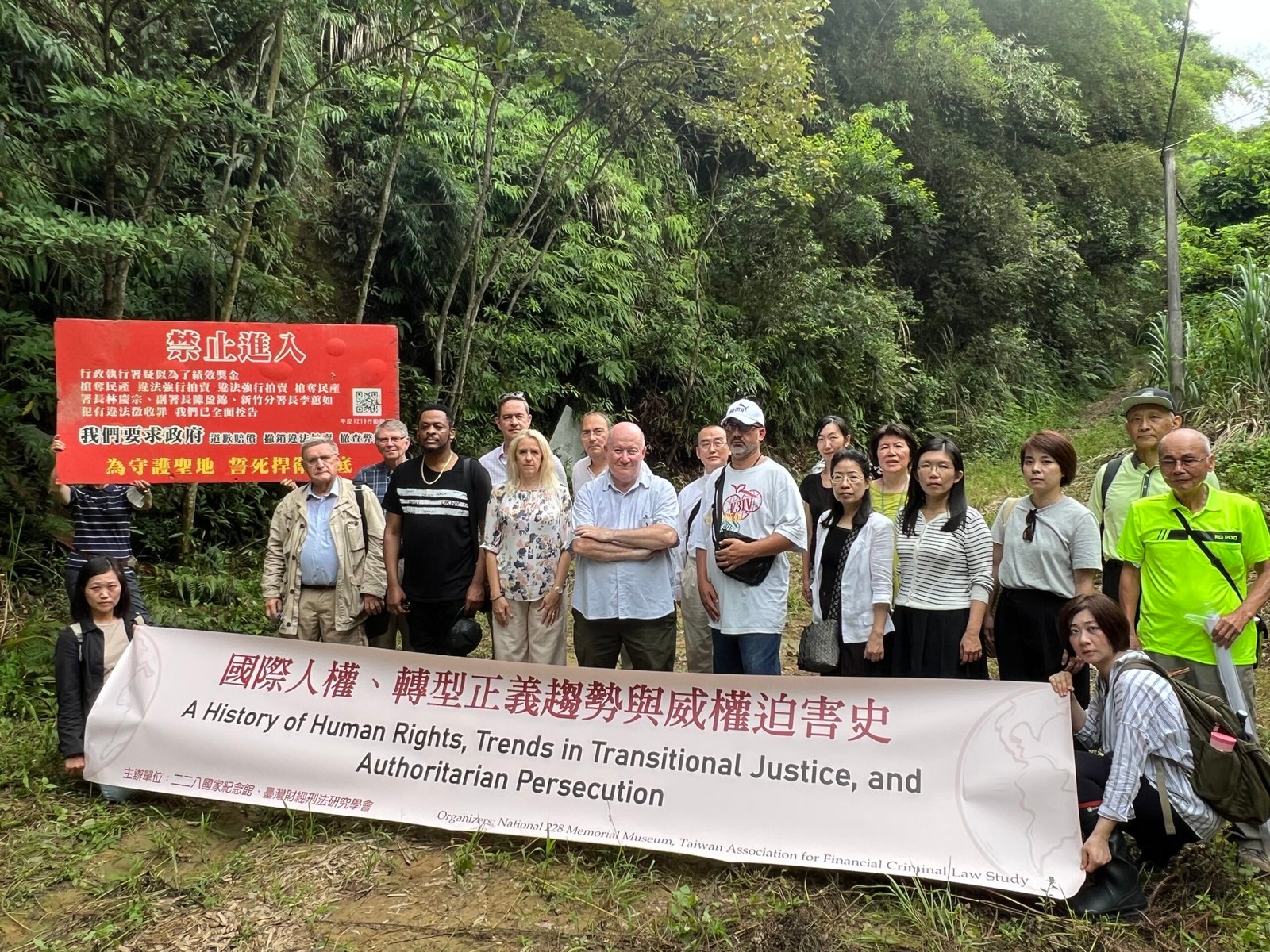
It is also important to consider the broader structural implications. Cases such as Tai Ji Men do not exist in isolation. Rather, they form part of a wider global pattern in which administrative and fiscal tools are used, intentionally or unintentionally, to regulate religious diversity. Comparative studies have shown that similar dynamics can emerge in different jurisdictions, where taxation, zoning laws, or registration requirements disproportionately affect minority groups. What unites these cases is not necessarily explicit intent, but rather the structural vulnerability of minority traditions within complex bureaucratic systems.
This leads to a final analytical point: the importance of visibility. One of the defining characteristics of administrative forms of pressure is that they are often difficult to perceive as forms of discrimination. Because they operate through technically lawful procedures, they tend to escape both public debate and legal scrutiny. Yet their effects can be deeply consequential for the communities involved.
For this reason, I argue that greater analytical and institutional attention must be given to what might be called “low intensity” or “indirect” forms of religious discrimination. These are no less significant than overt forms of repression; rather, they are more difficult to identify precisely because they are embedded in ordinary governance practices.
In conclusion, the Tai Ji Men case invites us to reconsider the boundaries between law, administration, and religious freedom. It challenges the assumption that neutrality in legal form necessarily guarantees neutrality in effect. It also highlights the need for more robust safeguards to ensure that fiscal systems are not inadvertently—or structurally—used in ways that disproportionately affect religious or spiritual minorities.
If we are committed to protecting pluralism and the integrity of religious freedom, we must broaden our analytical lens. We must look not only at explicit violations, but also at the subtle mechanisms through which inequality can be produced within the very structures designed to ensure fairness.