At the European Academy of Religion, scholars gathered to discuss the religious movement while its elderly leader remained behind bars.
by Massimo Introvigne
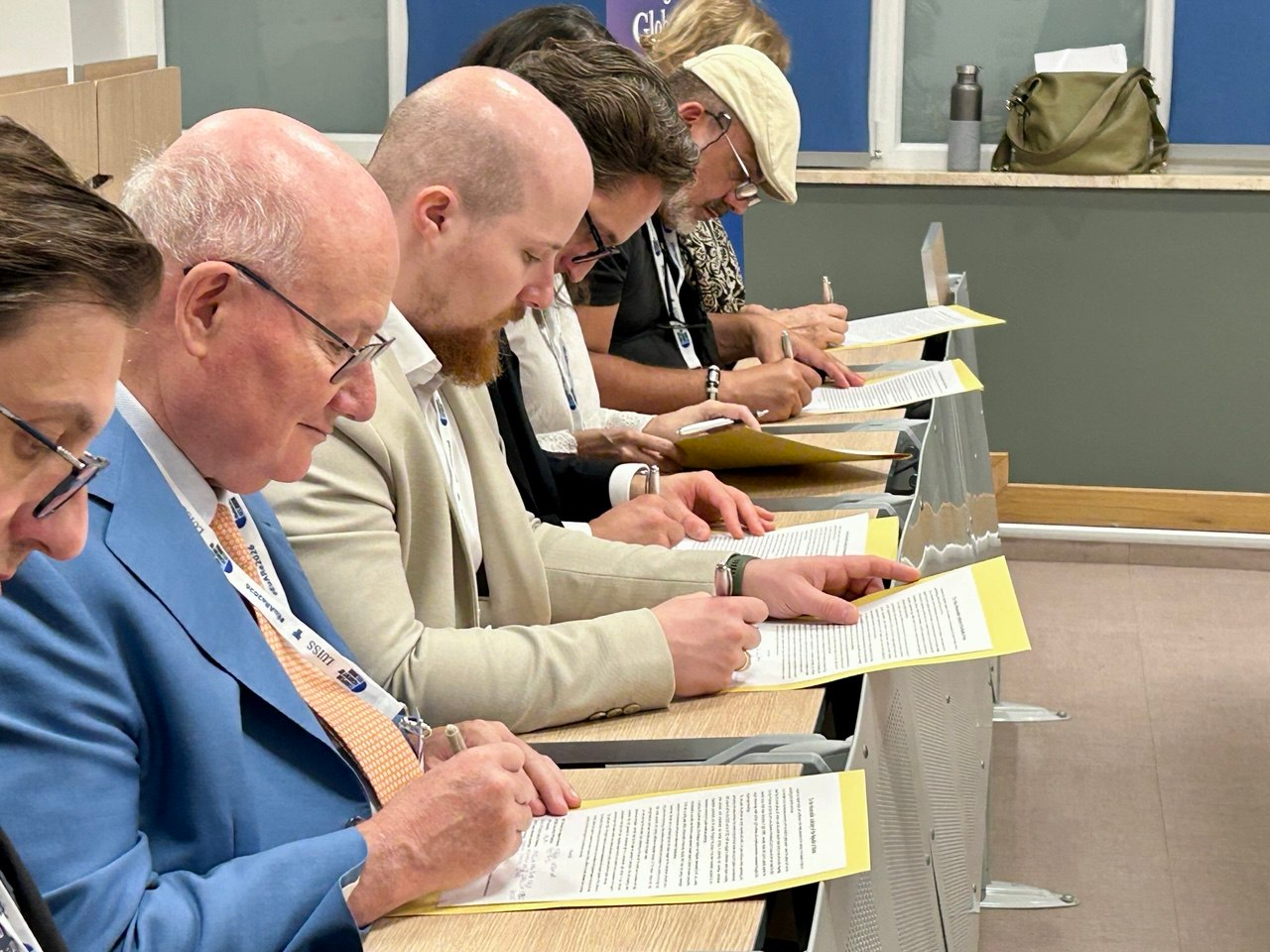
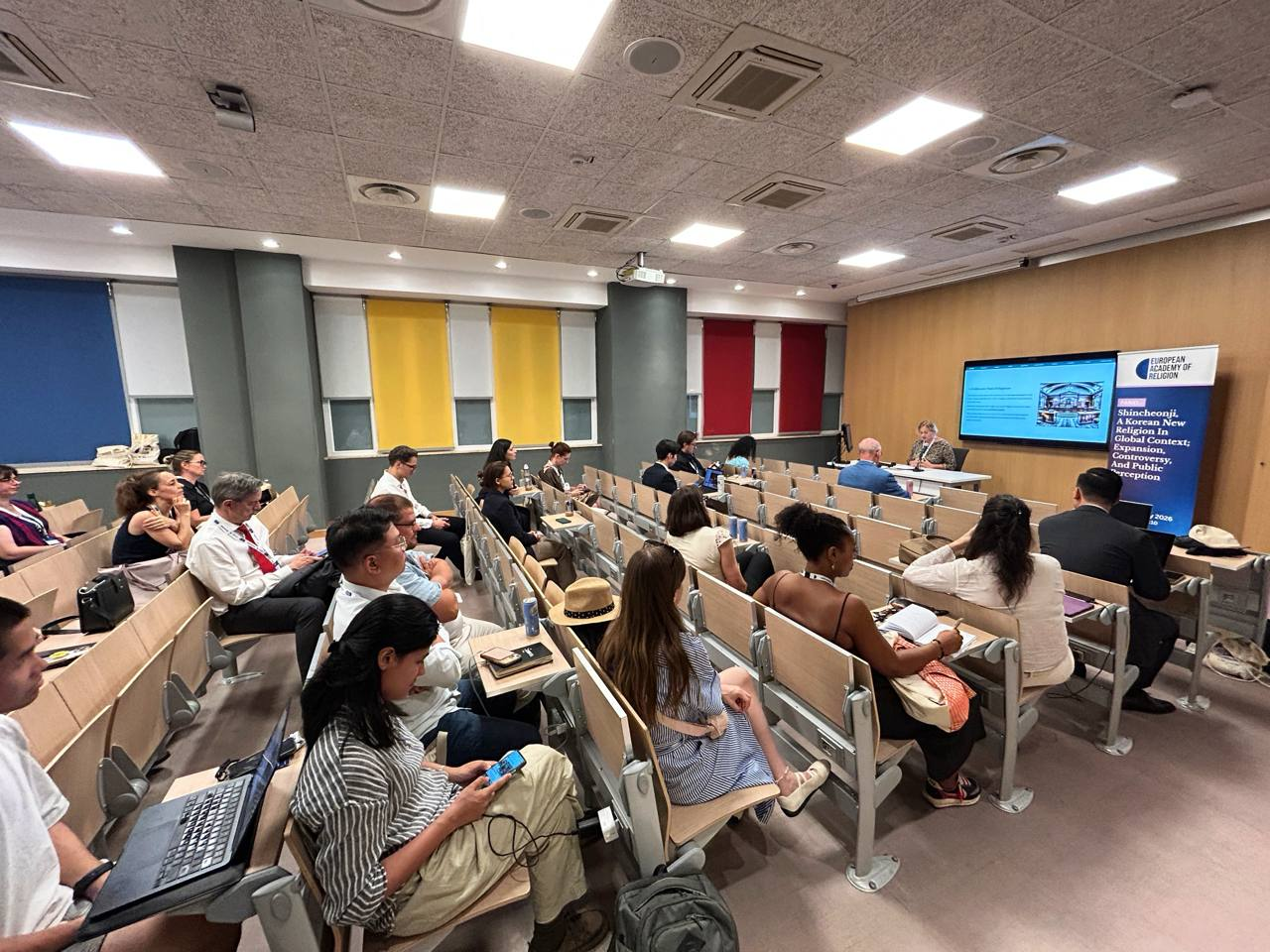
The session devoted to Shincheonji at the European Academy of Religion’s Ninth Annual Conference, held on July 3 at LUISS University of Rome, unfolded in an atmosphere shaped by events that had occurred only days earlier. On June 28, the ninety-five-year-old founder of Shincheonji, Chairman Lee Man-Hee, was arrested in South Korea on election-related charges. The detention of a religious leader of such advanced age for allegations involving no violence cast a long shadow over the meeting. Scholars who had gathered to present their research found themselves speaking while the man who founded the movement they were analyzing was sitting in a jail cell. The sense of unease was palpable.
The session was chaired by Davide S. Amore, an Italian historian of religions and the secretary in Sicily of the Islamic Cultural Association “As-Salàm,” whose principal activity is coordinating a local mosque program where he sometimes serves in the role of imam. Amore acknowledged the extraordinary circumstances while serving as chair of the session.
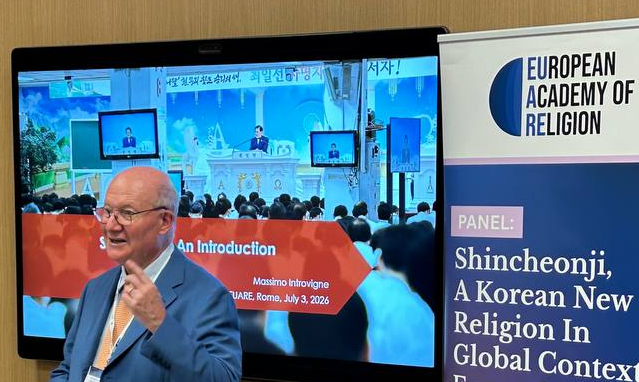
As the first speaker, I offered a broad overview of Shincheonji’s history, theology, and global development. I reconstructed the movement’s problems in South Korea from the episode of Patient 31 in Daegu to the present political crackdown. I explained how the COVID-19 panic of 2020 had produced a wave of accusations that Shincheonji had violated health regulations, which courts later dismissed, and how the stigma created during that period continues to shape public perceptions. I described Chairman Lee’s biography, the importance he attributes to his years in the Tabernacle Temple and the collapse of that movement, the founding of Shincheonji in 1984, and his distinctive interpretation of Revelation. I emphasized that Shincheonji does not regard Lee as divine, but as the promised pastor through whom God works in the last days. The presentation situated the current arrest within a long history of campaigns against the movement.
The second paper was delivered by Rosita Šorytė, a former Lithuanian diplomat and a member of the Scientific Committee of the European Federation for Freedom of Belief. She examined the Victorian Parliamentary Inquiry into “cults” in Australia, showing how anti-cult rhetoric had shaped its approach to Shincheonji. Her analysis focused on the sociology of apostasy, the circulation of globalized narratives of “coercive control,” and the dangers of treating emotionally charged testimonies as representative evidence. She argued that the Inquiry had imported a conceptual framework already shaped by prejudice and had failed to consult scholars capable of contextualizing minority religions. Her paper described the moral panic about Shincheonji’s presence on Australian university campuses. It analyzed the testimony before the Inquiry of one disgruntled ex-member, Gloria, placing the Australian case within a broader transnational pattern of suspicion directed at the church.
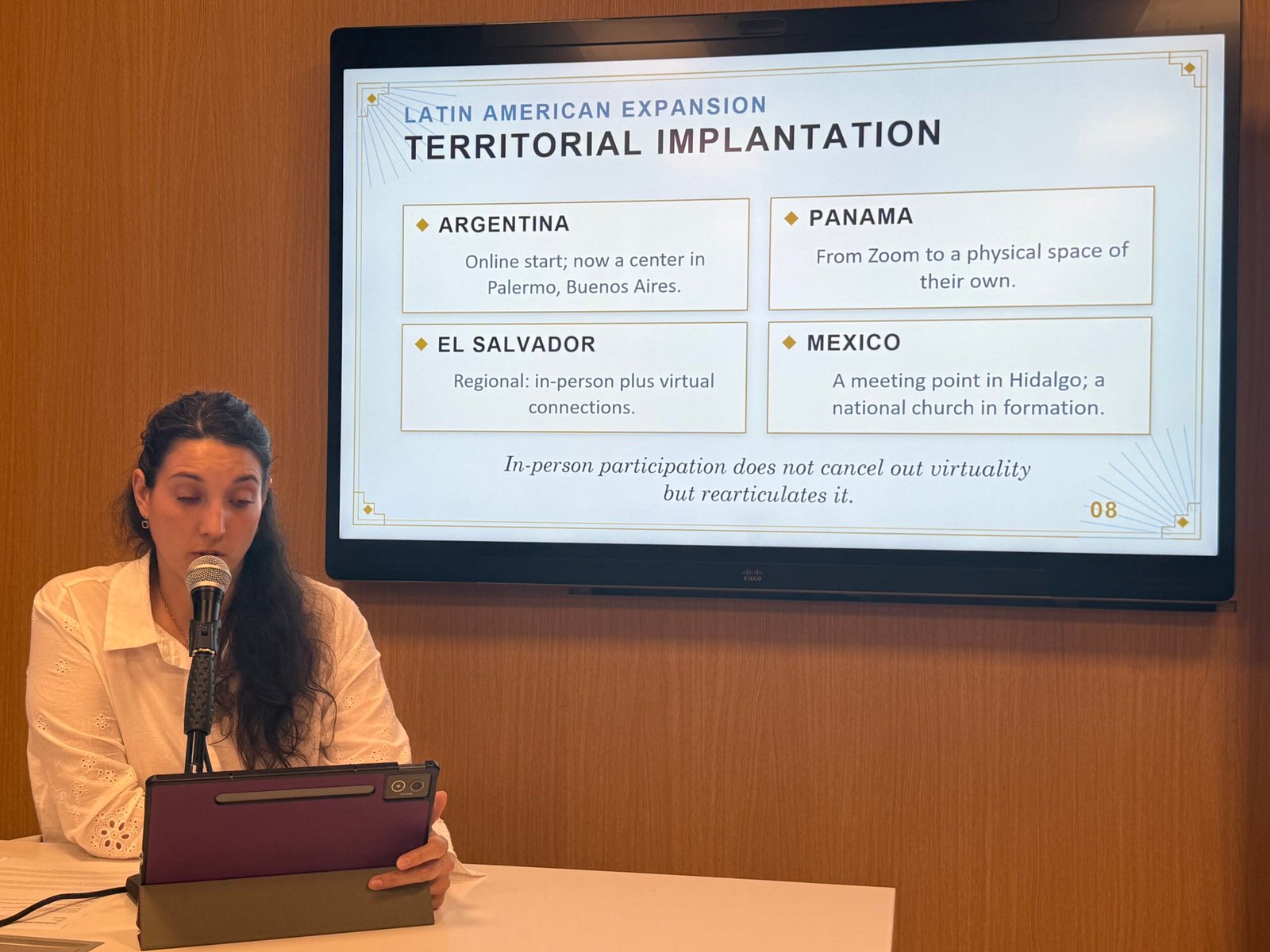
The third speaker, María Vardé, a Ph.D. candidate and lecturer at the University of Buenos Aires, presented ethnographic findings from her study of Shincheonji’s recent expansion in Latin America. She described how the movement’s Bible courses function as contact zones where curiosity, learning, and conversion are gradually negotiated. Her interviews revealed that many members experienced a sense of biblical clarity and found in Shincheonji an orderly and coherent interpretation of Scripture. She also documented how anti-cult rhetoric imported from abroad shapes local perceptions, creating a climate of suspicion that members must navigate from the earliest stages of affiliation. Her paper offered a portrait of a community forming under the pressure of external stereotypes.
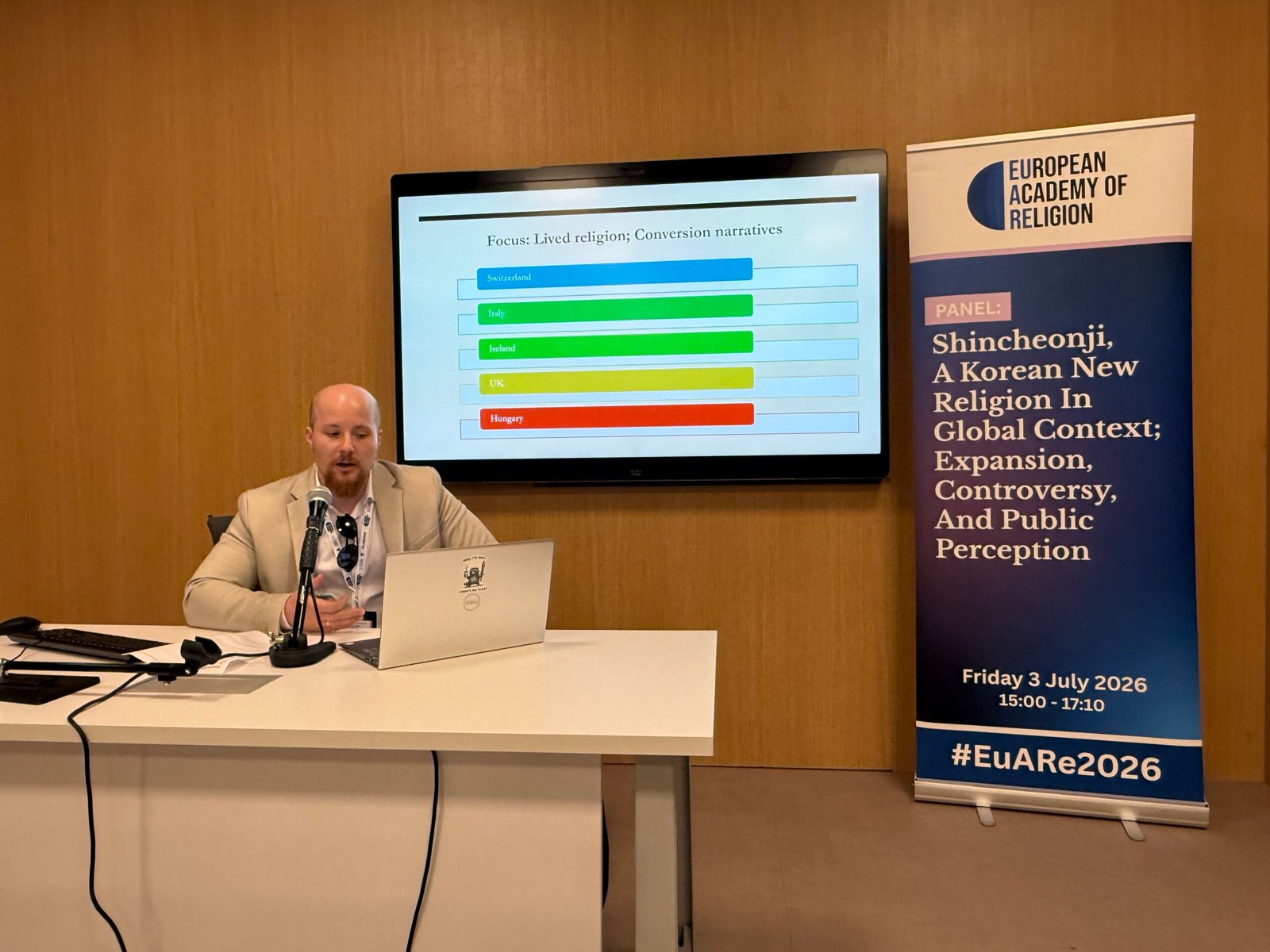
The fourth paper was presented by Márk Nemes, lecturer at the Hungarian Academy of Arts and Deputy Director of CESNUR. He reported on a large mixed-methods study of Shincheonji’s European presence, focusing on the Philip Tribe, which includes congregations in the UK, Ireland, Italy, Switzerland, and Hungary. His research, based on twenty-four semi-structured interviews and extensive fieldwork, explored conversion narratives, lived religion, and the challenges faced by members in a context where the movement remains little known and often stigmatized. He emphasized the need for methodological neutrality, ethical safeguards, and careful analysis of personal stories. His findings showed that members often come from Christian backgrounds, seek doctrinal coherence, and face social prejudice after joining Shincheonji.
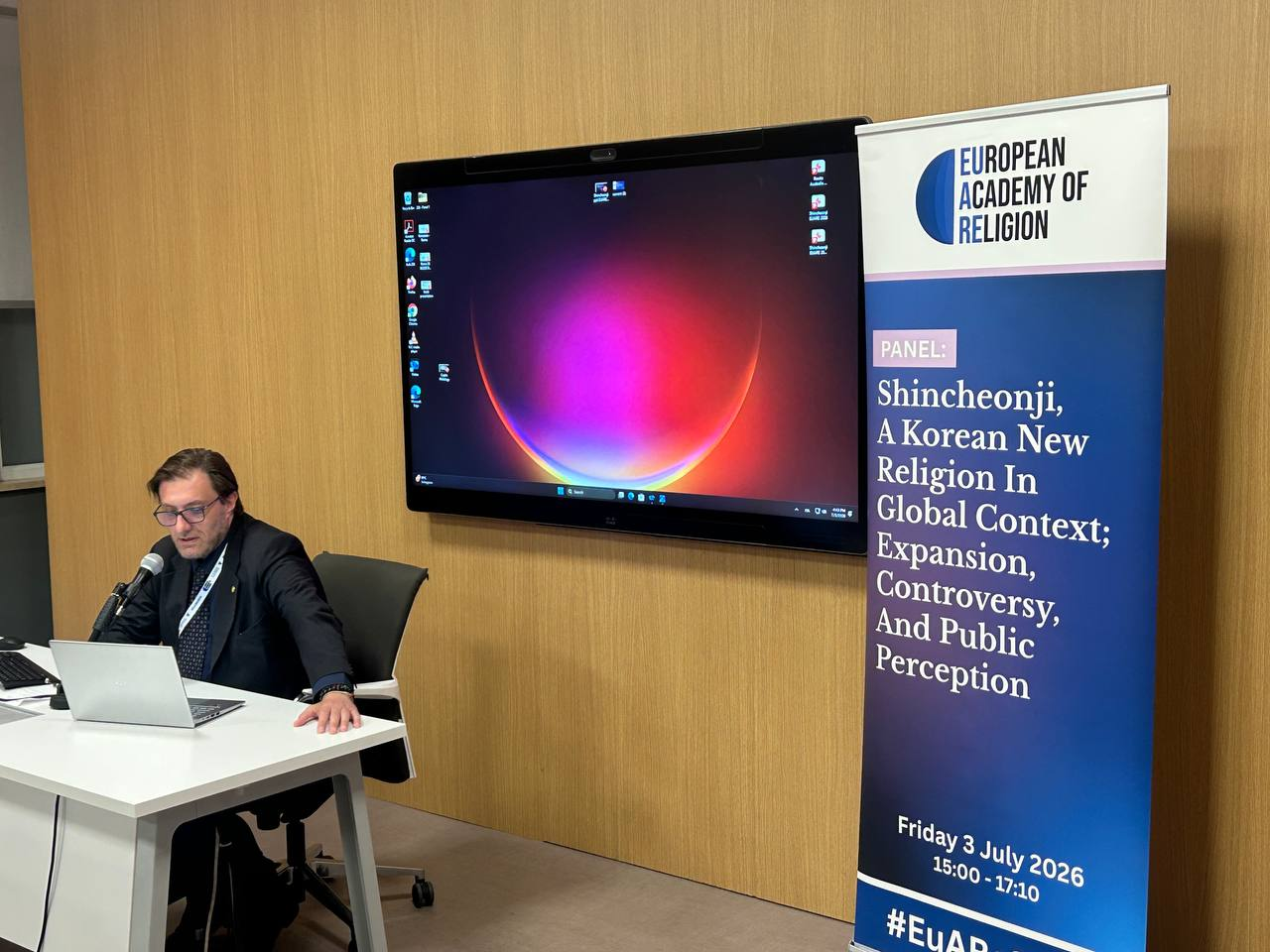
The final academic paper was delivered by Alessandro Amicarelli, a London-based human rights attorney and the President of the European Federation for Freedom of Belief. He examined the media framing of Shincheonji in the United Kingdom, where the movement is active under the name New Heaven New Earth. Amicarelli argued that the label “cult” functions as a tool of stigma rather than analysis. He showed how journalists often rely on imported narratives, reproduce clichés, and treat the term as a self-explanatory judgment that exempts them from providing evidence. He emphasized that freedom of religion or belief applies equally to all communities, including unpopular ones, and that scrutiny must be based on facts rather than prejudice. His paper highlighted the dangers of demonizing minority religions and the responsibility of scholars and institutions to avoid alarmist vocabulary.
After the academic presentations, a representative of Shincheonji offered an update on Chairman Lee’s situation. His appeal against detention had been rejected, and he remained in jail in South Korea. The speakers reiterated their concern and subscribed to an appeal calling for an end to his detention.
The arrest of a ninety-five-year-old religious leader for non-violent allegations, in a context shaped by decades of campaigns maligning Shincheonji as a “cult,” was described as an injustice that demands international attention.
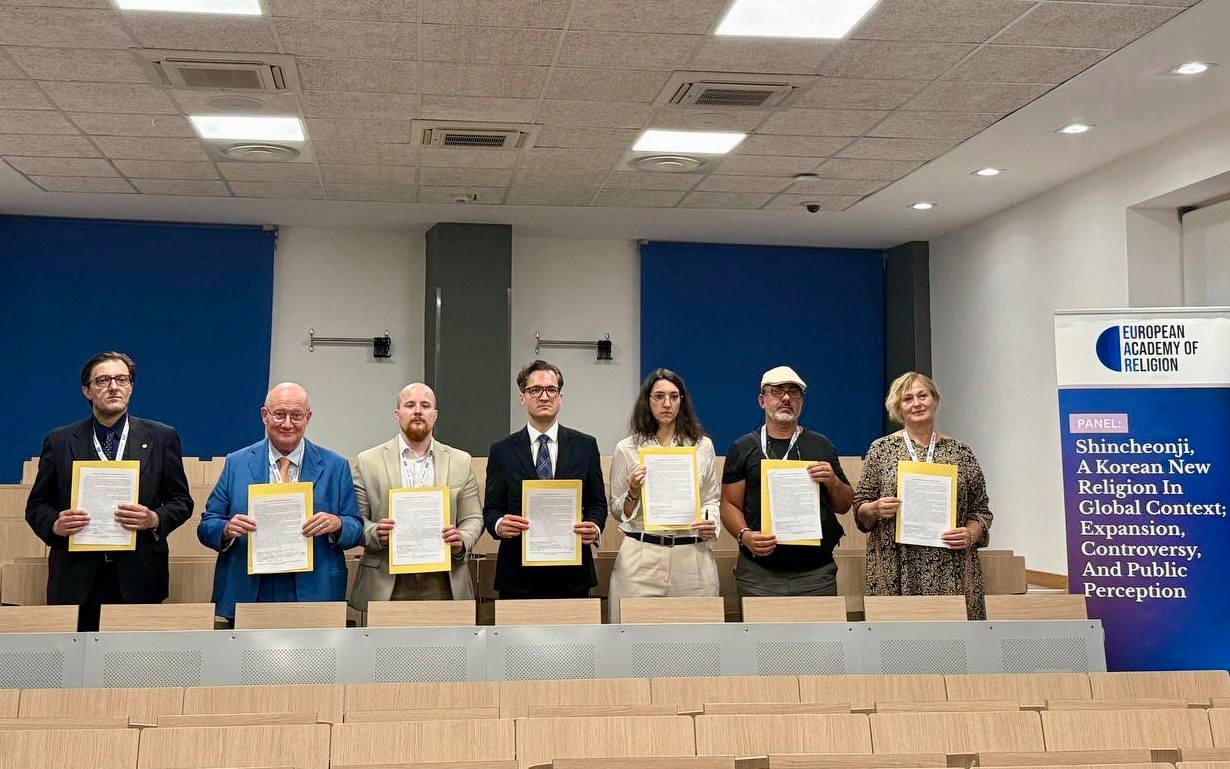
The session ended with a sense of gravity. Scholars had gathered to discuss theology, lived religion, and sociological patterns. Yet, the reality outside the conference room was that an older man who devoted his life to faith and education activities promoting world peace was behind bars. The long-running campaign portraying Shincheonji as a dangerous organization created a climate in which such an arrest became possible. The speakers agreed that democratic societies must resist the temptation to transform unfamiliar religions into objects of fear. When prejudice becomes institutionalized, the consequences reach the bodies of those who are most vulnerable.
The detention of Chairman Lee is more than a legal event. It is a warning sign. And the world, the scholars concluded, should pay attention.

Massimo Introvigne (born June 14, 1955 in Rome) is an Italian sociologist of religions. He is the founder and managing director of the Center for Studies on New Religions (CESNUR), an international network of scholars who study new religious movements. Introvigne is the author of some 70 books and more than 100 articles in the field of sociology of religion. He was the main author of the Enciclopedia delle religioni in Italia (Encyclopedia of Religions in Italy). He is a member of the editorial board for the Interdisciplinary Journal of Research on Religion and of the executive board of University of Pennsylvania Press’ Nova Religio. From January 5 to December 31, 2011, he has served as the “Representative on combating racism, xenophobia and discrimination, with a special focus on discrimination against Christians and members of other religions” of the Organization for Security and Co-operation in Europe (OSCE). From 2012 to 2015 he served as chairperson of the Observatory of Religious Liberty, instituted by the Italian Ministry of Foreign Affairs in order to monitor problems of religious liberty on a worldwide scale.