Elderly religious leaders are kept in detention, while the politician quotes the Gospel against the “heretics” and hails what happened in Japan.
by Massimo Introvigne
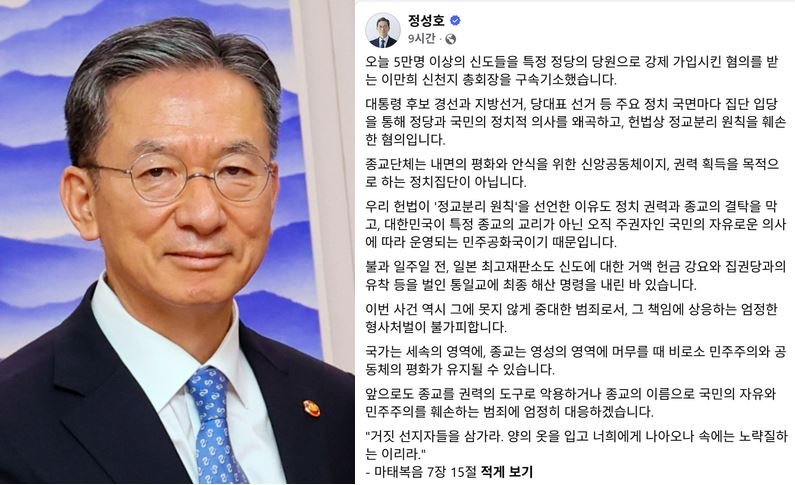
South Korea’s Minister of Justice, Jeong Seong-ho, has published an extraordinary Facebook post confirming what many feared. A ninety-five-year-old man, Shincheonji’s Chairman Lee Manhee, is being held in detention on accusations that involve no violence and no risk of escape. The alleged crime is a supposed violation of the principle of separation of religion and state. The Minister writes: “Lee Man-hee, Chairman of Shincheonji, who is accused of forcibly registering more than 50,000 believers as members of a specific political party, was indicted and detained. The allegation is that through mass party enrollment during major political events such as presidential primary elections, local elections, and party leadership elections, he distorted the political will of political parties and citizens and violated the constitutional principle of separation of religion and state.” These words confirm that a man of ninetyfive is in jail on charges related to political participation. This right belongs to every citizen in a democracy. How he could “forcibly” register co-religionists as members of a party is not really explained.
The Minister continues: “Religious organizations are communities of faith intended for inner peace and spiritual comfort, not political groups seeking power.” This sentence reveals a conception of religion that confines believers to a spiritual sphere and denies them the right to participate in public life. Democracy is built on the idea that citizens, including those who belong to religious communities, may express opinions, join parties, and vote. The Minister’s statement is a direct challenge to this principle.
The Minister writes: “Only when the state remains in the secular sphere and religion remains in the spiritual sphere can democracy and peace within the community be maintained.” Democracy is maintained when citizens are free to speak, vote, and participate. This includes religious citizens. The Minister’s post shows how political power may use the language of constitutional principles to silence religious communities. It shows how justice may be replaced by ideology. It shows how the boundary between state and religion may be invoked to justify repression.
He adds: “Just a week ago, Japan’s Supreme Court also issued a final dissolution order against the Unification Church over issues including large-scale monetary demands imposed on followers and close ties with the ruling party.” This is inaccurate. The dissolution decision does not mention ties with the ruling party. It is troubling that a Minister of Justice confuses media narratives with judicial documents. In South Korea, a draft law is pending that would authorize swift dissolution of religions whose leaders have been sentenced or that “interfere in politics.” In this context, the Minister’s misrepresentation of the Japanese decision acquires a sinister tone.
The Minister writes, going back to Chairman Lee but with a “likewise” referring to the Unification Church: “This case is likewise a serious crime, and strict criminal punishment corresponding to its responsibility is inevitable.” A Minister of Justice should guarantee impartiality. He should not prejudge an ongoing investigation. Declaring that “strict punishment is inevitable” before a trial has taken place undermines the credibility of the justice system. The Minister concludes his post with a biblical quotation: “Beware of false prophets, who come to you in sheep’s clothing but inwardly are ravenous wolves.” He gives his reader a reference to the Gospel of Matthew (7:15) in bold. He uses this verse to describe leaders of religious movements he dislikes. He does so on his official Facebook account as Justice Minister.
Jeong is known as a pious Presbyterian. His church includes many good Christians and righteous people, yet it also includes pastors who act as deprogrammers. These practices involve kidnapping members of Shincheonji and other groups and forcing them to abandon their faith. The Minister’s use of Scripture in an official communication crosses the very line he claims to defend. He invokes religion while accusing others of mixing religion and politics.
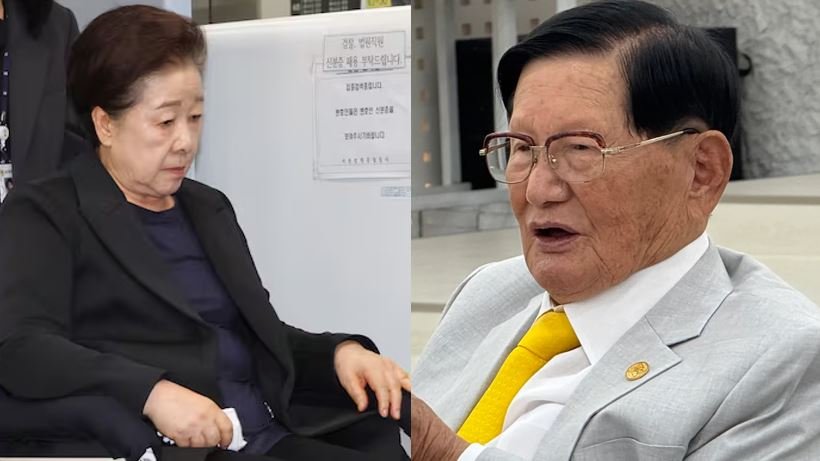
The leader of the Unification Church, Mother Hak Ja Han, is eighty-three years old. She has been detained for months in South Korea and is now hospitalized under surveillance. She is also accused of political interference.
The detention of elderly religious leaders raises questions. When a ninety-five-year-old man and an eighty-three-year-old woman are subjected to harsh conditions, one wonders whether the government hopes that they will not survive long enough to see justice. Religious movements have endured persecution for centuries. They have survived empires, dictatorships, and political storms. They will survive this season as well. Governments and parties rise and fall. Churches endure.
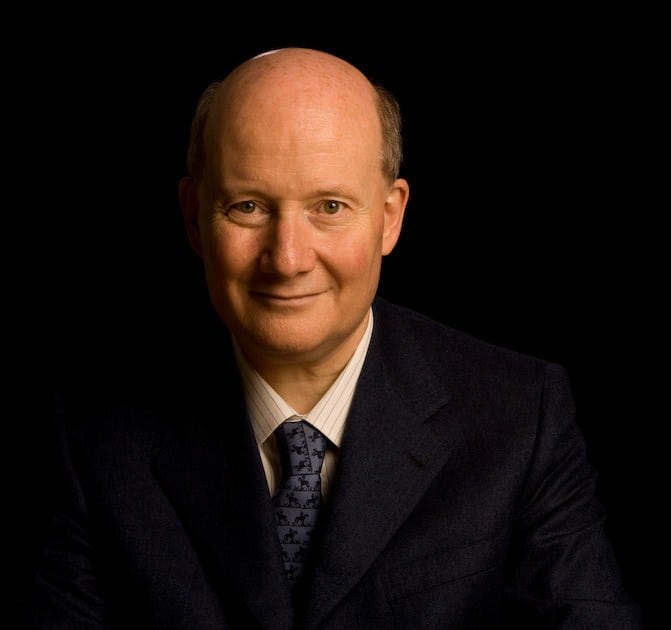
Massimo Introvigne (born June 14, 1955 in Rome) is an Italian sociologist of religions. He is the founder and managing director of the Center for Studies on New Religions (CESNUR), an international network of scholars who study new religious movements. Introvigne is the author of some 70 books and more than 100 articles in the field of sociology of religion. He was the main author of the Enciclopedia delle religioni in Italia (Encyclopedia of Religions in Italy). He is a member of the editorial board for the Interdisciplinary Journal of Research on Religion and of the executive board of University of Pennsylvania Press’ Nova Religio. From January 5 to December 31, 2011, he has served as the “Representative on combating racism, xenophobia and discrimination, with a special focus on discrimination against Christians and members of other religions” of the Organization for Security and Co-operation in Europe (OSCE). From 2012 to 2015 he served as chairperson of the Observatory of Religious Liberty, instituted by the Italian Ministry of Foreign Affairs in order to monitor problems of religious liberty on a worldwide scale.