A deeply spiritual painter who befriended Rudolf Steiner and helped define a nation’s visual identity.
Massimo Introvigne
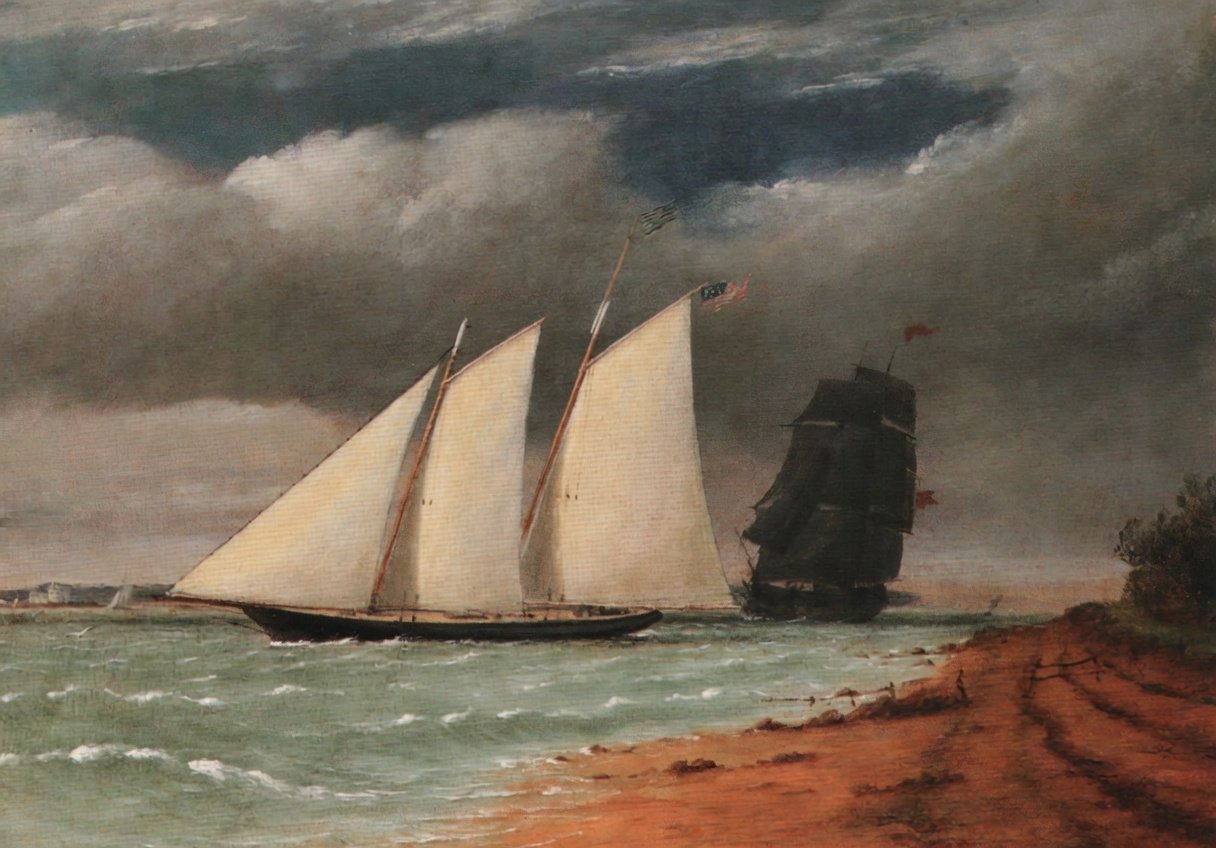
Theodora Walter (1832–1914) occupies a singular place in the cultural history of Trinidad and Tobago, not only as one of the earliest documented women artists of the island but also as a painter whose Theosophical convictions shaped both her technique and her understanding of landscape. Born to an English father—marine painter Theodore Walter (1827–1969), who was himself born in Trinidad—and a Trinidadian mother, Lucy Lechmere Guppy (1835–1907), she spent much of her youth in England, yet her artistic imagination remained anchored in the Caribbean. Scholars have repeatedly noted that her botanical studies and luminous watercolours belong to the earliest attempts to articulate a recognizably Trinidadian visual identity, a way of seeing the island that was neither colonial nor touristic but rooted in intimate knowledge of its flora, its light, and its spiritual atmosphere.
Walter’s training in watercolour followed the path opened by her father, but her artistic evolution cannot be understood without acknowledging her deep involvement in the Theosophical Society. She joined the movement early, cultivated a personal friendship with Rudolf Steiner before his departure from the Society, and absorbed the Theosophical conviction that the visible world is only the surface of a more subtle, energetic reality. For Walter, Theosophy was not an occasional interest but a framework that guided her entire practice. Her botanical paintings, though precise, were never merely descriptive. They sought to reveal what she regarded as the inner life of plants—their vibrational qualities, their spiritual signatures, the quiet radiance that Theosophists believed permeated all living forms. In this sense, her work stands in a fascinating parallel to the non‑abstract paintings of Hilma af Klint, another Theosophist shaped by Steiner’s teachings, who likewise attempted to render the spiritual architecture of nature without abandoning recognisable forms.
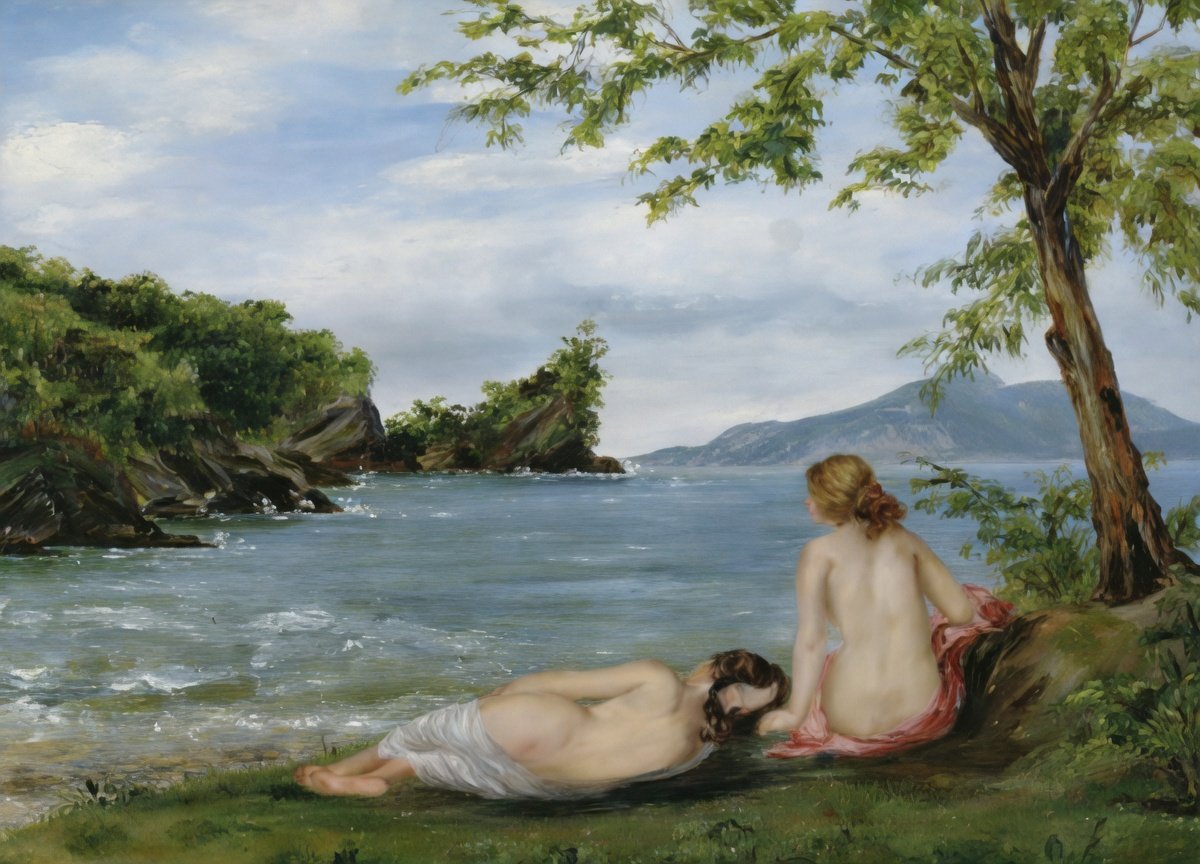
This spiritual orientation pushed Walter toward an early form of Expressionism, visible in the heightened colours, rhythmic contours, and atmospheric intensity of her Trinidad landscapes. Works such as “Nudes at Macqueripe Bay” show her effort to translate the island’s sensorial richness into a language capable of conveying more than topography. She painted Trinidad not as a backdrop but as a living organism, a place where physical and spiritual energies intertwined. Art historian Geoffrey MacLean has observed that her surviving botanical studies and simple landscapes are precious precisely because they capture this early moment when Trinidadian art began to speak in its own voice, shaped by local experience rather than imported conventions. While Theodora was also influenced by her father, Theosophy was a major factor in her inspiration.
Walter’s marriage in 1908 to Harold Cayley‑Robinson (1881–1914) did not diminish her commitment to Theosophy or to Trinidad. Cayley-Robinson was a mining engineer who worked in various countries and died of dysentery in Nigeria in 1914, at age 33. She continued to cultivate both her artistic and intellectual ties to the island, contributing to the Art Society of Trinidad and Tobago and maintaining the dual identity that had defined her from childhood.
By the time of her death in 1959, she had left behind a body of work small in quantity but remarkable in intention: paintings that reveal how a Theosophical worldview could infuse Caribbean landscape art with a sense of inner luminosity, and how an artist formed between England and Trinidad could help shape the earliest contours of a national aesthetic.
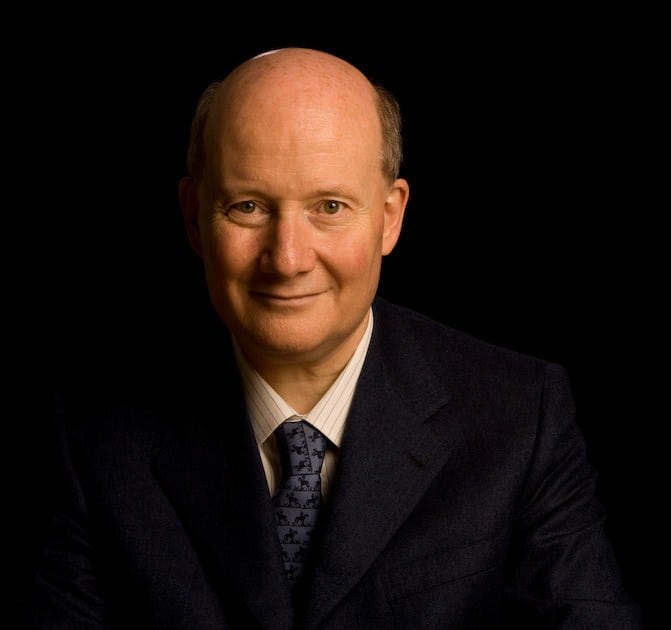
Massimo Introvigne (born June 14, 1955 in Rome) is an Italian sociologist of religions. He is the founder and managing director of the Center for Studies on New Religions (CESNUR), an international network of scholars who study new religious movements. Introvigne is the author of some 70 books and more than 100 articles in the field of sociology of religion. He was the main author of the Enciclopedia delle religioni in Italia (Encyclopedia of Religions in Italy). He is a member of the editorial board for the Interdisciplinary Journal of Research on Religion and of the executive board of University of Pennsylvania Press’ Nova Religio. From January 5 to December 31, 2011, he has served as the “Representative on combating racism, xenophobia and discrimination, with a special focus on discrimination against Christians and members of other religions” of the Organization for Security and Co-operation in Europe (OSCE). From 2012 to 2015 he served as chairperson of the Observatory of Religious Liberty, instituted by the Italian Ministry of Foreign Affairs in order to monitor problems of religious liberty on a worldwide scale.