Will the new government restore religious liberty and put an end to anti-Scientology bigotry and discrimination?
by Márk Nemes

For more than a decade, state agency raids, religious document seizures, and data protection directives have been utilized to render Scientology’s Hungarian Branch inoperable. The newly elected government has promised better alignment with EU directives, which includes improving freedom and protection of belief and religious practice in Hungary. The question is: will they also cease the harassment of Scientology as part of these promised changes?
Until 2026, observers saw Hungary as a once-democratic society slowly slipping into illiberalism through the methodical dismantling of the cornerstones of heavily fought-for freedoms. Since the 2010s, captured state media, a weakened constitutional court, politicized institutions, deep-rooted corruption, and cronyism have squeezed civil society. International media extensively documented these developments. Yet one of the most sweeping—and, strangely, least discussed—assaults on fundamental freedoms in this decade began in the realm of conscience and faith.
Since 2011, Orbán’s government has rewritten Hungary’s constitutional order and passed a series of laws concerning the rights to freedom of conscience and religion. This process resulted in the deregistration of more than 300 religious communities and the comprehensive restriction of state recognition in Hungary, with built-in preventive measures to hinder future registrations of specific minority movements. Such changes have been extensively criticized domestically, with cases reaching the European Court of Human Rights (2014).
One of the subjects of the 2011 deregistration process was the Hungarian Church of Scientology. First registered in 1991 as a religious organization, this new religious movement has thousands of followers domestically (specifics are not provided due to the ambiguous boundaries of membership, as noted by András Máté-Tóth and Gábor Dániel Nagy in “Alternatív vallás—Szcientológia Magyarországon,” 2011, p. 101). In addition to this estimate, the Budapest Org also serves as a central institution for spiritual progress for foreign Scientologists from Central and Eastern Europe, delivering ministerial courses and training only accessible in so-called Class V Organizations.
Currently registered as a “religious association,” Scientology in Hungary has limited rights in terms of public ministry, education, and social care. Moreover, they are subject to stricter regulations regarding data processing and protection—a matter that is challenging to define in religious settings and even more difficult to address where a form of documented confession is practiced. It is also worth noting that the preventive mechanisms were implemented exclusively to hinder Scientology in Hungary, as evidenced by the 2011 statements of Deputy Prime Minister Zsolt Semjén, who alluded to this in the law’s commentary. Speaker of the House László Kövér also explicitly confirmed his intent to prevent Scientology from ever being recognized in his parliamentary opening remark.
Semjén also commented on the construction of the Budapest Ideal Org, stating it is “outrageous that the Scientologists could build headquarters in Budapest.” The comment was later followed by a surprise denial of a certificate of occupancy (használatbavételi engedély), citing issues with the electrical system, which the Church corrected promptly. Italian sociologist Massimo Introvigne notes that, once again, administrative tools were used to hinder Scientology. Although the State Office had confirmed that this work was adequate, the Prime Minister’s Office transferred the appeal to the Southern city of Szeged, where it was denied. A new appeal, based on the fact that a new law no longer required this kind of COO [certificate of occupancy or használatbavételi engedély], was also denied.
Since the early 2010s, Scientology has been methodically pressured by various state agencies. The Hungarian National Authority for Data Protection and Freedom of Information (NAIH) investigated the organization on suspicion of, among other things, unlawful data processing since 2016; the National Tax and Customs Administration of Hungary (NTCA) pursued an investigation on the suspicion of budget fraud since 2017; and the National Bureau of Investigation (NNI) joined the investigation based on the suspicion of espionage and misuse of personal between 2017–2025. Per the records, both criminal proceedings were initiated upon the NAIH’s denunciation.

These resulted in police and customs officers raiding the Budapest Org as well as various rural missions several times, confiscating more than 10,000 confidential religious documents. Despite most investigations concluding in late 2025 with no wrongdoing found, the seized files from the series of raids were not returned; instead, they were transferred to NAIH, which, on March 22, 2024, issued an order to destroy parishioner files (also known as PC folders). These documents are crucial for Scientologists’ spiritual progress and cannot be replaced. Although the Church contested the decision, the Metropolitan Court of Budapest affirmed the NAIH order to destroy hundreds of religious files on January 7, 2026.
Human Rights Without Frontiers defines this interlinked means of harassing minority religions as the “Hungarian model.” It is the utilization of seemingly separate state agencies, cooperating under strict political directives with the explicit aims of rendering a religious community inoperable. The thinned constitutional protections and additional requirements imposed on non-recognized religions (those lacking the status beyond religious association or organization) enable ongoing harassment, which, conversely, also hinders any chance for higher-tier registration.
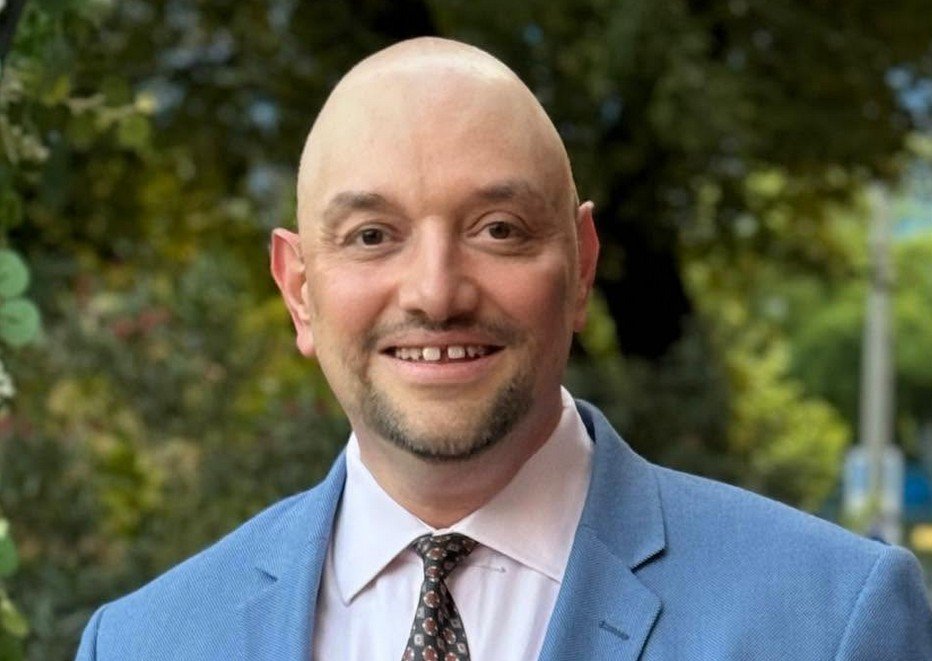
“Bitter Winter” has approached the President of the Church of Scientology Hungary, Attila Miklovicz (MA), to comment on these matters in June 2026:
BW – Almost a decade has passed since the Hungarian National Authority for Data Protection and Freedom of Information (NAIH) raided the Church of Scientology’s Budapest Ideal Org for the first time and seized a great number of parishioner files on the grounds of improper data treatment. These documents are crucial to Scientology’s spiritual practices and the advancement of members. What was the exact basis of this seizure, and how did this act affect the lives of those whose folders had been taken?
MA – The basis of the seizure was quite strange. As we learned in a later phase of the procedure, on December 5, 2016, after office hours, an email was sent to the NAIH’s central mailbox. The letter claimed that the person was a follower of Scientology and wanted to leave the community but was afraid that the intimate information he shared in Scientology processing would be used against him, “chaining” him to the organization. The person also claimed that the Church has denied the destruction of their records, despite a request. There were no specifics, no actual harm, no evidence, just a general complaint.
On December 6, 2016, after opening this e-mail, the NAIH took it so seriously that in one day they organized about 10 agents, including the President and Deputy President, external computer experts, trucks with loaders, official witnesses, and a police escort, and in the morning of December 7, they raided two church facilities quite far from each other. Having worked with administrative authorities for well over a decade, I can say this is an outstanding response time, especially since we are not talking about a clear and present danger to life or property, such as an epidemic or food poisoning at a manufacturing facility.
Another interesting aspect of this complaint is that the NAIH’s nearly 150-page concluding decision contained no findings regarding the complainant. NAIH apparently could not locate any records of the person, any correspondence or communication with the Church, no sign of harm, nothing. Yet this person’s complaint was the “casus belli.”
Regarding the folders, let me explain why these records are indispensable for Scientology parishioners so that one can understand the effect of their absence. Scientology, as far as individual religious goals are concerned, belongs to the Eastern traditions, so its followers aim for what we call “Total Spiritual Freedom.” This is somewhat similar to enlightenment or “Moksha” in Hindu traditions, which means breaking free from the eternal cycle of spirit and matter. In Scientology, the follower progresses through a series of preset spiritual levels using carefully arranged processes. An academic of religion, the late Frank K. Flinn, described Scientology as “technological Buddhism” in one of his analyses.
In any such system, where development needs to be verifiable, some form of documentation must exist. Educators keep records of student development, coaches document their athletes’ progress, etc. Same in our system, just in a religious and spiritual context. Imagine that these people are stripped of the records of their development. This means they are stripped of their ability to practice their religion. It is similar to denying a Christian the right to pray.
BW – Patricia Duval noted in 2018 that Hungary “is currently the only country in the world that has seized and refuses to return such folders consisting of sacred and confidential pastor-penitent communications.” In addition, she also noted that these folders were made available to external “experts” without the parishioners’ permission or consent throughout the investigation process. How sensitive are the matters written in these folders? Was any sensitive data made public throughout the series of court cases? How does the non-consensual external sharing affect the individuals whose folders have been taken?
MA – Although it was made clear to NAIH that these folders contain privileged communications, the authority claimed that data protection law grants them the right to access any secret, including attorney-client or priest-penitent privileged information. The law also says that it must be proportional and necessary, but who decides that? The very first court decision mandated that NAIH carefully examine the nature of the records about confidentiality and its consequences in the authority’s procedure, but this did not happen.
True, the NAIH provided these data to various experts without anonymizing them or obtaining consent. Obviously, there can be very sensitive data. When someone wants to get free from the shadows of the past that paralyze one’s life, naturally, very deep concerns, and yes, sometimes misdeeds, or memories that the person feels ashamed about, may occur. These records are not stenographic, rather notes, but sometimes very sensitive details get unearthed.
It is important to mention that the Church is handling this data with the utmost care. These folders for the Scientologists are sacrosanct. During the 35 years of our history in Hungary, no one’s records have leaked. During the widely covered procedure of the NAIH, not one person showed up saying, “me too,” “my data was abused, but I didn’t dare come forward so far.” It is because it is the highest sin in Scientology to abuse this data.
For this reason, I cannot tell how appalling it was to see the President of the NAIH quoting from these folders at a press conference. The aim was to create antagonism towards Scientology.
Some Scientologists recognized their folders exposed at this press conference. Of course, their names were not mentioned, but it was still very upsetting for them. Many Scientologists reported a sort of “chilling” effect. They became uncertain because they trust their religious organization with their data, but not with state authorities or experts.
There are two criminal cases ongoing, initiated by parishioners, alleging that the authority violated their private secrets; we’ll see the outcome.
BW – Since the seizure of folders, how has the spiritual progression of affected Scientologists changed? Were they able to continue their progress? What happens to those whose PC folders have now been destroyed?
MA – It has become very difficult for them. Imagine that all your university records, papers, grades, and certificates are inaccessible to you, while you need them to demonstrate your achievements and progress. You would have to retake the exams you have already taken. You would need to reconstruct that part of your life. It is a very difficult and time-consuming process.
These people literally had to do some of their Scientology grades again. Part of their past is erased. Recall the loss, the anger, or despair of a time when you lost two pages from what you have already written, because of a computer failure. Now imagine that you need to reconstruct hundreds of hours of spiritual counseling. It is devastating.
BW – Earlier, the then-UN Special Rapporteurs on FoRB, Minority Issues, and Privacy also expressed concerns about the discriminatory measures against the Church of Scientology in a letter to the Hungarian Government. Has the Church of Scientology Budapest seen any improvement in its cases after these letters? Did state agencies or the constitutional court acknowledge these reports at all?
MA – The letter you mention was addressed to the Hungarian government with a 60-day deadline for answering. It was eight years ago—no answer since. Several international watchdog and whistleblower organizations, NGOs, and even the US Embassy and the State Department signaled, raised awareness, or even tried to facilitate dialogue. Still, there was no willingness on the Hungarian side, unfortunately. The former US Ambassador at Large for International Religious Freedom had met me personally and received a promise from the State Secretary for Church Affairs about starting a dialogue with us. Somehow, they could not find a suitable time for an appointment for the last eight years.
I could write a novel about the oddities of our procedures before the court and the authorities. Maybe I will…

BW – In light of the most recent changes in the administration of Hungary and according to the Tisza Government’s program (pp. 132–134), what kind of developments does the Hungarian Church of Scientology expect in the future?
MA – So far, the utterances of the new government officials sound promising. We are hopeful that we can return to the internationally acclaimed good practice of freedom of religion or belief as it existed before the 2011 amendment to the Hungarian Church Act. Scientology is non-political. Our founder clearly stated that the Church does not get involved in political activities or sides, while individual Scientologists are free to support whoever they choose to. If the current administration continues to walk the walk, not just talk the talk, I believe every religious community and society itself will benefit. These communities are a huge potential asset for any government in its endeavors to empower society, due to their shared belief in a better world and willingness to act for it. I sincerely hope that this government will utilize this potential.
**
This newly formed Hungarian government now has the opportunity to change course by aligning with international laws and restoring the remaining religious records. With overwhelming societal authorization and holding 70.85% of parliamentary seats, there is a timely chance to rectify past errors through reforms aimed at restructuring and re-democratization. At minimum, this must involve reinforcing constitutional and international commitments to freedom of religion or belief—realigning Hungary with Article 18 of the Universal Declaration of Human Rights, as well as with the directives outlined by the European Convention on Human Rights, the International Covenant on Civil and Political Rights, and the EU Charter of Fundamental Rights. Furthermore, reparations must include the complete return of the remaining religious records to their rightful place, the cessation of harassment by unregulated state agencies, and the thorough investigation of cases in which foundational rights to religious practice have been infringed over the past decade.
The developments documented in this analysis and interview illustrate how a constellation of formally separate state agencies—data-protection authorities, tax offices, police units, and administrative bodies—can operate cumulatively to restrict the freedom of religion or belief of a minority community. The Hungarian case is significant beyond Scientology. The severity of the measures taken reveals a structural pattern: when constitutional safeguards are weak and discretionary powers expand, coordinated administrative actions can achieve outcomes that no single agency, acting alone, could legitimately justify. This “Hungarian model,” as described by human rights observers, demonstrates how bureaucratic mechanisms can be repurposed to marginalize or turn off a religious group while maintaining the appearance of legal formality.
The evidence presented here points to several necessary remedies. First, the remaining religious files must be returned to their rightful holders, and the destruction orders reversed or fully investigated. Second, discriminatory administrative practices—particularly those that single out minority religions for heightened scrutiny—should be discontinued. Finally, Hungary’s legal framework should be realigned with European and international human rights standards, ensuring that protections for freedom of religion or belief are applied consistently and free from political interference. Addressing these issues would not only resolve the long-standing concerns surrounding Scientology in Hungary but would also strengthen the rule of law for all religious and belief communities.

Márk Nemes is a historian and a graduate in the academic study of religions. He received his doctorate in philosophy at the University of Szeged’s PhD program in 2025 and works as a researcher at the Hungarian Academy of Arts’ Research Institute of Art Theory and Methodology. As an awardee of the Hungarian National Eötvös Scholarship, he served as a visiting researcher at CESNUR from 2023 to 2024. For the past 10 years, he has focused on researching new, alternative, and emergent forms of religiosity in Hungary, Iceland, the US and most recently, in Italy. Since 2025, he serves as the Deputy Director of CESNUR