The official Catholic body promotes with zeal a law internationally condemned while ignoring the Papal encyclical that the rest of the Catholic world is discussing.
by Zeng Liqin
The Chinese Patriotic Catholic Church has entered a new phase of political usefulness. In recent months, its official websites and regional branches have devoted sustained attention to the Law on Ethnic Unity and Progress, a piece of legislation the European Parliament has described as one that “openly promotes assimilation policies and restricts the cultural, religious and linguistic freedoms of various groups within China and beyond.” The contrast between international concern and domestic enthusiasm is revealing. The Church that Beijing recognizes as Catholic has become an active participant in the state’s campaign to reshape ethnic and religious identities according to Party doctrine.
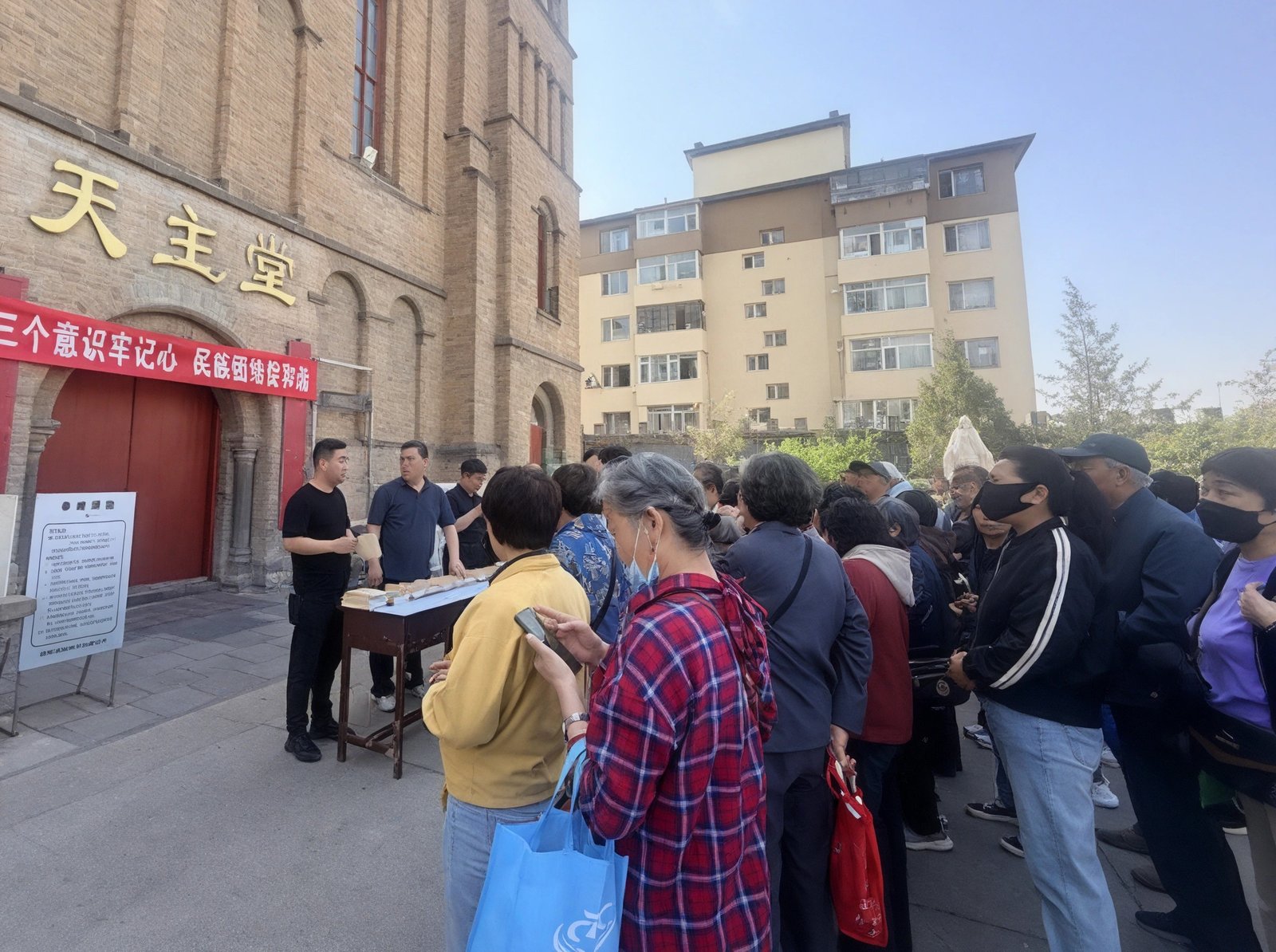
A recent initiative in Inner Mongolia—known to Mongolians as Southern Mongolia—illustrates the trend. Local Patriotic Catholic associations organized a propaganda event under the slogan “Three Consciousnesses in the Heart, Ethnic Unity for Harmony.” The theme was not the Gospel, but the need to internalize the Law on Ethnic Unity. Clergy distributed booklets on the legislation, explained the Party’s ethnic policies, and urged believers to cultivate what officials call national, civic, and legal consciousness. The message was that Catholic life must be aligned with the state’s priorities, and that the law should permeate parish activities, daily routines, and the formation of the faithful.
The location of this event matters. Southern Mongolia has seen years of resistance to policies that weaken Mongolian language education and promote cultural assimilation. The Ethnic Unity Law is central to this process. Its implementation has already reshaped school curricula, public discourse, and cultural institutions. Now, the state-controlled Catholic Church is being mobilized to reinforce the same agenda. The clergy was instructed to emphasize that “national law takes precedence over religious norms,” and that believers must demonstrate loyalty to the state by embracing the Five Recognitions. The vocabulary of the event mirrored the political language used in Party schools rather than the pastoral language of the universal Church.
The “Five Recognitions” are a key concept of Xi Jinping’s propaganda and control. The first is the “Recognition of the great motherland.” This requires religious believers and ethnic minorities to affirm emotional and political attachment to the PRC as the only legitimate national home. The second is the “Recognition of the Chinese nation.” It refers to accepting the Party’s narrative of a single, unified Chinese nation, in which all ethnic groups—including Tibetans, Uyghurs, Hui, and Mongols—are expected to see themselves as branches of one overarching national identity.
The third is the “Recognition of Chinese culture.” The slogan demands acceptance of Chinese culture as defined by the CCP, often emphasizing Confucian values and Han cultural norms. For religious groups, it means reshaping doctrine and practice to align with state‑approved cultural themes. The fourth is the “Recognition of the Chinese Communist Party.” This is the political core: acknowledging the CCP as the legitimate and indispensable leader of the country, society, and all religious affairs. Finally, the fifth is the “Recognition of socialism with Chinese characteristics.” This requires endorsing the Party’s political system, ideological framework, and development model as the only correct path for China.
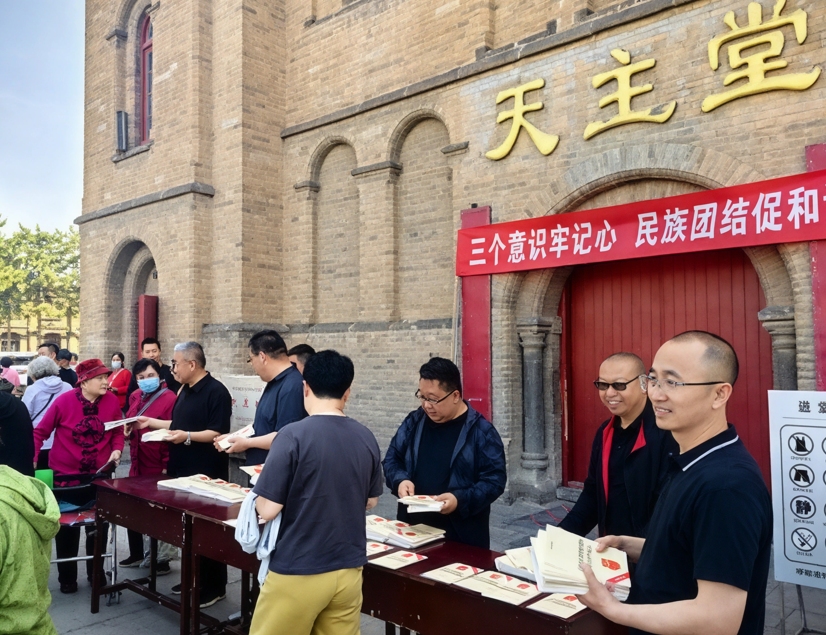
This pattern is not limited to Inner Mongolia. Across China, the five authorized religions have been enlisted to promote the Law on Ethnic Unity. Their websites, publications, and training programs echo the same themes: the need to strengthen identification with the Chinese nation, to support the Party’s vision of cultural integration, and to reinterpret religious doctrine in ways that reinforce political unity. The Patriotic Catholic Church has become one of the most active participants in this campaign. Its online presence contains multiple articles praising the law. Yet, it offers no reference to “Magnifica Humanitas,” despite the encyclical’s global significance and its direct relevance to questions of human dignity, cultural rights, and the protection of minorities.
A Church that sees itself as part of the Catholic communion would naturally engage with a major papal document. A Church that sees itself as an instrument of the state focuses instead on the legislation the Party seeks to promote. The priorities displayed on official Chinese Catholic platforms suggest that the Patriotic Church does not understand itself as a branch of the universal Church but as a domestic institution tasked with advancing the CCP’s political objectives.
The Vatican China Deal of 2018 was intended to heal divisions and create space for pastoral life. Eight years later, the results look different. The official Catholic Church has been absorbed into the machinery of Sinicization, and its clergy is being trained to disseminate political ideology rather than Catholic teaching. As the Ethnic Unity Law becomes a central tool of cultural assimilation, the Church’s role in promoting it raises a question that cannot be avoided.
Will the Holy See reconsider the consequences of an agreement that has allowed the state to present a government agency as the voice of Catholicism in China, even as it ignores the Pope and amplifies the Party’s most intrusive policies?

Uses a pseudonym for security reasons.