A detailed analysis by a leading French lawyer in preparation for the review of the case by Japan’s Supreme Court.
by Patricia Duval
Article 1 of 7.
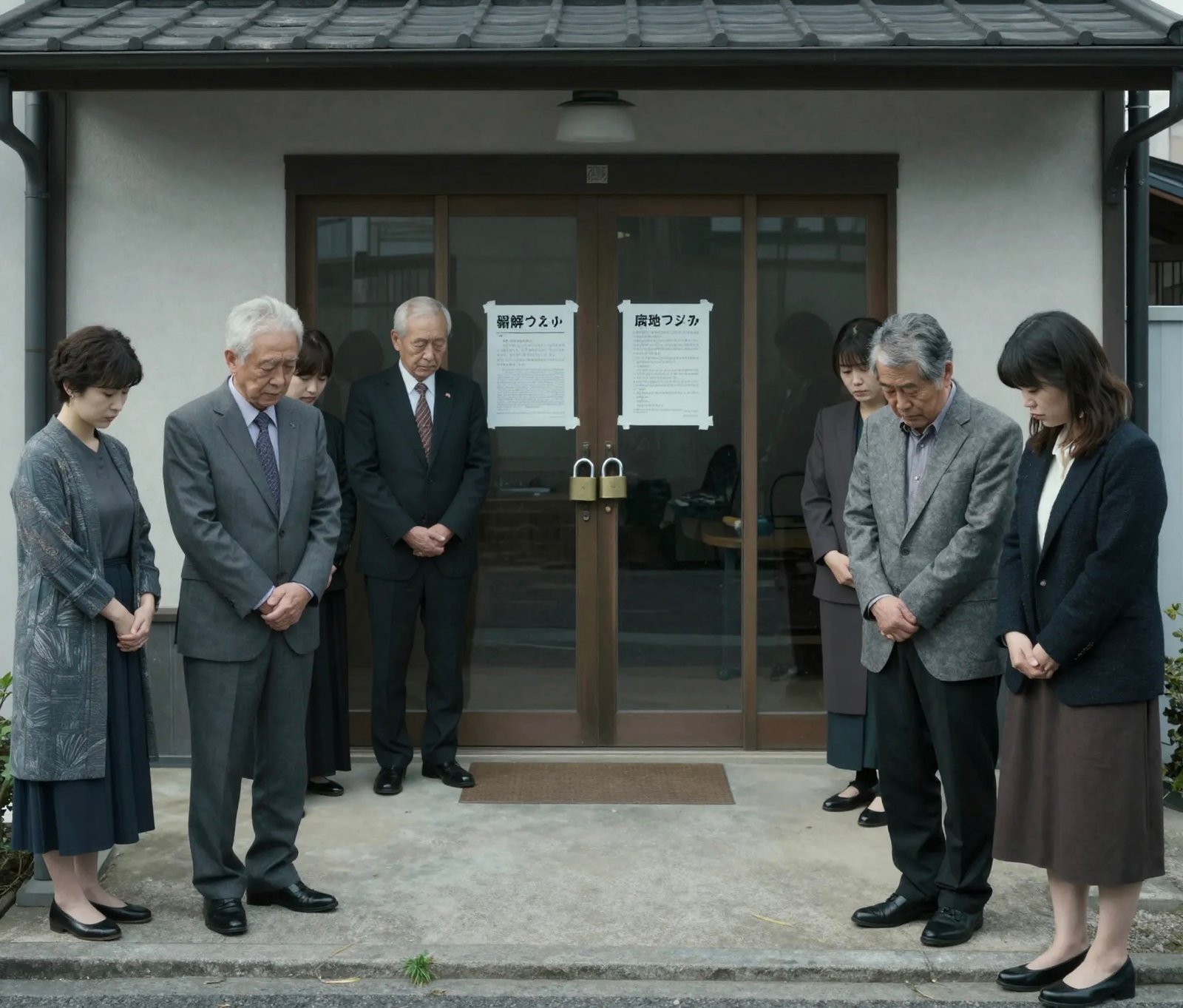
On March 4, 2026, the Tokyo High Court issued a ruling regarding the dissolution of the religious organization “Family Federation for World Peace and Unification” (formerly known as the Unification Church, hereinafter referred to by that name).
This opinion analyses this decision and denounces a violation of Article 98, para. 2, of the Japanese Constitution, which provides that “The treaties concluded by Japan and established laws of nations shall be faithfully observed.”
The fact that the High Court devoted only two pages, at the end of its ruling, to arguments concerning violations of international law demonstrates the scant importance the Court of Appeals attaches to compliance with that law.
The Supreme Court’s review of its application is all the more important to ensure consistency between Japanese law and the treaties to which Japan has acceded.
Article 98, para.2, of the Constitution implies, in particular, that the right to freedom of religion or belief (also protected by Article 20 of the Constitution) must be guaranteed under the conditions outlined in Article 18 of the International Covenant on Civil and Political Rights (ICCPR or the Covenant), to which Japan has acceded and which it has ratified.
This right encompasses not only the right to believe, but also the right to express one’s beliefs in community with others through religious rites, practices, and teachings, as well as the right to establish and maintain religious, charitable, or humanitarian institutions.
Any State interference with this right must meet the strict criteria outlined in Article 18.3 of the Covenant, which provides: “Freedom to manifest one’s religion or beliefs may be subject only to such limitations as are prescribed by law and are necessary to protect public safety, order, health, or morals or the fundamental rights and freedoms of others.”
Article 98, para.2, of the Constitution also implies that the other rights outlined in the Covenant must be guaranteed, in particular the right to freedom of association (Article 22) and the right to freedom of expression (Article 19); both of these rights are also likely to be infringed upon by the decision to dissolve the religious association.
Articles 19 and 22 provide the same conditions as Article 18, paragraph 3, regarding possible restrictions on the rights set forth therein under the Covenant.
Consequently, the following developments should be regarded as applying to potential violations of Article 18, read in conjunction with Articles 19 and 22 of the ICCPR.
The first question that arises then is whether the dissolution order issued by the Tokyo High Court constitutes an interference with the right of members of the Unification Church in Japan to manifest their beliefs, or a limitation of this right. This, in turn, would raise the question of its compliance with Article 18.3 of the Covenant.
The High Court provided a mixed answer.

Does the dissolution order constitute an interference with the believers’ rights?
The High Court asserted: “a dissolution order merely deprives a religious association of its legal personality and carries no legal effect whatsoever prohibiting or restricting the religious activities of believers” (VI, 1).
And further explained (V, 2, (1), A): “The Law on Religious Associations provides that its purpose is to grant legal capacity to religious groups so that they may own and maintain places of worship and other property, among other things (Article 1, paragraph (1)), and it permits religious groups to be granted juridical personality (Article 4). In other words, the regulation of religious groups under that Act is directed exclusively at their secular aspects, not their spiritual or religious aspects. It is not intended to interfere with freedom of religion, such as the performance by believers of religious acts.”
The Court then mitigated this finding by stating: “However, when a dissolution order concerning a religious association becomes final and binding, liquidation proceedings are carried out (…), and as a result, property belonging to the religious association that had been used for places of worship and other religious acts will also come to be disposed of (…). Accordingly, some impediment may arise to the continuation of the religious acts that believers had been carrying out using such property. Thus, even if legal regulation of a religious association does not itself have the legal effect of restricting the religious acts of believers, if it may nonetheless cause some impediment thereto, then, mindful of the importance of freedom of religion as one of the freedoms guaranteed by the Constitution, it is necessary to carefully examine whether the Constitution permits such regulation.”
This finding is self-contradictory. If the dissolution of religious associations causes some impediment to religious acts of believers, then it necessarily has the legal effect of restricting them.
The deprivation of legal personality, governed by the Law on Religious Associations, cannot be regarded as a mere administrative decision affecting only the secular aspects of a religious legal entity.
Indeed, the dissolution of a religious association is considered one of the most severe restrictions on the right to manifest one’s beliefs by international human rights standards.
The Human Rights Committee, established under Article 28 of the ICCPR to ensure the faithful and uniform implementation of the Covenant, has developed a substantial body of case law on this matter.
In a recent case, “Vladimir Yurlov and others v. the Russian Federation,” the Committee ruled on 24 October 2023 that the dissolution of the Jehovah’s Witnesses’ local association in Elista violated the believers’ right to freedom to manifest their religion.
The applicant, Mr. Yurlov, claimed that “since the Elista local religious organization was dissolved, he has been denied by the State party an entire range of rights enjoyed by members of registered religious organizations.”
The Russian State argued that Mr. Yurlov could still be part of a religious group, defined as a voluntary association of fellow believers without legal status. However, the Committee noted that this would deprive him of an entire range of rights, such as the right to own and rent property, to maintain bank accounts, to ensure judicial protection of the community, to establish places of worship, to hold religious services in places accessible to the public, and to produce, obtain, and distribute religious literature.
The Committee concluded that the dissolution of Mr. Yurlov’s religious organization deprived him of several rights essential for the free manifestation of his religion.
The European Court of Human Rights, too, has developed extensive case law on the subject.
As laid out in the Guide on Article 9 of the European Convention on Human Rights, on freedom of thought, conscience and religion, compiled by the Court Registry and published by the Council of Europe (§156-157): “One of the most radical forms of interference with the collective aspect of freedom of religion is the dissolution of an existing religious organization. Such a drastic measure requires very serious reasons by way of justification in order to be recognized as ‘necessary in a democratic society’ (Biblical Centre of the Chuvash Republic v. Russia, §54).”

Patricia Duval is an attorney and a member of the Paris Bar. She has a Master in Public Law from La Sorbonne University, and specializes in international human rights law. She has defended the rights of minorities of religion or belief in domestic and international fora, and before international institutions such as the European Court of Human Rights, the Council of Europe, the Organization for Security and Co-operation in Europe, the European Union, and the United Nations. She has also published numerous scholarly articles on freedom of religion or belief.