A monumental book explores the many incarnations of prana, qi, kundalini, and other invisible yet influential forces.
by Massimo Introvigne
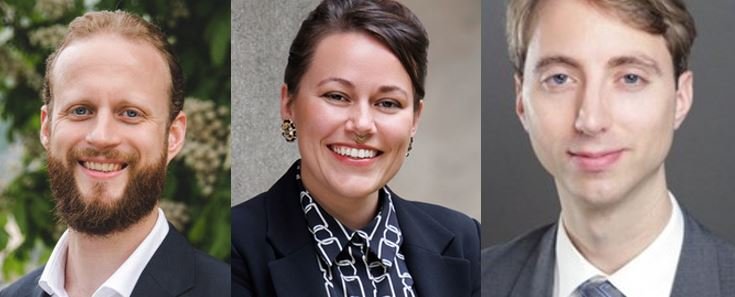
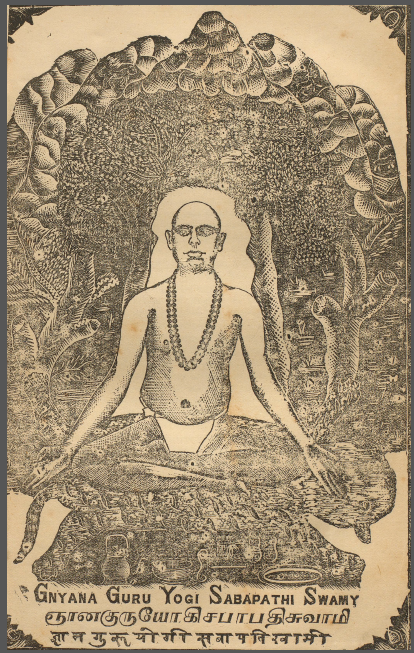
“Subtle Energies in Therapy, Spirituality, Arts, and Politics 1800–Present,” edited by Julian Strube, Marleen Thaler, and Dominic Zoehrer (Leiden: Brill, 2026), offers a panoramic tour of how “subtle energies” have been imagined, theorized, and practiced across science, esotericism, healing, yoga, art, and even politics. Structured into four parts, it shows that what many dismiss as vague “energy talk” is, in fact, rooted in precise historical lineages and concrete practices.
In the introduction, the three editors provide an overview of the book’s main theme: subtle energies across cultural, spiritual, and scientific contexts. They discuss how ideas of invisible, life-force, or energetic phenomena have appeared in various traditions—from South Asian Tantric practices to Western Esotericism—and how these concepts have evolved, been adopted, and reinterpreted over time.
The editors stress the importance of understanding subtle energies not only as spiritual or religious ideas but also as part of broader holistic and healing traditions, including their connections to modern science, psychology, and spirituality. They highlight the book’s interdisciplinary approach, which combines historical analysis, philosophical inquiry, and contemporary practices.
In the first two chapters, Dominic Zoehrer discusses the historical roots of subtle energies. He emphasizes that the concept of energy—in its modern, holistic, and spiritual contexts—is not solely a scientific notion but also a cultural and mystical one. Zoehrer explores how energies like prana, qi, and others have been understood, transformed, and integrated into various traditions, often blending scientific terminology with mystical or occult concepts. Zoehrer underscores that subtle energies are understood as imagined agents that mediate between physical and nonphysical realms and are used in rituals, healing, and identity construction. According to Zoehrer, these ideas are rooted in two main strands: “occult physicalism”—where energies are conceived as real physical or semi-physical forces—and “occult orientalism”—shaping Western interpretations of Asian spiritual practices. Concepts such as kundalini in India and qi in China were selectively interpreted and re-contextualized within Western esotericism, including in Madame Blavatsky’s Theosophical teachings. Zoehrer shows how these interpretations framed Eastern practices through a Western orientalist lens and helped shape contemporary ideas about spiritual healing and initiation.
Bastiaan van Rijn compares Franz Anton Mesmer’s concept of animal magnetism—an invisible fluid believed to cure illness—with modern practices. The chapter discusses how Mesmer introduced the idea of a cosmic fluid—an early form of subtle energy—using metaphors of harmony, hydraulic currents, and resistance. Van Rijn highlights the continuity of these metaphors in today’s practice, even as practitioners shift from the language of fluids to that of energies, while their theoretical assumptions differ from Mesmer’s. He notes that some practitioners still refer to what they do as “magnetism” (though not “animal magnetism”). He also mentions the differences between German-language authors like Johanna Arnold, who believe everyone can learn to magnetize, and Dutch and French teachers who argue that only a few have the magnetic “gift.”
Léo Bernard focuses on Dewanchand Varma, an Indian yogi who practiced “pranotherapy” in Paris in the early 20th century. Varma claimed to manipulate prana (life energy) using massage, breathing exercises, and new devices he had invented to improve health, offering a striking example of how esoteric ideas of subtle energies were fused with emerging technologies. The medical establishment was not amused, and although defended by some doctors, Varma was repeatedly sentenced for the illegal practice of medicine.
Justin B. Stein examines the origins of Reiki and Therapeutic Touch, tracing their development from 20th-century occult underground circles. Stein highlights how practitioners such as Mikao Usui (founder of Reiki) and Dorothy Hutchens (a key figure in Therapeutic Touch) embedded the concept of a universal “life energy” that transcends cultural boundaries and serves as a bridge between East and West. He mentions Usui’s connections with esoteric Buddhism and the influence of Theosophy on Therapeutic Touch. These techniques became phenomenally successful (Reiki in the West rather than in its native Japan). At the same time, their esoteric roots remained both “occult” and “occulted,” in the sense that later practitioners often preferred not to acknowledge them.
Kin Cheung discusses Chinese concepts of Qi through practices such as Qigong and acupuncture. He presents the example of a Chinese American healer, Cheung Seng Kan, who has been active in New York since 2012. The healer, who also learned Reiki from a Chinese American student, has gathered primarily Chinese immigrants into a community that blends traditional Chinese energetic models with Western holistic healing, constructing a modern practice rooted in ancient theories of flow and vitality.
Wouter J. Hanegraaff examines the role of subtle energies in Ayahuasca rituals. Hanegraaff emphasizes how both Amazonian shamans and Westerners who experiment with ayahuasca perceive and influence unseen forces. Ayahuasca thus exists within the broader discursive field of subtle energies. He questions whether we can define in scientific terms the nature and content of ayahuasca “energies.” His answer is no. These “energies” can only be experienced. They are “occult” in the sense that they appear only under specific altered states of consciousness. However, as Wittgenstein famously stated, what cannot be spoken still can reveal itself.
Marleen Thaler turns to ecospiritual movements that attribute living energies to the Earth itself—“Gaia”—and describe it as a source of healing. She presents a historical overview of esoteric theories seeking energetic centers in specific places, some of which were advanced by Theosophists such as George Arundale and Kaszimirz Chodkiewicz, who believed that Apollonius of Tyana had buried a powerful talisman beneath Krakow, thereby converting the Polish city into a center of spiritual forces. As for the concept of Earth as the Mother Goddess, it was reintroduced to modern Western audiences by poet Robert Graves and later popularized by James Lovelock. Robert Coon’s Earth chakras and Drunvalo Melchizedek’s terrestrial kundalini energy have also become popular concepts in contemporary New Age milieus.
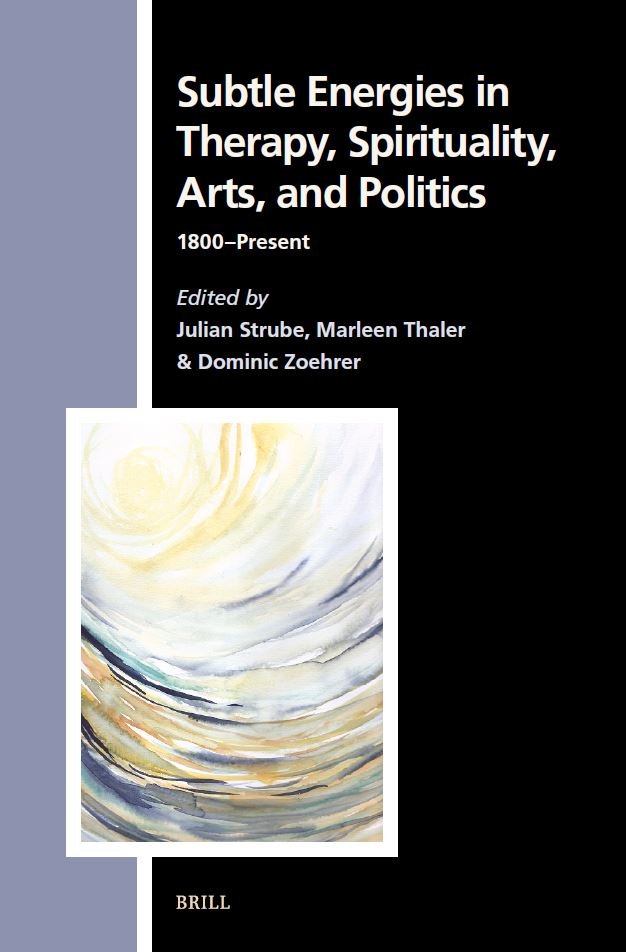
Keith Edward Cantú examines how the Tamil yogi Sri Sabhapati Swami, known for his interactions with early Theosophists (to whom he devoted an important book), used the English word “Mesmerism” to translate the Sanskrit “dīkṣā,” which is today problematically rendered as “initiation.” Sabhapati examined Western Mesmerism as an imperfect approach to subtle energies, tainted by materialism and even “atheism.” He believed that only India, the guru nation to the world, could teach “the full scope of Mesmerism.” Cantú emphasizes Sabhapati’s in-depth exploration of subtle energies and warns against over-emphasizing Theosophical influences. Probably Sabhapati had learned the techniques he taught from his first spiritual master, Chidambara Periya Swamigal, and other gurus before he met the Theosophical Society.
Hugh B. Urban offers a comprehensive historical and conceptual analysis of the kundalini concept within tantric traditions. Urban traces the evolution of kundalini from early South Asian texts—where it is described as a dormant cosmic energy located at the base of the spine—to its modern sexualized reinterpretation in neo-Tantric contexts. He emphasized Osho Rajneesh’s role in redefining kundalini as sexual energy and presenting it as such to Western audiences, but there were precedents in the European esoteric tradition. Jung had taught a seminar on kundalini in Zurich as early as 1932, but his psychological approach refused the idea that it was primarily associated with sexuality. British occultist Dion Fortune promoted this association. Today, several neo-Tantric teachings about kundalini can be traced to Rajneesh and his students.
Tova Olsson analyzes how Sally Kempton, an American disciple of Swami Muktananda’s Siddha Yoga, presented kundalini as a form of divine Śakti. Although she reminded her students that Śakti is present in both male and female bodies, she also emphasized “divine feminine” and Śakti’s somewhat special connection with women. Kempton had once been a member of The New York Radical Feminists and presented her teachings as “sacred feminism.” Olsson finds it problematic how she reconciled feminism with submission to Muktananda’s absolute authority, especially since Muktananda was accused of sexual abuse of women after his death, an issue Kempton preferred not to discuss. Kempton formally left Siddha Yoga in 2002 but continued to revere Muktananda and to display his portraits at her meditation centers until she died in 2023.
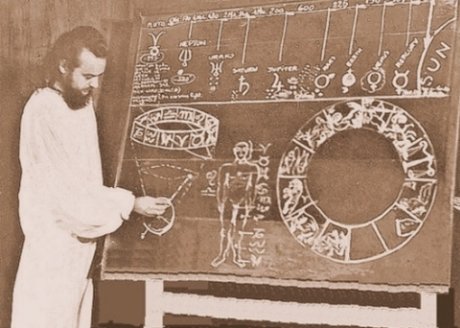
Adrián Muñoz presents the spiritual journey of Serge Raynaud de la Ferrière, a French yogi and founder of the Universal Great Brotherhood, who traveled to the Americas and interacted with local indigenous ideas about astral energies. The chapter shows how subtle energy concepts are exchanged across cultures and adapted in different spiritual settings. Muñoz’s portrayal of Raynaud’s career as a “mystical entrepreneur” is intriguing, and his analysis of how the French master understood ideas such as yoga and prana is insightful. However, Muñoz does not cite the works of the late PierLuigi Zoccatelli on how his various rival followers viewed Raynaud, nor Rita Santillan’s interpretations of Raynaud’s worldview. Engaging with these authors would have made the chapter more comprehensive.
Magdalena Kraler examines how sound practices such as mantra chanting and vowel breathing were believed to affect subtle energies, thereby shaping mental states and emotional health. She explores the work of practitioners and composers who integrated mantra and tonal vibrations into their art to influence subtle energies. She emphasizes the often-overlooked but influential figure of Benno Max Leser-Lasario, an Austrian breath therapist, vocal coach, and trained opera singer, who emerged in the early 20th century as a leading advocate of “vowel breathing” (Vokalatmung). Kramer explains that Leser-Lasario’s methods are based on Eastern concepts of prana and were likely influenced by Ariosophist theories that combined Theosophical ideas with German nationalist and racist motifs, seeking the origins of early “Ario-Germanic” spirituality in Atlantis. An Ariosophist named Peryt Shou adopted some of Leser-Lasario’s techniques for his “practical mantracism.” Leser-Lasario also influenced, through Shou, the occult order Fraternitas Saturni and several 20th-century esoteric writers.
Julian Strube examines how occultist groups allegedly aimed to harness subtle energies for political and military aims. Strube connects these ideas to larger esoteric movements that combined spiritual powers with political beliefs. His chapter differs from others because the subtle energy he discusses, “Vril,” is a fictional creation. Edward Bulwer-Lytton invented it in his 1871 novel “The Coming Race.” In a case of art imitating life, Rosicrucians and Theosophists, including Madame Blavatsky herself, claimed Bulwer-Lytton was an initiate and began elaborating on Vril. These theories gained particular popularity in Germany, among both Theosophists and occultists who were not part of the Theosophical Society, such as the Ariosophist astrologer Friedrich Schwickert, the previously mentioned Peryt Shou, and the controversial inventor Karl Schappeller, whom the Ariosophists highly regarded. Eventually, the Vril theory influenced some Nazis and post-World War II neo-Nazis. However, the idea that a secret “Vril Society” was the hidden center of the Third Reich is just another fictional invention by Louis Pauwels and Jacques Bergier in their famous “Morning of the Magicians.”
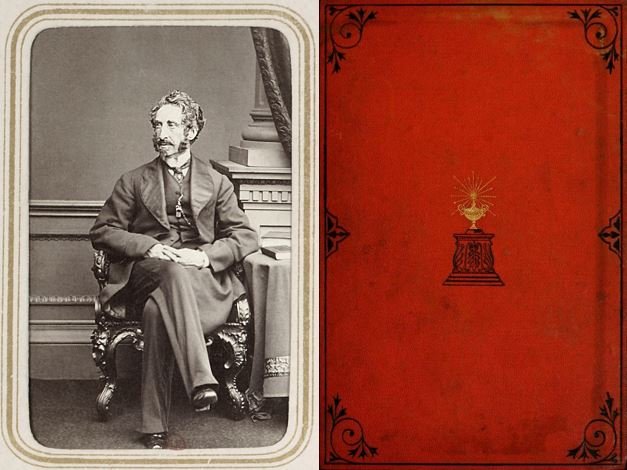
Jessica Albrecht’s chapter focuses on the lives and ideas of Ida Craddock and Frances Swiney, two women involved in eugenic, feminist, and esoteric discussions around the turn of the twentieth century. The chapter explores how their personal experiences and search for answers led them to develop innovative approaches to sexual education, spirituality, and social reform. The two women were quite different. Swiney, a Theosophist and mother of six, stayed within the bounds of British respectability, and her ideas on eugenics and feminism were at least tolerated. The American Craddock never married (though she once claimed to be married to a ghost), was repeatedly arrested for her “scandalous” writings on sex, and ultimately took her own life. Yet Albrecht emphasizes that both women had lifelong involvement with Theosophy and esotericism and actively created new perspectives rather than simply blending existing ideas. Their teachings were similar and reflected their individual efforts to address the social and spiritual issues of their time at the intersection of feminism and esotericism.
Theories about Qi, prana, Kundalini, astral currents, Gaia’s vitality, and their many hybrid forms are often dismissed in mainstream discussions as irrational, unscientific, or even “cultic.” This negative view is not new; it reflects a long history of labeling alternative spiritualities as problematic and their followers as naïve, deluded, or dangerous. However, the book shows that these concepts are neither marginal nor short-lived. They influence healing practices used by millions, fuel global yoga and meditation movements, contribute to ecological activism, and spark artistic and therapeutic creativity. The way these traditions are often misrepresented says more about society’s tendency to undermine non-institutional forms of spirituality than about their true worth. Subtle-energy traditions persist not because they avoid criticism but because they continue to provide meaning, coherence, and embodied experiences to large communities around the world.
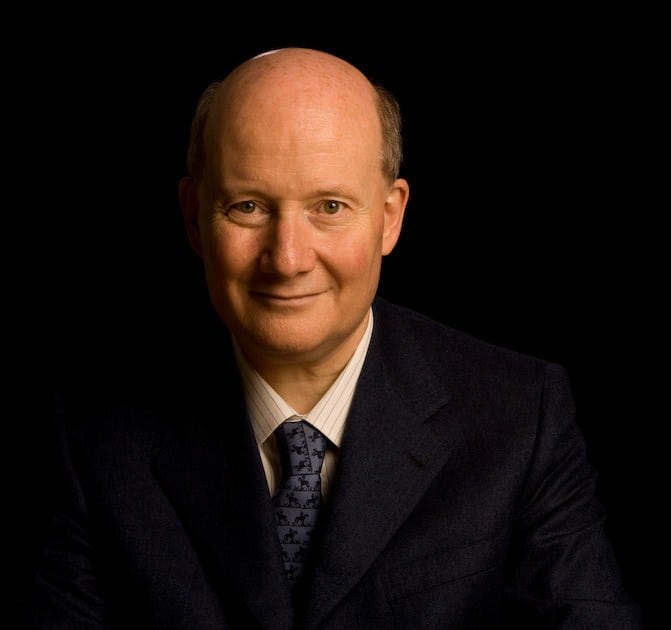
Massimo Introvigne (born June 14, 1955 in Rome) is an Italian sociologist of religions. He is the founder and managing director of the Center for Studies on New Religions (CESNUR), an international network of scholars who study new religious movements. Introvigne is the author of some 70 books and more than 100 articles in the field of sociology of religion. He was the main author of the Enciclopedia delle religioni in Italia (Encyclopedia of Religions in Italy). He is a member of the editorial board for the Interdisciplinary Journal of Research on Religion and of the executive board of University of Pennsylvania Press’ Nova Religio. From January 5 to December 31, 2011, he has served as the “Representative on combating racism, xenophobia and discrimination, with a special focus on discrimination against Christians and members of other religions” of the Organization for Security and Co-operation in Europe (OSCE). From 2012 to 2015 he served as chairperson of the Observatory of Religious Liberty, instituted by the Italian Ministry of Foreign Affairs in order to monitor problems of religious liberty on a worldwide scale.