The court reconstructed the theology and practices of the movement founded by Reverend Moon based on selective quotes and hostile sources.
by Massimo Introvigne
Article 1 of 6.
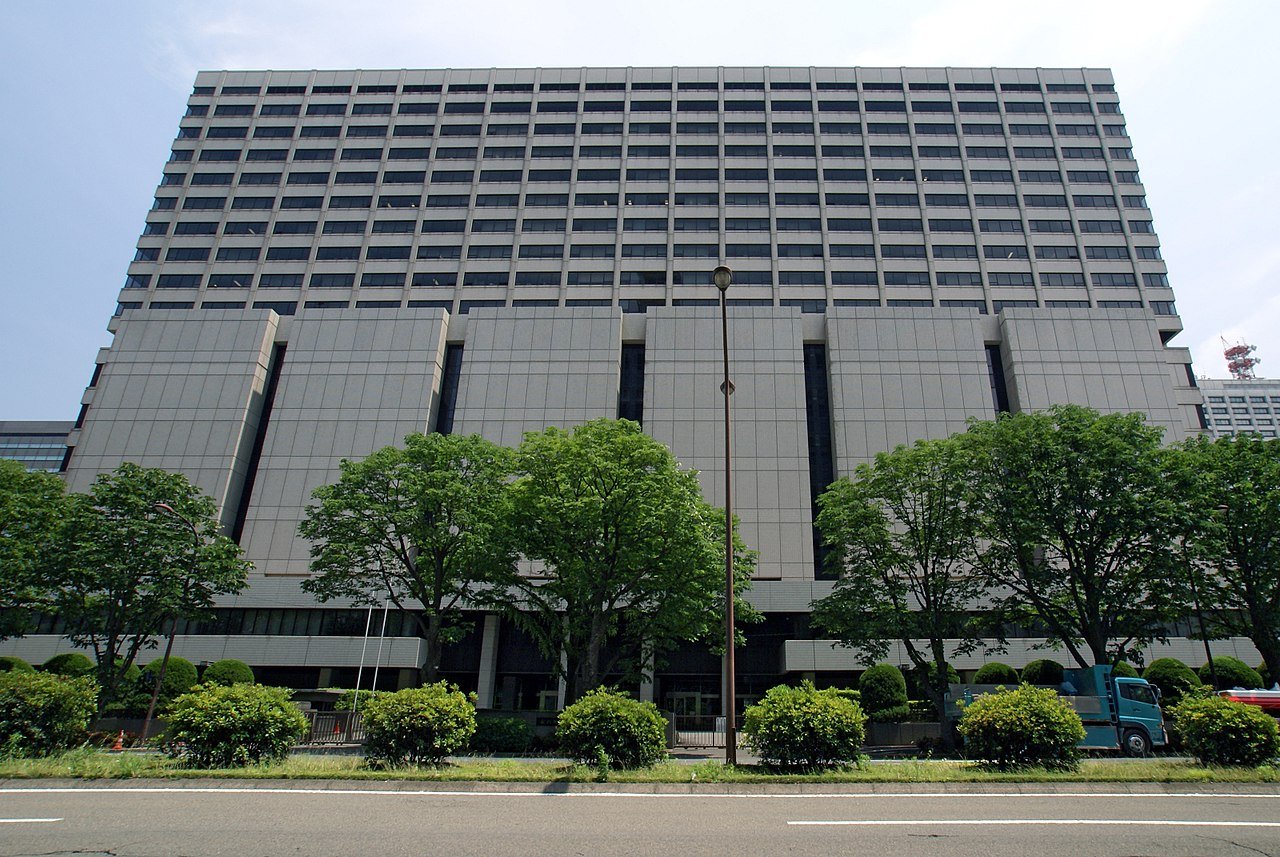
On March 4, the Tokyo High Court announced its decision to uphold the Tokyo District Court’s verdict ordering the dissolution of the Family Federation for World Peace and Unification (formerly known as the Unification Church and still often referred to by that name) as a religious corporation. What follows is an analysis of the voluminous decision. The text is often repetitive, and my analysis proceeds by examining its six main themes rather than following its arguments in the order in which they are presented.
The decision first presents in its own way the nature and aims of the Unification Church. Second, it discusses the methods through which the Church allegedly pursues its aims, i.e., mental manipulation. Third, it examines at length the reported fruits of mental manipulation: “spiritual sales” and excessive donations. Fourth, it denies that the objectionable and “socially unacceptable” collection of donations ceased after the Church’s internal reforms in 2009. Fifth, it answers the objections that the procedure was unfair and violated international law. Sixth, it insists that the dissolution is consistent with the constitutional and international protection of freedom of religion or belief.
The first theme is a somewhat caricatural presentation of the Unification Church. Scholars of religion know that reconstructing the history, theology, and practice of a religious organization is a difficult task, particularly when the group is comparatively new and still evolving. Any such reconstruction is as good as its sources. The High Court’s description of the Church is suspiciously similar to presentations by Japanese anti-cult scholars and to the maliciously selective use of Church texts by the main anti-Unification-Church organization in Japan, the National Network of Lawyers Against Spiritual Sales, which is repeatedly quoted. The Unification Church has been studied by numerous international scholars, including Eileen Barker, George Chryssides, David Bromley, and others. Their works are conveniently ignored.
The decision reports that the late Reverend Sun Myung Moon and his widow, Mother Hak Ja Han, are referred to as “the ‘True Parents,’ on the understanding that they are the Second Advent Messiah (Savior) and the True Parents of humankind.” Their message, we read, is about the “restoration of all things”: “Through the exercise of faith and by offering all things to God, human beings are said to recover the love and heart befitting their original status as children of God, thereby restoring the proper relationship among God, humanity, and all creation.”
These statements, although simplified, are not incorrect. Yet the court quickly shifts from this theological basis to a harsh interpretation: “offering all things to God” means mandating that members give as much money as possible to the Church. It emphasizes quotes where Reverend Moon urges generous giving, including his statement that “money’s ultimate purpose is to serve God for the sake of humanity.” In the court’s view, such excerpts prove a systematic effort to extract donations.
The court then presents the Unification Church doctrine of Japan as the Mother Nation and Korea as the Father Nation, in the position respectively of Eve and Adam. Within Unification theology, several nations, including the United States, play symbolic roles. However, the court oversimplifies this intricate worldview to a single practical claim: that the doctrine serves to pressure Japanese believers into financially supporting the Church’s Korean headquarters.
Another doctrine the High Court focuses on is “ancestral karma.” This is the teaching that some of our ancestors are (in the words of the decision) “suffering in the spirit world or hell,” and their situation negatively affects their descendants. The Unification Church proposes specific “ancestral liberation” rituals to liberate these souls. Donations normally accompany the performance of such rituals.
The impression the decision wants to convey is that the theology of the Unification Church is just a pretext to collect donations in Japan to support Reverend Moon and, after his death, Mother Han in Korea. The text gives more than a nod to a certain anti-Korean animosity present in Japanese society. It reports, from journalistic sources and without examining accuracy or context, alleged remarks made in 2023 by Mother Han in reaction to the persecution of the Church after the assassination of Shinzo Abe, mentioning the war crimes committed by Japan against Korea and other countries, which is certainly a sensitive argument for the Japanese.
This reconstruction is so selective that it skews towards caricature. The Unification Church was founded in Korea, and its headquarters are there. However, the Korean center supports missionary and other activities worldwide. Such centralized systems of collecting and allocating funds are certainly not unique to the Unification Church. A part of the donations collected by the Catholic Church internationally goes to the Vatican and is redistributed from there. The same is true for the Church of Jesus Christ of Latter-day Saints and its headquarters in Salt Lake City, Utah, and of countless other religious organizations. Centralization is not proof of exploitation—it is a practical method for coordinating international work.
The decision implies that the Unification Church milks Japanese believers to enrich the Korean leaders. This malicious reconstruction ignores the fact that the Korean headquarters supports a massive missionary activity in dozens of countries. It also downplays the fact that the Church’s donations are not used solely for missionary activities. They support a large and successful network of charitable institutions and schools serving local communities, with admirable results in Africa, some of them largely funded by Japanese believers, and elsewhere. I visited some of these institutions in Africa, where none of the students are or have become members of the Church. The Unification Church has also supported impressive peace education initiatives. Mother Han is well-known as “the Mother of Peace.”

The High Court decision mentions these activities only in passing, highlighting “political activities aimed at opposing communism,” which, of course, are the bête noire of the left-leaning attorneys of the National Network of Lawyers Against Spiritual Sales and the main reason the Network was established in 1987.
The court also implies that the “ancestral liberation” rituals are a mere money-making enterprise. Here, the decision dangerously encroaches on the sphere of theology and seems to endorse one of the oldest claims of Protestant opponents of the Unification Church, who labeled it “heretical.” The Catholic Church teaches that souls after death can go to Heaven, Hell, or Purgatory. The latter, Purgatory, is the temporary residence of those who are not sentenced to Hell but need a time of purification before they can enter Heaven. This is a time of suffering, which their descendants and friends can alleviate through rituals (“Masses for the dead”) and donations, thereby obtaining “indulgences” for their deceased loved ones and, at the same time, acquiring merits and benefits for themselves.
In the 16th century, this doctrine was sometimes preached mechanically, making the amount of monetary offerings by the descendants correspond to the time after which the souls of their deceased relatives would be allowed to leave Purgatory. This was the casus belli used by Martin Luther to deny not only the doctrine of indulgences but the existence of Purgatory and ultimately the divine authority of the Catholic Church. The Protestant Reformation had started.
While the Catholic Church has repudiated the excesses of its 16th-century preachers, it still maintains its doctrines of Purgatory, indulgences, and Masses for the dead (for which donations are collected). For Protestants, any reference by a non-Catholic religious organization to ancestors who can be liberated from their sufferings through rituals and donations immediately evokes the Catholic “heresy” that ignited Luther’s righteous indignation. In both Korea and Japan, the Unification Church’s “ancestral liberation” looked to Protestants as a return to the Catholic doctrine of indulgences they hated with a vengeance.
These theological debates are well-known and not without interest. They are not, however, the provinces of secular courts of law. Surely, there are illegal ways of collecting donations that courts may object to. What they cannot do is assess the validity of doctrines like karma, the afterlife, or the spiritual state of ancestors.
The Tokyo High Court’s ruling, however, repeatedly crosses that boundary. It treats theological concepts as evidence of wrongdoing, interprets religious terms most cynically, and relies heavily on sources that are openly antagonistic to the movement. The outcome is a skewed depiction influenced by decades of anti-cult activism.
If courts start to treat religious doctrines with suspicion whenever they involve donations, many mainstream traditions could become vulnerable. Catholic Masses for the dead, Buddhist memorial offerings, Shinto rites, and countless other rituals in world religions involve financial contributions. To single out one group’s beliefs as illegitimate simply because they include significant donations opens a door that no constitutional democracy should ever open.
The Tokyo High Court ruling raises deep concerns about the line between legitimate legal oversight and unwarranted intrusion into religious belief. These concerns will not fade with this decision and will influence the future of religious freedom in Japan and internationally for many years to come.

Massimo Introvigne (born June 14, 1955 in Rome) is an Italian sociologist of religions. He is the founder and managing director of the Center for Studies on New Religions (CESNUR), an international network of scholars who study new religious movements. Introvigne is the author of some 70 books and more than 100 articles in the field of sociology of religion. He was the main author of the Enciclopedia delle religioni in Italia (Encyclopedia of Religions in Italy). He is a member of the editorial board for the Interdisciplinary Journal of Research on Religion and of the executive board of University of Pennsylvania Press’ Nova Religio. From January 5 to December 31, 2011, he has served as the “Representative on combating racism, xenophobia and discrimination, with a special focus on discrimination against Christians and members of other religions” of the Organization for Security and Co-operation in Europe (OSCE). From 2012 to 2015 he served as chairperson of the Observatory of Religious Liberty, instituted by the Italian Ministry of Foreign Affairs in order to monitor problems of religious liberty on a worldwide scale.