Scooters, faith, and the smartphone rebellion: how a Guangdong city successfully defied the police.
by Zhao Zhangyong

In China, fireworks serve as a political tool. The government celebrates itself with dazzling displays during Party anniversaries and state ceremonies. However, these same authorities frequently restrict or ban fireworks during religious events or local traditions. This contradiction is widely disliked, and in early March, it sparked an unexpected revolt in Lufeng, Guangdong. Thousands of residents faced off against police, using their most powerful tool: the smartphone. They recorded every confrontation, threatening to reveal the repression both within China and beyond. What began as a ban on firecrackers became a rare instance of collective resistance.
Lufeng’s Youshen, or the Parade of the Gods, is the city’s most significant annual folk celebration. Every Lunar New Year, villagers greet visiting deities with heaps of firecrackers and fireworks. The streets fill with smoke, noise, and a sense of communal spirit. Locals describe this ritual as a “battlefield” of blessings, offering prayers for a life that thrives and is prosperous. In 2026, however, authorities imposed a sweeping ban on firecrackers during the festival. They ignored strong opposition from residents who viewed the ban as an attack on their identity and a clear example of the state’s selective tolerance: fireworks for the Party, silence for the gods. Fireworks are the very center of the Youshen festival: no fireworks, no festival.
The first spark ignited on March 5. Young people, refusing to accept the ban, rode through the city on electric scooters, launching fireworks in open defiance. Several were detained, but the arrests only fueled the anger. Videos of the detentions spread quickly, delivering a clear message: if authorities used force, the entire country would see it.

On March 6, the night before the festival’s grand finale, the government sent hundreds of police officers to the city center to try to stop further resistance. Instead, even more young people flocked to Donghai Subdistrict, home to the City God Temple.
They carried fireworks in backpacks and baskets, weaving through the streets on scooters.

Some followed police cars, igniting firecrackers behind them as a challenge. Police made additional arrests, but crowds responded by blocking roads, building barricades, and surrounding police vehicles to prevent officers from taking detainees away.
Shortly after midnight on March 7, tensions peaked. When police tried to grab a man who was rallying the crowd, residents pushed back. In other areas, officers seeking to detain citizens found themselves surrounded by hundreds of people. Overwhelmed and outnumbered, the police retreated from the city center.

What followed was a spontaneous explosion throughout the city. Residents unveiled their hidden fireworks stashes. For hours, the sky lit up with color and noise. Firecrackers echoed from every alley and rooftop. Lufeng transformed into a single, continuous wave of defiance.
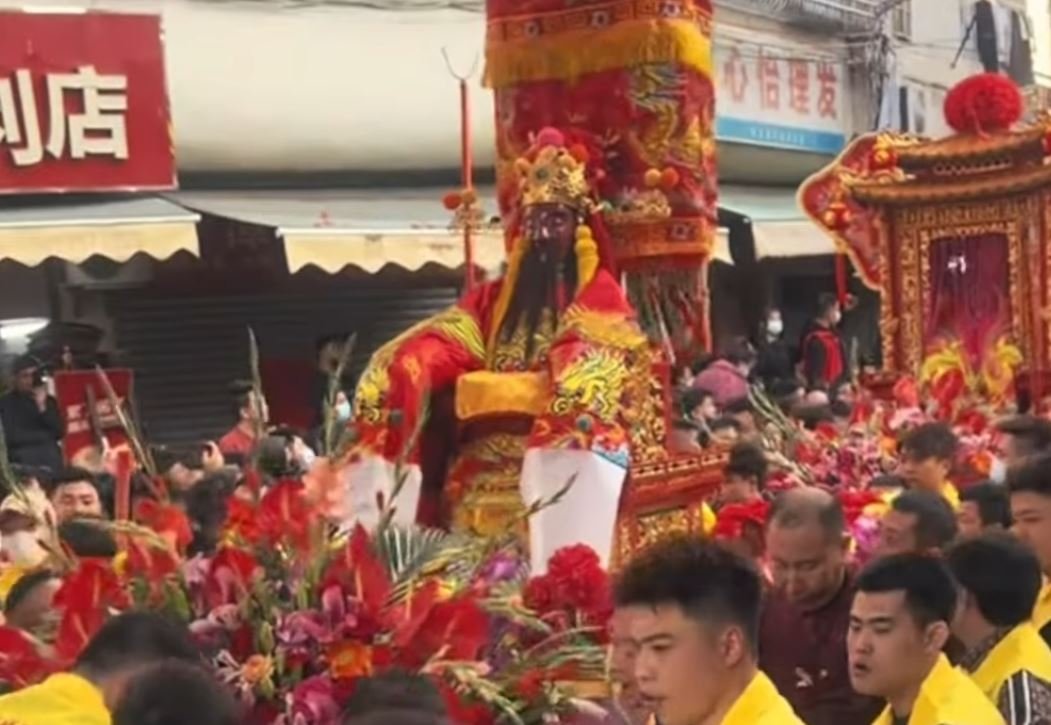
The fireworks continued until 8:00 a.m., when the festival’s peak arrived: the City God was carried out of the Chenghuang Temple. He began his solemn procession through the streets, accompanied by the very thunderous soundtrack the authorities had tried to ban.
Activists or political groups did not lead the Lufeng uprising. It was an unplanned defense of tradition, dignity, and local self-rule. Its most powerful tool was the smartphone.
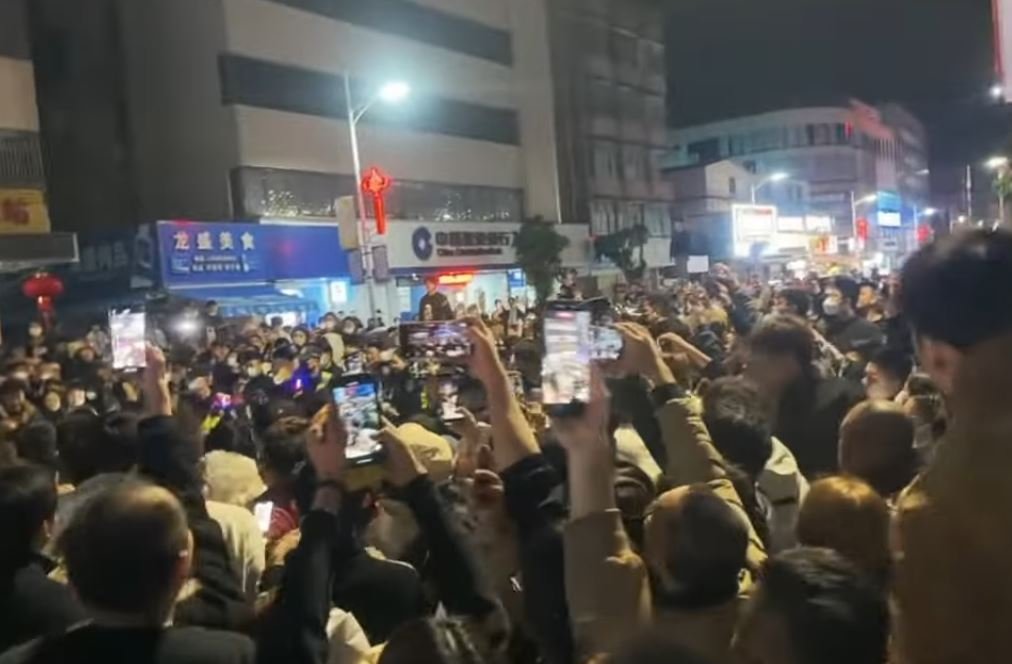
Residents recorded every arrest, every clash, every retreat. The threat of exposure became a shield, and the regime’s attempt to silence a ritual ultimately intensified it.
Lufeng’s rebellion raises a broader question: was this an isolated spark, or the first sign that China’s strict control over local traditions is reaching its limits?


Uses a pseudonym for security reasons.