The American anti-cultist’s ideology is just the old, discredited “brainwashing” ideology under a new name.
by Massimo Introvigne
Article 1 of 4
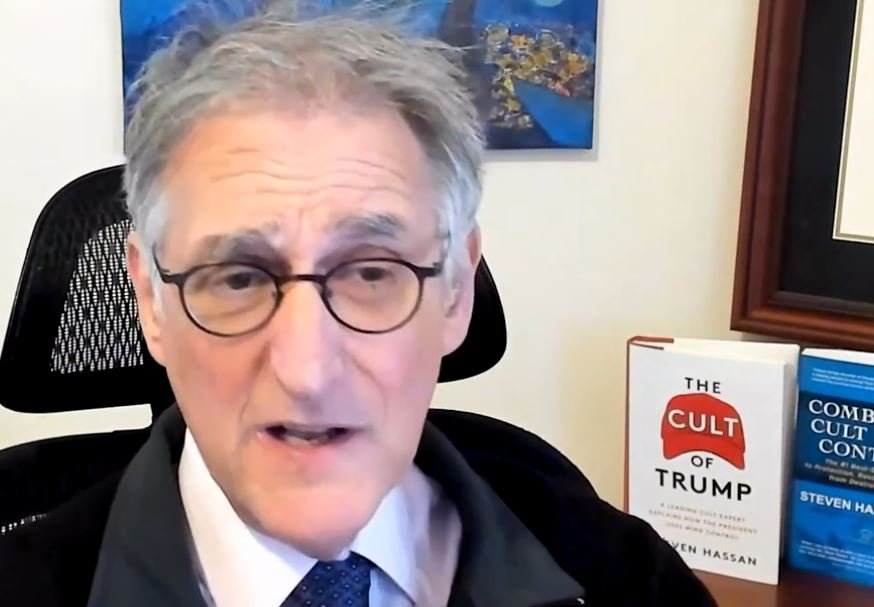
Media outlets often consult Steven Hassan, a former Unification Church member who became a deprogrammer and now claims expertise in “mind control.” His public profile centers on the “BITE model”—Behavior, Information, Thought, and Emotional control. He offers this model as a tool for identifying “destructive cults” by measuring the degree of control over members. Each category lists indicators: discouraging individualism, using specialized language, instilling fear, manipulating emotions, or demanding unquestioning acceptance of doctrine. But these indicators are so broad they could fit many groups—religious, political, or corporate—depending on who’s judging. The model does not operate as a scientific tool, but as a device to label disliked groups as “cults” by pointing to behaviors found in many mainline organizations.
Hassan’s 2020 dissertation sought to prove the BITE model. He administered a SurveyMonkey questionnaire to self-selected former members of groups they labeled as “high-control.” These individuals had already left their groups and believed themselves victims of undue influence. Because the study relied on a self-selected sample and lacked a valid comparison group, it was subject to confirmation bias. Participants who believed they were harmed by a “cult” predictably affirmed that the BITE model reflected their experience. Thus, the conclusion preceded the analysis. As one critic noted, it was like asking a barber whether people needed more haircuts. The dissertation did not validate the BITE model; it merely found support among those predisposed to favor it.
To critically assess Hassan’s framework, we should situate it within scholarship on new religious movements. In its standard history of the academic study of new religious movements, W. Michael Ashcraft identifies four core disciplinary assumptions that defined the subfield. First, there is no substantive distinction between “religions” and “cults.” Second, “cult” is a stigmatizing label used against minority groups and should preferably be avoided. Third, while religious groups may commit crimes, such acts are not more prevalent in newer groups than in mainstream religions. Fourth, “brainwashing” theories lack empirical support and should be considered pseudo-scientific. Ashcraft observes that “cult” and “brainwashing” theories are outside the academic majority, forming a distinct enclave known as “cultic studies.” Its supporters posit a distinction between legitimate religions and “cults,” arguing that “cults” employ psychological manipulation, or “brainwashing.” Ashcraft notes that “cultic studies is not mainstream” but a project of a small cadre of activists, not endorsed by most academics.
The ideology behind “cultic studies” has been analyzed using the sociological concept of moral panic. In the 1970s, scholars used this term to describe situations in which a social problem is exaggerated far beyond its actual prevalence. Moral panics involve disproportionate reactions in media and politics, portray old issues as new or rapidly increasing, and spread “folk statistics” that lack empirical support. Philip Jenkins, a leading scholar in the field, explains that a moral panic does not result from logical assessment but from “ill-defined fears” that focus on a single incident or stereotype, creating a symbol for debate. Jenkins highlights the role of “moral entrepreneurs,” who have an interest in sustaining panic. In the case of “cults,” these entrepreneurs include anti-cult activists such as Hassan, who promote what the U.S. Commission on International Religious Freedom (USCIRF) calls “the anti-cult ideology,” which they identify as a major threat to religious liberty.
Anti-cult ideology rests on two main claims. It asserts that certain minorities are not authentic religions but rather “cults,” a term intended to separate them from recognized faiths. This approach is longstanding. In 1877, anti-Mormon writer John Hanson Beadle contended that Mormonism was “the sole apparent exception to the American rule of universal toleration.” He argued, “something peculiar to Mormonism takes it out of the sphere of religion.” Beadle presented readers with a choice: either acknowledge that Americans were not genuinely tolerant or accept that Mormonism was not a religion. In societies that value religious liberty, discrimination can be justified only by denying the religious status of the group in question.
The second principle of anti-cult ideology asserts that cults employ “brainwashing,” “mind control,” or “mental manipulation.” This charge also has a long history. In the nineteenth century, anti-Mormon writers such as Maria Ward attributed Mormon conversions to “a mystical, magical influence” that deprived followers of agency, linking it to “Mesmerism.” Earlier, Romans characterized Christians as bewitched; medieval Chinese officials accused unapproved religions of employing black magic; and European Christians subsequently leveled similar accusations against so-called “heretical” movements. After the Enlightenment, the language of magic was replaced by hypnosis, but the central premises persisted: individuals could not willingly choose a religion perceived as excessively strange or threatening.
In his 2020 criticism of the anti-cult ideology, the USCIRF described it as being based on “pseudoscientific concepts like ‘brainwashing’ and ‘mind control.’” This matches the views of nearly all scholars of new religious movements. Edward Hunter, a CIA-connected journalist, invented the word “brainwashing” in 1950, claiming it translated a Chinese term. In reality, the CIA took the idea from George Orwell’s novel “1984,” where Big Brother “washes clean” citizens’ minds. As the late psychologist Dick Anthony demonstrated, this “CIA brainwashing theory” is propaganda, not science.
Academic studies of Chinese and North Korean “thought reform” by Robert Jay Lifton and Edgar Schein employed distinct approaches. Lifton’s “Thought Reform and the Psychology of Totalism” (1961) examined forty individuals subjected to Communist indoctrination. All signed pro-Communist statements, but only two retained a favorable attitude after release; most complied out of fear. Lifton identified eight themes in “totalistic” environments, asserting that “milieu control”—physical isolation and geographic separation—was the fundamental feature of thought reform. Although Lifton was controversial for his psychoanalytical approach and was in sympathy with the anti-cult movement, he had to admit that religious groups seldom create such conditions.

Schein rejected the mystique of “brainwashing,” arguing that Communist persuasion techniques were not fundamentally distinct from those in Western institutions. He noted, “Chinese Communist coercive persuasion is not too different a process in its basic structure from coercive persuasion in institutions in our own society.” Schein warned that condemning Communist methods while admiring similar tactics in religious orders, prisons, or corporations reflects a judgment of ideas, not methods. In conclusion, he observed “striking similarities in the manner in which the influence occurs” and cautioned against allowing “our moral and political sentiments” to distort scientific understanding.
British psychiatrist William Sargant’s 1957 book “The Battle for the Mind” argued that all religions convert through “brainwashing,” including Catholicism and Protestantism. Margaret Thaler Singer later adapted his ideas into the anti-cult ideology of the 1960s and 1970s, claiming that only those she labeled “cults” used “brainwashing.” Her theories gained traction among parents whose children joined new religious movements but were later discredited by scholars and rejected by courts.

The decisive legal confrontation occurred in 1990 in the U.S. District Court for the Northern District of California in the Fishman case. Judge D. Lowell Jensen reviewed hundreds of academic documents. He concluded that “brainwashing” and “mind control” did not represent meaningful scientific concepts. Singer’s testimony was excluded. The court ruled that “Theories regarding the coercive persuasion practiced by religious cults are not sufficiently established to be admitted as evidence in federal courts of law.” The European Court of Human Rights reached similar conclusions in 2010, noting that “there is no generally accepted and scientific definition of what constitutes ‘mind control.’” It also emphasized that many behaviors cited as evidence of coercion are “a common feature of many religions.” The Italian Constitutional Court had already repealed the Fascist-era crime of “plagio” (similar to “brainwashing”) in 1981 as incompatible with both mainline science and religious liberty.
Hassan argues that “brainwashing” survives in American case law through discussions of coercive control in abusive families or human trafficking. But these contexts are entirely different. Criminal organizations that force individuals into prostitution cannot be compared to religious movements whose members join and leave voluntarily. Hassan’s BITE model is simply another version of Singer’s theory, which Judge Jensen found derived not from Lifton or Schein but from the CIA propaganda model. As Jensen warned, such models are easily misused to condemn the content of beliefs while pretending to critique methods. Most of the practices Singer and Hassan cite as evidence of “mind control” also occur in mainline religions. The difference lies not in the techniques but in the evaluator’s approval or disapproval of the ideas.

Massimo Introvigne (born June 14, 1955 in Rome) is an Italian sociologist of religions. He is the founder and managing director of the Center for Studies on New Religions (CESNUR), an international network of scholars who study new religious movements. Introvigne is the author of some 70 books and more than 100 articles in the field of sociology of religion. He was the main author of the Enciclopedia delle religioni in Italia (Encyclopedia of Religions in Italy). He is a member of the editorial board for the Interdisciplinary Journal of Research on Religion and of the executive board of University of Pennsylvania Press’ Nova Religio. From January 5 to December 31, 2011, he has served as the “Representative on combating racism, xenophobia and discrimination, with a special focus on discrimination against Christians and members of other religions” of the Organization for Security and Co-operation in Europe (OSCE). From 2012 to 2015 he served as chairperson of the Observatory of Religious Liberty, instituted by the Italian Ministry of Foreign Affairs in order to monitor problems of religious liberty on a worldwide scale.