A Russian spiritual teacher survives persecution, exile, and disinformation—only to be trapped again by a narrative that won’t die.
by Massimo Introvigne
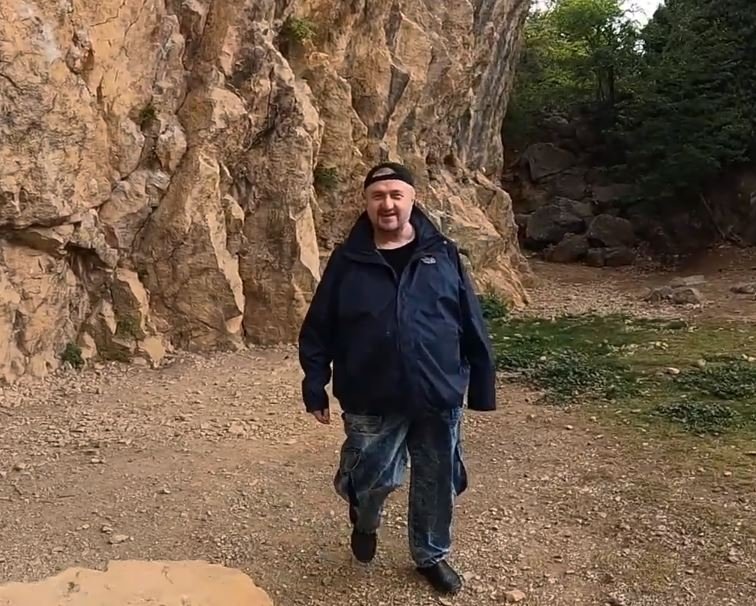
To an outside observer, Argentina’s detention of Russian spiritual teacher Konstantin Rudnev looks like a bureaucratic hallucination where reality bends under the weight of imported prejudice, mistranslated documents, and a state apparatus that mistakes confusion for evidence. The Coordination des associations et des particuliers pour la liberté de conscience (CAP-LC), a United Nations ECOSOC-accredited NGO specialized in religious liberty, has taken the case of Rudnev to the 61st session of the UN Human Rights Council in Geneva.
The written statement was filed on January 18. On January 21, Rudnev was granted house arrest, no doubt also a fruit of international protests. However, the prosecutors have appealed the house arrest decision.
In its written statement CAP‑LC underlines that “the principles of truth, justice, and human dignity apply to spiritual minorities whose members face discrimination, false accusations, and the misuse of state power,” and that these rights are violated not only through violence but also “when administrative or judicial systems are used against individuals because of their beliefs or their reputation abroad.” Rudnev’s ordeal in Argentina is a perfect illustration of this quieter, procedural cruelty.
In Russia, Rudnev was known for attracting students to his esoteric teachings, a fact that made him a target for the Russian Orthodox Church and its long-standing campaign—documented by scholars and by the U.S. Commission on International Religious Freedom—to brand independent spiritual movements as “cults.” CAP‑LC notes that “international academic research and the United States Commission on International Religious Freedom (USCIRF) report from 2020 show that the Russian Orthodox Church has long worked with state authorities to label independent spiritual movements as ‘cults’ and suppress them as competitors.” Add to this Rudnev’s explicit criticism of the Putin regime, and the smear machine went into overdrive.
Anti-cultist Alexander Dvorkin, identified in the USCIRF report as an activist who instigates legal actions through false claims, helped fuel a media campaign that culminated in Rudnev’s 2010 arrest and 2013 conviction on charges that independent scholars essentially consider fabricated. He served all eleven years under harsh conditions and, upon release in 2021, sought peace—first in Montenegro, then in Argentina, where he lived quietly, teaching no one, forming no group, and spending his days walking and meditating.
CAP-LC explains that his arrest in Argentina did not stem from anything he did. It began with a tragic misunderstanding involving a young Russian woman, E., who had fled an abusive relationship and traveled to Argentina to give birth safely. Due to language barriers, improvised translations, and cultural misunderstandings, hospital staff misinterpreted her reliance on friends as “submission,” assumed she was a minor despite her passport, and even viewed her giving a nurse a white rose as a coded plea for help. CAP‑LC recounts that “these assumptions were treated as facts, leading to police involvement.” E. was separated from her newborn, and investigators constructed a theory of a human‑trafficking network allegedly linked to Rudnev—a man she had never met.
Download the written statement (date of distribution subject to change).
Argentina’s overly broad anti‑trafficking law provided the perfect frame for a narrative that grew more absurd with each retelling. A nurse’s insistence on adding a father’s surname to the birth certificate was later recast as attempted forgery. When E. asked staff to correct the grammatical gender of her child’s surname—a regular feature of Russian naming conventions—the doctor tore up the form, and prosecutors later accused one of her friends of destroying it. The hospital threatened E. repeatedly, telling her she could not return home without providing a document about the father, a request she later learned was illegitimate.
The only indirect link to Rudnev, CAP-LC notes, came from E.’s landlady, who knew him and was helping him obtain a residence permit. A copy of his passport was in E.’s home, and in desperation, she gave it to the hospital as the child’s father’s passport. CAP‑LC notes that this was the sole connection between them, and that E. “claims she never met Rudnev in person and was certainly not part of any spiritual school or ‘cult.’” But once his name appeared in the file, it triggered speculation that he was rebuilding his “cult” in Argentina.
A judge dismissed the case for lack of evidence, but instead of closing the investigation, authorities expanded it. In March 2025, police arrested fifteen more Russians at the Bariloche airport—mostly women tourists not connected to Rudnev. Media headlines dutifully echoed Russian disinformation about a “Russian cult.”
The detained women described being seized without warrants, yelled at, physically abused, denied interpreters, and pressured to “confirm” they were trafficking victims. CAP‑LC reports that “some were asked to sign blank documents,” and one was falsely accused of carrying cocaine pills that turned out to be sleep aids. Many endured “cold cells without mattresses, inadequate food and water, lack of hygiene and medical care, humiliating searches, and treatment they felt threatened their physical or sexual safety.” All those detained were eventually released—except one, Rudnev.
Konstantin Rudnev was arrested at the airport without a warrant, without charges being read, and without access to an interpreter or legal help. CAP‑LC writes that he was “strip-searched, placed in solitary confinement, and given food he could not eat. For ten days, he survived on bread and tap water.” Hearings ran from morning until after midnight in a language he did not understand. He lost around 30 kilograms in nine months. Prison doctors misinterpreted his high blood pressure and forced him to take three strong antihypertensive medications daily, causing fainting spells. When he collapsed, the staff dismissed it. He was denied pain medication, antibiotics, and food appropriate for his condition. Sanitary conditions were appalling: prisoners shared a single cup for drinking. Eventually, he refused all treatment, signing daily forms that guards misinterpreted as a form of rebellion. Through all of this, he remained calm, polite, and respectful, spending his days in prayer and meditation.
To this day, neither he nor his wife has been clearly informed of the specific facts behind the accusations. CAP‑LC notes that “the supposed primary victim denies knowing him,” the detained women deny any connection, and every theory—trafficking, drugs, birth‑certificate forgery—has collapsed. Prosecutors admit they lack concrete evidence but insist the case is “complex” due to its international aspects. They requested, and received, a full year of pretrial detention, until March 2026, to examine seized devices, many of which belonged to unrelated tourists. Much of the material is in Russian and is being translated with automated tools, a legally invalid practice. In reality, CAP‑LC concludes, “Rudnev is imprisoned not for anything he did in Argentina but because of a narrative imported from Russia.”
At the time of CAP-LC’s statement, Rudnev was sitting in a cell in Rawson, his health declining, waiting for a process that showed no sign of beginning. CAP‑LC warns that “continued detention could have irreversible consequences.” The legal scandal is becoming a humanitarian emergency. CAP‑LC’s final appeal is dramatic: “CAP-LC urges Argentina to release Konstantin Rudnev immediately… as his life and health are at risk.”
Whatever one thinks of Rudnev’s teachings, no human being should be imprisoned based on foreign propaganda, bureaucratic panic, and mistranslated documents. While a first result has been achieved with the house arrest decision of January 21, the prosecutors’ stubbornness poses a real risk of new imprisonment.
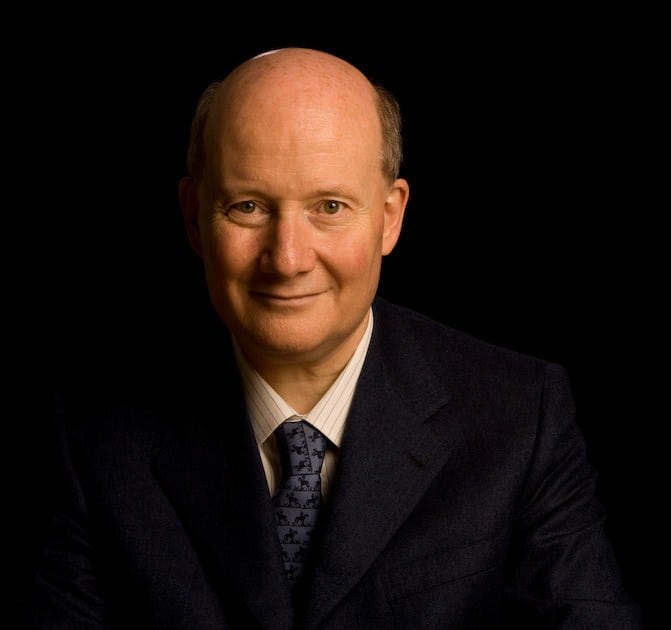
Massimo Introvigne (born June 14, 1955 in Rome) is an Italian sociologist of religions. He is the founder and managing director of the Center for Studies on New Religions (CESNUR), an international network of scholars who study new religious movements. Introvigne is the author of some 70 books and more than 100 articles in the field of sociology of religion. He was the main author of the Enciclopedia delle religioni in Italia (Encyclopedia of Religions in Italy). He is a member of the editorial board for the Interdisciplinary Journal of Research on Religion and of the executive board of University of Pennsylvania Press’ Nova Religio. From January 5 to December 31, 2011, he has served as the “Representative on combating racism, xenophobia and discrimination, with a special focus on discrimination against Christians and members of other religions” of the Organization for Security and Co-operation in Europe (OSCE). From 2012 to 2015 he served as chairperson of the Observatory of Religious Liberty, instituted by the Italian Ministry of Foreign Affairs in order to monitor problems of religious liberty on a worldwide scale.