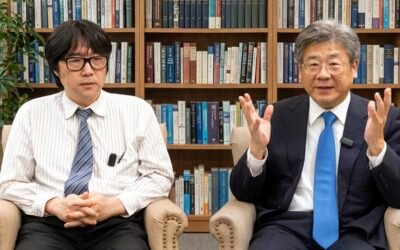
Fukuda proves that the first-degree dissolution decision was based on faulty and sometimes fraudulent “evidence.”
a review by Bitter Winter
Article 4 of 5. Read article 1, article 2, article 3, and article 4.

Continuing the review of Masumi Fukuda’s “Sacrifice to the Nation,” we now reach the final part of her argument, in which local hostility, activist networks, bureaucratic misconduct, and historical memory converge in a disturbing picture of how a modern democracy can slide into punitive exceptionalism. These last chapters are the peak of her case. Fukuda writes with urgent clarity, aware that the events she describes are signs of a more profound present crisis. Her narrative becomes broader, more historical, and increasingly accusatory as she explores how fear can be created in neighborhoods, recorded in government documents, and eventually endorsed by the courts.
In chapter 13, she discusses the 1996 Seijo Church relocation controversy. At first, it seems like a local issue—a religious group moving into a quiet residential area. Yet, it quickly shows how deliberate fear can turn regular citizens into a hostile mob. When the Unification Church moved its local congregation to Seijo, the response was immediate and intense. Residents filed complaints and eventually organized into a form of vigilante group. Fukuda paints vivid scenes: forty to fifty residents gathering at every service, forming a human barrier at the church entrance, blocking members from entering, pushing them as they tried to get through, following them to the station, and shouting insults with a fervor that hints at something deeper than simple neighborhood anxiety.
Fukuda points to the influence of one resident—a lawyer connected to Masaki Kito and the National Network of Lawyers Against Spiritual Sales—as a key factor. This person appears to have filled the community with rumors and worst-case scenarios. What began as unease quickly turned into a certainty: the church was dangerous, manipulative, and predatory. Once this narrative took root, it became self-reinforcing. Activists like Hiroshi Yamaguchi, Yoshifu Arita, and Takashi Miyamura soon arrived to hold a public “information meeting,” which Fukuda describes as more of a rally to incite anger than a genuine information session. Former members who had been abducted and confined by deprogrammers were presented as living proof, adding emotional weight to a narrative that had already been set.
The legal outcome—a settlement in favor of the church—might appear to provide vindication, but Fukuda highlights how empty that victory was. The landlord, whether under pressure or simply fearful, refused to renew the lease. The church ultimately withdrew from Seijo regardless. The message was disturbing: even if the law recognizes your rights, social pressure can still force you out. Fukuda concludes that the real instigators of the incident were not the believers but the lawyers and deprogrammers who incited the residents into conflict. She argues that the Seijo incident is a small-scale version of a larger trend, where fear is not natural—it is manufactured.
In chapter 14, she shifts from the streets to the bureaucracy, focusing on the Ministry of Education, Culture, Sports, Science and Technology (MEXT) and the victim statements that underpin the dissolution request. If the Seijo chapter shows how fear can be socially constructed, this chapter reveals how it can be created administratively. Fukuda shares a series of discoveries that together amount to a quiet scandal. An investigation by the church-connected daily newspaper “Sekai Nippo” found several cases in which individuals listed as “victims” denied writing the statements attributed to them or challenged their truthfulness. Some claimed that lawyers had drafted the documents and presented them as done deals. Others said the stories had been exaggerated or completely fabricated. Still others learned that grievances from different religious contexts had been mixed into the Unification Church case file, as if “religious harm” were the same across traditions.

The MEXT refused to release the documents, citing the trial’s non-contentious nature, but did not deny the allegations. Fukuda reconstructs the process through testimony from two former members, A and B. They explained how their statements were first written by lawyers from the anti-Unification-Church network, then revised by ministry officials. Each revision became more dramatic and accusatory, aligning more closely with a predetermined narrative. By the time the statements were finalized, they were filled with standard phrases—“ancestral karma,” “hell,” “spiritual fear”—showing signs of bureaucratic templates rather than personal testimony.
Fukuda’s critique insists that, if the state can fabricate or enhance evidence to dissolve a religious organization, the implications stretch far beyond the Unification Church. It threatens the integrity of the legal system itself. She warns that a dissolution order based on such flawed evidence would violate believers’ rights and undermine public trust in the judiciary. The real danger, she suggests, is not that one religious group might be targeted unfairly, but that the state may decide it can target any group without consequence.
In chapter 15, Fukuda broadens her perspective further, placing the dissolution request within a historical pattern of state intervention in religious life. She argues that the current case resembles a “trial based on national policy,” a term that carries significant historical weight in Japan. To illustrate this, she references the prewar persecution of Oomoto, a popular Shinto-based movement. In the first trial, Oomoto leaders were convicted under the Peace Preservation Law, and the co-founder Onisaburō Deguchi received a life sentence. However, during the appeals trial overseen by Judge Tsunao Takano, it became clear that official documents had been altered. The defendants were acquitted, making the case a symbol of how unchecked state power can distort justice and how judicial conscience can redress those wrongs.
Fukuda sees an alarming similarity between the Tokyo District Court’s March 25, 2025, decision ordering the dissolution of the Family Federation. She notes that the ruling barely mentioned the allegations of fabricated statements. It overlooked the voices of current members, who would suffer the consequences. Instead, it relied heavily on incidents from decades ago, treating them as timeless proof of institutional guilt. Human rights implications—the disruption of families, the stigma on believers, the chilling effect on religious freedom—received minimal attention.
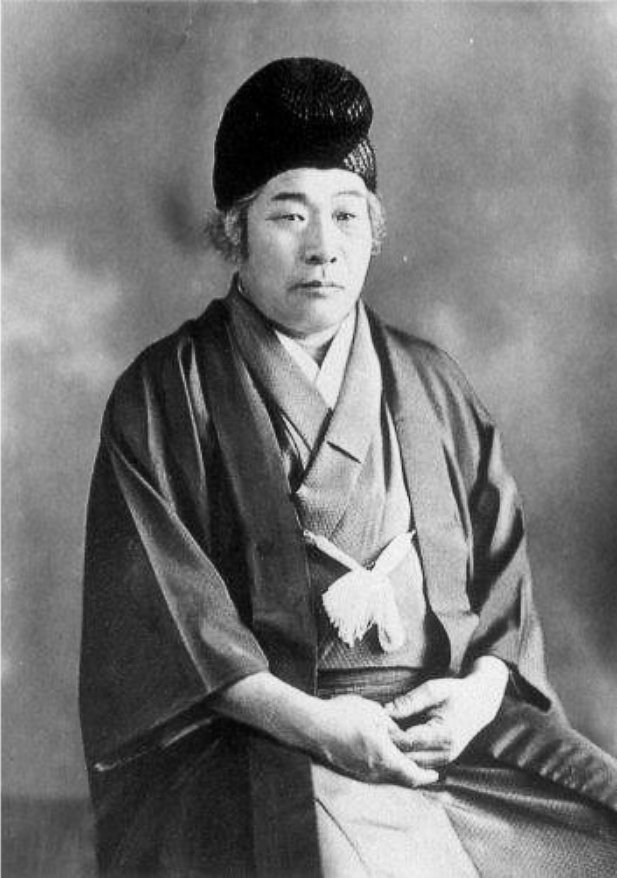
Her closing appeal is both rhetorical and historical. She calls for a modern-day Judge Takano, someone in the judiciary ready to challenge the state’s narrative and restore integrity to the process. “Come on, Judge Takano Tsunao of the Reiwa era,” she writes, a line that feels like both a challenge and a lament, suggesting that she fears such figures may no longer exist.
Taken as a whole, “Sacrifice to the Nation” is more than just a collection of separate incidents or a defense of one religious group. Fukuda has crafted a book that questions the prevailing stories of our time. She refuses to accept the black-and-white representations that have influenced public discussions about the Unification Church since 2022. What strengthens this work, in addition to the extent of her evidence, is the moral clarity with which she examines the very systems of accusation. She looks at neighborhood gossip, activist networks, bureaucratic shortcuts, and judicial oversights. By doing this, she reveals a troubling trend that goes beyond any particular group: a readiness, in modern Japan, to disregard fair procedures when a minority community is regarded as politically troublesome. Her argument is uncomfortable, and she makes no pretense that it should be.
The strength of this book lies in its refusal to turn away. In post-Abe-assassination Japan, public sentiment has hardened, and political motives encourage harsh actions. Fukuda asks who gains from the story of victimhood and who gets silenced by it. She pushes readers to consider that the state, the media, and activist lawyers might have worked together—whether intentionally or not—to spark a moral panic that now risks altering the legal framework for religious freedom. By drawing parallels to past instances of government overreach, she reminds her audience that Japan has faced similar situations before and that the loss of rights rarely announces itself loudly. It starts with exceptions, the quiet acceptance of extraordinary actions, and the idea that some groups do not deserve the same protection as others.
In the current debate in Japan, where the dissolution of the Family Federation has become a symbolic fight over broader concerns about politics, money, and social unity, Fukuda’s book serves as a counterbalance. It is a carefully argued warning against the allure of agreement. She does not ask readers to praise the Unification Church; instead, she urges them to uphold principles that prevent any government from dissolving a religious organization based on rumors, retroactive moral judgments, or false testimony. For this reason, “Sacrifice to the Nation” is a timely and essential book. It adds complexity to a conversation oversimplified by outrage and challenges a society that values social harmony to examine the illiberal tendencies hidden beneath its surface. Regardless of whether one agrees with her conclusions, Fukuda has compelled the debate to confront its own assumptions—and that, in today’s climate, shows civic courage.