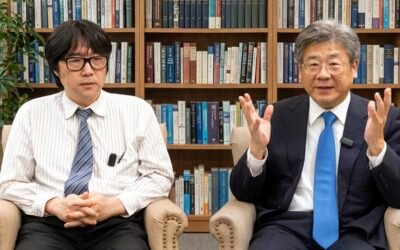
Award-winning journalist Masumi Fukuda has begun changing how the Japanese view the Unification Church following the assassination of Shinzo Abe.
a review by Bitter Winter
Article 1 of 5.

“Sacrifice to the Nation,” the new book by award-winning journalist Masumi Fukuda (who also has a degree in sociology), has created a significant impact in the publishing world. Released by the respected Tokyo publisher Asuka Shinsha, it is already in its third printing, marking a true national success. More importantly, it has begun to change how Japanese readers view both the Yamagami trial and the long-criticized Unification Church, now officially known as the Family Federation for World Peace and Unification (FFWPU).
Fukuda delivers a detailed examination of national fear, showing how institutions that should have acted as safeguards instead fueled the panic. She begins her book with a shocking scene: the Tokyo District Court’s dissolution order against the Family Federation issued in March 2025. She sees this moment as the peak of what she openly calls state persecution of religion, coordinated by the judiciary, government, and media.
Fukuda reminds readers that dissolving a religious corporation is not a routine bureaucratic action. It impacts the fundamental promise of a democratic society: freedom of religion. Yet, she contends that the Tokyo court’s order was not a careful, evidence-based decision. Instead, she describes a ruling steeped in politics, based on assumptions rather than facts, and amplified through repetition until speculation appeared as “truth.”
According to Fukuda, the entire process was driven by a “predetermined conclusion.” This conclusion emerged on July 8, 2022, when former Prime Minister Shinzo Abe was assassinated by Tetsuya Yamagami, who blamed the Family Federation for his family’s troubles. From that point, she notes, state power began to move in eerie unison towards the very outcome Yamagami had hoped for.
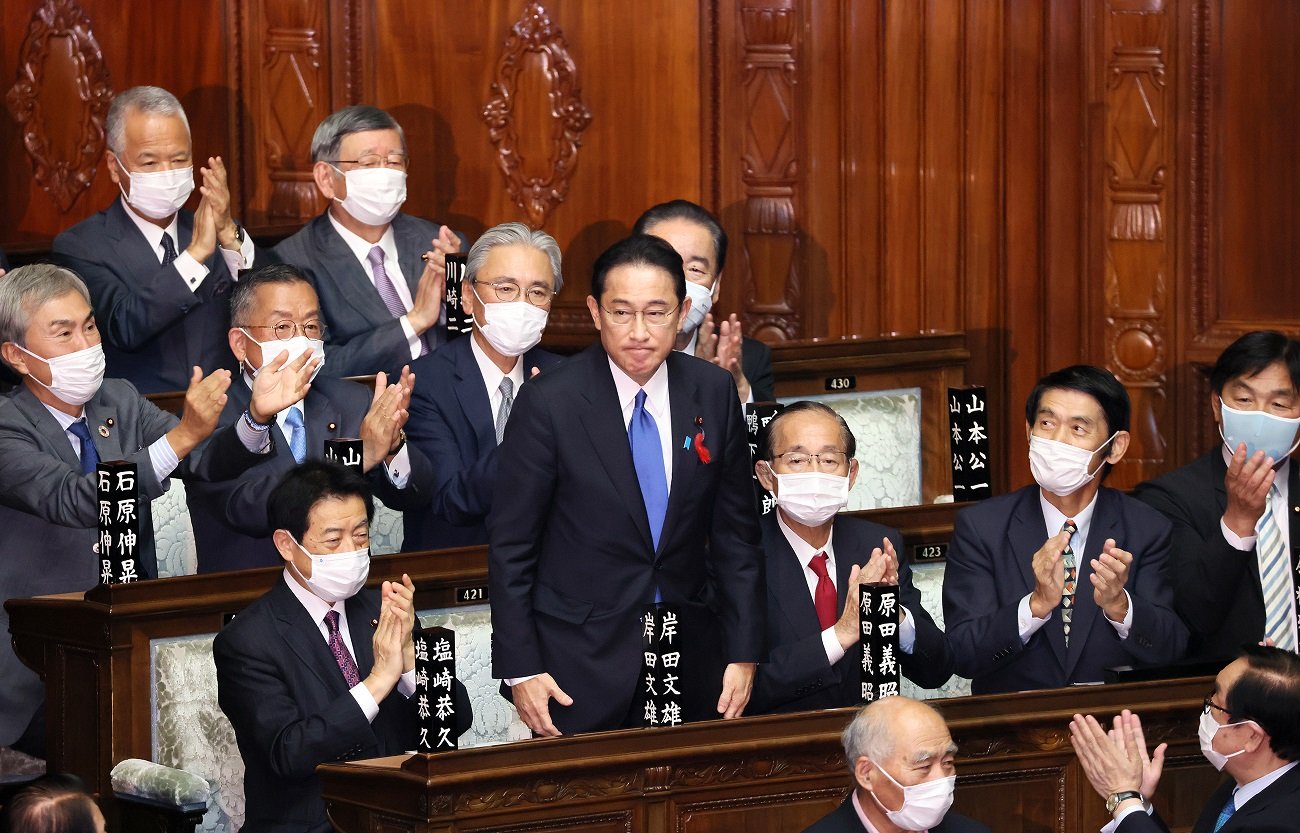
The Kishida administration announced it would cut the Liberal Democratic Party’s historical ties with the Family Federation. Bureaucrats swiftly reinterpreted the Religious Corporations Act. The Religious Corporations Council provided a one-sided recommendation. The Ministry of Education, Culture, Sports, Science, and Technology promptly requested a dissolution order. Finally, the Tokyo District Court completed the process.
Fukuda maintains that each step pointed in the same direction: dissolution first, justification later. That direction coincided perfectly with the assassin’s stated goal. Japan, she writes with chilling clarity, fulfilled a terrorist’s wish.
Fukuda is neither a believer nor an instinctive defender of the Family Federation. She describes herself as a secular person who once shared the standard negative view of the former Unification Church. Her interest in this topic arose not from sympathy but from a feeling of discomfort—a sense that something was wrong in the unfolding public discourse.
In a functioning democracy, she observes, different viewpoints should clash, contradict, and coexist. But in this case, only one voice was allowed: accusation. Any attempt to provide nuance, context, or defense was seen as contamination.
After Abe’s assassination, Japan’s media environment turned into a closed loop, promoting only criticism of the Family Federation while disregarding dissenting or neutral views. Fukuda characterizes the resulting atmosphere as a witch hunt.
As she investigated further, she uncovered what she calls a series of “inconvenient truths”—facts that had been visible but largely ignored. Central among these was the long, harsh history of forced de-conversion, a practice that began in the 1960s and involved the abduction and confinement of over 4,000 believers, often for months or years, until they renounced their faith. Fukuda does not hold back: she labels this “the worst human rights violation of the postwar era” in Japan.
She also raises critical questions about the ideological and political motivations of the National Network of Lawyers Against Spiritual Sales, a group that has long shaped public opinion about the Family Federation. Their influence, she suggests, goes far deeper—and receives far less scrutiny—than most Japanese realize.
For Fukuda, the core of the Family Federation controversy lies not in its beliefs or fundraising methods but in two connected realities: the systematic abduction and confinement of its members and the equally systematic manipulation of public opinion. Any discussion that leaves these out, she argues, isn’t a discussion at all.
She urges readers to set aside inherited narratives and face the facts as they are, not as they have been presented.
The first chapter begins with the stark, almost unbelievable stories of Toru Goto and Hirohisa Koide. Their experiences symbolize Japan’s decades-long campaign of forced de-conversion. Goto’s ordeal is the most harrowing: from 1995 to 2008—12 years and 5 months—he was imprisoned by his own family in various apartments, cut off from the outside world, denied freedom of movement, and stripped of all communication.
The machinery behind these kidnappings was not random. Fukuda identifies a network led by Takashi Miyamura, a professional “deprogrammer,” and a group of Christian pastors who were strongly opposed to the Unification Church. These pastors trained families to confine their adult children, providing theological justification and practical guidance. The brutality of the practice was softened with euphemisms; confinement became “protection,” and violence was redefined as care.
Between 1966 and 2014, at least 4,300 believers were abducted this way. In the worst year, more than 300 members vanished. Some were taken from churches in armed raids; others were handcuffed and forced into cars. Many eventually broke under pressure and renounced their faith. Goto did not—and he suffered for his resistance with over a decade of captivity.
Fukuda shows how this system developed into a business model. Once a believer agreed—under pressure—to “leave the cult,” they were compelled to write letters of apology, denounce the organization, and file civil lawsuits seeking financial damages. Refusal meant the threat of being locked up again. Lawyers from the National Network of Lawyers Against Spiritual Sales represented these “victims,” fully aware of the coercive circumstances that produced them. The result was a legal reversal: the abducted became plaintiffs, and the organization they had been forced to denounce became the perpetrator.
According to Fukuda, the courts became part of this system. High-value cases were directed to lawyers close to Miyamura. A shared understanding circulated among legal professionals: “If the other party is a cult, monetary claims are easier,” and “In civil cases, cults always lose.”
In the class action known as the “Give Back Our Youth Trial,” most plaintiffs were former members who had themselves been abducted and confined, raising the unsettling possibility that the entire case rested on a reversal of victim and perpetrator.
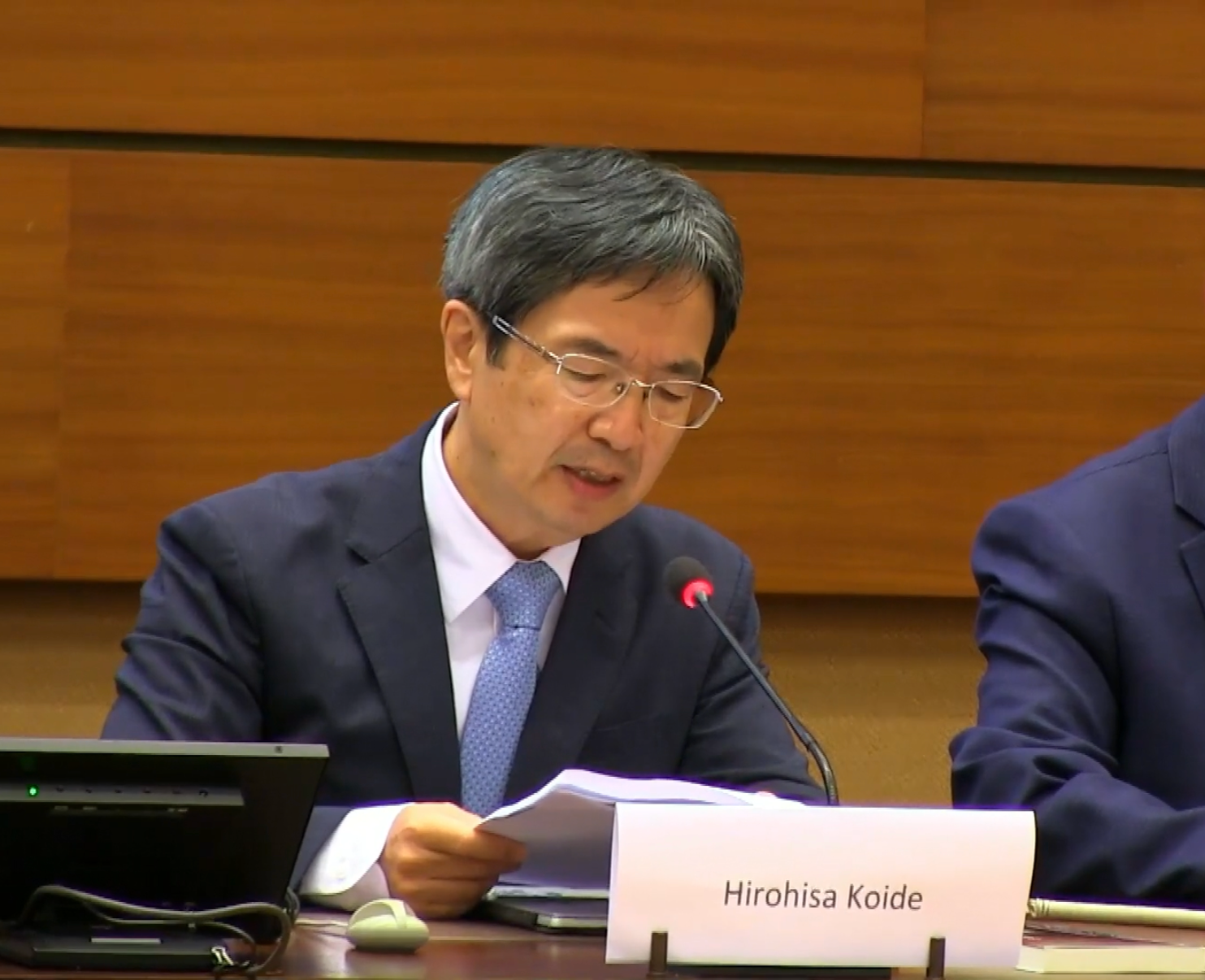
Dr. Hirohisa Koide, a physician and a believer, offers testimony that strengthens suspicions of coordinated actions among pastors, deprogrammers, and lawyers. Because these lawyers denied that abduction and confinement were illegal, victims felt they had no option but to pretend to renounce their faith and file lawsuits, fearing that refusal would lead to renewed captivity.
Fukuda claims that these acts represent not just human rights violations but outright crimes. She points out that international organizations, including the U.S. State Department, have long criticized Japan’s tolerance of forced de-conversion.
Yet within Japan, she notes, the typical attitude is still a shrug: “It can’t be helped because it’s a problematic religion.” Fukuda warns that the true nature of the National Network of Lawyers Against Spiritual Sales—and the reality behind the term they created and weaponized against the Family Federation “spiritual sales”—has never been adequately investigated.