Freedom for Faith’s Mike Southon describes an Inquiry where the word “cult” is so vaguely described that any church can be a “cult.” He suggests abandoning the use of “cult” entirely.
by Alex Woolnough
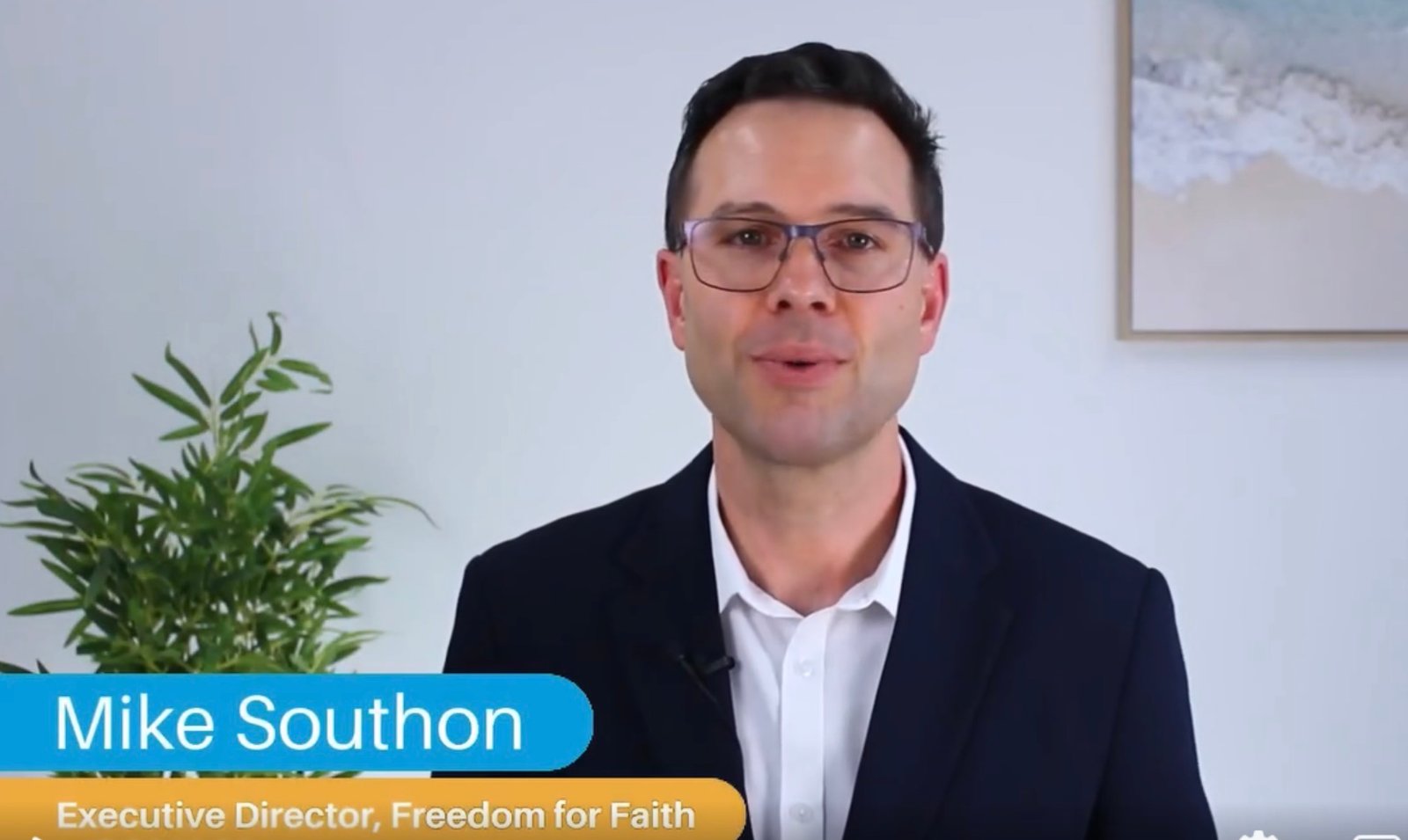
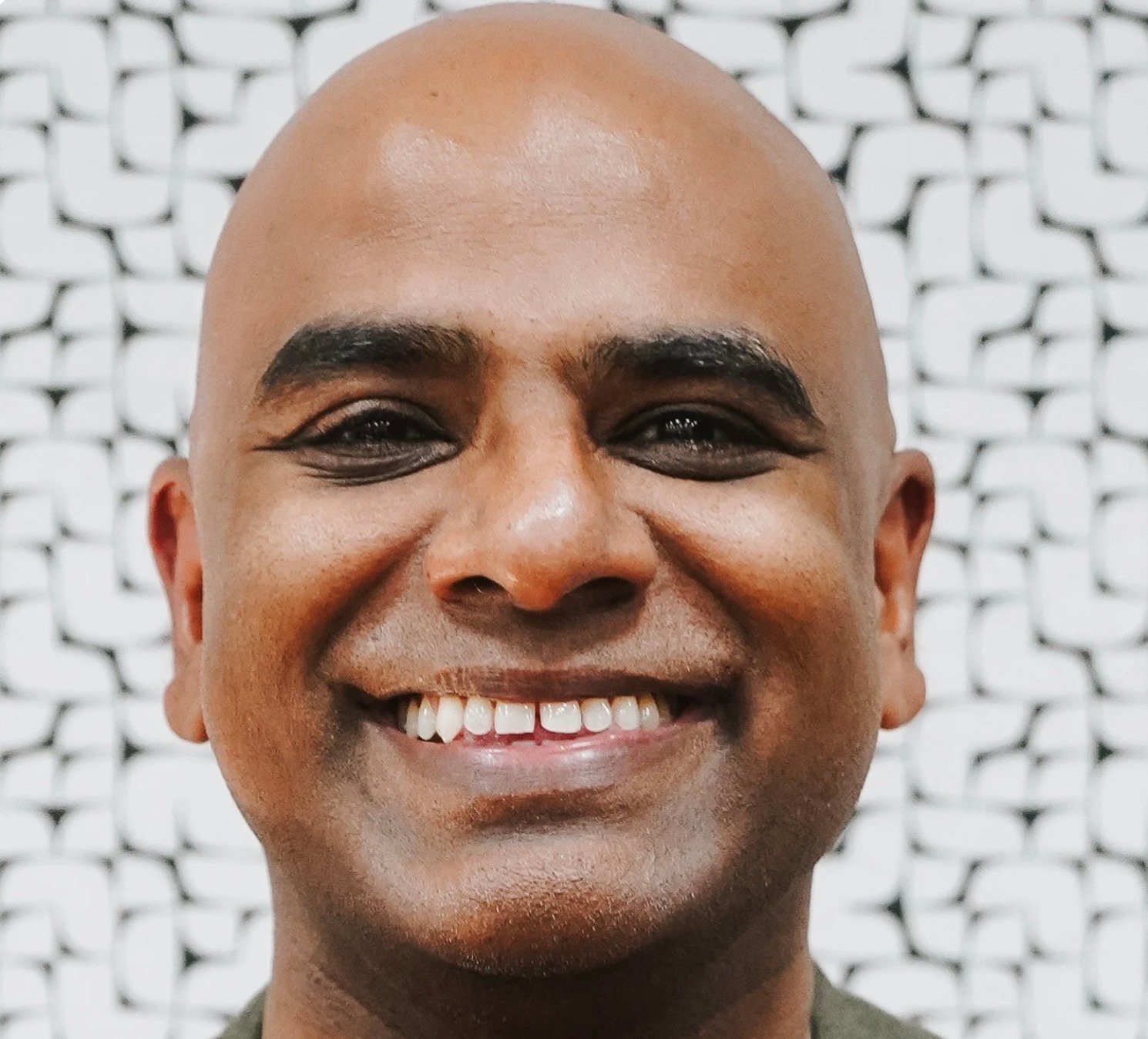
Mike Southon is the Executive Director of Freedom for Faith, a Christian legal think tank that recently provided testimony to the Victorian government’s Inquiry into cults and organized fringe groups. His comments below reflect how the Inquiry is facing an uphill battle in trying to provide a clear legal definition of what a cult is, and the fears among faith‑based communities across Australia that the inquiry could unintentionally lead to consequences affecting religious‑freedom laws.
Alex Woolnough: For readers of “Bitter Winter,” would you like to briefly discuss Freedom for Faith and the work the organization does to further religious freedom in Australia?
Mike Southon: Freedom for Faith is both a legal think tank, engaging in issues on religious freedom, and we also work politically on the same issues. We specifically only do religious‑freedom issues, so for instance we would not do issues about abortion unless it became a concern about conscientious objection and religious freedom around abortion. That’s what distinguishes us from other organizations. We’re a Christian legal think tank, but we work in multifaith circles too, and we predominantly exist to serve the Church through the denominations, particularly to equip them and inform them on religious‑freedom issues. We’re partnered with our five key affiliates: the Sydney Anglican Diocese, and then the National Baptists, Presbyterians, ACC (Australian Christian Churches), and Adventists. But we work very closely with many Catholic archdioceses across Australia, and very widely with other denominations. We also try to engage in interfaith and multifaith conversations across the country too.
AW: Talk to me about your initial reactions to the Victorian Inquiry into cults and organized fringe groups, and about the direction the Inquiry could take.
MS: Yes, our concern with the Inquiry was never about the direction it was taking at the time we provided our submissions and testimony; it was about the direction it “could” take, because it’s still not clear what they’re going to conclude. But our initial reaction was, “This could be interesting, or this could go really badly, really quickly.” It’s because when you start trying to define what a cult is with a specific set of definitions, and then apply that definition to churches, you either end up with something so narrow that nothing is a cult, or so broad that any church you don’t like is a cult. And that was the real danger. If they tried to define cults and then create legislation around that definition, you end up capturing a whole lot of other behavior as an unintended consequence, and Victoria does not have a strong track record of doing these things well, so we were initially concerned. However, we weren’t going into the Inquiry with the assumption that this is a concerted attack against conservative faith groups or Christians, and we don’t think that it is that—but it could be what it turns into if they don’t manage the process very well.
AW: Have you been following the Inquiry since, and has anything caught your eye?
MS: I haven’t been following it as heavily as I was leading up to our testimony. I am interested that some on the Inquiry continue to ask questions about legislative options, whereas others keep asking questions about education. And the answers we gave to the questions on notice were very much pushing them to consider pursuing methods of education, particularly in the voluntary‑education space, because again, if you create mandated training, then you have to determine who gets to write that content and who gets to define a cult. But it was, on the day, very concerning that witnesses in the morning had name‑dropped ACC as a cult—and it’s the second‑biggest grouping of Christians behind the Catholic Church in Australia—and these witnesses very strongly intimated that their belief was that Pentecostal movements with high levels of conviction and commitment fall under the cult umbrella, so to speak.
Now again, this wasn’t the Inquiry saying this, and when we were providing testimony, I was highly encouraged when we pushed back against what these witnesses had said earlier in the day, and the Chair of the Inquiry said, “Well, we invite all sorts of people here; that doesn’t mean we agree with what they believe.” And I thought that was great to see—that the Chair wasn’t automatically nodding along with what everyone was testifying.
It was a poorly framed inquiry. The original terms of reference and original guidance paper were poorly framed, and as the Chair said a couple of times during our testimony, they’re realizing how hard this is, and they’re really struggling with definitions and creating a legislative response. So, I see glimmers of hope in the process, but we’ll only see what happens down the track. We’re still concerned about what may happen.
AW: In your testimony to the Inquiry, you spoke about how there is a fear among faith communities not just in Victoria but across Australia who believe the Inquiry was already set up in a particular direction. Do you believe the Inquiry has a pre‑empted conclusion?
MS: It’s really hard to determine that. I guess the question is: Did they just jump in all excited because they wanted to stop cults, so they didn’t think through their terms of reference well? Or is this a very carefully designed conspiracy? I don’t normally accuse the Victorian government of well‑designed conspiracy. I would assume an ignorance of the field as they dove in, rather than trying to create an excuse to suppress mainstream religious groups, would be the reason why there would be concerns. We just don’t know. Those terms of reference could have been very carefully crafted, but I suspect not.
At the start of our testimony, I did make the point of saying our fear is about the unintended consequences of a poorly defined inquiry. We don’t think this is a big conspiracy necessarily, and we’re not treating it as a big conspiracy either. We just think it has huge scope for unintended consequences.
It was the guidance note that was particularly concerning for some faith communities — the way it said, “We can’t really define a cult, but cults have these elements in them,” and then created this very long list of factors. A few of them were either illegal behavior or highly coercive behavior, but the vast majority were things that every church does, like evangelism and promising salvation. It was the lack of clarity and the very broad scope within the guidance note that elicited the most concern. I had multiple faith leaders and members reaching out to me saying, “Have you seen this? This looks really scary.” Sometimes we have to educate churches about events such as these inquiries, but in this case, it was actually the community who came to us with their concern. And this is nationwide too, because Victoria has a habit of exporting its bad ideas—like their conversion‑therapy legislation—and we are definitely concerned about potential knock‑on effects in other states with this Inquiry.
AW: There is clearly a fine line between what can be restrained and what can’t be. We can obviously stop illegal activity, but there are other areas of religious organization and behavior that are much more difficult to legally restrict. What advice would you give the Victorian government in how they pursue potential amendments to legislation to ensure religious freedom and to make sure that those who act illegally are punished?
MS: The activity you mention is already illegal. It is illegal to sexually abuse someone, so if something like that happens in a religious group or organization, then the perpetrator should be punished. My first piece of advice is: Don’t try to create a legal definition of a cult. It’s just not possible without a massive number of unintended consequences. Secondly, don’t try to legislate against what a community may think or say or do—legislate against individual behavior, as we already do. The analogy I gave in the testimony was of the child‑sexual‑abuse Royal Commission. Sexual abuse is illegal. The fact that it happened in churches was not a reason to ban the churches; it was a reason to help the churches educate people about how to prevent already‑illegal activity from happening and, in some cases, to prevent people from covering it up. But once churches and other faith organizations were able to know what it looks like to be transparent and prevent this sort of harm, we all jumped at it because we want churches to be safe places. So, my advice would definitely be: prosecute all illegal behavior. We don’t need to define a cult to show whether something is already illegal or not. And if someone from my church committed a crime, that doesn’t mean my church is a cult—it just means I have a criminal in my church, and they need to be dealt with by the law.
AW: How much of this concern about certain religious groups can be attributed to the growth in religious denominationalism?
MS: I don’t think any of it can be. We’ve always had a huge number of denominations in Australia, and if anything, I would say that our denominations are more brought together in denominational lumps than in the past. For example, the ACC or the Fellowship of Evangelical Churches, which is actually bringing together small independent churches into a denominational network—partly driven by just the sheer level of compliance needed to continue operating. So, I wouldn’t think that a particular proliferation of churches sprouting up would have raised people’s concerns about cults. The only group I remember Australians being very concerned with was The Family, from around 40 years ago. I think potentially just the increase in mass communication and the fact that we all know what’s going on has increased our awareness of these denominations. I guess the other question would be: Is there actually an increased fear or awareness about cults out there? Something has happened in Victoria that has made them worried about it, and now suddenly they want to do something about it. It doesn’t seem to be a topic or a concern that the average person is talking about.
AW: The Australian media have been pretty significant for this debate. In particular, there was an article published by the national broadcaster that argued coercion is a fundamental element of religious behavior and religious commitment. Do you agree?
MS: We actually quoted that article in our submission. Again, it comes down to definition. What is coercion? There are a vast number of community networks that expect you to be reasonably committed to that network and could well consist of someone’s full social life. If you’re going to ban any organization where people are really passionate about what they believe, and leaving it could significantly affect your social networks, then we might as well also ban unions, environmental groups, every political party, and all sorts of conservative groups as well. Now, the inquiry says that it’s about cults and organized fringe groups, not specifically targeting religious groups. So how do you define an organized fringe group without using the word religion? And without including caucus solidarity too—because if you don’t vote the same way as your party, particularly in the Labor Party, you stop being a member of the Labor Party. How is that not highly coercive? Now, this behavior doesn’t mean the organization is illegal. It means people are passionate. So no, I wouldn’t say coercion is fundamental for religious commitment in this sense.
AW: Something I’ve also noticed in the Australian media is the tendency for publications to begin investigations and reports into religious communities. One news outlet has published a wide range of stories about the Exclusive Brethren—some in defense of them, some “exposing” some of their behaviors. Are you concerned the Australian media will begin to not just present agendas for their audience in a political sense but also in a religious sense?
MS: Well, the Australian media don’t need this inquiry, because that media outlet’s stories on the Exclusive Brethren didn’t mention the Inquiry—it was connected to their volunteers during the federal election. I think that series of articles just so happened to occur in the sphere of this Inquiry. But the media don’t need the excuse; politicians don’t need the excuse to target religious communities. So, to what extent this Inquiry is definitely allowing people to make allegations under parliamentary privilege—and as we know, when it’s alleged under parliamentary privilege, then the media can say, “It’s been said that…” But it was only recently that a Greens MP accused a large evangelical church of failing to disclose child sexual abuse. That accusation was entirely specious, and despite the Child Guardian’s office having been involved in the entire process and having said the church acted entirely appropriately, that didn’t stop a Greens MP from saying things that were completely unfounded under parliamentary privilege—and then reported within hours of the speech, so clearly prepared well before, by another well‑known media outlet.
This Inquiry will add a vehicle for people to say plenty of things, and we’re going to get various accusations. But I think the environment has always been there for a political agenda to exist within political institutions and media organizations against faith communities. This is just one more opportunity for that to exist. The advantage here, at least, is that being an actual inquiry will allow us to say what we want to say, and for us to be engaged with the discourse, and to allow a give‑and‑take of ideas. So, we could view this as a slightly more positive experience than the average parliamentary dump.
AW: You make a great point in your submission to the Inquiry that holding strong religious beliefs and disciplines isn’t coercive. Is there a potential concern by the Inquiry, and by members of the public, that perhaps strong religious beliefs could correlate with certain political concerns about populism and conservatism? Does there need to be further education?
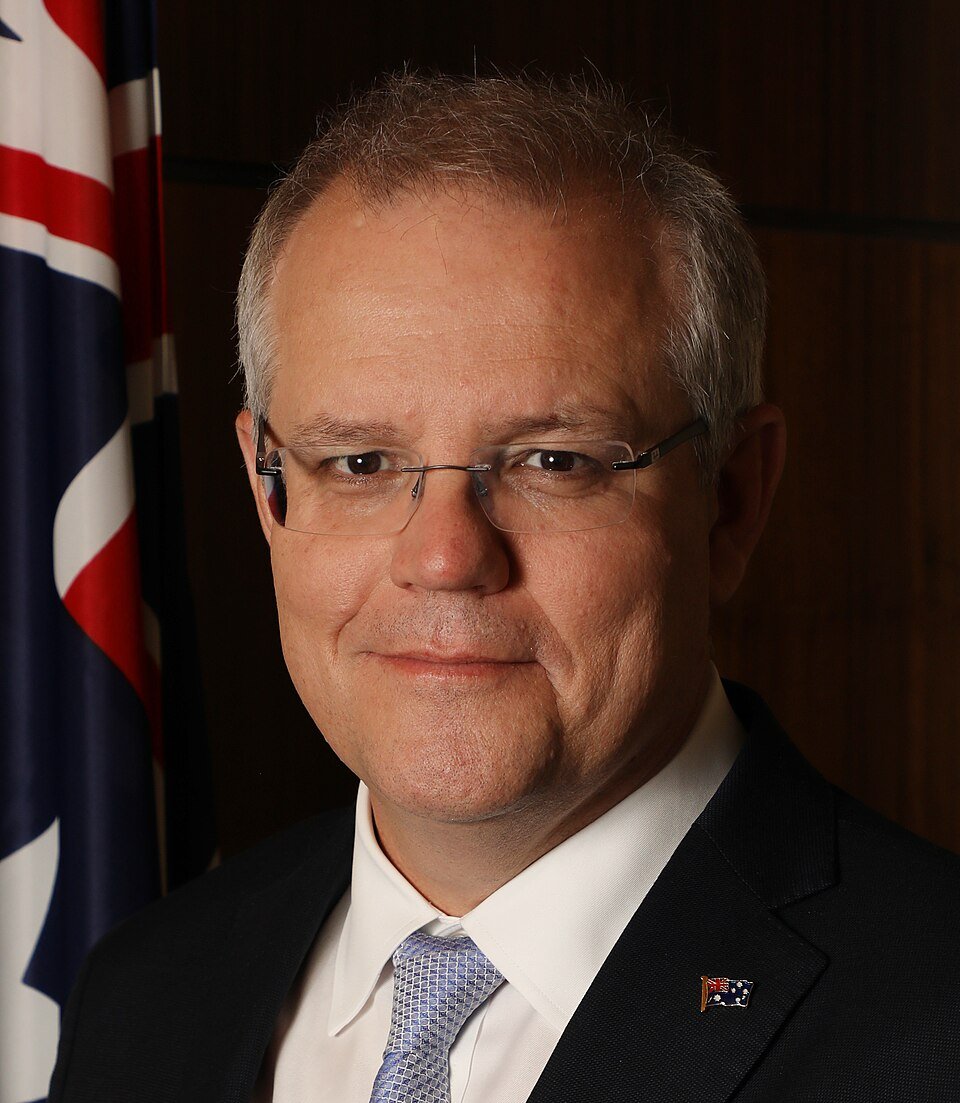
MS: The first thing I would say is that the average Australian voter would be more frustrated by a politician who said they possessed a strong religious belief and didn’t live that way. The media tried to whip up an ick factor around Tony Abbott and wanting to be a priest at one point, and being a conservative Catholic, but that didn’t stop him from being elected. They also tried to whip up a frenzy around Scott Morrison and his involvement with ACC, and I would say neither his faith nor his involvement with ACC had any role in determining his election to the prime ministership nor his departure from office. I think the Australian public is far more tolerant of people of strong faith than the media would like us to be at times. But absolutely, there has been a connection in some people’s minds—and the media’s minds—between ACC and particular policies Morrison put forward, because there has been no other prominent Pentecostal in politics. So, there’s more risk to say, “This is what Pentecostalism is like,” as opposed to, “This is what Catholicism is like.” In every religion, people’s beliefs are varied, and you can’t judge somebody because of their faith.
The people who earlier in the day we testified implied that ACC was a cult were in particular objecting to conservative views on gender and sexuality. The same witnesses also testified that they left their churches due to their sexual identity and then felt like they weren’t supported and that they had lost their community because they no longer aligned with their faith. That doesn’t mean their churches are cults. Their accusations were completely unfounded. I definitely think, however, that the media have decided to talk a lot more about these types of churches, particularly Pentecostal ones, because one of their members became Prime Minister and put forward legislation that wasn’t popular in the end. But I don’t think the average Australian is as concerned by it, and I think that’s backed up by the stats we have from ACC, which show they have grown to become the second‑biggest denomination in Australia.
AW: Finally, you were asked in your testimony to the Inquiry about the difference between a religion and a cult, even though there is a significant amount of conjecture and vagueness about what constitutes the latter. How do you reflect on that now, and do you think we can ever provide a distinction?
MS: From what I have been following of the Inquiry, the committee themselves have started to realize there isn’t a specific element that turns a religion into a cult. And then if you say that there are eight elements that a cult possesses, I will bet that around six of them could easily be ticked off by a mainstream religion too. I did notice in the inquiry’s terms of reference they said a cult has an excessive commitment to the leader or founder. Well, if Jesus is the founder of Christianity, then if so, I have excessive commitment—millions of people do. I think it is absolutely impossible to define a cult. I actually don’t even like the word “cult.’
I think this discourse would work much better if we axed the word “cult’ entirely, talked about the idea of group‑based coercion, and even then, you would realize we can’t even define that for a legal context. But what we can discern is that group‑based coercion leads to individuals committing illegal behavior, and that is the only thing you can police. It is stereotypically true that a portion of criminals are bikies, or vice versa, but there are a bunch of people who like to wear leather, jump on their Harley‑Davidsons, and go for a ride. Just because they’re wearing all the stuff and have the paraphernalia doesn’t make them criminals. And therein lies the problem of trying to create a definition. You can’t define a cult. You can’t define a coercive community, especially if it’s not incorporated. You can define employment conditions, but you can’t create a law for every single community in Australia that they have to abide by in terms of how they interact with their members or participants, and then police it. You would have to specify the community, and if you did that to religious communities, then that would be the most blatant example of religious discrimination and be in violation of human‑rights acts.
My biggest concern with this Inquiry would be if they come away with legislation that specifically targets religious communities and faith‑based communities. The second‑biggest would be if they try to create some sort of legislation that defines how voluntary communities are to be, because the scope issues that would arise with that would be significant. If I and a group of mates catch up at a pub, that is no more of a voluntary community than a house church is, so any kind of legislation around group dynamics would be extremely concerning. I hope they realize that it would be impossible to do.
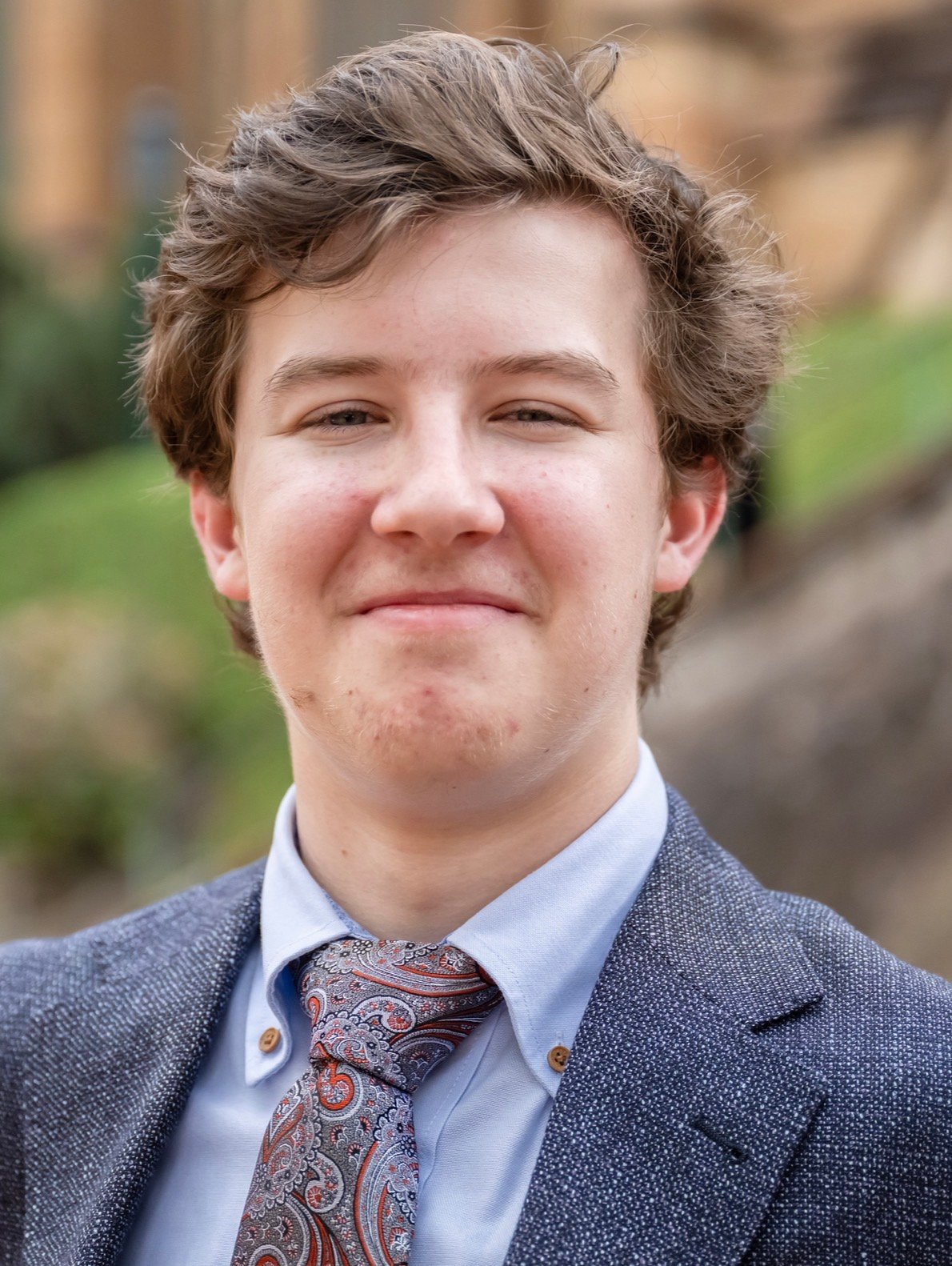
Alex Woolnough is a journalist for “The Catholic Weekly,” and has also written for Australian Catholics Magazine. He is a third‑year university student at the University of Notre Dame Australia, majoring in journalism, politics, and film.