Victoria is not the only part of the world where minority religions are stigmatized and harassed. But is at risk of becoming one of the worst.
by Marco Respinti
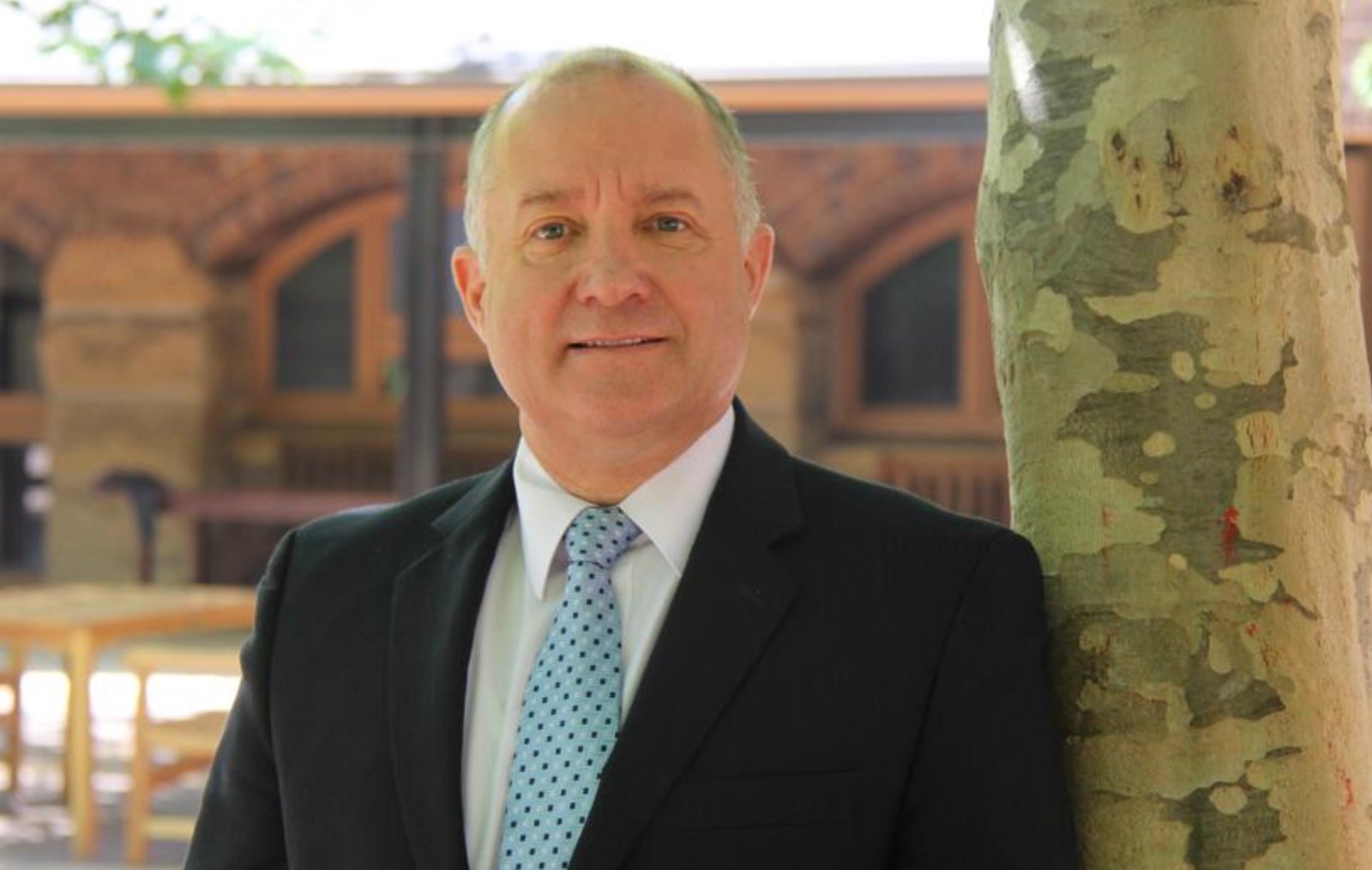
Following the publication of two articles by Bernard Doherty, distinguished Australian scholar of religions at Charles Sturt University, which sharply criticized the Parliament of Victoria’s Inquiry into the Recruitment Methods and Impacts of Cults and Organized Fringe Groups as a threat to religious liberty, we sought to broaden the discussion. To provide a legal and political perspective on the Inquiry, we spoke with Professor Keith Thompson of Notre Dame Australia, University, Sydney. His remarks shed light on the constitutional and jurisprudential stakes involved, and on Victoria’s recurring pattern of disregarding established principles of religious freedom.
Marco Respinti: Professor Thompson, what is your general view of the Victorian Parliament’s Inquiry?
Keith Thompson: Victoria has form when it comes to wilful ignorance about the well‑established human right of religious freedom. Its early 1980s decision to enforce state payroll tax against the Church of Scientology—at that time not even allowed to be called by its proper name—had to be purged by a strong majority decision of the High Court in 1983.
In a joint judgment, Chief Justice Mason and his eventual successor emphasized that it was not appropriate for a court or a government to focus on the truth or falsity of religious doctrines. Freedom of religion was described as the paradigm freedom of conscience and the essence of a free society.
As they put it: “The chief function in the law of a definition of religion is to mark out an area within which a person subject to the law is free to believe and act in accordance with his belief without restraint.”
Respinti: Could you expand on how the High Court framed religious freedom in that case?
Thompson: Referring to the judgments of Chief Justice Latham and Justice Rich in the Adelaide Jehovah’s Witnesses Case of 1943, the Court added: “The guarantees in s 116 of the Constitution would lose their character as a bastion of freedom if religion were so defined as to exclude from its ambit minority religions out of the main streams of religious thought… [they] stand in need of especial protection… Protection is accorded to preserve the dignity and freedom of each man so that he may adhere to any religion of his choosing or to none.” They warned against narrow definitions of religion that would allow tides of popular opinion to subvert freedom of belief and practice. For the purposes of law, they stated, the criteria of religion are twofold:
- Belief in a supernatural Being, Thing, or Principle; and
- Acceptance of canons of conduct to give effect to that belief—though conduct that offends against ordinary laws is outside the area of any immunity or privilege conferred on grounds of religion.
They also stressed that “religion encompasses conduct, no less than belief.”
Respinti: How did the Court respond to lower‑court skepticism about Scientology?
Thompson: They strongly rejected Justice Crockett’s assertion that the transformation of Scientology into a religion was a sham, that its proclaimed belief in prayer was bogus, and that its adoption of religious paraphernalia was mockery.
Respinti: You also invoke Thomas Jefferson. Why is his view relevant here?
Thompson: Jefferson, reflecting on Virginia’s 1786 Statute for Religious Freedom, one of the world’s most enduring religious freedom statutes that he had drafted in his native state of Virginia in 1777, long before he became U.S. President, wrote: “The error seems not sufficiently eradicated, that the operations of the mind, as well as the acts of the body, are subjects to the coercion of laws. But our rulers can have authority over such natural rights only as we have submitted to them. The rights of conscience we never submitted, we could not submit. We are answerable for them to God. The legitimate powers of government extend to such acts only as are injurious to others. But it does me no injury for my neighbour to say that there are twenty gods, or no god. It neither picks my pocket nor breaks my leg.” This remains one of the clearest statements of why freedom of conscience is beyond the reach of government.
![Mather Brown (1761–1831), “Portrait of Thomas Jefferson [1743–1826].” Credits.](https://bitterwinter.org/wp-content/uploads/2025/11/Portrait-of-Thomas-Jefferson.jpeg)
Respinti: How does this apply to the current Inquiry in Victoria?
Thompson: In this Parliamentary Inquiry, the State of Victoria once again seeks to subvert the wisdom of the framers of the Universal Declaration of Human Rights (1948) and the International Covenant on Civil and Political Rights (1966), as well as the wisdom of the ages. By changing the definition of harm so that any personal slight or offence becomes actionable in law, the Inquiry undermines the premise of all freedoms settled in our foundational human rights instruments. These freedoms are a compound whole, greater than the agenda of those who initiated this “new” Victorian Inquiry.
Respinti: Earlier you said “Victoria has form” when it comes to undermining freedom of religion. Could you elaborate?
Thompson: Yes. Other examples include:
- The “Cobaw” decision against the Exclusive Brethren by the Court of Appeal in 2014, where the majority—particularly President Maxwell—completely disregarded religious freedom precedent.
- The persecution of Cardinal Pell in media and courts, with the Court of Appeal’s decision (again featuring Maxwell prominently in the majority) unanimously overturned by the High Court. I have written elsewhere that nothing was done to forestall the use of social media, which I believe was mobilized against Pell (under the radar) during his second jury trial.
- Premier Dan Andrews’ infamous lockdowns during Covid, which were among the most intrusive in the world and substantially curtailed the free exercise of religion.
Professor Thompson’s remarks highlight the deep legal and political concerns surrounding Victoria’s Inquiry. His analysis underscores how fragile religious liberty can become when governments redefine harm and disregard precedent. Victoria is not the only part of the world where minority religions are stigmatized and harassed. But it may soon become one of the worst.

Marco Respinti is an Italian professional journalist, member of the International Federation of Journalists (IFJ), author, translator, and lecturer. He has contributed and contributes to several journals and magazines both in print and online, both in Italy and abroad. Author of books and chapter in books, he has translated and/or edited works by, among others, Edmund Burke, Charles Dickens, T.S. Eliot, Russell Kirk, J.R.R. Tolkien, Régine Pernoud and Gustave Thibon. A Senior fellow at the Russell Kirk Center for Cultural Renewal (a non-partisan, non-profit U.S. educational organization based in Mecosta, Michigan), he is also a founding member as well as a member of the Advisory Council of the Center for European Renewal (a non-profit, non-partisan pan-European educational organization based in The Hague, The Netherlands). A member of the Advisory Council of the European Federation for Freedom of Belief, in December 2022, the Universal Peace Federation bestowed on him, among others, the title of Ambassador of Peace. From February 2018 to December 2022, he has been the Editor-in-Chief of International Family News. He serves as Director-in-Charge of the academic publication The Journal of CESNUR and Bitter Winter: A Magazine on Religious Liberty and Human Rights.