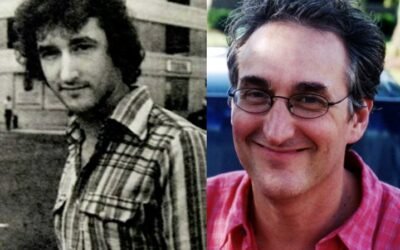
From members of the Church of Jesus Christ of Latter-day Saints to supporters of Donald Trump, all groups Hassan dislikes are identified as “cults.”
by Massimo Introvigne.
Article 2 of 4. Read article 1.
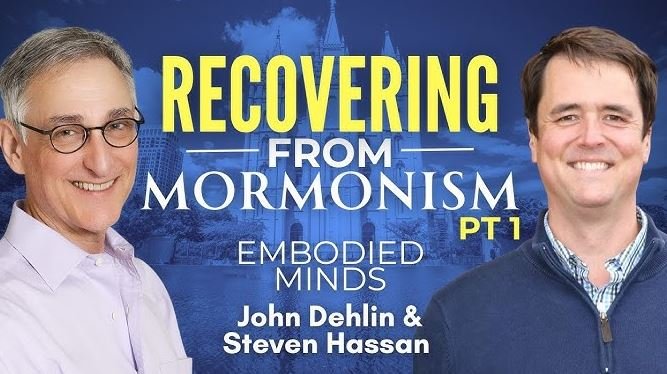
As we have seen in the first article of this series, Hassan promotes the BITE model as a scientific method for identifying “destructive cults,” claiming it can distinguish legitimate religions from dangerous groups. In practice, however, the model functions less as a diagnostic tool than as a means of labeling any movement he opposes as a “cult.” Its criteria are so broad and indeterminate that they can be applied to political movements, established religions, or even public-health debates, depending on the evaluator’s preferences. The result is a subjective framework that reflects Hassan’s own moral and political prejudices.
The BITE model’s four categories—Behavior, Information, Thought, and Emotional control—are presented as if they offer objective measures of coercion. In reality, the indicators are so imprecise that they could describe almost any organized group. Practices such as discouraging individualism, using specialized language, or promoting group loyalty are not unique to fringe sects; they are found in political parties, universities, religious organizations, and many other institutions. The model’s lack of specificity allows it to be used against virtually any target.
Hassan applies the same reasoning to The Church of Jesus Christ of Latter-day Saints, finding in it the elements of a “cult” and denouncing its founder and practices. He offers paid workshops for those leaving the church. The BITE model serves to delegitimize a mainstream religious organization whose members obviously participate voluntarily. Ordinary practices such as missionary work or doctrinal teaching are reinterpreted as evidence of “mind control.” Rather than clarifying the nature of the Latter-day Saints’ religion, the model pathologizes it.
As for the Seventh-day Adventists, Hassan’s website informs us that theirs “is a widely recognized Christian organization with around 20 million members worldwide. However, many of its beliefs and practices align with the BITE Model of Authoritarian Control, which causes great concern.”
Hassan’s use of the BITE model to characterize Donald Trump and the MAGA movement as a “cult” further illustrates the model’s underlying logic. In “The Cult of Trump,” a book that understandably became popular among the American President’s opponents but was judged as academically worthless, he compares Trump with figures like Jim Jones and David Koresh. He claims that Trump’s supporters are victims of mind control. This comparison is not grounded in empirical research, but rather in Hassan’s political views. He has acknowledged his longstanding personal dislike of Trump, and here, as elsewhere, the conclusion comes before the analysis. The BITE model serves as a tool for dehumanizing political opponents, recasting disagreement as evidence of psychological manipulation.
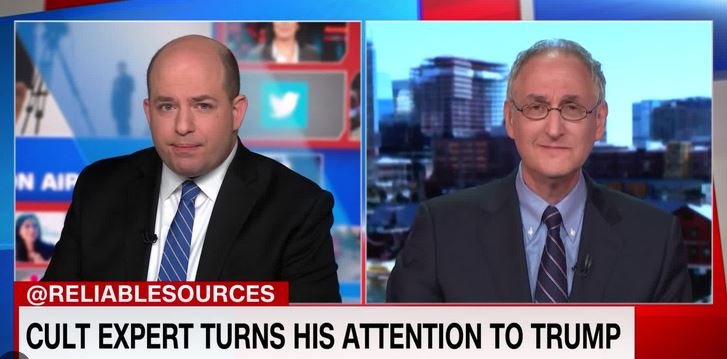
A similar pattern is evident in Hassan’s commentary on the January 6, 2021, Capitol attack participants, whom he describes as instruments of a “violent cult.” This framing shifts the explanation for their actions from political anger or violence, or misinformation, to psychological manipulation, effectively denying individual agency. It also enables Hassan to market “cult recovery” services to former Trump supporters. Here, the BITE model serves both political and commercial purposes. Obviously, one does not need to be a Trump sympathizer or to justify what happened on January 6 to recognize Hassan’s flawed method and problematic use of “brainwashing” rhetoric.
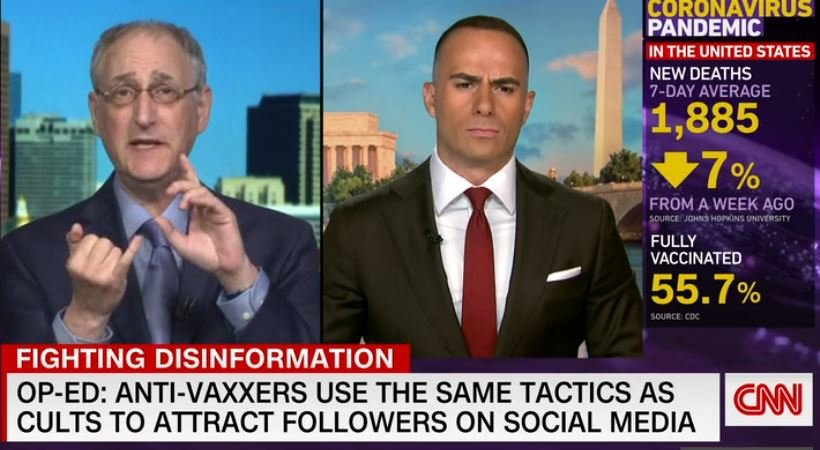
Hassan has also applied his “cult” framework to public-health debates, arguing that anti-vaccine activists are subject to cultic manipulation. Regardless of one’s view of vaccine skepticism (a position I personally do not share), the assertion that millions who rejected the COVID vaccine (including, e.g., Novak Djokovic, revered as the shrewdest tennis tactician of all time) are all naïve victims of “mind control” reduces complex social dynamics to a single psychological explanation. This illustrates a central problem with the BITE model: it pathologizes disagreement. When individuals hold views Hassan finds objectionable, the explanation defaults to “cultic influence,” rather than considering factors such as misinformation, distrust, or ideology. The model thus serves as an easy universal psychological diagnosis.
This pattern reveals the central flaw in the BITE model. It does not function as a scientific tool for measuring coercion, but rather as a moral filter for identifying groups that diverge from Hassan’s own preferences. The model’s categories are sufficiently flexible to encompass almost any target, and the use of psychological terminology lends an appearance of clinical legitimacy to what is essentially a subjective judgment.
The risks associated with the BITE model extend beyond academic discussion. When public figures or policymakers adopt the language of “mind control,” it can fuel renewed moral panics with real-world consequences. The history of anti-cult activism includes instances of discrimination, family separation, and violence, all justified by claims of “brainwashing.” By providing a pseudo-scientific rationale for these actions, the BITE model contributes to an environment where religious liberty and freedom of conscience are at risk. Rather than providing a scientific explanation, the BITE model repackages longstanding prejudices in psychological terms.
Hassan’s application of the BITE model also blurs the distinction between persuasion and coercion. Persuasion is a universal feature of human communities, encompassing teaching, encouragement, ritual, and the promotion of shared values. These practices are not evidence of “mind control”; they are ordinary aspects of collective life. The BITE model, however, treats such behaviors as pathological only when they occur in groups Hassan disapproves of, while ignoring them elsewhere.
Because the BITE model is so elastic, the range of groups labeled as “cults” is likely to expand indefinitely. Today, it encompasses Trump supporters, Latter-day Saints, anti-vaccine activists, and January 6 participants; tomorrow, it could be applied to any religion, social group, or political party that Hassan dislikes. The model serves the interests of moral entrepreneurs rather than advancing scholarly understanding.
Hassan’s use of the BITE model across political, religious, and public-health contexts demonstrates its actual function. It serves to delegitimize dissenting views. The model does not safeguard individuals from manipulation; it insulates Hassan’s particular worldview from criticism. Its scientific appearance conceals an ideological agenda that perpetuates the logic of moral panic in updated psychological terms.
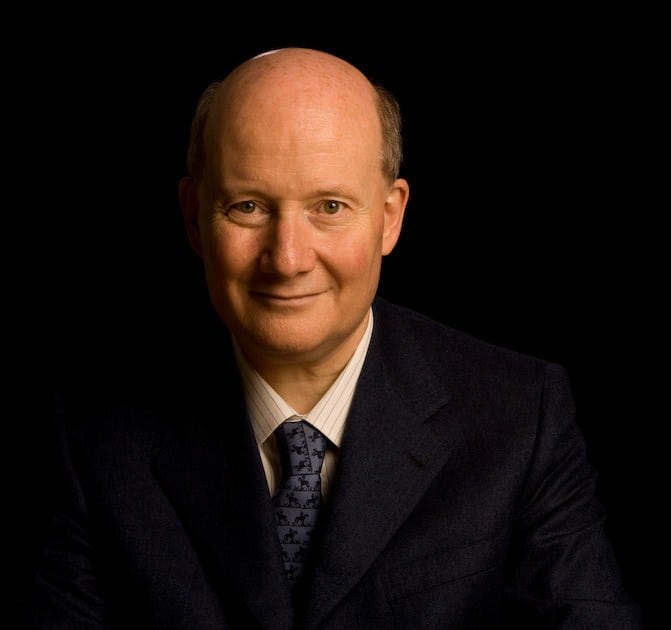
Massimo Introvigne (born June 14, 1955 in Rome) is an Italian sociologist of religions. He is the founder and managing director of the Center for Studies on New Religions (CESNUR), an international network of scholars who study new religious movements. Introvigne is the author of some 70 books and more than 100 articles in the field of sociology of religion. He was the main author of the Enciclopedia delle religioni in Italia (Encyclopedia of Religions in Italy). He is a member of the editorial board for the Interdisciplinary Journal of Research on Religion and of the executive board of University of California Press’ Nova Religio. From January 5 to December 31, 2011, he has served as the “Representative on combating racism, xenophobia and discrimination, with a special focus on discrimination against Christians and members of other religions” of the Organization for Security and Co-operation in Europe (OSCE). From 2012 to 2015 he served as chairperson of the Observatory of Religious Liberty, instituted by the Italian Ministry of Foreign Affairs in order to monitor problems of religious liberty on a worldwide scale.