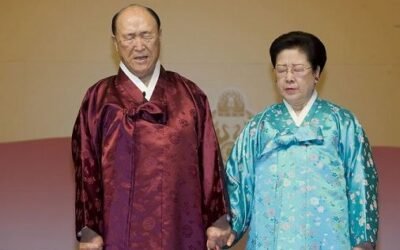
The court assures us that individual devotees will not be discriminated against. The reality is different.
by Massimo Introvigne
Article 6 of 6. Read article 1, article 2, article 3, article 4, and article 5.
The High Court recognizes that dissolving the Unification Church as a religious corporation could significantly affect the daily lives of hundreds of thousands of believers. Although the decision cites a few hundred ex-members who claim to have suffered due to their past ties with the Church, the actual number of devotees whose religious freedom and daily lives are now at risk is much greater.
The court solemnly proclaims that it does not want to interfere with the individual religious liberty of believers. They “are not prevented from continuing an unincorporated religious organization or from newly forming one, nor are they prevented from performing religious acts or newly preparing facilities and materials for use in such acts. That is, a dissolution order is not attended by any legal effect whatsoever prohibiting or restricting the religious acts of believers.”
The decision even attempts to argue that the corporate freedom of religion of the believers’ community will still be protected: “They are not prevented from continuing the ‘Family Federation for World Peace and Unification’ as a religious organization without legal personality, nor are they prevented from establishing a new religious organization. Thus, it cannot be said that they would be unable to conduct religious activities as an organization.”
Since the religious corporation ceases to exist, the employment contracts between it and its pastors and other employees “are generally understood to terminate” (although they may continue for a while as employees of the corporation’s liquidator, but without carrying out religious activities). However, the High Court notes that “although the employment contracts between the employees and the appellant [the Unification Church] as a juridical person would legally terminate, it remains possible that those employment relationships could continue as employment contracts between the employees and the religious organization in its non-incorporated form.” In the worst case scenario, the High Court assumes that these pastors and other employees would find comfort in the prospect of surviving on “unemployment insurance and public assistance.”
As for the social discrimination of believers, the High Court virtuously comments that “there is no justification for the appellant’s believers to be subjected to social discrimination, exclusion, or persecution as a result of the dissolution order against the appellant. (Needless to say, social discrimination, exclusion, or persecution against the appellant’s believers is impermissible under any circumstances, regardless of the reasons).”
With all these noble words, the court admits that the result of the dissolution order is that, without waiting for the outcome of the recourse filed by the Church with the Supreme Court (a Japanese legal anomaly), a liquidator will immediately take possession of the assets of the religious corporation, including places of worship, offices, and bank accounts. It euphemistically calls these “some impediments” that may affect the believers as “indirect” consequences of the dissolution order.
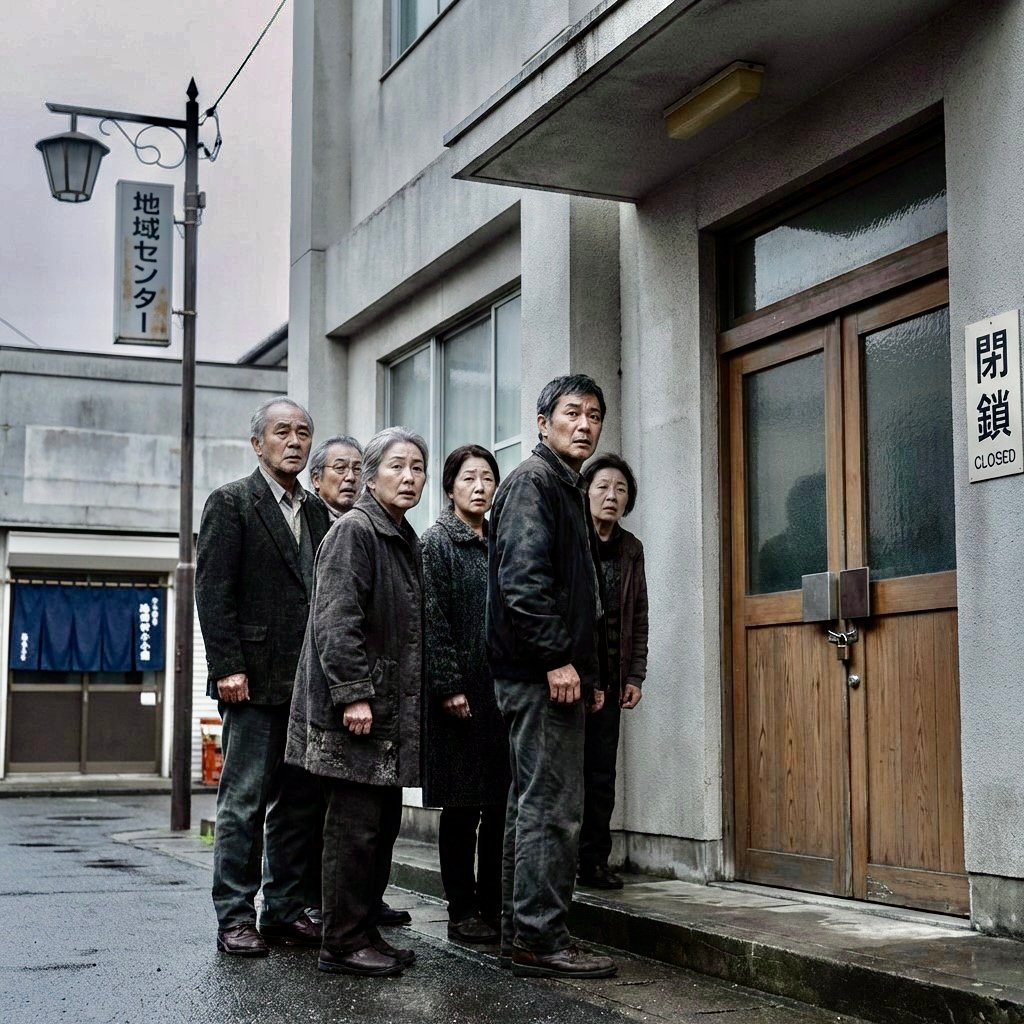
Immediately means immediately. Within hours of the announcement of the dissolution decision, lawyers and police officers appeared at the majority of the 260 Unification Church places of worship throughout Japan, seized all assets, confiscated the keys, and told believers they would not be allowed to enter the premises. As reported by attorney Patricia Duval in a statement at the United Nations in Geneva, a devotee revealed that “Even before the High Court’s decision was made public, approximately 1,000 lawyers and police officers appeared to have collaborated to ensure that the liquidation process went smoothly. Despite assurances from the government and the courts that religious freedom would be protected even after the corporation’s dissolution, we quickly found ourselves unable to practice our religion. The simultaneous dispatch of liquidators to churches across the country resembled a massive investigation into a criminal organization. Churches across the country were closed during the dissolution, leaving believers without a place of worship.”
Even before the dissolution, local city councils and hotels refused to rent rooms to Unification Church members, claiming they were part of an “anti-social” organization. If they cannot use the premises seized by the liquidator nor rent other places, where should they gather for their religious activities? Are these just “impediments”? What about the High Court’s assurance that believers “would not be prevented from performing religious acts”? Who is protecting the followers from “social discrimination”?
Although the latter question remains unanswered, another question has an easy answer. Who is actively promoting discrimination against Unification Church believers? Both the National Network of Lawyers Against Spiritual Sales and the Japan Federation of Bar Associations, which have long-standing enmity toward the Church, issued statements after the dissolution order.
Unbelievably, the Network argues that the harsh measures imposed on Unification Church believers following the dissolution are insufficient. It calls for new laws restricting their rights to proselytize and collect donations, whether as individual believers or on behalf of any newly established organizations. It also wants ex-members who speak publicly against the Church (those sociologists call “apostates”) to be protected from “defamation and slander.” The law provides broad protection against defamation. However, it appears the Network seeks an additional safeguard—a specific shield that would prevent independent journalists and scholars from exposing the apostates’ assertions when they deem those claims false.
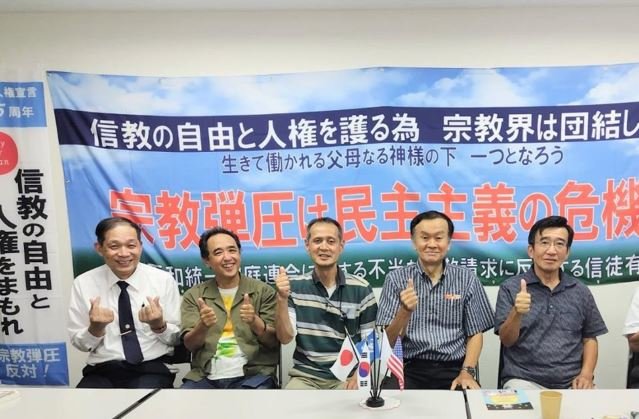
The Network insists that “only a very small portion of victims have reported their damages.” The statement implies that every second- or third-generation member is a “victim,” although most of them “have not yet spoken out.” In fact, every child born to parents who believe in the Unification Church’s teachings is a potential victim.
The number of victims is therefore limitless. The Religious Corporation Act and the Articles of Incorporation of the Church state that once a dissolved entity’s liquidation is finished and victims (and their lawyers) have been paid, any remaining assets should be transferred to an entity designated by the original organization. Lawyers are creating a system to ensure that no assets are left behind, as new claims from additional “victims” will continue to arise, potentially forever.
In the unlikely event that anything remains, the High Court has already included in its decision malicious comments about Tenchi Seikyo, the religious organization legally incorporated since 1987, which, since 2009, the Unification Church has indicated should receive its residual assets in the event of dissolution. Essentially, the High Court noted that Tenchi Seikyo and its Head Priest had consistently maintained friendly relations with the Unification Church and cannot be considered truly independent from the Church. Naturally, a church would want its assets to pass to a friendly religious organization. It would be strange for it to designate a hostile group.
The Network claims that “unless some provision is made,” some assets of the dissolved Unification Church may end up with Tenchi Seikyo, which is accused (without evidence) of having also victimized “many victims of the Unification Church.” The Japan Federation of Bar Associations recognized that the provision for transferring the residual assets to Tenchi Seikyo is legally valid, and states that “it is essential to take legal measures, such as establishing an exception to the rules regarding the distribution of remaining assets in the case of dissolution by order, before the liquidation procedures are completed.” It also asks for further legislation to “tackle the fundamental problems related to the antisocial religious activities that lie beneath the surface” and extend the “protection” of “second-generation members” to other “religious groups.”
These comments are very interesting because they show that the left-leaning anti-Unification-Church lawyers, who started their politically motivated campaigns against the Unification Church in 1987, are not happy with just dissolving the organization. They also need to keep working, finding new targets for their efforts.
While the High Court claims that those who believe in the message of Reverend Moon and Mother Han as the True Parents “are not prevented from continuing an unincorporated religious organization or from newly forming one,” the militant lawyers call for measures to eradicate any group that will continue to promote this belief. They also hope to use the High Court decision as a precedent to target other groups. Most unfortunately, the High Court’s comments attacking the Unification Church theology directly and promoting the pseudo-scientific theory of mind control offer a solid foundation for these campaigns. The battle for religious liberty in Japan is entering a new phase.

Massimo Introvigne (born June 14, 1955 in Rome) is an Italian sociologist of religions. He is the founder and managing director of the Center for Studies on New Religions (CESNUR), an international network of scholars who study new religious movements. Introvigne is the author of some 70 books and more than 100 articles in the field of sociology of religion. He was the main author of the Enciclopedia delle religioni in Italia (Encyclopedia of Religions in Italy). He is a member of the editorial board for the Interdisciplinary Journal of Research on Religion and of the executive board of University of California Press’ Nova Religio. From January 5 to December 31, 2011, he has served as the “Representative on combating racism, xenophobia and discrimination, with a special focus on discrimination against Christians and members of other religions” of the Organization for Security and Co-operation in Europe (OSCE). From 2012 to 2015 he served as chairperson of the Observatory of Religious Liberty, instituted by the Italian Ministry of Foreign Affairs in order to monitor problems of religious liberty on a worldwide scale.