Ultimately, the reason for the dissolution was the alleged manipulation of donors. Is there really enough evidence that it happened?
by Massimo Introvigne
Article 3 of 6. Read article 1 and article 2.

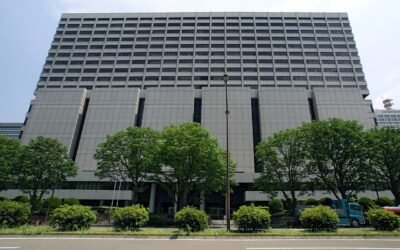
The High Court decision affirming the dissolution of the Unification Church as a religious organization describes it as a profit-driven enterprise that uses psychological manipulation. The court argues that this manipulation leaves victims in a position where they are compelled to donate large sums of money, either directly or by purchasing artifacts such as seals, miniature pagodas, and other items at prices far exceeding their actual worth. Opponents called these “spiritual sales,” although later they extended the term to include donations where no physical objects were sold.
First, the Court references three criminal rulings from 2007 to 2009 involving executives and salespersons of companies that sold seals and other items. It highlights the decision regarding Shinsei Ltd., which was the only case to impose, in addition to fines, prison sentences of two years for the company’s director and one year and six months for the sales manager, both with a four-year probation period.
Importantly, these individual believers’ criminal convictions are not taken into account when assessing grounds for dissolution. The judgment merely references these cases as context, possibly to imply that the Church is “anti-social,” though this is not explicitly stated. Clearly, not all crimes committed by members of a religious organization can justify dissolving the entire organization. Otherwise, cases involving pedophile priests should be grounds to dissolve the Roman Catholic Church.
Furthermore, the court extensively discusses the activities of a company founded in 1971 by Unification Church followers as Kosei Shoji Co., Ltd., which later renamed itself Sekai no Shiawase Co., Ltd., and eventually became Happy World Co., Ltd. (“Happy World”). Its business involved selling ginseng products, marble vases, pagodas, and seals. Although it acknowledges that in 1977 the Kobe District Court acquitted its director and other executives of all criminal charges filed against them, the High Court identifies the company as the main culprit in the “spiritual sales.”
Happy World indeed engaged in aggressive and objectionable practices to sell its products. This is also acknowledged by scholars who are members of the Unification Church, such as Michael L. Mickler in his book “The Unification Church Movement” (Cambridge: Cambridge University Press, 2022, p. 26). The decision acknowledges that the Unification Church did try to rein in Happy World as early as 1987: “In April 1987, Happy World sent a document to the Ministry of Health and Welfare and to the National Consumer Affairs Center stating that, effective as of the end of March of that year, it had notified its affiliated dealers that the sale of goods in a manner likely to give rise to misunderstandings commonly referred to as ‘spiritual sales’ was to be completely prohibited.” Eventually, Happy World ceased its operations altogether.
The cases involving Happy World and other companies go back over twenty years. They are revisited through the decision to portray the Church negatively. However, the dissolution decision is not based on these cases but on 26 civil judgments and several in-court and out-of-court settlements.
The question is whether, in the absence of criminal verdicts, civil decisions are enough to order the dissolution of a religious organization. The High Court acknowledges that Japanese case law has consistently answered this question in the negative. Subsequent Japanese governments have also maintained this interpretation. In 1994 and 1998, they resisted pressure from the anti-cult Lawyers’ Network to seek the Unification Church’s dissolution. In 2012, the Network sued the government for its refusal to initiate a dissolution case, but the government won. After Shinzo Abe’s assassination, Prime Minister Kishida initially said that pursuing a dissolution was impossible because there were no criminal convictions against the Church. However, as the High Court recalls, within 24 hours, Kishida reversed his stance and announced that civil verdicts were enough to pursue dissolution.
The High Court asserts it does not base its decision on Kishida’s opinion but instead on a Supreme Court ruling from March 3, 2025. This ruling concerned a non-penal fine imposed on the Church’s then President Tanaka for failing to fully respond to questions from the Ministry of Education, Culture, Sports, Science and Technology (MEXT). In that ruling, which appeared intended to influence the Tokyo District Court’s then-upcoming first-degree decision on dissolution, the Supreme Court emphasized that civil torts are sufficient grounds for dissolving a religious organization.
Neither the Supreme Court nor the High Court clarified why they reversed decades’ worth of case law. It seems that this unconventional interpretation of the Religious Corporation Act was tailored specifically to target the Unification Church. Perhaps this was done without considering the possible effects on numerous other religious groups, most of which have never been accused of any crimes but could still face civil lawsuits. One of Japan’s most prominent Buddhist monks remarked in an interview that this argument for dissolution threatens all religions and temples.
In addition to the 26 civil judgments, the High Court noted that the Church had settled several civil cases. It summarized the verdicts and settlements through calculations as evidence of illegal solicitation of donations.
This approach is inherently flawed. A settlement differs fundamentally from a verdict. In a settlement, parties, without admitting the opposing arguments, agree on a compromise to avoid prolonged litigation. Any law school undergraduate would see that comparing settlements with court decisions is illogical. Moreover, this position may deter religious corporations from settling civil cases in the future, fearing that their settlements could be used as evidence in later dissolution proceedings.
Perhaps because of widespread domestic and international criticism, the High Court decided to address the Unification Church’s objection that “with respect to the cases involving judicial settlements and out-of-court settlements… most of the attorneys who accepted those cases were members of the National Network of Lawyers Against Spiritual Sales, and such attorneys have habitually made false allegations and fabricated evidence, so their assertions lack credibility. Christian pastors hostile to the Appellant [the Unification Church] as heretical and professional deprogrammers have caused parents of believers of the Appellant to abduct and confine such believers, have gone to the places of confinement to persuade them to withdraw from the Appellant, and have forcibly made them renounce their faith, with the result that such ‘apostates’ came to harbor hostility and hatred toward the Appellant and to make false allegations and statements without hesitation; because the plaintiffs and claimants in the settlement cases are such ‘apostates,’ their allegations and statements lack credibility.”
Actually, deprogrammed “apostates” not only hold “hostility” towards the Unification Church, but in several documented cases, they were told they might face re-confinement if they refused to sue the Church.
This is a serious and important issue, on which entire books have been written, raising doubts about the entire argument that, because the Church lost some civil cases and settled others, it should be dissolved. The High Court’s response is, with all due respect, absurd.
The court states that “if the allegations and statements of the plaintiffs, claimants, or their attorneys in the settlement cases truly lacked all credibility, then there would be no possibility that tortious conduct had occurred. In that event… it is difficult to think that the Appellant [the Unification Church] would nevertheless have agreed to judicial or out-of-court settlements. It must be said that no reasonable explanation has been provided for the fact that the Appellant did in fact agree to such settlements.”
This restates the flawed argument that settling is an admission of guilt and that, if the Church were innocent, it would not have settled. The High Court never considered that the Church, as the judges describe it, “had no choice but to agree to out-of-court settlements,” not because it was guilty, but because it was a target of a hostile social and judicial environment. In this climate, the Church knew that the stories the alleged “victims” were made to tell by deprogrammers and lawyers would be believed, regardless of their truth or falsehood.
The High Court’s bias is evident in its cavalier reliance on settlements to determine guilt. The Church has been dissolved without any criminal conviction. Overriding previous case law, civil decisions, and settlements were deemed sufficient for dissolution.
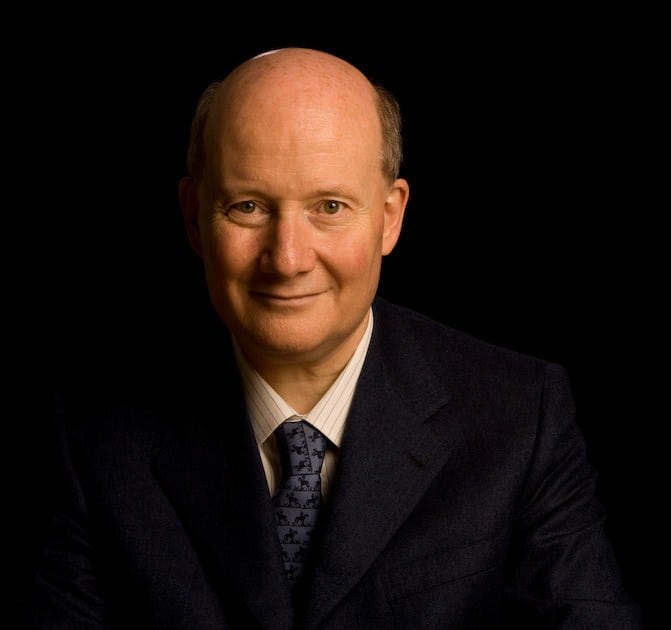
Massimo Introvigne (born June 14, 1955 in Rome) is an Italian sociologist of religions. He is the founder and managing director of the Center for Studies on New Religions (CESNUR), an international network of scholars who study new religious movements. Introvigne is the author of some 70 books and more than 100 articles in the field of sociology of religion. He was the main author of the Enciclopedia delle religioni in Italia (Encyclopedia of Religions in Italy). He is a member of the editorial board for the Interdisciplinary Journal of Research on Religion and of the executive board of University of California Press’ Nova Religio. From January 5 to December 31, 2011, he has served as the “Representative on combating racism, xenophobia and discrimination, with a special focus on discrimination against Christians and members of other religions” of the Organization for Security and Co-operation in Europe (OSCE). From 2012 to 2015 he served as chairperson of the Observatory of Religious Liberty, instituted by the Italian Ministry of Foreign Affairs in order to monitor problems of religious liberty on a worldwide scale.